Introduction/Overview
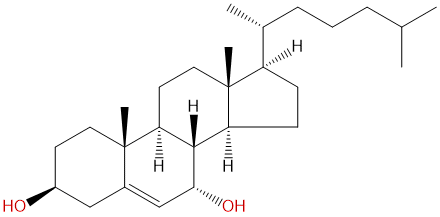
7 α - Hydroxycholesterol (CAS number: 566-26-7), as a 7 α - hydroxy derivative of cholesterol, is an important member of the class of oxysterols. As a key intermediate in cholesterol metabolism, oxysterols are widely involved in physiological processes such as cell membrane structure regulation, bile acid synthesis, lipid metabolism, and signal transduction. 7 α - hydroxycholesterol is not only an important metabolite in the cholesterol metabolic pathway, but also shows significant biological activity in a variety of pathological states, especially in cardiovascular diseases such as atherosclerosis.
In recent years, with the in-depth study of the biological functions of oxysterols, 7 α - hydroxycholesterol has been found to regulate various cellular signaling pathways, affecting processes such as inflammatory response, cell apoptosis, and lipid metabolism. Its molecular targets related to atherosclerosis, such as LOX-1 (oxidized low-density lipoprotein receptor 1), AMPK (adenylate activated protein kinase), ABCA1 (ATP binding cassette transporter A1), provide a theoretical basis for exploring its potential pharmacological mechanism and clinical application. This article will systematically review the chemical structure and physicochemical properties, sources and extraction, pharmacological activity and mechanism of action of 7 α - hydroxycholesterol, and explore its application prospects in related diseases by combining drug evaluation and pharmacokinetics.
Chemical structure and physicochemical properties
7 α - hydroxycholesterol belongs to 3 β - hydroxy - Δ 5-steroids, which structurally introduces a hydroxyl (- OH) group at the 7th carbon atom of the cholesterol molecule, forming a hydroxyl substitution at the 7 α position. Its molecular formula is C27H46O2, with a molecular weight of 402.6630 Da. The structural characteristics of this compound endow it with unique biological activity and physicochemical properties.
From the perspective of physical and chemical properties, the LogP value of 7 α - hydroxycholesterol is as high as 6.9237, indicating its high hydrophobicity. Its extremely low water solubility (0.0003 mg/mL) limits its solubility in aqueous phase, but it is beneficial for penetrating lipid membranes. The polarization surface area (TPSA) is 40.46 Å ², indicating that its molecular polarity is low and conducive to membrane permeation. The high permeability of the blood-brain barrier suggests its potential role in the central nervous system. The negative result of hERG channel inhibition experiment indicates a low risk of cardiac toxicity. The Ames genotoxicity test showed 0.0, indicating a low risk of genotoxicity.
Structurally, compared with other oxygen sterols, the introduction of hydroxyl groups in 7 α - hydroxycholesterol makes it an important intermediate in the bile acid synthesis pathway, especially as a product of 7 α - hydroxylation reaction in the classical bile acid synthesis pathway. In addition, its chemical stability and ability to bind with cholesterol esters also provide the basis for its biological functions.
Plant sources and extraction methods
7 α - hydroxycholesterol is mainly present in animal tissues, especially in the liver and plasma, and is a natural product of cholesterol metabolism. Although its main source is metabolites in animal bodies, similar oxysterol compounds have also been detected in some plants, especially in plants rich in sterols such as soybeans and yews. However, the content of 7 α - hydroxycholesterol in plants is extremely low and extraction is difficult.
Conventional extraction methods often use organic solvent extraction combined with chromatographic separation technology. Typical steps include:
- Sample Pretreatment Animal tissues or plant materials are subjected to freeze-drying or cryopreservation, crushed, and then homogenized.
- Lipid extraction Lipid extraction was performed using a chloroform methanol (2:1, v/v) mixed solvent, and the extract was separated by centrifugation and concentrated.
- silica gel column chromatography Preliminary separation of sterol compounds and removal of impurities.
- High performance liquid chromatography (HPLC)Using reverse phase or normal phase chromatography columns, combined with ultraviolet detection or mass spectrometry, further purify 7 α - hydroxycholesterol.
- Identification and quantification Confirm the structure through mass spectrometry (MS), nuclear magnetic resonance (NMR) and other methods, and perform quantitative analysis using standard samples.
In recent years, the application of supercritical fluid extraction (SFE) and solid-phase extraction (SPE) technologies has improved extraction efficiency and purity, reduced the use of organic solvents, and is in line with the concept of green chemistry. In addition, engineering modifications of biosynthetic pathways and microbial fermentation techniques have provided new ideas for the production of 7 α - hydroxycholesterol.
Pharmacological activity research
7 α - hydroxycholesterol exhibits diverse pharmacological activities in various physiological and pathological processes, particularly playing important roles in cardiovascular disease, metabolic syndrome, and inflammatory responses.
1. Role in atherosclerosis
Atherosclerosis is a chronic vascular disease caused by lipid deposition, inflammatory reaction and abnormal function of vascular wall cells. 7 α - hydroxycholesterol, as an oxidative modified cholesterol, can regulate the function of vascular endothelial cells, macrophages, and smooth muscle cells.
Research has shown that 7 α - hydroxycholesterol affects endothelial injury and inflammatory response mediated by oxidized low-density lipoprotein (oxLDL) by regulating LOX-1 (oxidized low-density lipoprotein receptor 1) expression. It activates the AMPK signaling pathway, promotes lipid metabolism and cellular energy homeostasis, and inhibits the release of inflammatory factors. In addition, 7 α - hydroxycholesterol can up regulate the expression of ABCA1, promote cholesterol efflux, slow down the formation of foam cells, and delay the progression of atherosclerosis.
2. Apoptosis and autophagy regulation
7 α - hydroxycholesterol plays a bidirectional regulatory role in regulating cell apoptosis. On the one hand, it affects cell survival by regulating the expression of anti apoptotic protein BCL2 and pro apoptotic protein MCL1; On the other hand, it regulates DNA repair related proteins such as RECQ1, participates in cellular stress response, and maintains genomic stability.
In addition, autophagy induced by 7 α - hydroxycholesterol has also been reported to be involved in regulating cell fate, especially in the inflammatory microenvironment, by modulating epigenetic modifications mediated by EHMT2 (histone methyltransferase), affecting gene expression and cell function.
3. Anti inflammatory and immune regulation
7 α - hydroxycholesterol can regulate the polarization state of macrophages, inhibit the secretion of pro-inflammatory cytokines such as TNF - α and IL-6, promote the expression of anti-inflammatory factors, and thus regulate immune responses. It regulates the cross regulation of lipid metabolism and inflammatory response through signaling pathways mediated by nuclear receptors such as LXR (liver X receptor) and FXR (farnesol X receptor).
4. Neuroprotective effect
Due to its excellent blood-brain barrier penetration, the potential role of 7 α - hydroxycholesterol in neurological diseases is gradually being recognized. Research has shown that it may have certain neuroprotective potential by regulating neuroinflammation and oxidative stress, reducing neuronal damage.
Mechanism of action and molecular targets
The biological effects of 7 α - hydroxycholesterol are mainly achieved through various molecular targets and signaling pathways, involving multiple levels such as lipid metabolism, inflammation regulation, cell apoptosis, and gene expression regulation.
1. LOX-1 (oxidized low-density lipoprotein receptor 1)
LOX-1 is a key oxidized LDL receptor in atherosclerosis, which mediates the endocytosis and signal transduction of oxidized LDL. 7 α - hydroxycholesterol regulates LOX-1 expression, affects endothelial cell function and inflammatory response, and slows down vascular damage.
2. AMPK (AMP activated protein kinase)
As a key regulatory factor in energy metabolism, AMPK activation promotes lipid metabolism and cellular energy homeostasis. 7 α - hydroxycholesterol activates AMPK signaling pathway, enhances cholesterol efflux, inhibits lipid accumulation, and plays an anti atherosclerosis role.
3. ABCA1 (ATP binding cassette transporter A1)
ABCA1 mediates the transport of cholesterol from cells to high-density lipoprotein (HDL) and is the core protein of reverse cholesterol transport. 7 α - hydroxycholesterol can promote cholesterol efflux and reduce the formation of foam cells by up regulating the expression of ABCA1.
4. BCL2 and MCL1
These two anti apoptotic proteins play a crucial role in cell survival. 7 α - hydroxycholesterol regulates its expression, affects the balance of cell apoptosis, and participates in the survival regulation of vascular wall cells and immune cells.
5. EHMT2 (Histone Methyltransferase)
EHMT2 is involved in chromatin remodeling and gene expression regulation. 7 α - hydroxycholesterol regulates EHMT2 activity, affects epigenetic modifications of inflammation related genes, and regulates immune responses.
6. RECQ1 (DNA helicase)
RECQ1 plays a role in DNA repair and maintenance of genomic stability. 7 α - hydroxycholesterol regulates RECQ1 expression and participates in cellular stress response and apoptosis regulation.
In summary, 7 α - hydroxycholesterol regulates lipid metabolism, inflammatory response, and cell fate through multi-target and multi pathway synergistic effects, reflecting its complex biological functions.
Evaluation of drug properties and pharmacokinetics
The pharmacological evaluation of 7 α - hydroxycholesterol shows that it has certain potential for drug development, but there are also challenges.
1. Physical and chemical properties and pharmacokinetics
The high LogP value (6.9237) and extremely low water solubility (0.0003 mg/mL) suggest that its distribution in the body tends to be lipid soluble, making it easy to penetrate cell membranes and the blood-brain barrier (BBB has high permeability), and suitable for the treatment of central nervous system related diseases. However, strong hydrophobicity may also lead to reduced bioavailability and uneven distribution within the body.
2. Safety evaluation
HERG channel inhibition is negative, indicating a low risk of cardiac toxicity. Ames test negative, low risk of genotoxicity, and good safety. Further validation through in vivo toxicology and long-term safety studies is needed in the future.
3. Pharmacokinetic characteristics
At present, there is limited research on the pharmacokinetics of 7 α - hydroxycholesterol. It is speculated that it may be metabolized in the body through liver metabolic enzymes (such as cytochrome P450), forming various metabolites that affect its half-life and clearance rate. Its high lipid solubility may lead to accumulation in liver and adipose tissue, and potential tissue toxicity should be considered.
4. Formulation development challenges
Due to its extremely low water solubility, the development of oral formulations of 7 α - hydroxycholesterol faces bottlenecks in solubility and bioavailability. The development of novel drug delivery systems such as nanocarriers, liposomes, and solid dispersions is expected to improve their in vivo absorption and targeted distribution.
Clinical application prospects and prospects
7 α - hydroxycholesterol, as an important intermediate in cholesterol metabolism and an active molecule of oxysterols, has shown broad application prospects in the treatment of various diseases.
1. Atherosclerosis and cardiovascular disease
Based on its ability to regulate key targets such as LOX-1, AMPK and ABCA1, 7 α - hydroxycholesterol is expected to become a new candidate drug for the prevention and treatment of atherosclerosis. Its multiple mechanisms of promoting cholesterol efflux, inhibiting inflammation, and cell apoptosis provide theoretical support for the comprehensive treatment of cardiovascular diseases.
2. Neurodegenerative diseases
The high blood-brain barrier permeability makes 7 α - hydroxycholesterol potentially neuroprotective in neurodegenerative diseases such as Alzheimer's disease and multiple sclerosis. By regulating neuroinflammation and oxidative stress, disease progression may be delayed.
3. Metabolic syndrome and inflammatory diseases
Its role in lipid metabolism and immune regulation suggests that 7 α - hydroxycholesterol may be used as an adjuvant therapy for obesity, diabetes and chronic inflammatory diseases.
4. Future research directions
- Optimization of drug formulations Develop efficient drug delivery systems to address issues of poor water solubility and low bioavailability.
- In depth analysis of targeting mechanism Combining multiple omics techniques to reveal the precise regulatory mechanism of 7 α - hydroxycholesterol in the cellular signaling network.
- Preclinical and clinical research Conduct pharmacokinetic, safety, and efficacy evaluations of the system to promote clinical translation.
- Application of Synthetic Biology Utilizing microbial engineering synthesis technology to achieve large-scale production of 7 α - hydroxycholesterol.
Conclusion
7 α - hydroxycholesterol, as an important oxysterol in cholesterol metabolism, has shown significant therapeutic potential in atherosclerosis and related metabolic diseases by virtue of its unique chemical structure and multi-target pharmacological activity. It affects the occurrence and development of diseases by regulating multiple mechanisms such as lipid metabolism, inflammatory response, and cell apoptosis. Although its high hydrophobicity and low water solubility pose certain challenges for drug development, its good safety and blood-brain barrier penetration provide favorable conditions for its clinical application. In the future, combining modern pharmaceutical formulation technology and molecular biology methods, 7 α - hydroxycholesterol is expected to become an important research object and potential new drug candidate molecule in the field of natural product pharmacology. The in-depth basic and clinical research of the system will open up new treatment pathways for its prevention and treatment of cardiovascular and neurological diseases.