Introduction/Overview
Natural products, as an important source of drug discovery, play an irreplaceable role in the long history of human struggle against diseases. The active secondary metabolites isolated from traditional medicinal plants are not only the direct source of many classic drugs, but also valuable templates for modern medicinal chemists to optimize their structures and discover lead compounds. Among the numerous biologically active natural product families, Diels Alder type adducts from Moraceae plants have attracted much attention due to their unique chemical structure and broad pharmacological activities. Mulberrofuran Q, as an important member of this family, has emerged due to its unique inhibitory activity in the arachidonic acid metabolism pathway since its isolation and identification.
The discovery of mulberry furan Q originated from the study of mulberry plants(Morus Systematic study of the chemical composition of spp. Mulberry trees, especially mulberry bark(Morus alba L.), In the traditional medical system of East Asia, it has a long history of application and is commonly used to treat diseases such as lung heat cough, edema, and hypertension. Modern pharmacological research has revealed that mulberry tree extracts have various biological activities such as anti-inflammatory, antioxidant, hypoglycemic, anti-tumor, and hepatoprotective effects. Mulberry furan Q is a compound with significant biological activity that has been isolated and identified in this context. Its initial reported function was as an inhibitor of 12-hydroxy-5,8,10-heptadecenoic acid (HHT) and thromboxane B ₂ (TXB ₂) formation. HHT and TXB ₂ are both products of arachidonic acid metabolism through the cyclooxygenase (COX) pathway, with TXB ₂ being a stable hydrolysis product of thromboxane A ₂ (TXA ₂) and a key mediator of platelet aggregation and vasoconstriction. Therefore, the inhibitory effect of mulberry furan Q on COX products suggests its potential anti platelet aggregation and anti-inflammatory activity.
In recent years, with the deepening of research, the pharmacological activity spectrum of mulberry furan Q has been continuously expanded. Especially its potential in the field of anti hepatic fibrosis has attracted widespread attention in academia. Liver fibrosis is a common pathological process in which various chronic liver diseases progress to cirrhosis and even liver cancer. Its essence is the activation and transformation of hepatic stellate cells (HSCs) into myofibroblasts, leading to excessive deposition of extracellular matrix (ECM). Currently, there is a lack of highly effective and low toxicity anti liver fibrosis drugs in clinical practice. Mulberry furan Q exhibits the potential to inhibit HSC activation, promote ECM degradation, and reverse liver fibrosis by regulating multiple key targets including matrix metalloproteinase 2 (MMP2), transforming growth factor beta 1 (TGFB1), smooth muscle actin alpha 2 (ACTA2), type I collagen alpha 1 chain (COL1A1), and tissue inhibitor of metalloproteinases 1 (TIMP1). This discovery provides a highly promising natural lead compound for the development of novel anti liver fibrosis drugs.
This review aims to comprehensively and systematically review the research progress of mulberry furan Q. The article will first introduce its chemical structure and physicochemical properties, followed by an explanation of its plant origin and extraction and separation methods. It will focus on summarizing its pharmacological activities and molecular mechanisms in anti-inflammatory and anti liver fibrosis aspects, and evaluate its pharmacokinetic properties and development potential based on drug parameters. Finally, it will look forward to its clinical application prospects. Through this review, it is expected to provide comprehensive references for the in-depth research, development, and utilization of mulberry furan Q.
Chemical structure and physicochemical properties
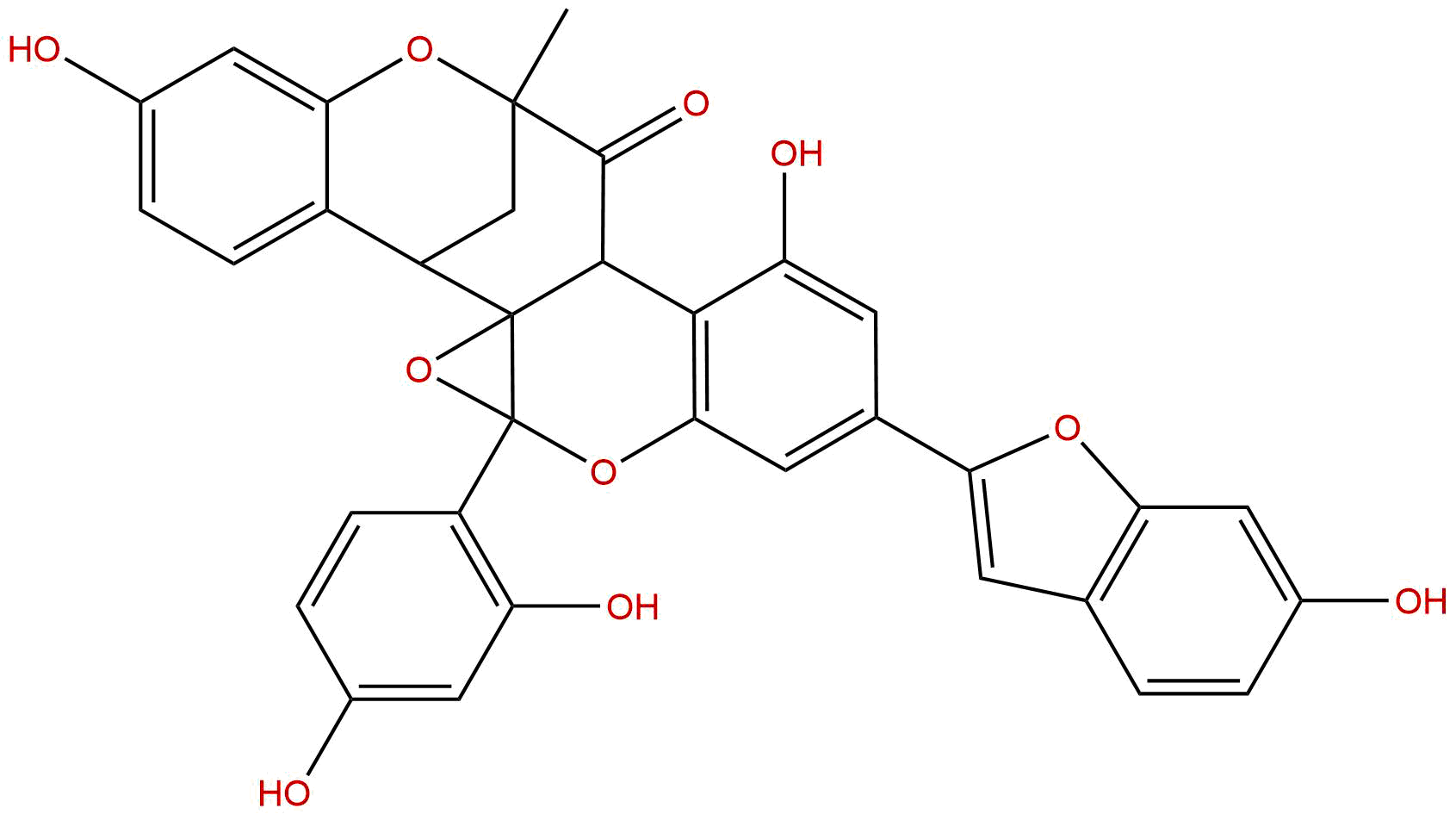
Mulberry furan Q belongs to the Diels Alder type adduct, and its chemical structure is highly complex and unique. From the perspective of its source pathway, it is formed by intermolecular Diels Alder cycloaddition reaction between isoprene functionalized chalcones or flavanones and another molecule of isoprene functionalized phenolic compounds. This unique skeletal structure endows mulberry furan Q with rich stereochemical characteristics and diverse biological activities.
Specifically, the parent nucleus structure of mulberry furan Q contains a 2-arylbenzofuran unit, which is a typical feature of mulberry furan compounds (Mulberrofurans). Its molecular structure also contains multiple phenolic hydroxyl groups, which not only endow the molecule with good antioxidant activity, but also serve as key sites for hydrogen bonding interactions with biological targets. In addition, the molecule usually contains prenyl side chains, which increase its lipophilicity and facilitate its binding to cell membranes or hydrophobic protein pockets. The precise chemical structure of mulberry furan Q has been confirmed by various spectroscopic methods such as nuclear magnetic resonance (NMR), mass spectrometry (MS), and circular dichroism (CD). Its molecular formula is C ∝₄ H ₂₄ O ₁₀, with an accurate molecular weight of 592.5560 Da.
In terms of physical and chemical properties, mulberry furan Q exhibits typical characteristics of natural polyphenolic compounds. Its lipophilic water partition coefficient (LogP) is 4.8471, indicating that the compound has strong lipophilicity, which is consistent with its structural characteristics of containing multiple aromatic rings and isopentenyl side chains. A higher LogP value indicates poor solubility of mulberry furan Q in water. The calculated water solubility value is only 0.0022 mg/mL, which is a significant challenge in practical applications. Low water solubility not only affects the in vitro activity evaluation of compounds, but also severely restricts their oral bioavailability and in vivo pharmacokinetic behavior. The polar topological surface area (TPSA) is 162.3500 Å ². TPSA is an important parameter for predicting drug oral absorption and blood-brain barrier penetration ability. It is generally believed that molecules with TPSA greater than 140 Å ² have poor oral absorption and are not easily able to penetrate the blood-brain barrier. The TPSA value of mulberry furan Q is relatively high, which is related to the presence of multiple polar phenolic hydroxyl groups in its structure. This further confirms that its oral bioavailability may be low, and the risk of central nervous system side effects is relatively low (low blood-brain barrier penetration). These physicochemical property parameters provide important guidance for subsequent formulation design and structural modification.
Plant sources and extraction methods
Mulberry furan Q is mainly derived from the Moraceae genus in the Moraceae family(Morus)Plants. At present, it has been reported that the compound has been isolated from various mulberry resources, including but not limited to mulberry trees(Morus alba L.)、 Chicken Sang(Morus australis Poir and Monsoon(Morus mongolica Schneid, etc. The distribution sites within the plant body are mainly concentrated in the root bark (i.e. the traditional Chinese medicine mulberry bark) and stem bark, which are usually the tissues with the richest accumulation of secondary metabolites in mulberry trees. In addition, trace amounts are also present in mulberry branches and leaves. Due to the wide application of mulberry bark in traditional Chinese medicine, it is usually the preferred raw material for separating mulberry furan Q and other Diels Alder type adducts.
The content of mulberry furan Q in plants is usually low and often coexists with a series of structurally similar homologs (such as mulberry furan A, C, G, etc.), which poses challenges for its efficient extraction and purification. The classic extraction and separation process usually includes the following steps:
-
Raw material pretreatment and extraction Dry mulberry bark or stem bark powder is first extracted using organic solvents. Due to the lipophilicity of mulberry furan Q, methanol, ethanol, or acetone are often used as extraction solvents, and methods such as cold soaking, percolation, or heating reflux are employed. In order to improve extraction efficiency, ultrasound assisted extraction or microwave-assisted extraction techniques are sometimes used. The extract was concentrated under reduced pressure to obtain the total extract.
-
Preliminary separation The total extract is usually suspended in water and then subjected to liquid-liquid extraction using solvents of different polarities such as petroleum ether, ethyl acetate, n-butanol, etc. Due to the moderate polarity of mulberry furan Q, it is usually enriched in the ethyl acetate extraction layer. After concentration, the ethyl acetate extract is subjected to the next step of column chromatography separation.
-
Column chromatography separation This is the core step of separation and purification. Common stationary phases include silica gel, reverse silica gel (such as ODS), dextran gel (such as Sephadex LH-20) and polyamide resin. Usually a combination of multiple chromatographic methods is used. For example, first use silica gel column chromatography with gradient elution using solvent systems such as chloroform methanol or petroleum ether acetone to preliminarily segment the ethyl acetate extract. The collected fractions rich in target compounds are further purified by ODS column chromatography using methanol water or acetonitrile water systems. Finally, Sephadex LH-20 gel column chromatography is used to separate impurities with methanol or ethanol as mobile phase according to molecular size to remove impurities with large molecular weight differences.
-
Preparation of High Performance Liquid Chromatography (HPLC)For complex mixtures that are still difficult to separate after the above steps, especially isomers with extremely similar structures, preparative HPLC is the key means to ultimately obtain high-purity mulberry furan Q. Usually, a C18 reverse phase preparation column is used, with acetonitrile water (or methanol water) as the mobile phase. By optimizing the elution conditions, baseline separation of the target compound from impurities can be achieved.
The entire extraction and separation process requires real-time monitoring using thin-layer chromatography (TLC) and HPLC, and structural confirmation of the final compound obtained through spectroscopic techniques such as NMR and MS. Due to the sensitivity of mulberry furan Q to light and heat, the entire operation process should be avoided from light as much as possible and carried out at low temperatures to prevent compound degradation.
Pharmacological activity research
The pharmacological activity research of mulberry furan Q mainly focuses on its anti-inflammatory and anti liver fibrosis effects, and in recent years, it has also been found to have other potential biological activities.
1. Inhibition of arachidonic acid metabolism
This is the earliest reported pharmacological activity of mulberry furan Q. Research has shown that mulberry furan Q can effectively inhibit the formation of 12-hydroxy-5,8,10-heptadecenoic acid (HHT) and thromboxane B ₂ (TXB ₂). HHT and TXB ₂ are products of arachidonic acid metabolism through the cyclooxygenase (COX) pathway. COX is a key rate limiting enzyme in the synthesis of prostaglandins (PGs) and thromboxanes (TXs), with two subtypes: COX-1 and COX-2. COX-1 is structurally expressed and participates in maintaining normal physiological functions; COX-2 is an inducible expression that is produced in large quantities under inflammatory stimulation and is closely related to the inflammatory response. The inhibition of COX products by mulberry furan Q suggests that it may exert anti-inflammatory effects by directly inhibiting COX enzyme activity or interfering with its signaling pathway. Compared with traditional nonsteroidal anti-inflammatory drugs (NSAIDs), mulberry furan Q, as a natural product, may have a more complex mechanism of action and different selectivity, which may reduce gastrointestinal and other side effects. This discovery provides clues for the development of new anti-inflammatory drugs.
2. Anti fibrotic effect
Liver fibrosis is currently the most in-depth and popular area of research in the field of mulberry furan Q. The core pathological process of liver fibrosis is the activation of hepatic stellate cells (HSCs). In normal liver, HSCs are in a resting state and mainly store vitamin A. When the liver is chronically damaged (such as viral hepatitis, alcohol, non-alcoholic fatty liver disease, etc.), HSCs are activated and transformed into myofibroblasts, highly expressing α - smooth muscle actin (α - SMA, encoded by the ACTA2 gene), and synthesizing and secreting large amounts of extracellular matrix (ECM) components such as type I collagen (COL1A1). Meanwhile, the degradation of ECM is finely regulated by matrix metalloproteinases (MMPs) and their inhibitors (TIMPs). In the process of fibrosis, the expression and activity of MMP2 are upregulated, while the expression of TIMP1 is significantly increased, leading to the inhibition of ECM degradation and ultimately causing excessive deposition of ECM.
Multiple in vitro and in vivo studies have confirmed the anti fibrotic potential of mulberry furan Q:
- Inhibit HSC activation In activated HSC cell lines (such as LX-2 or HSC-T6) cultured in vitro, treatment with mulberry furan Q can significantly reduce cell viability and inhibit their proliferation. Meanwhile, it can downregulate the expression of HSC activation marker α - SMA (ACTA2), indicating its ability to reverse or inhibit the transformation of HSC into myofibroblasts.
- Regulating ECM metabolism Mulberry furan Q can significantly reduce the mRNA and protein levels of type I collagen (COL1A1) and decrease ECM synthesis. More importantly, it can regulate the balance of the ECM degradation system. Research has found that mulberry furan Q can inhibit the expression of TIMP1 and upregulate the activity of MMP2. This "open source and throttling" regulation, which reduces ECM synthesis and promotes its degradation, is the key to reversing liver fibrosis.
- Intervention of TGF - β 1 signaling pathway Transforming growth factor beta 1 (TGFB1) is widely recognized as the strongest fibrogenic factor. TGF - β 1 activates the phosphorylation of downstream Smad proteins (such as Smad2/3) by binding to receptors on the cell membrane, thereby regulating the transcription of target genes (such as COL1A1, ACTA2). Research has shown that mulberry furan Q can effectively inhibit TGF - β 1-induced HSC activation. The mechanism may involve blocking the activation of TGF - β 1 receptors or inhibiting the phosphorylation of downstream Smad2/3, thereby cutting off the transmission of fibrogenic signals.
- In vivo anti fibrotic effect In animal models of liver fibrosis induced by carbon tetrachloride (CCl ₄) or bile duct ligation (BDL), treatment with mulberry furan Q can significantly improve liver function indicators (such as ALT, AST), reduce pathological damage to liver tissue (such as collagen deposition and fibrous septa formation), and downregulate the expression of fibrosis related genes such as ACTA2, COL1A1, TIMP1 in liver tissue. These in vivo experimental results provide strong evidence for the anti liver fibrosis effect of mulberry furan Q.
3. Other potential activities
In addition to the main activities mentioned above, preliminary studies also suggest that mulberry furan Q may have antioxidant and anti-tumor activities. The multiple phenolic hydroxyl groups in its molecular structure endow it with the ability to directly scavenge free radicals. In some tumor cell lines, mulberry furan Q has also shown inhibitory effects on cell proliferation, but its specific mechanism and target remain to be further elucidated.
Mechanism of action and molecular targets
The pharmacological effects of mulberry furan Q are the result of multi-target and multi pathway synergistic effects, especially in the field of anti liver fibrosis, and its mechanism network has been preliminarily outlined. The core mechanism revolves around inhibiting hepatic stellate cell (HSC) activation and regulating extracellular matrix (ECM) homeostasis.
1. Core signaling pathway: TGF - β 1/Smad pathway
TGF - β 1 is the core driving factor of liver fibrosis. One of the main mechanisms by which mulberry furan Q inhibits liver fibrosis is its strong intervention in TGF - β 1 signaling. Specific molecular targets include:
- TGFB1 Mulberry furan Q may directly or indirectly downregulate the expression of TGFB1 gene, reducing the production of fibrogenic factors.
- TGF - β receptor Research suggests that mulberry furan Q may inhibit the binding of TGF - β 1 to the TGF - β receptor (T β RI or T β RII) by binding to the receptor, thereby blocking signal transmission into the cell.
- Smad protein This is a key downstream effector molecule of the TGF - β signaling pathway. Mulberry furan Q can inhibit the phosphorylation of Smad2 and Smad3 proteins induced by TGF - β 1, preventing them from forming complexes with Smad4 and entering the nucleus, thereby inhibiting the transcriptional activity of downstream target genes such as ACTA2 and COL1A1.
2. Effect molecules and ECM remodeling
By inhibiting the TGF - β 1 signaling, sanfuran Q directly regulates the activation status of HSC and the metabolic balance of ECM.
- ACTA2 Encoding α - SMA protein, it is the gold standard for HSC activation into myofibroblasts. Mulberry furan Q significantly downregulates the expression of ACTA2, directly inhibiting the activation and contractile function of HSC.
- COL1A1 Encode the main components of type I collagen. Mulberry furan Q directly reduces the main structural components of ECM in fibrotic liver by inhibiting its transcription.
- MMP2 and TIMP1 The degradation of ECM depends on the activity of MMPs, and TIMP1 is the main endogenous inhibitor of MMPs. In liver fibrosis, the activity of MMP2 (gelatinase A) increases, but its ability to degrade ECM is counteracted by the simultaneous elevation of TIMP1. The unique feature of mulberry furan Q lies in its ability to simultaneously downregulate the expression of TIMP1 and potentially enhance the activity or expression of MMP2 through indirect mechanisms such as activating other signaling pathways, thereby breaking the imbalance between ECM synthesis and degradation, promoting the degradation of already deposited ECM, and achieving the reversal of liver fibrosis.
3. Anti inflammatory and antioxidant mechanisms
The inhibition of COX products by mulberry furan Q is the basis of its anti-inflammatory activity. By inhibiting the activity or expression of COX-2 and reducing the production of inflammatory mediators such as prostaglandins and thromboxanes, the inflammatory microenvironment of the liver can be alleviated, thereby indirectly inhibiting the activation of HSCs. In addition, the phenolic hydroxyl groups in its structure endow it with direct antioxidant capacity, which can clear reactive oxygen species (ROS) and alleviate oxidative stress damage to liver cells. This is also an important auxiliary mechanism for its protection of the liver and anti fibrosis.
In summary, mulberry furan Q targets multiple key molecules such as TGFB1, TGF - β receptors, Smad2/3, ACTA2, COL1A1, TIMP1, and COX-2, forming an stereological network that inhibits inflammation and oxidative stress, blocks core fibrogenic signals, and directly regulates ECM synthesis and degradation. The characteristic of multi-target synergistic effect gives it unique advantages in anti liver fibrosis.
Evaluation of drug properties and pharmacokinetics
To promote the clinical application of mulberry furan Q from laboratory research, it is necessary to rigorously evaluate its drug like and pharmacokinetic (ADME) properties. Based on the provided parameters and existing knowledge, the pharmacological properties of mulberry furan Q face significant challenges, but there is also room for optimization.
1. Analysis of pharmacological parameters
- Molecular weight and LogP The molecular weight is 592.5560 Da, exceeding the limit of molecular weight less than 500 in Lipinski's Rule of Five. The higher LogP value (4.8471) also exceeds the recommended range of LogP less than 5 in the rule. This indicates that the molecule of mulberry furan Q is relatively large and has strong lipid solubility, which may lead to poor solubility, incomplete oral absorption, and high metabolic clearance rate.
- Water solubility The extremely low water solubility (0.0022 mg/mL) is one of the biggest obstacles to the development of mulberry furan Q. Low solubility directly leads to difficulty in dissolving the drug in the gastrointestinal tract after oral administration, resulting in extremely low bioavailability. This is a common bottleneck for many natural polyphenolic compounds.
- Blood-brain barrier penetrability Low penetration is an advantageous characteristic. For drugs used to treat peripheral diseases such as liver fibrosis, low central nervous system exposure can reduce potential neurotoxic side effects.
- HERG inhibition HERG (human Ether - à - go Related Gene) potassium channel inhibition is the main cause of drug-induced QT interval prolongation and arrhythmia in the heart. The hERG inhibition prediction result of mulberry furan Q is' no ', which is a very positive signal indicating a low risk of cardiac toxicity.
- Ames test Ames test is used to evaluate the mutagenicity of compounds. The predicted result is 0.6, which is generally considered negative if it is less than 0.5 and positive if it is greater than 0.5. The value of 0.6 is within the critical range, indicating that there may be a certain genetic toxicity risk of mulberry furan Q, which needs to be focused on and verified in subsequent toxicology studies.
2. Pharmacokinetic challenges
Based on the above parameters, it can be foreseen that the pharmacokinetic characteristics of mulberry furan Q may not be ideal:
* absorb Poor oral absorption and extremely low bioavailability.
* distribution Due to its high lipophilicity, it may be widely distributed in tissues and highly bound to plasma proteins.
* Metabolism As a polyphenolic compound, it is highly susceptible to phase II metabolism (such as glucuronidation and sulfation) in the liver and intestines, leading to significant first pass effects and further reducing oral bioavailability.
* excretion Mainly excreted in the form of metabolites through bile or urine.
3. Improvement strategy
In order to overcome the pharmacological defects of mulberry furan Q, future research can start from the following aspects:
* Structural modification By means of medicinal chemistry, hydrophilic groups (such as amino acids, sugar groups, phosphate groups) are introduced or prepared as prodrugs while retaining key pharmacophores (such as benzofuran rings, phenolic hydroxyl groups) to improve water solubility and oral absorption. Meanwhile, reducing molecular weight through structural simplification.
* Development of new dosage forms By utilizing modern pharmaceutical techniques such as liposomes, nanoparticles, phospholipid complexes, solid dispersions, etc., the solubility and oral bioavailability of mulberry furan Q can be significantly improved by encapsulating it.
* Optimization of administration route For liver diseases such as liver fibrosis, non oral administration routes such as transdermal administration, intraperitoneal injection, or local liver administration can be considered to bypass the absorption barrier and directly act on the target organ.
Clinical application prospects and prospects
Despite the challenges in drug development, the unique pharmacological activity of mulberry furan Q, especially its enormous potential in the field of anti liver fibrosis, makes it have broad clinical application prospects.
1. New candidates for anti liver fibrosis drugs
Liver fibrosis is a common pathological basis for various chronic liver diseases, with a high prevalence worldwide. At present, there are no approved and marketed specific anti liver fibrosis drugs in clinical practice, except for etiological treatments such as antiviral therapy and alcohol withdrawal. Mulberry furan Q exhibits the potential to reverse liver fibrosis by synergistically inhibiting HSC activation and promoting ECM degradation through multiple targets and pathways, which has significant advantages compared to single target drugs. If its pharmacokinetic problems can be solved through structural modification or new dosage forms, mulberry furan Q or its derivatives are highly likely to become lead compounds for the new generation of anti liver fibrosis drugs.
2. Potential applications of anti-inflammatory drugs
Its inhibitory effect on COX products suggests that it may have practical value in inflammation related diseases. For example, in disease models such as rheumatoid arthritis and inflammatory bowel disease, it is worth further exploring their therapeutic effects. Due to its potentially different mechanism of action from traditional NSAIDs, it may provide an anti-inflammatory option with fewer side effects.
3. Future research directions
In order to promote the clinical translation of mulberry furan Q, future research should focus on the following aspects:
- In depth mechanism research Using modern omics techniques such as proteomics and transcriptomics, we aim to comprehensively reveal the molecular targets and functional networks of mulberry furan Q. Especially to clarify the protein targets it directly binds to, providing a basis for structure based drug design.
- Pharmaceutical Chemistry and Structural Optimization This is currently the most urgent task. We need to synthesize a series of derivatives and analogues of mulberry furan Q, systematically study their structure-activity relationship (SAR), and search for candidate compounds with higher activity and better drug properties.
- Pharmacokinetic and Toxicological Studies Conduct systematic pharmacokinetic studies in vivo to clarify its absorption, distribution, metabolism, and excretion characteristics. At the same time, conduct comprehensive acute and chronic toxicological evaluations, particularly to validate potential genetic toxicity suggested by Ames tests.
- Development of new dosage forms Collaborate with pharmaceutical experts to develop new dosage forms that can enhance the bioavailability of mulberry furan Q, such as nanoliposomes and polymer micelles, and validate their efficacy and improved bioavailability in animal models.
- preclinical research In various animal models of liver fibrosis, such as CCl ₄, BDL, and NASH models, systematically evaluate the efficacy and safety of mulberry furan Q and its optimized products, laying the foundation for entering clinical trials.
Conclusion
Mulberry furan Q, a Diels Alder type adduct derived from traditional Chinese medicine mulberry bark, has become a new star in the field of natural product drug research due to its unique chemical structure and multifaceted biological activities, especially its significant anti liver fibrosis potential. It targets the TGF - β 1/Smad signaling pathway and regulates multiple key molecules such as ACTA2, COL1A1, MMP2, and TIMP1, demonstrating strong ability to inhibit hepatic stellate cell activation and reverse extracellular matrix deposition. However, as a candidate drug, it also faces severe challenges such as poor water solubility and low oral bioavailability.
The research path of mulberry furan Q from discovery to application is a typical epitome of natural product drug development: there are both exciting activity discoveries and insurmountable obstacles to drug development. The future research focus should be on optimizing the chemical structure of drugs and developing new dosage forms, in order to overcome their pharmacokinetic deficiencies and unleash their enormous potential as anti liver fibrosis drugs. We have reason to believe that with the continuous deepening of research, mulberry furan Q and its derivatives are expected to bring new hope to billions of liver fibrosis patients worldwide, and also provide another successful example for exploring innovative drugs from the treasure trove of traditional Chinese medicine.