Introduction/Overview
In the long river of natural product chemistry and pharmacology research, exploring lead compounds with novel structures and unique activities from the plant kingdom has always been an important source of innovative drug development. Methyl brevifolincarboxylate (MBC), as a natural tannic acid derivative derived from traditional medicinal plants, has attracted much attention since its discovery due to its multi-target and multi pathway biological activity spectrum. This compound (CAS number: 154702-76-8) is not only an effective PB2 cap binding inhibitor of influenza virus, providing new ideas for the antiviral field, but also exhibits significant potential in antioxidant, antiplatelet aggregation, lipid metabolism regulation, and anti-inflammatory effects. Its molecular weight is moderate (306.2260), and preliminary pharmacological parameters suggest its potential for development. With the development of modern molecular biology and network pharmacology, the analysis of the mechanism of action of MBC is becoming increasingly in-depth, and its potential as a multi-target therapeutic agent is gradually highlighted. This article aims to provide a systematic review of the chemical structure, plant origin, pharmacological activity, molecular mechanism of action, pharmacological evaluation, and clinical application prospects of methyl ester of Sapindaceae, in order to provide comprehensive scientific references for the in-depth research and development of this natural product.
Chemical structure and physicochemical properties
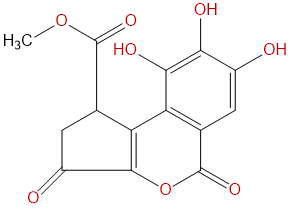
Brevifolincarbolic acid methyl ester, also known as Brevifolincarbolic acid methyl ester, has a molecular formula of C ₁₄ H ₁₀ O ₈ and a molecular weight of 306.2260. Structurally, MBC belongs to the derivatives of ellagic acid, with a highly conjugated benzofurano [3,2-b] benzofuran-2,8-dione system as its core skeleton, and methyl ester groups (- COOCH H3) and hydroxyl (- OH) functional groups connected at specific positions. This unique polycyclic aromatic hydrocarbon structure endows it with good planarity and electron delocalization ability, which is the material basis for its antioxidant activity and interaction with biomolecules such as proteins.
Its physical and chemical properties are closely related to its structure. The calculated lipid water partition coefficient (LogP) is 1.2084, indicating that the compound has moderate lipophilicity, which is beneficial for its penetration of cell membranes, but has not reached the accumulation risk that high lipophilicity may bring. The topological polar surface area (TPSA) is 134.2700 Å ², reflecting the presence of multiple polar oxygen atoms (from carbonyl, ester, and hydroxyl groups) in the molecule, which is crucial for its solubility and hydrogen bonding interactions with the target. The water solubility value is 0.3030 mg/mL, which belongs to the category of slightly soluble to poorly soluble. This suggests that solubilization strategies may need to be considered in formulation development, such as making salts, cyclodextrin inclusion complexes, or nano formulations. Preliminary pharmacological evaluation shows that its ability to cross the blood-brain barrier is low, which limits its use in central nervous system diseases, but may also reduce related central side effects. HERG inhibition is' no ', indicating a lower risk of inducing QT interval prolongation in the heart, which is a favorable safety feature. The Ames test result is 0.6, indicating a low risk of mutagenicity, but further genetic toxicity studies are needed to confirm.
Plant sources and extraction methods
The methyl ester of phenolic acid in Short Leaf Sapindaceae is mainly isolated from various plants such as Euphorbiaceae and Combretaceae. One of the most concentrated sources of research is Phyllanthus emblica(Phyllanthus emblica L.), Also known as Omore fruit or Indian blackcurrant, this is a famous medicinal and edible plant widely used in traditional Asian medicine (such as Ayurveda, Tibetan medicine, and traditional Chinese medicine) for clearing heat, cooling blood, promoting digestion and stomach health, and resisting oxidation and aging. In addition, in Short Leaf Sumu The compound and its analogues can also be isolated from Brevifolin related plants such as certain Phyllanthus species.
The extraction and separation of MBC from plant materials usually follow the conventional process of natural product chemistry. Firstly, solvent extraction method is adopted, commonly using methanol, ethanol or acetone water mixed solvents to extract or reflux dried plant fruits, leaves or whole plants, in order to fully extract polyphenolic components including MBC. Subsequently, utilizing its acidic characteristics, preliminary enrichment can be achieved through acid-base treatment. Further purification relies on various chromatographic techniques. Large pore adsorption resin (such as D101, AB-8) column chromatography is commonly used for crude separation to remove polar impurities such as sugars and proteins. Then, fine separation and purification were performed using silica gel column chromatography, reverse phase silica gel column chromatography (such as ODS-C18), and high performance liquid chromatography (HPLC). In modern separation analysis, mass spectrometry (MS) and nuclear magnetic resonance (NMR, especially ¹ H-NMR and ¹ ³ C-NMR) techniques are often combined to identify the structure of the isolated compounds, ensuring that they are the target compound, methyl ester of abscisic acid. In recent years, green extraction techniques such as supercritical fluid extraction and microwave-assisted extraction have also been explored to improve extraction efficiency and selectivity.
Pharmacological activity research
Short leaved Sapindac Acid Methyl Ester exhibits a wide range of pharmacological activities, reflecting the pleiotropy of natural products.
-
Antiviral activity One of the most notable activities of MBC is its ability to serve as Influenza virus PB2 cap binding inhibitor The transcription of influenza virus depends on the viral RNA polymerase complex (composed of PA, PB1, PB2 subunits) grabbing the 5 'cap structure of host cell mRNA. MBC can specifically bind to the cap binding pocket of PB2 subunit, competitively inhibiting its interaction with the host mRNA cap structure, thereby blocking the transcription initiation of viral mRNA and effectively inhibiting the replication of influenza virus. This mechanism is different from traditional neuraminidase inhibitors (such as oseltamivir) and provides a new candidate drug for combating drug-resistant influenza virus strains.
-
antioxidant activity This is the fundamental core activity of MBC. The multiple phenolic hydroxyl groups in its molecular structure are ideal hydrogen donors, which can effectively scavenge free radicals (such as DPPH, ABTS ⁺ free radicals) and inhibit lipid peroxidation. Research has shown that MBC can not only directly eliminate reactive oxygen species (ROS), but also exert indirect antioxidant effects by upregulating the intracellular antioxidant defense system.
-
Antiplatelet aggregation and antithrombotic effects MBC can significantly inhibit platelet aggregation induced by adenosine diphosphate (ADP), collagen, arachidonic acid, and other substances. Its function may be related to inhibiting platelet signaling pathways (such as calcium ion mobilization and thromboxane A2 synthesis) and regulating membrane receptor function related to platelet activation, suggesting its potential value in preventing arterial thrombosis.
-
Regulating lipid metabolism Research has shown that MBC can improve lipid metabolism disorders in both cellular and animal models. For example, it can inhibit the excessive accumulation of cholesterol and triglycerides in liver cells, downregulate the expression of key enzymes related to fat synthesis (such as fatty acid synthase FAS and sterol regulatory element binding protein SREBPs), and promote fatty acid beta oxidation, thereby exerting a lipid-lowering effect.
-
anti-inflammatory activity MBS exhibits inhibitory effects on both acute and chronic inflammation models. It can inhibit the excessive production of nitric oxide (NO), prostaglandin E2 (PGE2), as well as pro-inflammatory cytokines such as tumor necrosis factor - α (TNF - α) and interleukin-6 (IL-6) in macrophages stimulated by lipopolysaccharides (LPS). Its anti-inflammatory effect is an important pharmacological basis for its use in the treatment of metabolic inflammation, atherosclerosis and other diseases.
Mechanism of action and molecular targets
The multiple pharmacological activities of MBC stem from its regulation of multiple molecular targets and signaling pathways, and its mechanism of action is complex and synergistic.
-
Core antioxidant pathway: Nrf2/ARE system One of the core mechanisms of MBC pharmacological action is the activation of the nuclear factor E2 related factor 2 (Nrf2, encoded by the NFE2L2 gene) signaling pathway. Under oxidative stress, MBC may promote the dissociation and translocation of Nrf2 from the Keap1-Nrf2 complex to the nucleus by modifying the cysteine residues of Keap1 protein. In the nucleus, Nrf2 binds to antioxidant response elements (ARE), initiating the transcriptional expression of a series of downstream phase II detoxifying enzymes and antioxidant proteins, including Heme oxygenase-1 (HMOX1)、Superoxide dismutase (SOD1, SOD2)、Catalase (CAT)、Glutathione peroxidase 1 (GPX1) Wait. The comprehensive activation of this system is the fundamental pathway for MBC to enhance cellular antioxidant defense and combat oxidative damage.
-
Anti inflammatory and matrix metabolism related targets MBC can inhibit the excessive activation of pro-inflammatory signaling pathways such as nuclear factor kappa B (NF - κ B), thereby downregulating the expression of inflammatory mediators such as TNF - α and IL-6. In addition, research suggests that MBC has an impact on Matrix metalloproteinases (such as MMP1, MMP3) Has inhibitory effects on expression or activity. MMPs participate in the degradation of extracellular matrix and are closely related to inflammation, instability of atherosclerotic plaque and tumor metastasis. The inhibition of MMPs by MBC may help stabilize plaques and prevent tumor invasion.
-
Direct interaction with enzymes In addition to regulating signaling pathways, MBC can also directly act on specific enzymes. For example, as an influenza virus PB2 protein The inhibitor is a prime example of direct targeting. In terms of antioxidant properties, it may have an impact on Tyrosinase (TYR) It has a certain inhibitory effect, which is related to the regulation of skin pigmentation. Its antiplatelet aggregation effect also involves potential effects on key enzymes in arachidonic acid metabolism pathways such as cyclooxygenase (COX) and thromboxane synthase.
-
From the perspective of network pharmacology From a systems biology perspective, the role of MBC can be seen as a multi-target multi disease network. Its multiple effects of anti-oxidation (through Nrf2), anti-inflammatory (inhibition of NF - κ B), lipid regulation, and anti platelet aggregation are intertwined, which together constitute its potential for comprehensive treatment of cardiovascular diseases (atherosclerosis, thrombosis), metabolic syndrome, and many diseases driven by oxidative stress and chronic inflammation.
Evaluation of drug properties and pharmacokinetics
Evaluating the pharmacological properties of MBC based on its physicochemical parameters and preliminary biological activity data is a key step in promoting its conversion into a drug.
-
Absorption, distribution, metabolism, excretion (ADME) characteristics:
- absorb A moderate LogP value (1.21) suggests that it has some oral absorption potential, but lower water solubility and higher TPSA may limit its dissolution and passive diffusion in the gastrointestinal tract. Whether it is a substrate for efflux pumps such as P-glycoprotein still needs to be studied.
- distribution Low molecular weight but high polarity, leading to its Low blood-brain barrier permeability This limits its application in the central nervous system, but it may also avoid central side effects. It is expected to be distributed to target tissues such as the liver, kidneys, and vascular walls.
- Metabolism As a polyphenolic ester compound, MBC is likely to undergo extensive first pass metabolism in the body. Its methyl ester group may be hydrolyzed by esterases to form the carboxylic acid form of Brevifolincarbolic acid, whose activity may change. Phenolic hydroxyl groups may undergo glucuronidation and sulfation binding reactions, which are common II binding metabolic pathways of polyphenolic compounds, accelerating their excretion and potentially affecting their bioavailability.
- excretion Metabolites are mainly excreted through the kidneys (urine) and bile (feces).
-
Preliminary evaluation of safety:HERG inhibition negative It is an important positive signal that reduces the risk of inducing fatal arrhythmias (apical twisted ventricular tachycardia).Ames test result (0.6) Preliminary indications suggest no direct mutagenicity, but a more comprehensive genotoxicity combination test (such as micronucleus test, chromosome aberration test) is needed for a comprehensive evaluation. Its long-term toxicity, reproductive toxicity and other data are currently blank, which is a necessary link to be filled in future preclinical research.
-
Challenges and Strategies in Formulation Development The main challenge is to improve its bioavailability. Explorable formulation strategies include: making phospholipid complexes and cyclodextrin inclusion complexes to improve solubility and membrane permeability; Developing nano drug delivery systems such as nanocrystals, liposomes, or polymer micelles; Or search for its soluble salt form. In view of its multi target action characteristics, it can also be considered to develop functional food or health care products to prevent or treat chronic diseases (such as atherosclerosis).
Clinical application prospects and prospects
The multiple pharmacological activities of methyl ester of short leaf abscisic acid have shown broad application prospects in multiple therapeutic fields, but at the same time, it also faces many challenges.
-
Potential clinical application directions:
- Anti influenza treatment As a novel PB2 inhibitor, MBC provides a new chemical framework for the development of anti drug resistant influenza virus drugs. It can be used in combination with existing neuraminidase inhibitors or developed as a monotherapy targeting PB2 targets, especially for influenza cases resistant to oseltamivir.
- Prevention and treatment of cardiovascular diseases Its "four in one" effects of antiplatelet, antioxidant, anti-inflammatory and lipid regulating perfectly match the pathophysiological mechanism of atherosclerotic cardiovascular disease (ASCVD). It is expected to be developed as a natural source drug or adjuvant therapy for the prevention and treatment of coronary heart disease and stroke.
- Metabolic diseases By improving lipid metabolism and inhibiting chronic low-grade inflammation, MBC has potential value in the prevention and treatment of nonalcoholic fatty liver disease (NAFLD), diabetes and its complications.
- Diseases related to antioxidant and anti-aging As a potent Nrf2 activator, it has exploratory value in areas such as delaying aging, neurodegenerative diseases (such as Alzheimer's disease, although poor BBB penetration is a barrier), and skin photoaging.
-
Future research focus and challenges:
- In depth mechanism research Chemical biology methods such as affinity fishing and molecular probes need to be used to identify more direct targets and elucidate their synergistic networks among multiple targets.
- Systematic pharmacokinetic study ADME research must be comprehensively conducted in animal models (rodents, non rodents) to clarify its absolute bioavailability, major metabolites, tissue distribution, and excretion pathways, providing a basis for formulation design.
- Preclinical safety evaluation Strictly follow the Good Laboratory Practice (GLP) for non clinical drug research to complete systematic acute toxicity, long-term toxicity, reproductive toxicity, genetic toxicity, and carcinogenicity tests, and comprehensively evaluate their safety.
- Structural optimization and development of analogues Using it as a lead compound, reasonable structural modifications (such as modifying ester groups, introducing other functional groups) are carried out to improve its activity, solubility, metabolic stability, or blood-brain barrier penetration, in order to obtain more valuable candidate drugs for development.
- Clinical conversion pathway Clarifying its main clinical indication positioning, whether to move towards antiviral, cardiovascular or metabolic fields, will determine its subsequent research and development strategies and resource investment.
Conclusion
As a natural active molecule discovered from traditional medicinal plants, methyl ester of short leaf abscisic acid has become a bridge connecting traditional medical wisdom with modern drug development due to its unique tannic acid derived structure and rich pharmacological activity spectrum. It not only injects new vitality into the antiviral field as a PB2 inhibitor of influenza virus, but also demonstrates enormous potential in the prevention and treatment of cardiovascular and metabolic diseases due to its powerful antioxidant, anti-inflammatory, antiplatelet aggregation, and lipid-lowering effects. The core of its mechanism of action lies in activating endogenous protective pathways such as Nrf2 and regulating multiple key targets, demonstrating the advantages of multi-target synergistic therapy. Despite facing challenges such as bioavailability in drug development, its good preliminary safety features (such as no hERG inhibition) lay the foundation for further development. In the future, through in-depth mechanism exploration, systematic pharmacokinetic and safety evaluation, and rational optimization based on structure, short leaf salicylic acid methyl ester is expected to gradually move from a potential natural lead compound to a candidate drug with clear clinical value, contributing its unique value to human health.