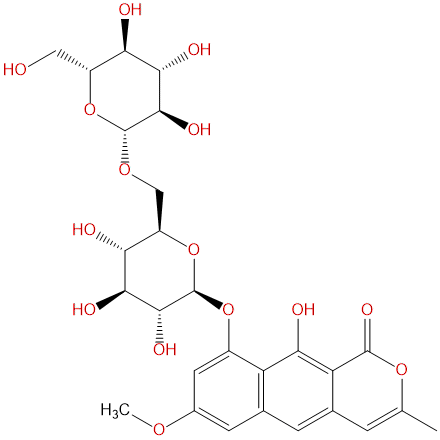
Introduction/Overview
Cassiaside C, also known as Toralactone 9-O - β - D-genoposide and CAS number 119170-52-4, is a natural naphthol product isolated from the seeds of traditional Chinese medicine Cassia obtusifolia L. or Cassia tora L. Cassia seed, as a classic traditional Chinese medicine herb, has always been used for various clinical indications such as clearing the liver and improving vision, moistening the intestines and promoting bowel movements, and lowering cholesterol. In recent years, with the deepening development of natural product pharmacology, Cassia seed glycoside C has gradually become a research hotspot due to its unique chemical structure and significant biological activity, especially its potential in antioxidant and inhibition of late glycation end products (AGEs) formation.
The abnormal accumulation of advanced glycation end products is a key factor in the pathological process of many chronic metabolic diseases, such as diabetes and its complications, atherosclerosis, neurodegenerative diseases and so on. AGEs not only trigger oxidative stress and inflammatory responses, but also activate multiple signaling pathways by binding to receptors (RAGE), leading to tissue damage and functional impairment. Cassia seed glycoside C exhibits good pharmacological activity and potential for development by regulating various antioxidant enzymes and signaling molecules, inhibiting the generation of AGEs and related pathological processes.
This article provides a systematic review of the chemical structure and physicochemical properties, plant sources and extraction methods, pharmacological activity and mechanism of action, pharmacological evaluation and pharmacokinetic characteristics of Cassia seed glycoside C, combined with its clinical application prospects, aiming to provide scientific basis and reference for the in-depth research and drug development of this natural product.
Chemical structure and physicochemical properties
Cassia seed glycoside C belongs to the naphthol class of compounds, and its specific structure is a glycoside derivative of Toralactone, in which the 9-hydroxyl group is connected by a β - D-mannoside bond. Its molecular formula is C27H32O14, with a molecular weight of 596.5380, and it has typical multi hydroxyl and glycoside structural characteristics.
From the perspective of physical and chemical properties, the LogP value of Cassia seed glycoside C is -0.1809, indicating its strong hydrophilicity and a water solubility index of 3.6512, indicating its good solubility in the aqueous phase, which is conducive to absorption and distribution in vivo. Its topological polar surface area (TPSA) is 238.2 Å ², and a higher polarity area suggests stronger polarity, which may limit its passive diffusion through lipid membranes, especially with lower penetration ability through the blood-brain barrier (low blood-brain barrier permeability). In addition, the hERG channel inhibition test result was negative, indicating a low risk of cardiac toxicity. The Ames test score was 0.9, indicating a low risk of genotoxicity.
Structurally, the naphthol core of Cassia seed glycoside C endows it with potential antioxidant activity, while the glycoside portion enhances its water solubility and bioavailability, which may optimize its in vivo behavior by affecting pharmacokinetic parameters. This type of structural characteristic makes it highly valuable for research in natural product pharmacology.
Plant sources and extraction methods
Cassia glycoside C mainly exists in Cassia seeds, which are the two main medicinal species of Cassia genus in the legume family: Cassia obtusifolia L. and Cassia tora L. Cassia seed contains abundant polyphenols, anthraquinones, flavonoids, and glycosides, among which Cassia glycoside C, as an important glycoside component, has been widely studied.
The common methods for extracting Cassia seed glycoside C include:
-
Solvent extraction
Using water, ethanol, or their aqueous solutions as solvents, reflux extraction or ultrasound assisted extraction techniques can effectively extract polysaccharides and glycosides from Cassia seed. Given the high polarity of Cassia seed glycoside C, water or low concentration ethanol aqueous solution (30% -50%) is more suitable for its extraction.
-
Separation and purification
After concentration, the extraction solution is often subjected to liquid-liquid extraction to remove non-polar impurities, and then separated and purified by silica gel column chromatography, reverse phase C18 column chromatography, or high-performance liquid chromatography (HPLC). In recent years, preparative liquid chromatography (Prep HPLC) technology has been widely used for the high-purity separation of Cassia seed glycoside C.
-
Structural Identification
The structure of purified Cassia seed glycoside C was confirmed by modern analytical techniques such as mass spectrometry (MS) and nuclear magnetic resonance (NMR). ^1H-NMR and ^ 13C-NMR data clarified the glycosidic bond position and sugar chain structure, while MS provided molecular weight information, ensuring accurate identification of the compound.
In summary, the extraction process of Cassia seed glycoside C is mature and efficient, with the potential for large-scale production, laying the foundation for its subsequent pharmacological research and application.
Pharmacological activity research
The pharmacological activity research of Cassia seed glycoside C mainly focuses on antioxidant, inhibition of late glycation end product formation, and prevention and treatment of related chronic diseases.
1. Antioxidant activity
Cassia seed glycoside C exhibits significant free radical scavenging ability and can effectively inhibit the generation of oxygen free radicals (ROS) and peroxides. In vitro experiments have shown that it can enhance the activity of key antioxidant enzymes such as superoxide dismutase (SOD1, SOD2), catalase (CAT), glutathione peroxidase (GPX1), and reduce oxidative damage. It enhances the cellular antioxidant defense system by activating the nuclear factor erythroid 2-related factor 2 (NFE2L2/NRF2) signaling pathway, inducing downstream antioxidant enzyme expression.
2. Inhibit the formation of advanced glycation end products (AGEs)
Advanced glycation end products are important pathological mediators of diabetes and its complications. Cassia seed glycoside C can reduce protein cross-linking and glycosylation by directly inhibiting the formation of AGEs, and alleviate the damage of diabetes related tissues. In addition, it can also reduce the activity of matrix metalloproteinases (MMP1, MMP3), prevent tissue matrix degradation and inflammatory reactions, and protect vascular and renal function.
3. Anti inflammation and tissue protection
Cassia seed glycoside C exhibits anti-inflammatory effects in various cell models, inhibiting the release of inflammatory factors and reducing oxidative stress-induced cell apoptosis. It reduces the inflammatory microenvironment and promotes tissue repair by regulating the NFE2L2/NRF2 pathway and related antioxidant enzyme expression.
4. Other potential activities
Preliminary studies also suggest that Cassia seed glycoside C may have the potential to regulate melanin synthesis (target TYR) and protect skin barrier function, but related research is still in its infancy and needs further validation.
In conclusion, the multi target and multi mechanism pharmacological activities of cassia seed glycoside C provide a theoretical basis for its development as a drug for the prevention and treatment of diabetes and related chronic diseases.
Mechanism of action and molecular targets
The mechanism of action of Cassia seed glycoside C mainly revolves around antioxidant stress and inhibition of AGEs formation, involving multiple molecular targets and signaling pathways.
1. Antioxidant related targets
- NFE2L2/NRF2 Cassia seed glycoside C can activate NFE2L2 (nuclear factor erythroid 2-related factor 2), promote its nuclear translocation, induce the expression of downstream antioxidant enzymes such as SOD1, SOD2, CAT, GPX1, HMOX1, and enhance cellular antioxidant capacity.
- SOD1、SOD2 Superoxide dismutase is responsible for clearing superoxide radicals, and Cassia seed glycoside C reduces ROS accumulation by enhancing its activity.
- CAT (catalase)Decompose hydrogen peroxide to prevent oxidative damage.
- GPX1 (Glutathione Peroxidase)Catalytic reduction of peroxides to protect cells from oxidative stress.
- HMOX1 (Heme Oxygenase 1)Has anti-inflammatory and antioxidant functions, and participates in cell protection.
2. Inhibit matrix metalloproteinases (MMPs)
- MMP1、MMP3 These two proteases are involved in extracellular matrix degradation, and excessive activation is closely related to tissue damage and inflammation. Cassia seed glycoside C protects tissue structural integrity and reduces inflammatory response by downregulating the expression or activity of MMP1 and MMP3.
3. Inhibit the formation of advanced glycation end products
Cassia seed glycoside C directly inhibits key enzymes or intermediates in glycosylation reactions, blocks the generation process of AGEs, reduces the binding of AGEs to their receptor RAGE, and thereby inhibits downstream inflammation and oxidative stress signaling pathways, reducing tissue damage.
4. Other targets
- TYR (Tyrosinase)As a key enzyme in melanin synthesis, the regulatory effect of quercetin C on it may affect pigment metabolism, suggesting its potential application in skin diseases.
Overall, Cassia seed glycoside C exhibits good pharmacological activity by regulating oxidative stress and glycosylation related pathological processes through multi-target synergistic effects.
Evaluation of drug properties and pharmacokinetics
The pharmacological evaluation of Cassia seed glycoside C includes physical and chemical properties, pharmacokinetic characteristics, and safety.
1. Physical and chemical properties and drug compatibility
- molecular weight 596.5380, belonging to the medium to high molecular weight range, may affect its membrane permeability.
- LogP-0.1809 indicates strong hydrophilicity, which is beneficial for water-soluble drug delivery forms, but may limit the penetration of lipid soluble membranes.
- TPSA 238.2 Å ², with a high polar surface area indicating difficulty in crossing the blood-brain barrier, is suitable for peripheral target action.
- Water solubility 3.6512, with good water solubility, conducive to oral absorption.
2. Pharmacodynamics
At present, there are few systematic pharmacokinetic studies on Cassia seed glycoside C, but based on its structure and physicochemical properties, it is speculated that:
- absorb Due to its high polarity and glycosidic structure, oral absorption may be limited, requiring the release of active ingredients through glycosidase hydrolysis or the use of special formulations to enhance bioavailability.
- distribution The blood-brain barrier has low permeability and is mainly distributed in peripheral tissues.
- Metabolism Glycoside bonds are easily hydrolyzed by gut microbiota or liver enzymes, producing metabolites that may affect activity and clearance.
- excretion Good water solubility, mainly excreted through the kidneys.
3. Safety evaluation
- HERG inhibition No inhibitory effect, low risk of cardiac toxicity.
- Ames test Score 0.9, indicating a low risk of genotoxicity.
- toxicology The existing literature has not reported any significant toxic side effects, and the preliminary safety is good.
In summary, Cassia seed glycoside C has good safety and certain potential for drug development, but further systematic pharmacokinetic and toxicological studies are needed to optimize the administration route and formulation design.
Clinical application prospects and prospects
Cassia seed glycoside C, as an important active ingredient in Cassia seed, has broad clinical application potential due to its multi-target antioxidant and anti glycosylation effects.
1. Prevention and treatment of diabetes and its complications
Inhibition of advanced glycation end products is a key strategy for the prevention and treatment of diabetes. Cassia seed glycoside C may effectively delay the occurrence and development of complications such as diabetes nephropathy, retinopathy and neuropathy by inhibiting the formation of AGEs and regulating oxidative stress.
2. Cardiovascular diseases
Oxidative stress and abnormal matrix metalloproteinase activity are important pathological mechanisms of atherosclerosis and myocardial injury. Cassia seed glycoside C is expected to exert cardiovascular protective effects and reduce the risk of cardiovascular events by regulating MMPs and antioxidant enzymes.
3. Neurodegenerative diseases
Although Cassia seed glycoside C has low blood-brain barrier penetration, its antioxidant and anti-inflammatory effects may indirectly affect the nervous system through peripheral mechanisms. In the future, it can enhance central nervous system efficacy through structural optimization or carrier systems.
4. Skin diseases and beauty
Regulating tyrosinase activity suggests the potential application of Cassia seed glycoside C in pigmentation, skin aging, and other aspects, which has the value of developing natural skincare products.
5. Challenges and Strategies in Drug Development
The high polarity and glycosidic structure of Cassia seed glycoside C limit its oral bioavailability and tissue distribution. In the future, strategies such as nanocarriers and structural modifications are needed to enhance its pharmacokinetic properties. Meanwhile, the preclinical safety evaluation and mechanism research of the system are key to its clinical translation.
Conclusion
Cassia seed glycoside C, as a natural naphthol glycoside compound with significant antioxidant and inhibitory activity on late glycation end product formation, exhibits multi-target and multi mechanism pharmacological properties. Its good water solubility and safety provide favorable conditions for the development of pharmaceuticals. In the future, combining modern pharmaceutical chemistry and pharmacology technology, we will deeply analyze its mechanism of action, optimize its pharmacokinetic characteristics, and carry out systematic preclinical and clinical research, which is expected to promote cassia seed glycoside C to become a new natural drug for the prevention and treatment of diabetes and related chronic diseases.
The study of Cassia seed glycoside C not only enriches the scientific connotation of Cassia seed medicinal materials, but also provides valuable examples for natural product pharmacology and new drug development, with important academic value and application prospects.