Introduction/Overview
Malignant tumors are a major disease that seriously threatens human health, and chemotherapy occupies a core position in their comprehensive treatment system. Natural products and their derivatives have always been a treasure trove for the development of anti-tumor drugs, among which podophyllotoxin compounds have attracted much attention due to their significant cytotoxicity. Etoposide (trade name VP-16), as a semi synthetic derivative of podophyllotoxin, has become one of the cornerstone drugs for the treatment of various solid tumors and hematological malignancies since entering clinical practice in the 1970s. It successfully combines the potent cytotoxicity of natural podophyllotoxin with a relatively improved therapeutic window, ushering in a new era of topoisomerase II (TOP2) targeted therapy. Etoposide, through its unique mechanism of action - stabilizing DNA topoisomerase II covalent complexes (i.e. "cleavable complexes"), triggers DNA double strand breaks, which in turn trigger a series of complex cellular signaling pathways, ultimately leading to changes in cell fate such as cell cycle arrest, apoptosis, and autophagy. This article aims to systematically review the chemical properties, sources, pharmacological activities, multi-target mechanisms of action, pharmacological characteristics, and clinical applications of etoposide, and to provide prospects for its future development direction.
Chemical structure and physicochemical properties
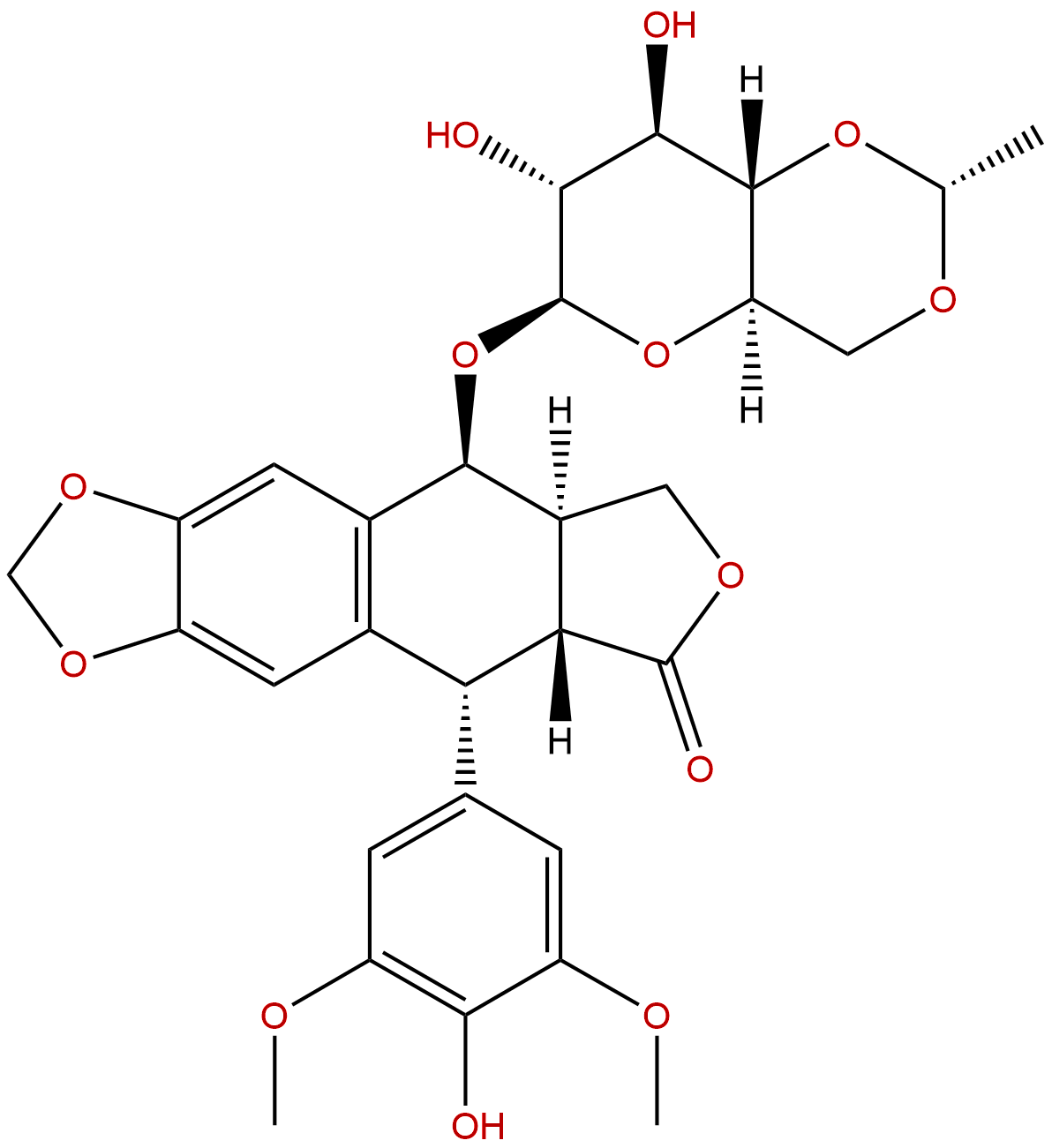
The chemical name of etoposide (CAS number: 33419-42-0) is 4 '- demethylated podophyllotoxin - β - D-ethylidene glucoside, with a molecular formula of C29H32O13 and a molecular weight of 588.5620. Its structure is based on key modifications of the natural Podophyllotoxin skeleton: firstly, the C-4 methoxy group is demethylated to form 4 '- demethylated podophyllotoxin; Secondly, change the configuration of C-1 from trans (podophyllotoxin) to cis (podophyllotoxin); Most importantly, a β - D-ethylidene glucopyranose side chain was introduced on the C-4 hydroxyl group. This series of structural modifications, especially the introduction of glycosides, fundamentally changed its mechanism of action, shifting from mainly inhibiting microtubule protein polymerization by podophyllotoxin to specifically targeting topoisomerase II.
From the analysis of physical and chemical properties, the lipid water partition coefficient (LogP) of etoposide is 1.1551, indicating that it has a certain lipophilicity, but not high lipophilicity. Its topological polar surface area (TPSA) is as high as 160.83 Å ², which is mainly attributed to the numerous oxygen atoms and glycosidic structures in the molecule, indicating that it has more hydrogen bond donor and acceptor sites. The water solubility data is 0.3607 mg/mL, which belongs to poorly soluble drugs, posing challenges to their formulation development (such as the need for solubilizers or special dosage forms) and oral bioavailability. These basic physicochemical parameters are the basis for its subsequent pharmacokinetic behavior and drug properties.
Plant sources and extraction methods
The semi synthetic precursor of etoposide, podophyllotoxin, mainly comes from the genus Podophyllotoxin in the Berberidaceae family(Podophyllum)A variety of plants, including the American sundew(Podophyllum peltatum, also known as Guijiu in shield leaf) and Xizang(Podophyllum hexandrum Also known as Tao'er Seven, it is the most important. These plants have traditionally been used to treat warts and certain skin diseases, and their anti-tumor activity has only been scientifically confirmed in modern times.
The extraction of podophyllotoxin is a multi-step process. Usually, after crushing the dried plant rhizomes, organic solvents such as methanol, ethanol, or chloroform are used for reflux extraction or percolation extraction. After concentration of the extraction solution, the difference in solubility of podophyllotoxin in different solvents is utilized for preliminary purification through liquid-liquid distribution (such as chloroform water system). Further purification is often carried out using silica gel column chromatography, with gradient elution using different ratios of organic solvent mixtures (such as chloroform methanol). High performance liquid chromatography (HPLC) or recrystallization method is used to obtain high-purity standard samples of podophyllotoxin.
The synthesis of etoposide starts from purified podophyllotoxin. The key steps include: 1) selective protection of the C-4 phenolic hydroxyl group; 2) Isomerize the C-1 configuration and introduce glycosidic bonds through chemical or biocatalytic methods, typically using fully acetylated glucose derivatives for glycosylation reaction under Lewis acid catalysis; 3) Remove the protective group and complete the demethylation of the C-4 'position (sometimes this step is performed before glycosylation); 4) Final purification and crystallization. Modern technology continuously optimizes the reaction conditions and purification methods of each step, aiming to improve the overall yield, reduce by-products, and meet the requirements of Good Manufacturing Practice (GMP) for drug production. Due to limited plant resources and slow growth, using plant cell culture or microbial synthetic biology techniques to produce precursor substances of podophyllotoxin has become a promising alternative research direction.
Pharmacological activity research
The core pharmacological activity of etoposide is its broad-spectrum anti-tumor effect. It is effective in various malignant tumors in clinical practice, including:
1. Small cell lung cancer (SCLC)Etoposide combined with platinum based drugs (such as cisplatin) is the first-line standard treatment for extensive SCLC with high efficacy.
2. Testicular germ cell tumor The BEP regimen composed of bleomycin and cisplatin is the cornerstone of curative chemotherapy.
3. malignant lymphoma Especially effective for Hodgkin lymphoma and non Hodgkin lymphoma (such as diffuse large B-cell lymphoma), it is often combined with other drugs (such as doxorubicin, cyclophosphamide, vincristine, prednisone) to form a combination regimen (such as CHOP-E).
4. acute leukemia Especially for acute myeloid leukemia (AML) and acute lymphocytic leukemia (ALL), used for induction and consolidation therapy.
5. Other solid tumors It also has certain therapeutic effects on gastric cancer, ovarian cancer, neuroblastoma, etc.
At the cellular and molecular levels, the pharmacological activity of etoposide exhibits multiple effects:
- cell cycle arrest Mainly blocking cells in the late S and G2 phases, this is the result of activating DNA damage checkpoints, providing a time window for cells to perform DNA repair or initiate apoptosis programs.
- Inducing cell apoptosis This is the primary endpoint of its anti-tumor effect. Etoposide activates the caspase cascade through endogenous (mitochondrial) and exogenous (death receptor) pathways, leading to programmed cell death.
- Induce autophagy Etoposide can activate cellular autophagy. Autophagy plays a double-edged sword role in this process, initially serving as a protective mechanism to clear damaged organelles, but excessive or sustained autophagy can also promote type II programmed cell death or cross talk with apoptotic pathways.
- Inhibition of angiogenesis and invasion/metastasis Research has shown that etoposide can downregulate the expression of hypoxia inducible factor-1 α (HIF1A) and matrix metalloproteinase-2 (MMP2), which may inhibit tumor angiogenesis and invasion and metastasis potential.
Mechanism of action and molecular targets
The mechanism of action of etoposide is as follows:Topoisomerase II (TOP2)Especially TOP2A subtype as the core target. TOP2 solves the problem of topological entanglement by temporarily cutting and reconnecting DNA double strands during processes such as DNA replication, transcription, and chromosome separation. Etoposide does not directly inhibit the catalytic activity of the enzyme, but acts as a "topoisomerase II toxin" to stabilize the covalent intermediate (i.e. cleavage complex) formed between the enzyme and the DNA break end, preventing the reconnection of the DNA break end.
This stable ternary complex is equivalent to introducing persistent, protein related DNA double strand breaks (DSBs) into the genome. These breaks are perceived by cells as severe DNA damage, which in turn activates a complex DNA damage response (DDR) network. If the damage cannot be repaired, it will ultimately trigger cell apoptosis.
In addition to the core target TOP2A, studies have revealed that the anti-tumor effect of etoposide involves a complex signaling network closely related to the provided multiple targets:
- Apoptosis regulatory targets DNA damage signals regulate the expression of pro apoptotic proteins (such as Bax) and anti apoptotic proteins through transcription factors such as p53. Etoposide can be down regulated BCL2 and MCL1 These two key anti apoptotic proteins lower the mitochondrial apoptosis threshold and promote the release of cytochrome C.
- signal transduction pathway DNA damage activates multiple kinase pathways.MAPK1 The ERK2 pathway may be involved in cell fate decision-making, and its sustained activation or inhibition affects cell survival.STAT3 As an important survival signal transcription factor, its activity may be inhibited under the action of etoposide, thereby weakening the expression of survival promoting genes.
- Hormones and metabolic related targets In hormone dependent tumors, etoposide may interfere ESR1(Estrogen receptor alpha) signal or influence CYP19A1 The activity of aromatase, but this part of the research is relatively minor and may be related to its therapeutic effect in specific tumor types.
- Other DNA damage related targets Although etoposide mainly acts on TOP2, it may also be associated with high concentrations TOP1 Topoisomerase I undergoes cross interaction or indirectly affects its function.HIF1A The inhibition is related to the tumor microenvironment and drug resistance.
In summary, the effect of etoposide begins with TOP2A mediated DNA damage, and then determines cell apoptosis, autophagy, or survival by affecting key signaling nodes such as BCL2 family balance, STAT3, MAPK, etc.
Evaluation of drug properties and pharmacokinetics
Based on the provided pharmacological parameters and existing research, the evaluation of etoposide is as follows:
Pharmaceutical advantages:
1. Strong target specificity As a TOP2 toxin, the mechanism is clear.
2. HERG inhibition negative The potential for it to cause prolonged QT interval in the heart (a serious risk of arrhythmia) is low, and its cardiovascular safety is relatively good.
3. Ames test negative(0.0): No mutagenicity was observed in the standard bacterial recovery mutation test, indicating that it is not a direct genotoxic substance (its genotoxicity is mainly mediated by stable TOP2 complexes, which cannot be detected by this test system).
4. Accurate clinical efficacy It has been proven to have therapeutic value in various types of tumors.
Drug Challenge:
1. Solubility and permeability Poor water solubility (0.36 mg/mL) and high TPSA value result in low oral bioavailability and large variability (about 25-75%), usually requiring intravenous administration. The oral preparation is a soft capsule containing a solubilizer.
2. Low blood-brain barrier permeability Difficult to treat central nervous system tumors or metastases.
3. Pharmacokinetic characteristics After intravenous administration, it shows biphasic elimination, with a half-life of about 0.5-2 hours for the distribution phase and about 4-11 hours for the elimination phase. Widely binds to plasma proteins in the body (approximately 94-97%). Mainly metabolized by the liver cytochrome P450 enzyme system (CYP3A4 as the main enzyme), inactive hydroxy acid derivatives and glucuronic acid conjugates are generated and excreted through bile and kidneys. When used in combination with CYP3A4 inducers or inhibitors, attention should be paid to drug interactions.
4. Main toxic side effects The dose limiting toxicity is myelosuppression(Decreased white blood cells and platelets). Other common side effects include hair loss, nausea and vomiting, and loss of appetite. Long term or high-dose use carries a risk of secondary leukemia (mainly associated with 11q23 chromosome translocation, i.e. TOP2 mediated chromosome breakage), which is the most severe long-term toxicity.
Clinical application prospects and prospects
Although etoposide has been clinically applied for decades, its research and development are still dynamic, and future directions mainly focus on the following aspects:
- Overcoming drug resistance The resistance mechanism of tumors to etoposide is complex, including downregulation or mutation of TOP2A expression, overexpression of drug efflux pumps (such as P-glycoprotein), enhanced DNA repair ability (such as upregulation of non homologous terminal junction repair), and defects in the apoptotic pathway. The combined use of P-glycoprotein inhibitors, DNA repair pathway inhibitors (such as PARP inhibitors, ATM/ATR inhibitors), or targeted anti apoptotic proteins (such as BCL2 inhibitor vinaclar) is currently being explored as a strategy.
- New formulations and drug delivery systems To improve water solubility, enhance targeting, and reduce systemic toxicity, researchers have developed liposomes such as etoposide, nanoparticles, and albumin bound prodrugs. These new formulations may enhance tumor tissue infiltration and retention (EPR effect), improve therapeutic efficacy, and may partially overcome the blood-brain barrier.
- Optimization of combination therapy strategy:
- Combined with immunotherapy Chemotherapy drugs may enhance the efficacy of immune checkpoint inhibitors (such as PD-1/PD-L1 antibodies) by inducing immunogenic cell death (ICD) and clearing immunosuppressive cells. Exploring the synergistic effect of etoposide and immunotherapy is a hot topic.
- Combined with targeted therapy As mentioned earlier, combination therapy with signaling pathway inhibitors (such as STAT3, MAPK) or epigenetic regulators may reverse drug resistance or enhance sensitivity.
- metronomic chemotherapy Adopting a low-dose, high-frequency administration mode may focus more on anti angiogenesis and regulating the immune microenvironment, making it suitable for maintenance therapy or elderly frail patients.
- Expand the field of diseases In addition to traditional tumors, the immunomodulatory effects of etoposide in autoimmune diseases such as lupus nephritis, primary sclerosing cholangitis, and certain proliferative diseases are being studied.
- Biological synthesis and structural optimization Utilizing synthetic biology techniques to sustainably produce precursors of podophyllotoxin, and developing novel podophyllotoxin analogs with lower toxicity, higher activity, or the ability to cross the blood-brain barrier through rational drug design.
Conclusion
Etoposide, as a modern anti-cancer star drug derived from traditional medicinal plants, is a model of successful transformation of natural products into clinical applications. It uses topoisomerase II as a molecular switch to induce DNA damage, interfere with key signaling pathways, and reshape cell fate, demonstrating the complexity of multi-target and multi-level pharmacological effects. Despite challenges in solubility, drug resistance, and long-term toxicity, the position of etoposide in combination chemotherapy regimens remains stable. In the future, by deeply analyzing its resistance mechanism, developing innovative formulations, exploring new combination therapies, and utilizing advanced technology for structural modification, it is expected to further expand its treatment boundaries and improve the clinical benefit risk ratio. The research process of etoposide continues to confirm that deep exploration and modernization of natural products are still important ways to discover new anti-cancer drugs and optimize existing therapies.