Introduction/Overview
Natural products, as an important source of drug discovery, play an indispensable role in maintaining human health and treating diseases. Phenolic acid compounds, as a widely distributed and structurally diverse class of secondary metabolites in plants, have attracted much attention due to their significant antioxidant, anti-inflammatory, anti-tumor, and metabolic regulatory activities. Quinic acid and its derivatives, especially a series of products formed by ester bonding with hydroxycinnamic acid compounds such as cinnamic acid, constitute a unique class of biologically active molecular libraries in nature. Among these derivatives, 4-O-Cinnamoylquinic acid (4-CQA) has gradually become a research hotspot in the field of natural product pharmacology due to its specific chemical structure and remarkable pharmacological activity.
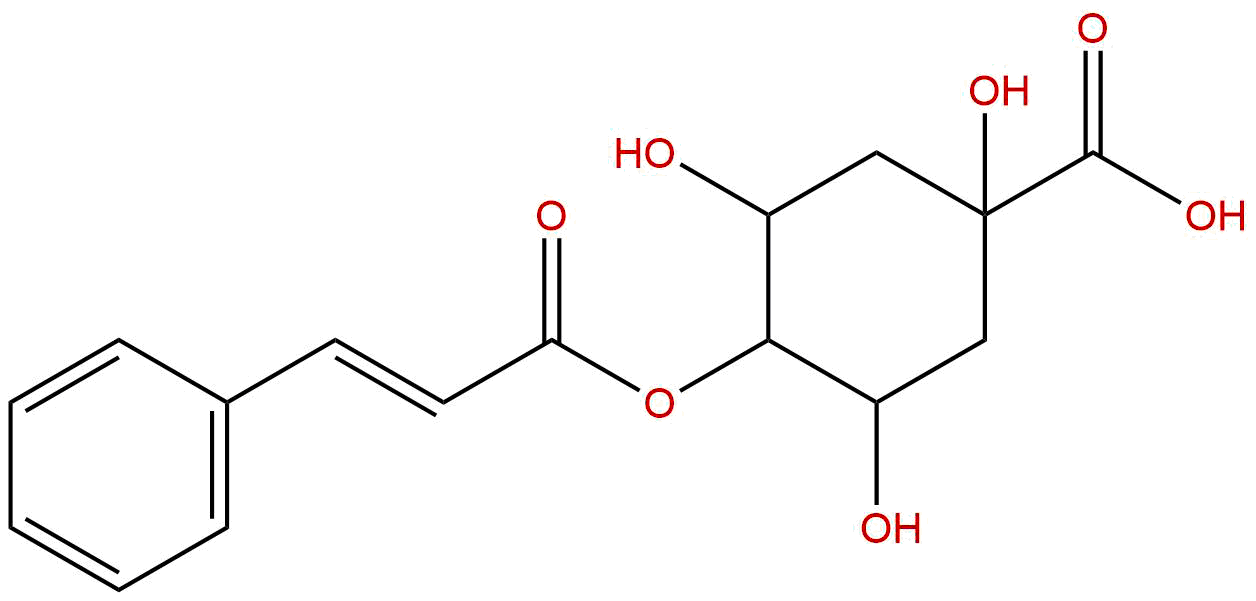
4-O-cinnamoylquinic acid, also known as (1S, 3R, 4R, 5R) -3- [(E) -3-phenylprop-2-enoxy] -1,4,5-trihydroxycyclohexane-1-carboxylic acid, is a mono substituted quinic acid ester formed by esterification of one molecule of quinic acid and one molecule of cinnamic acid at the 4-hydroxy position. Its CAS number is 5509-70-6. This compound mainly exists in various medicinal plants and daily edible plants in nature, such as honeysuckle(Lonicera japonica)Coffee(Coffea spp.)、 Purple cone chrysanthemum(Echinacea purpurea)And some fruits and vegetables. Early research mainly focused on its antioxidant capacity as an analog of chlorogenic acid (5-O-caffeoylquinic acid), but subsequent studies have found that 4-CQA exhibits more specific and powerful biological activity beyond ordinary antioxidants.
Of particular note is that 4-O-cinnamoylquinic acid has been found to significantly inhibit the generation of superoxide anions (O ₂⁻) in human neutrophils. Neutrophils are key effector cells of the innate immune system in the body, which produce large amounts of reactive oxygen species (ROS) through respiratory burst to kill pathogenic microorganisms. However, excessive or uncontrolled neutrophil activation can lead to tissue damage and participate in the occurrence and development of a variety of inflammatory diseases (such as acute lung injury, rheumatoid arthritis, atherosclerosis). Therefore, 4-CQA exhibits potential anti-inflammatory and cell protective effects by inhibiting neutrophil superoxide anion generation. In addition, recent studies have further revealed its enormous potential in metabolic regulation, especially in anti obesity. By regulating multiple key molecular targets related to fat production, energy metabolism, and appetite regulation, 4-CQA provides a new chemical entity and approach for the treatment of obesity and its related metabolic syndrome.
This article aims to provide a systematic professional review of 4-O-cinnamoylquinic acid, starting from its chemical structure and physicochemical properties, sorting out its plant sources and extraction methods, exploring its pharmacological activity, mechanism of action, and molecular targets in depth, evaluating its pharmacokinetic characteristics based on drug parameters, and finally looking forward to its clinical application prospects, in order to provide comprehensive scientific basis for the in-depth research and development of this natural product.
Chemical structure and physicochemical properties
The chemical structure of 4-O-cinnamoylquinic acid (4-CQA) is the basis of its biological activity. Its core skeleton is quinic acid, namely 1,3,4,5-tetrahydroxycyclohexane-1-carboxylic acid. Quinic acid molecules have four chiral centers (1R, 3R, 4R, 5R) that give them specific stereoisomers. In 4-CQA, cinnamic acid molecules undergo esterification reaction with the hydroxyl group at position 4 of the quinic acid ring through their carboxyl group, forming cinnamoyloxy substituents. The cinnamic acid portion contains a trans(E)The double bond in the configuration is connected to a benzene ring, which gives the molecule a certain degree of rigidity, hydrophobicity, and ability to interact with proteins. Therefore, the complete IUPAC name for 4-CQA is (1S, 3R, 4R, 5R) -3- [(E) -3-phenylprop-2-enoxy] -1,4,5-trihydroxycyclohexane-1-carboxylic acid. Its molecular formula is C ₁₆ H ₁₈ O ₈.
From the perspective of physical and chemical properties, the molecular weight of 4-CQA is 322.3130 g/mol. Its lipid water partition coefficient (LogP) is 0.4848, indicating that the compound has a certain degree of hydrophilicity, but also retains a certain degree of lipid solubility, which enables it to be appropriately distributed between hydrophilic extracellular fluid and hydrophobic biofilm. The topologically polar surface area (TPSA) is 124.2900 Å ², which is a relatively high value (usually TPSA>140 Å ² is considered to have poor oral absorption), indicating that the molecule contains a large number of polar groups (three hydroxyl groups, one carboxyl group, and one ester group), which are potential sites for hydrogen bonding and crucial for its binding to the target protein. The water solubility parameter is 3.9625 (LogS), indicating moderate solubility in water, which provides a basis for its transport and absorption in organisms.
In addition, key parameters in drug efficacy evaluation show that the blood-brain barrier (BBB) penetration ability of 4-CQA is relatively low, which may be due to its high polar surface area and molecular weight. This characteristic may have a double-edged sword effect for its use as an anti obesity or anti-inflammatory drug: on the one hand, low BBB permeability means a lower risk of central nervous system side effects; On the other hand, if its anti obesity effect involves central targets such as POMC neurons, it may be necessary to overcome this barrier through other routes of administration or prodrug design. The prediction result of hERG inhibition is' no ', indicating a low risk of cardiac toxicity, which is a positive indicator of drug efficacy. The Ames test result is 0.0, indicating that it has no mutagenicity in standard testing and a low risk of genetic toxicity. Overall, 4-CQA has good preliminary pharmacological characteristics, especially outstanding safety performance. However, its oral bioavailability may be limited by its high polarity and moderate water solubility, and further pharmaceutical research is needed to optimize it.
Plant sources and extraction methods
4-O-cinnamoylquinic acid is widely distributed in nature, but not all plants have high levels. It mainly exists in certain specific families and genera of plants, especially those species rich in phenolic acid compounds.
Main plant sources:
1. Caprifoliaceae: Honeysuckle flower(Lonicera japonica Thunb. and its related plants are one of the most famous sources of 4-CQA. Honeysuckle, as a traditional Chinese medicine, is commonly used for clearing heat and detoxifying. Its active ingredients include various quinic acid derivatives, such as chlorogenic acid, isochlorogenic acid, and 4-CQA. Research has shown that 4-CQA is one of the important antibacterial and anti-inflammatory components in honeysuckle.
2. Asteraceae: Plants of the genus Echinochloa(Echinacea spp.), Especially the purple cone chrysanthemum(E. purpurea)Narrow leaved Echinochloa purpurea(E. angustifolia)The aboveground and root parts also contain 4-CQA. Echinochloa purpurea is a widely used immunomodulatory agent internationally, with active ingredients including caffeoylquinic acid and cinnamoylquinic acid compounds.
3. Rubiaceae family: Coffee(Coffea The fruits and raw coffee beans of spp. are rich in various chlorogenic acid compounds, including a small amount of 4-CQA. Although chlorogenic acid (5-CQA) has the highest content in coffee, 4-CQA, as one of its isomers, also has biological activity.
4. Other sources: In addition, trace amounts have also been found in Solanaceae plants (such as potatoes and tomatoes), Umbelliferae plants (such as carrots), and certain fruits (such as apples and pears). Some traditional medicinal plants, such as buttercup(Hydrastis canadensis)Some plants in the Salvia genus have also been reported to contain 4-CQA.
Extraction and Separation Methods:
Due to the coexistence of 4-CQA with various phenolic acid compounds with similar structures in plants, its efficient extraction and purification are key research steps.
-
Extraction: The most commonly used extraction method is solvent extraction. Considering the good water and alcohol solubility of 4-CQA, water, methanol, ethanol, or their mixed solvents in different ratios are usually used as extractants. For example, using a 50% -80% methanol or ethanol aqueous solution for leaching or reflux extraction at room temperature or heating (40-60 ℃) can effectively extract 4-CQA from plant materials. In order to improve extraction efficiency and selectivity, modern technologies such as ultrasound assisted extraction (UAE) and microwave-assisted extraction (MAE) have also been widely used, which can increase yield and shorten time by disrupting cell walls and accelerating solvent permeation.
-
Separation and Purification: The crude extract contains a large amount of impurities and requires a series of chromatographic techniques for separation and purification.
- Liquid liquid extraction: Firstly, liquid-liquid extraction can be carried out using solvents of different polarities (such as petroleum ether, ethyl acetate, n-butanol) to preliminarily enrich the target compound. 4-CQA is usually enriched in the ethyl acetate or n-butanol extraction layer.
- Column chromatography: The most classic separation method is to use macroporous adsorption resin (such as D101, AB-8) column chromatography, which can remove strong polar impurities such as sugars and proteins by gradient elution with ethanol water solutions of different concentrations, and obtain a fraction rich in phenolic acids. Subsequently, silica gel column chromatography, polyamide column chromatography or Sephadex LH-20 gel column chromatography are used for further separation, and the separation is realized according to the difference of polarity or molecular size of the compound.
- High efficiency preparative liquid chromatography (Prep HPLC): This is the most effective method to obtain high-purity 4-CQA (usually>98%). By using a reverse phase C18 column with methanol water or acetonitrile water (often with a small amount of formic acid or acetic acid added to suppress tailing) as the mobile phase, 4-CQA can be accurately separated from other isomers (such as 3-CQA, 5-CQA) through isocratic or gradient elution. UV detectors are typically set at 320-330 nm (characteristic absorption of cinnamoyl groups) for monitoring.
Pharmacological activity research
The pharmacological activity research of 4-O-cinnamoylquinic acid has expanded from its initial antioxidant activity to multiple fields such as anti-inflammatory and anti obesity, demonstrating its multi effect characteristics.
1. Antioxidant activity:
This is the most fundamental pharmacological activity of 4-CQA. The conjugated double bond system between the phenolic hydroxyl group (derived from the quinic acid moiety) and cinnamoyl group in its molecular structure endows it with the ability to scavenge free radicals. Research has shown that 4-CQA can effectively scavenge 1,1-diphenyl-2-trinitrophenylhydrazine (DPPH) free radicals and 2,2 '- diazo-bis-3-ethylbenzothiazoline-6-sulfonic acid (ABTS) cationic free radicals, and exhibits reducing ability. Its antioxidant mechanism includes direct hydrogen supply, chelation of transition metal ions (such as Fe ² ⁺), and activation of intracellular antioxidant enzyme systems (such as superoxide dismutase (SOD) and glutathione peroxidase (GPx)). However, its antioxidant activity is usually weaker than that of chlorogenic acid (5-CQA), which may be related to the substitution position of the hydroxyl group on the quinic acid ring.
2. Anti inflammatory activity:
This is one of the most distinctive pharmacological activities of 4-CQA. As mentioned earlier, this compound has been clearly reported to inhibit the generation of superoxide anions (O ₂⁻) in human neutrophils. The respiratory burst of neutrophils relies on the assembly and activation of the NADPH oxidase (NOX) complex. 4-CQA may inhibit the production of O ₂⁻ by interfering with the phosphorylation or membrane translocation of key subunits of NOX complexes, such as p47phox and p67phox. In addition, studies have found that 4-CQA can inhibit the production of nitric oxide (NO) and prostaglandin E ₂ (PGE ₂) in macrophages stimulated by lipopolysaccharide (LPS), and downregulate the expression of inducible nitric oxide synthase (iNOS) and cyclooxygenase-2 (COX-2). In animal models, 4-CQA can alleviate carrageenan induced foot swelling in rats and xylene induced ear swelling in mice, demonstrating significant in vivo anti-inflammatory effects.
3. Anti obesity activity:
This is the most notable area of 4-CQA research in recent years. Multiple in vitro and in vivo experiments have confirmed its anti obesity potential.
* Inhibition of adipocyte differentiation: In the 3T3-L1 preadipocyte model, 4-CQA can dose dependently inhibit adipocyte differentiation and lipid accumulation. Oil red O staining and triglyceride content determination both confirmed its inhibitory effect.
* Regulating energy metabolism: In obese animal models such as high-fat diet induced obese mice, oral or intraperitoneal injection of 4-CQA can significantly reduce body weight, decrease white adipose tissue (WAT) weight, and improve insulin resistance and dyslipidemia (reducing total cholesterol, triglycerides, low-density lipoprotein, and increasing high-density lipoprotein).
* Promote fat thermogenesis: 4-CQA has been found to upregulate the expression of uncoupling protein 1 (UCP1) in brown adipose tissue (BAT) and white adipose tissue, promoting browning of white adipose tissue and increasing energy expenditure. Meanwhile, it can also activate the AMP activated protein kinase (AMPK) signaling pathway, promoting fatty acid oxidation.
4. Other activities:
* Antimicrobial activity: It has inhibitory effects on certain bacteria (such as Staphylococcus aureus, Escherichia coli) and fungi.
* Liver protective activity: It has a protective effect on liver injury models induced by carbon tetrachloride (CCl ₄) or acetaminophen, which may be related to antioxidant and anti-inflammatory mechanisms.
* Neuroprotective activity: In vitro neuronal cell models have shown the ability to counteract oxidative stress-induced cell apoptosis.
Mechanism of action and molecular targets
The pharmacological activity of 4-O-cinnamoylquinic acid is achieved through multi-target and multi pathway network regulation, especially in the field of anti obesity, and its mechanism of action has been extensively studied.
1. Anti obesity mechanism and molecular targets:
According to the provided target information, the anti obesity effect of 4-CQA involves the following key molecules and signaling pathways:
- PPARG (Peroxisome proliferator activated receptor gamma): PPARG is the main transcription factor for adipocyte differentiation. 4-CQA has been found to be able to inhibit The expression and transcriptional activity of PPARG. This is the core mechanism by which it inhibits the differentiation of preadipocytes into mature adipocytes. By downregulating PPARG, the expression of downstream target genes such as FASN and FABP4 can be inhibited.
- SREBF1 (sterol regulatory element binding transcription factor 1): SREBF1 is an important transcription factor that regulates the synthesis of fatty acids and triglycerides. 4-CQA can lower The expression of SREBF1 reduces the expression of fatty acid synthase (FASN) and inhibits de novo fat synthesis(de novo lipogenesis)。
- FASN (fatty acid synthase): As a target gene of SREBF1, FASN is a key enzyme in fatty acid synthesis. 4-CQA indirectly inhibits SREBF1 lower The protein and mRNA levels of FASN reduce lipid accumulation in adipocytes.
- LEPR (leptin receptor) and LEP (leptin): Leptin is a hormone secreted by adipocytes that inhibits appetite and increases energy expenditure by acting on LEPR in the hypothalamus. In the state of obesity, leptin resistance often occurs. 4-CQA may pass through raise The expression of LEPR or improvement of leptin signaling (such as enhancing STAT3 phosphorylation) can restore leptin sensitivity and regulate energy balance. Meanwhile, it may also regulate the expression of LEP itself.
- ADRB3 (β 3-adrenergic receptor): ADRB3 is mainly expressed in adipose tissue, especially in BAT, and its activation can promote fat breakdown and thermogenesis. 4-CQA may pass through raise The expression or enhancement of ADRB3 signaling activates downstream cAMP/PKA pathways, thereby activating hormone sensitive lipase (HSL) and UCP1.
- UCP1 (uncoupling protein 1): UCP1 is a key molecule for heat generation in BAT, which converts chemical energy into thermal energy by uncoupling the mitochondrial respiratory chain and synthesizing ATP. 4-CQA has been proven to be able to Significantly upregulated The expression of UCP1 not only promotes the thermogenic activity of BAT, but also induces the appearance of beige adipocytes in WAT, that is, white adipose browning. This process is an important mechanism for increasing overall energy expenditure and combating obesity.
- FABP4 (Fatty Acid Binding Protein 4): FABP4 is the main fatty acid chaperone protein in adipocytes, involved in the uptake, transport, and storage of fatty acids. As a target gene of PPARG, 4-CQA inhibits PPARG,lower FABP4 expression reduces the deposition of fatty acids in adipocytes.
- ADIPOQ (Adiponectin): Adiponectin is a adipokine secreted by adipocytes that has insulin sensitizing and anti-inflammatory effects. Unlike leptin, obese individuals typically have lower levels of adiponectin in their bodies. 4-CQA may pass through raise The expression of ADIPOQ improves insulin resistance and metabolic disorders.
- POMC (POMC): POMC is a precursor protein expressed by a class of neurons (POMC neurons) in the hypothalamic arcuate nucleus. After processing, it produces alpha melanocyte stimulating hormone (α - MSH) and other hormones, which activate MC4R receptors to suppress appetite and increase energy expenditure. 4-CQA may pass through raise The expression of POMC enhances central appetite suppression signals.
2. Anti inflammatory mechanism:
* Inhibition of NADPH oxidase: As mentioned earlier, 4-CQA directly inhibits the activity of NADPH oxidase in neutrophils and reduces the generation of superoxide anions.
* Inhibition of NF - κ B pathway: 4-CQA can inhibit LPS induced phosphorylation and degradation of I κ B α, thereby preventing nuclear translocation of NF - κ B p65 subunit and downregulating the expression of downstream pro-inflammatory factors (such as TNF - α, IL-6, IL-1 β) and enzymes (iNOS, COX-2).
* Activate Nrf2 pathway: As the main regulator of antioxidant defense, activation of Nrf2 can induce the expression of a series of antioxidant enzymes such as HO-1 and NQO1. 4-CQA may indirectly exert anti-inflammatory effects by activating the Nrf2 pathway, enhancing cellular antioxidant defense capabilities.
Evaluation of drug properties and pharmacokinetics
Based on the provided pharmacological parameters and existing literature, a comprehensive evaluation of the pharmacological properties of 4-O-cinnamoylquinic acid is conducted.
1. Analysis of pharmacological parameters:
* Molecular weight and LogP: The molecular weight is 322.31 Da (<500 Da), with a LogP of 0.48 (between -0.4 and 5.6), which conforms to the Lipinski Five Rules, indicating that it has good oral absorption potential. A lower LogP value also suggests good water solubility, which is beneficial for formulation development.
* TPSA and BBB: TPSA 124.29 Å ² (>140 Å ² is considered poor absorption, but<140 Å ² is acceptable), with low BBB penetration. This limits the direct action of central nervous system targets, but reduces the risk of central side effects. For the anti obesity effect mediated by peripheral targets such as adipose tissue and liver, low BBB permeability may not be a disadvantage.
* Security: The inhibition of hERG is' no ', and the Ames test is 0.0, indicating that its cardiotoxicity and genotoxicity risks are extremely low, and its safety is good, which is its outstanding advantage as a candidate drug.
2. Pharmacokinetic characteristics:
At present, there is relatively limited pharmacokinetic research on 4-CQA, but it can be inferred from studies on its structural analogues such as chlorogenic acid.
* Absorption: After oral administration, 4-CQA is mainly absorbed in the small intestine. However, due to its high polarity and limited passive diffusion ability, its oral bioavailability may be low (usually the oral bioavailability of chlorogenic acid is less than 5%). Its absorption may partially depend on carrier mediated transport (such as monocarboxylic acid transporters MCTs). In addition, the gut microbiota will hydrolyze it into quinic acid and cinnamic acid, the latter of which can be further metabolized.
* Distribution: After absorption, 4-CQA is mainly distributed in plasma and extracellular fluid. Due to its low BBB permeability, its distribution in the central nervous system is limited. It may bind to plasma proteins such as albumin.
* Metabolism: The metabolic pathways of 4-CQA mainly include: ① hydrolysis by esterases in the intestine and liver to produce quinic acid and cinnamic acid; ② Cinnamic acid can undergo II phase metabolic reactions such as β - oxidation, methylation, sulfation, or glucuronidation; ③ Quinic acid may also be further metabolized or excreted.
* Excretion: It is mainly excreted in the form of metabolites through urine and bile. The excretion of prototype drugs is usually very low.
3. Optimization strategy for drug properties:
Considering its potential low oral bioavailability, the following strategies can be considered to enhance the pharmacological properties of 4-CQA:
* Pre drug design: Esterify or etherifie the carboxyl or phenolic hydroxyl groups of 4-CQA to prepare prodrugs, in order to improve their lipid solubility and membrane permeability. For example, preparing acetoxymethyl ester (POM) prodrug.
* Formulation technology: By using technologies such as nanoliposomes, phospholipid complexes, solid dispersions, or self microemulsifying drug delivery systems (SMEDS), their solubility and oral absorption can be improved.
* Structural modification: Under the premise of maintaining core activity, structural modification of the benzene ring or quinic acid ring of cinnamoyl group is carried out to optimize its pharmacokinetic properties and target selectivity.
Clinical application prospects and prospects
4-O-cinnamoylquinic acid has shown broad clinical application prospects in multiple disease fields due to its unique pharmacological activity spectrum and good safety.
1. Metabolic diseases:
* Obesity: This is the most promising application direction for 4-CQA. It is expected to develop into a novel, multi-target anti obesity drug through multiple mechanisms such as inhibiting fat production (PPARG/SREBF1/FASN), promoting fat thermogenesis (UCP1/ADRB3), improving leptin resistance (LEPR), and regulating appetite (POMC). Compared with existing weight loss drugs such as orlistat and liraglutide, 4-CQA may have the advantage of fewer side effects (such as no gastrointestinal reactions and low cardiac toxicity).
* Type 2 diabetes and metabolic syndrome: By improving insulin resistance (up regulation of ADIPOQ), regulating blood lipids (reduction of FASN activity) and reducing inflammation, 4-CQA can be used as an auxiliary drug to treat type 2 diabetes and its complications.
2. Inflammatory diseases:
* Acute and chronic inflammation: Its strong ability to inhibit neutrophil superoxide anion generation makes it potentially valuable in the treatment of neutrophil mediated inflammatory diseases such as acute lung injury, ischemia-reperfusion injury, rheumatoid arthritis, and inflammatory bowel disease.
* Cardiovascular disease: Atherosclerosis is essentially a chronic inflammatory process. The antioxidant, anti-inflammatory and lipid regulating effects of 4-CQA help to delay the progress of atherosclerosis.
3. Other fields:
* Liver protection: Used for the treatment of non-alcoholic fatty liver disease (NAFLD) and drug-induced liver injury.
* Neurodegenerative diseases: Although BBB has low permeability, its anti-inflammatory and antioxidant effects may be beneficial for certain peripheral central neuroinflammatory diseases such as multiple sclerosis. After improving BBB permeability through nanomaterials and other technologies, it may also be used for Alzheimer's disease or Parkinson's disease.
Outlook:
Despite the promising prospects, the clinical translation of 4-CQA still faces challenges. Future research should focus on:
1. In depth pharmacokinetic studies: It is necessary to systematically study its absorption, distribution, metabolism, and excretion (ADME) processes in animals and humans to determine whether its metabolites are active.
2. Refined analysis of the mechanism of action: Using gene knockout/knock in mice ChIP-seq、 Proteomics and other technologies are used to accurately elucidate its direct binding mode with key targets such as PPARG and SREBF1.
3. Preclinical safety evaluation: Conduct comprehensive toxicological studies on long-term toxicity, reproductive toxicity, carcinogenicity, and other related topics.
4. Drug delivery system development: Develop efficient and safe nano formulations or prodrugs to address the bottleneck of low oral bioavailability.
5. Clinical trials: After completing sufficient preclinical research, design rigorous Phase I, II, and III clinical trials to validate its effectiveness and safety in indications such as obesity and inflammation.
Conclusion
4-O-cinnamoylquinic acid, as a naturally occurring phenolic acid compound, has a unique chemical structure and possesses dual pharmacophores of quinic acid and cinnamic acid. It not only has basic antioxidant activity, but also exhibits specific and powerful pharmacological effects in inhibiting neutrophil superoxide anion generation and anti obesity. By regulating a series of key molecular targets related to fat metabolism, energy balance, and appetite regulation, such as PPARG, SREBF1, FASN, UCP1, LEPR, ADIPOQ, POMC, etc., 4-CQA forms a multi-target and multi-level anti obesity network. Its good pharmacological parameters, especially low cardiac toxicity and low genetic toxicity, have laid a safety foundation for its drug development. Despite challenges such as oral bioavailability, these issues are expected to be addressed through strategies such as prodrug design and novel formulation technologies. In the future, with the in-depth analysis of its mechanism of action and advances in drug development technology, 4-O-cinnamoylquinic acid is expected to transform from a natural product research hotspot to an innovative drug for treating obesity, inflammation, and related metabolic disorders, contributing to human health.