Introduction/Overview
Chemical damage refers to the functional impairment and structural destruction of cells, tissues, or organs caused by exogenous or endogenous chemicals. It is the core pathological link of various acute and chronic diseases, such as drug-induced liver injury, chemical poisoning, and environmental toxin exposure related diseases. The mechanism of its occurrence is complex, usually involving imbalances in multiple biological processes such as oxidative stress, inflammatory response, metabolic disorders, and cell apoptosis. In the cellular defense system, enzyme systems represented by NQO1, SOD1, CAT, CYP2E1, GSTP1, etc. play a crucial role. Therefore, the search for active compounds that can multi-target regulate these key defense factors and safely and effectively alleviate chemical damage has become one of the hotspots in modern pharmacological research. In recent years, the discovery of natural products with clear chemical structures and significant biological activities from traditional medicinal plants has provided a rich source of lead compounds for the development of new drugs. Negsehisaandrin G, a lignan compound isolated from plants of the Schisandra genus, is receiving increasing attention from researchers due to its unique pharmacological activity and multi-target action characteristics in combating chemical damage. This article aims to systematically review the chemical structure, plant origin, pharmacological activity, mechanism of action, and potential medicinal properties of Schisandrin G from Diancang, in order to provide comprehensive scientific references for the in-depth research and development of this compound.
Chemical structure and physicochemical properties
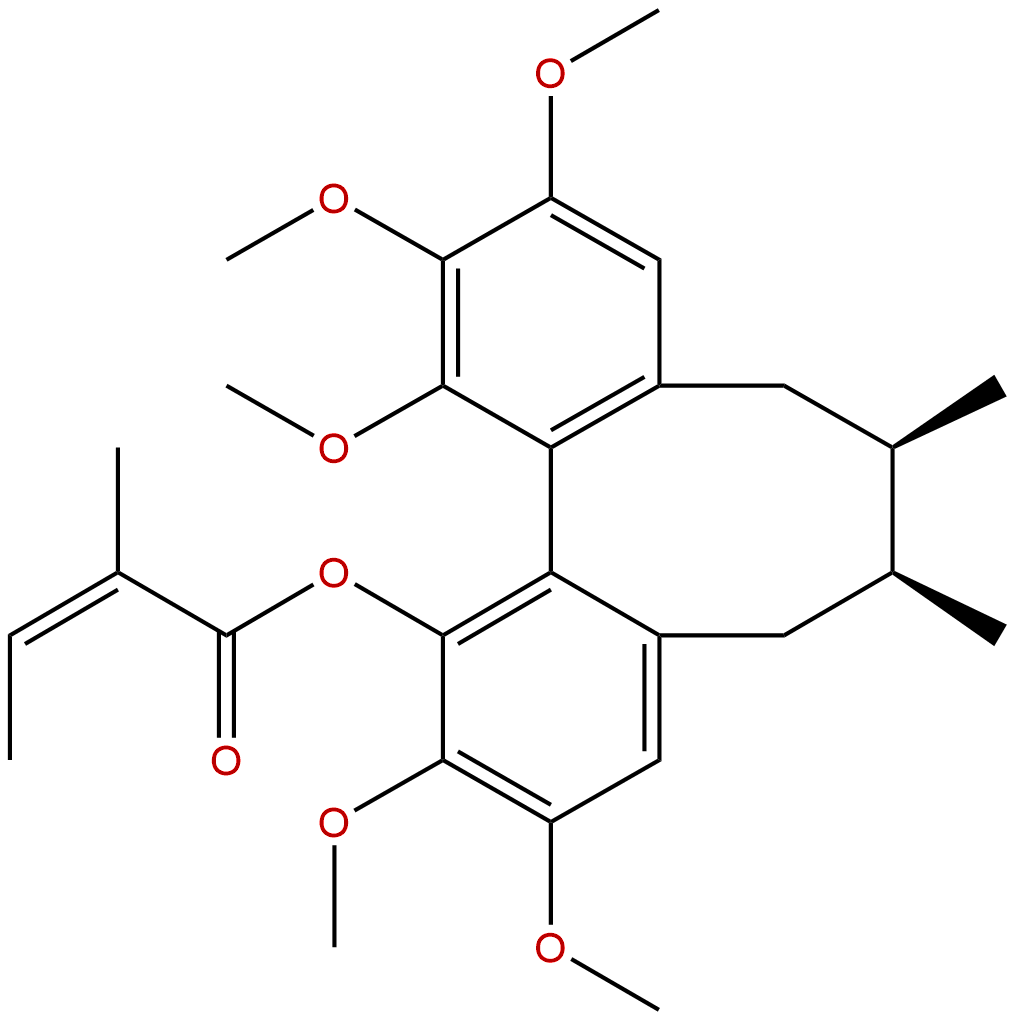
The CAS number of Dianzang Wuwei andrin G is 1023744-69-5, and its chemical structure belongs to the biphenyl cyclooctene lignans, which are characteristic components of Schisandra plants. This type of compound typically consists of two phenylpropanoid units connected by C-C bonds to form a unique octacyclic (cyclooctadiene) skeleton, often accompanied by multiple methoxy substitutions. The specific stereoconfiguration and substitution mode of schisandrin G in Dianzang determine its unique biological activity.
According to its pharmacological parameters, the molecular weight of the compound is 484.5890, which belongs to the category of medium molecular weight compounds. The calculated lipid water partition coefficient (LogP) is 5.6897, indicating its strong lipophilicity. The topological polar surface area (TPSA) is 72.4500 Å ², which is relatively low. These parameters collectively determine its extremely low water solubility (approximately 0.0021 mg/mL), which may be a key consideration in its oral absorption and formulation development. It is worth noting that the predictive model shows a high blood-brain barrier permeability, suggesting that it may have a potential protective effect against chemical damage related to the central nervous system. In the early safety evaluation indicators, the compound did not show hERG potassium channel inhibitory activity (low risk of arrhythmia), and the Ames test result was 0.0, indicating no significant genetic toxicity risk, laying a good safety foundation for its further development.
Plant sources and extraction methods
The main source of schisandrin G in Yunnan Tibet is from the Schisandraceae family, Schisandraceae genus(Schisandra)Plants. This genus of plants is widely distributed in East Asia. In traditional Chinese medicine, Schisandra chinensis is commonly known as Schisandra chinensis(Schisandra chinensis)And Dianzang Schisandra chinensis(Schisandra neglecta)These varieties are often used for liver protection, antioxidant, anti-inflammatory and other purposes. Dianzang Schisandrin G was initially isolated and identified from dried fruits or vine stems of plants such as Dianzang Schisandra.
Its extraction and separation usually follow the conventional process of natural product chemistry. Firstly, the dried plant material is crushed and subjected to reflux extraction or cold soaking extraction using organic solvents such as methanol, ethanol, or acetone to obtain the crude extract. After vacuum concentration, the crude extract was subjected to systematic solvent extraction using solvents such as petroleum ether, ethyl acetate, and n-butanol, and was preliminarily separated based on polarity. Dianzang Schisandrin G is usually enriched in the ethyl acetate extraction site due to its equipolarity and strong lipophilicity. Further purification relies on various chromatographic techniques, including silica gel column chromatography, reverse phase silica gel (such as ODS) column chromatography, and high performance liquid chromatography (HPLC). By using techniques such as nuclear magnetic resonance (NMR, including 1H-NMR, 13C-NMR, 2D-NMR), mass spectrometry (MS), and X-ray single crystal diffraction, the planar structure and stereoconfiguration were ultimately determined. Optimizing the extraction process (such as ultrasound assisted extraction, microwave-assisted extraction) and adopting modern separation techniques such as high-speed countercurrent chromatography can help improve the yield and purity of the compound.
Pharmacological activity research
Numerous in vitro and in vivo pharmacological studies have shown that the core pharmacological activity of Diancang Schisandrin G is focused on combating chemical damage, particularly in liver protection.
1. Antioxidant activation: In various chemical injury models, such as acetaminophen, carbon tetrachloride, and alcohol induced liver cell injury, Dianzang Schisandrin G can significantly reduce the levels of intracellular reactive oxygen species (ROS) and malondialdehyde (MDA), while increasing the activity of superoxide dismutase (SOD), glutathione peroxidase (GSH Px), and the content of reduced glutathione (GSH). This indicates that it can effectively enhance the antioxidant defense ability of cells and alleviate oxidative stress damage.
2. Anti inflammatory activity: Chemical damage is often accompanied by strong inflammatory reactions. Research has shown that Schisandrin G from Diancang can inhibit the excessive production of pro-inflammatory factors such as nitric oxide (NO), prostaglandin E2 (PGE2), tumor necrosis factor - α (TNF - α), interleukin-6 (IL-6), etc. in macrophages stimulated by lipopolysaccharide (LPS) or toxic substances. Its anti-inflammatory effect is closely related to the inhibition of the activation of inflammatory signaling pathways such as nuclear factor kappa B (NF - κ B) and mitogen activated protein kinase (MAPK).
3. Anti apoptotic and necrotic activity: In the liver cell injury model induced by hepatotoxic agents, treatment with Diancang Schisandrin G can significantly reduce the apoptosis rate of cells. The mechanism involves upregulating the expression of anti apoptotic protein Bcl-2, downregulating the expression of pro apoptotic protein Bax, inhibiting the activation of caspase-3, and thus blocking mitochondrial pathway induced cell apoptosis. At the same time, it can also alleviate cell necroptosis.
4. Metabolic regulatory activity: This compound has a regulatory effect on drug metabolizing enzymes and can affect the metabolic activation or detoxification process of chemical toxins, which is related to its regulation of the CYP450 enzyme system (especially CYP2E1).
Mechanism of action and molecular targets
The anti chemical damage effect of Dianzang Schisandrin G is not achieved through a single target, but exhibits the characteristics of multi-target and multi pathway synergy, with its core mechanism revolving around the regulation of key defense enzyme systems.
1. Activate the Nrf2/ARE antioxidant pathway: This is the central link in its antioxidant and cell protective effects. Dianzang Schisandrin G can promote the translocation of transcription factor Nrf2 (nuclear factor E2 related factor 2) from the cytoplasm to the nucleus. In the nucleus, Nrf2 binds to antioxidant response elements (ARE) and initiates gene transcription of a series of downstream phase II detoxifying enzymes and antioxidant proteins. Research has confirmed that Schisandrin G from Dianzang can be significantly upregulated NQO1 (NAD (P) H: quinone oxidoreductase 1)、GSTP1 (Glutathione S-transferase P1)Expression of heme oxygenase-1 (HO-1). NQO1 catalyzes the double electron reduction of quinones to prevent oxidative stress; GSTP1 promotes the binding of glutathione and electrophilic toxins, enhancing detoxification ability.
2. Directly or indirectly enhance endogenous antioxidant enzyme activity: In addition to inducing expression through the Nrf2 pathway, Diancang Schisandrin G can also directly or indirectly enhance expression SOD1 (Superoxide Dismutase 1, Copper Zinc Superoxide Dismutase) and CAT (catalase) The activity. SOD1 is responsible for converting superoxide anions (O2 •−) into hydrogen peroxide (H2O2), while CAT decomposes H2O2 into water and oxygen, which together form the first line of defense for clearing ROS. Compounds may exert their effects by stabilizing the conformation of these enzymes or reducing their oxidative inactivation.
3. Inhibit the toxic metabolic enzyme CYP2E1: Cytochrome P450 2E1(CYP2E1)It is a key enzyme that metabolically activates various pre toxins (such as carbon tetrachloride, acetaminophen, alcohol) as active intermediates, and its catalytic cycle itself also generates a large amount of ROS. Dianzang Schisandrin G has been shown to inhibit the enzymatic activity or downregulate the expression of CYP2E1, thereby reducing the generation of toxic metabolites and accompanying oxidative stress at the source.
4. Regulating inflammation and apoptosis signaling pathways: As mentioned earlier, its anti-inflammatory effect is related to the inhibition of NF - κ B and MAPK (such as JNK, p38) pathways. The anti apoptotic effect is mainly achieved by regulating the Bcl-2/Bax ratio and inhibiting the caspase cascade reaction. The regulation of these pathways may have a cross-talk with the activation of Nrf2, for example, the activation of Nrf2 can indirectly inhibit the activity of NF - κ B, forming a synergistic protective network.
In summary, Dianzang Schisandrin G achieves comprehensive protection against chemical damage through a multi-level and networked mechanism of "inhibiting toxin activation (regulating CYP2E1) - enhancing direct clearance (activating SOD1, CAT) - promoting detoxification binding (inducing GSTP1, NQO1) - inhibiting secondary damage (anti-inflammatory, anti apoptotic)".
Evaluation of drug properties and pharmacokinetics
Based on its physicochemical properties and preliminary biological data, a preliminary evaluation of the pharmacological properties of Dianzang Schisandrin G was conducted.
Advantage:
1. Clear activity, multi-target effect: The core pathological processes of chemical damage (oxidative stress, metabolic activation, inflammation, apoptosis) have multiple regulatory effects, which may produce synergistic therapeutic effects and reduce the risk of drug resistance.
2. Preliminary safety assessment is good: The absence of hERG inhibition and genotoxicity warnings has reduced key safety barriers for its preclinical and clinical development.
3. High blood-brain barrier permeability: This characteristic gives it unique potential in protecting the central nervous system from neurotoxic substances such as certain chemotherapy drugs and environmental toxins.
Challenges and unknowns:
1. Contradiction between solubility and permeability: The high LogP value (5.6897) and extremely low water solubility (0.0021 mg/mL) are the main challenges faced by its oral administration. Although high lipophilicity is beneficial for cell membrane penetration and absorption, poor water solubility severely limits its dissolution in gastrointestinal fluids, which may lead to low oral bioavailability. Developing appropriate formulation strategies (such as nanocrystals, solid dispersions, liposomes, cyclodextrin inclusion complexes, etc.) is the key to solving this problem.
2. Lack of pharmacokinetic data: The currently available systematic pharmacokinetic studies on Schisandrin G from Diancang, including absorption, distribution, metabolism, and excretion processes, are very limited. It is necessary to conduct in-depth research on its absolute bioavailability, plasma protein binding rate, tissue distribution characteristics (especially its high BBB permeability in vivo), main metabolic pathways (whether it involves CYP450 enzyme metabolism, and whether it is an enzyme inhibitor or inducer), and excretion mode in animals. These data are crucial for determining dosing regimens and evaluating potential drug interactions.
3. In vivo efficacy verification needs to be strengthened: Existing research has mostly been conducted in cell models and animal models of acute chemical injury, and further validation is needed in chronic injury models that are closer to human diseases, as well as in models used in combination with other drugs.
Clinical application prospects and prospects
Dianzang Schisandrin G, as a natural compound with a clear multi-target protective mechanism, has a clinical application prospect mainly focused on the prevention and treatment of chemical injury related diseases.
Potential application directions:
1. Prevention and treatment of drug-induced liver injury (DILI): As a candidate ingredient for hepatoprotective drugs, it is used to prevent or treat liver damage caused by anti tuberculosis drugs, antipyretic analgesics (such as acetaminophen), anti-tumor drugs, etc. Can be explored as an adjuvant chemotherapy drug to reduce liver toxicity.
2. Adjuvant treatment for alcoholic and non-alcoholic fatty liver disease: Through its multiple effects such as antioxidant, anti-inflammatory, inhibition of CYP2E1, and regulation of lipid metabolism, it may have an intervention effect on the development of alcoholic and non-alcoholic liver disease.
3. Detoxification assistance for chemical poisoning: For acute poisoning caused by environmental pollutants and industrial toxins (such as carbon tetrachloride), it may be used as an auxiliary antidote.
4. Neurological protection: Develop drugs for preventing or treating central nervous system damage caused by neurotoxic substances (such as certain chemotherapy drugs, heavy metals, organic solvents) by utilizing their high BBB permeability.
5. As a lead compound for structural optimization: Based on its active skeleton, structural modification can be carried out through medicinal chemical methods to improve its water solubility and pharmacokinetic properties, while retaining or enhancing its multi-target activity, which is expected to obtain more valuable candidate drugs for development.
Future research prospects:
1. In depth mechanism research: Further precise identification of its direct target using chemical biology methods such as molecular probes and proteomics, elucidating the upstream molecular events that activate pathways such as Nrf2.
2. System drug development: Key breakthroughs in formulation bottlenecks, conducting systematic preclinical pharmacokinetic and safety evaluations (including long-term toxicity, reproductive toxicity, etc.).
3. Exploring the potential of combination therapy: Study the combined application effect and interaction with known hepatoprotective drugs or other therapeutic drugs.
4. Conduct clinical research: After completing sufficient preclinical research, gradually advance clinical trials to verify its safety and effectiveness in humans.
Conclusion
Dianzang Schisandrin G is a biphenyl cyclooctene lignan isolated from the traditional medicinal plant Schisandra genus. Research has shown that this compound exhibits significant pharmacological activity in combating chemical damage through multi-target and multi pathway synergistic effects. Its core mechanism involves activating the Nrf2/ARE pathway to induce phase II enzymes such as NQO1 and GSTP1, enhancing endogenous antioxidant enzyme activity such as SOD1 and CAT, inhibiting CYP2E1 mediated toxin metabolism activation, and synergistically regulating inflammation and apoptosis signaling pathways. Although its extremely low water solubility is a major obstacle to overcome in the process of drug development, and systematic pharmacokinetic research is still needed, its clear multi-target mechanism of action, good preliminary safety characteristics, and high blood-brain barrier permeability make it have important development potential and research value in the prevention and treatment of drug-induced liver injury, chemical poisoning, and related neurological diseases. In the future, through innovative formulation technology, in-depth pharmacokinetic and toxicological evaluations, and rigorous clinical validation, Diancang Schisandrin G is expected to move from a potential natural active molecule to a candidate drug with practical application value, providing new strategies and choices for the prevention and treatment of chemical damage related diseases.