| Catalog No | Package | Original Price | Price | Inventory | Quantity | Operating |
|---|---|---|---|---|---|---|
| SBP04183-5mg | 5mg | $720.00 | Sign in |
|


Storage conditions:Short-term storage at 2~8℃, long-term storage at -20 ~ -80℃
101.9100
3.8075
3.8075
.0008
2.5324
9.5991
High
93.8102
3.9881
No
No
No
No
No
Yes
0.0
Yes
Yes
Yes
Yes
Natural products, as an important source of drug discovery, play an irreplaceable role in the long history of human fight against diseases. In traditional Chinese medicine, the dried and ripe fruits of Schisandra chinensis and its closely related species Schisandra sphenanthera are widely used in the fields of liver protection, calming the nerves, and cough relief. Its medicinal history can be traced back to the "Shennong Bencao Jing" more than two thousand years ago. Modern pharmacological research has revealed that the lignans rich in Schisandra chinensis are the main material basis for its various biological activities, among which Schisandra esters have attracted much attention due to their unique chemical structure and significant pharmacological activity.
Schisanterin D is a dibenzocyclooctadiene lignan isolated from the fruit of Schisandra chinensis in central China, and is an important member of the Schisandrin ester family. This compound was first isolated and identified in the 1980s, and its chemical structure has a typical biphenylcyclooctene skeleton, containing multiple chiral centers and substituent groups, endowing it with unique stereochemical characteristics and biological activity. With the deepening of research, Schisandra chinensis ester has shown various pharmacological potentials, especially in the fields of antiviral and hepatoprotective effects. Studies have shown that schisandrin has significant anti HIV replication activity, with its half effective concentration (EC50) reaching 0.5 μ g/mL, which makes it a potential lead compound in the research and development of anti AIDS drugs. At the same time, the compound can inhibit endothelin receptor B (ETBR) and exert hepatoprotective effects by regulating multiple signaling pathways, involving multiple biological processes such as oxidative stress, lipid metabolism, and inflammatory response.
In recent years, with the cross fusion of natural product chemistry, molecular pharmacology, and drug design, the research on Schisandra chinensis ester has gradually progressed from initial activity screening to molecular mechanism analysis and drug efficacy evaluation. This article will provide a systematic review of the research progress of Schisandra chinensis ester from the aspects of chemical structure, plant origin, pharmacological activity, molecular mechanism, pharmacokinetic properties, and clinical application prospects, in order to provide reference for the in-depth development and clinical translation of this natural product.
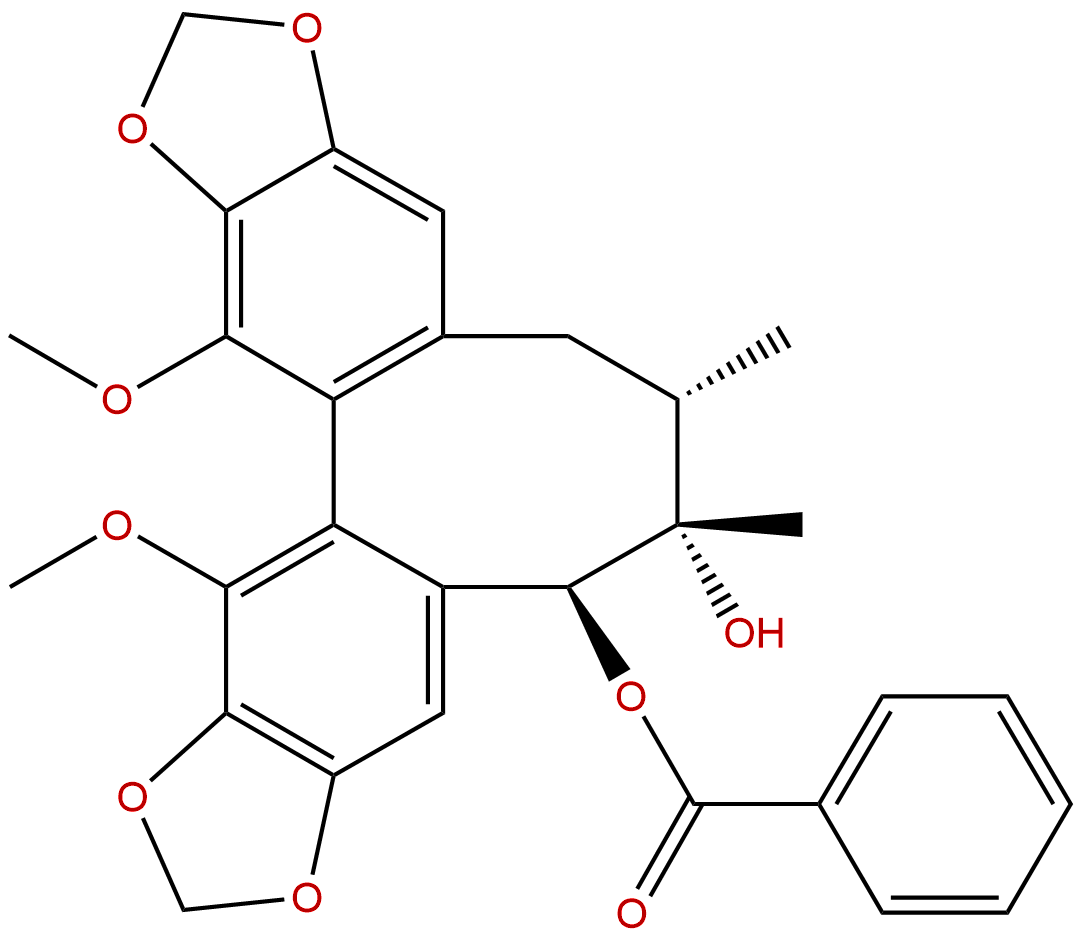
The chemical name of Schisanterin D is Schisanterin D, with a CAS registration number of 64917-82-4, a molecular formula of C28H32O10, and a molecular weight of 520.5340. From a structural classification perspective, Schisandra esters belong to the dibenzocyclooctadiene class of lignans, which is a characteristic secondary metabolite in Schisandra plants. Its core skeleton is composed of two benzene rings connected by an eight membered ring, forming a unique biphenyl structure. This rigid conformation endows the molecule with specific spatial arrangement and biological activity.
Specifically, the chemical structure of Schisandra esters includes the following features: multiple oxygen-containing substituents, including methoxy (- OCH3), hydroxyl (- OH), and one ester side chain, are present on the parent nucleus of biphenyl cyclooctene. Among them, the ester moiety is usually substituted with benzoyl or acetyl groups, which is a common structural feature of Schisandra esters. The presence of chiral centers endows schisandrin esters with optical activity, and their absolute configuration is crucial for their biological activity. The complete stereochemical information of the compound has been confirmed by nuclear magnetic resonance (NMR) and X-ray crystal diffraction analysis.
In terms of physicochemical properties, Schisandra esters exhibit typical lipophilic characteristics. Its oil-water partition coefficient (LogP) is 3.8075, indicating that the compound has strong lipid solubility, which is consistent with the presence of multiple aromatic rings and methoxy substituents in its molecule. The polar surface area (TPSA) is 101.9100 Å ², which is at a moderate level, indicating that the molecule has a certain polarity but overall tends to be hydrophobic. The water solubility data (0.0008 mg/mL) further confirms its extremely low water solubility, which may limit its absorption and bioavailability in vivo and is a key concern in drug development.
The stability of schisandrin esters is influenced by various factors. Under acidic conditions, ester bonds may undergo hydrolysis; In alkaline environments, phenolic hydroxyl groups may undergo ionization. Light exposure and high temperature may also cause structural degradation. Therefore, protective measures such as avoiding light and low temperature need to be taken during the extraction, separation, and storage processes. In addition, the compound can penetrate the blood-brain barrier (BBB penetration is "high"), which provides the possibility for its application in the treatment of central nervous system diseases, but may also pose potential neurotoxic risks.
Schisandra sphenanthera Rehd. et Wils. mainly comes from the dried and ripe fruits of Schisandra sphenanthera Rehd. et Wils. plants in the Schisandra genus. Huazhong Schisandra chinensis is mainly distributed in central and western China, including provinces such as Shaanxi, Gansu, Hubei, Sichuan, and Yunnan. Its fruit is often referred to as "South Schisandra chinensis" and has similar medicinal value to the fruit of Schisandra chinensis ("North Schisandra chinensis") in traditional medicine. It is worth noting that different origins, harvesting seasons, and processing methods can affect the content of schisandrin in plants. Research has shown that the accumulation of lignans in mature fruits is usually higher than in immature fruits, and the drying process (such as shade drying, sun drying, or oven drying) can also affect the retention rate of active ingredients.
In addition to Schisandra chinensis, other Schisandra plants such as S. chinensis, S. rubriflora, and S. henryi may also contain schisandrin esters, but the content is usually low. Therefore, Huazhong Schisandra chinensis is currently the main natural source for obtaining this compound. From the perspective of phytochemistry, the biosynthesis pathway of Schisandra esters in plants belongs to the phenylpropane metabolism pathway. Phenylalanine generated through the shikimic acid pathway undergoes a series of enzymatic reactions to form lignin monomers, which are then subjected to oxidative coupling and esterification modification to ultimately form Schisandra esters.
The classic methods for extracting schisandrin esters include organic solvent extraction, ultrasound assisted extraction, and microwave-assisted extraction. Traditionally, dried Schisandra fruit is crushed and subjected to cold soaking or hot reflux extraction using ethanol or methanol. The extract is then concentrated to obtain a crude extract. Due to the lipophilicity of schisandrin ester, using high concentration ethanol (70% -95%) as the extraction solvent can achieve high extraction efficiency. In recent years, researchers have developed various modern extraction techniques to improve extraction efficiency and selectivity
Ultrasound assisted extraction (UAE)By utilizing the cavitation effect of ultrasound to destroy plant cell walls, accelerate solvent permeation and solute diffusion, high extraction rates can be achieved in a short period of time (30-60 minutes), and the extraction temperature is low, which is beneficial for protecting thermosensitive components.
Microwave assisted extraction (MAE)By utilizing the penetrating and selective heating properties of microwaves, the internal temperature of plant cells rapidly increases, cell walls rupture, and active ingredients are rapidly released. This method has a short extraction time (usually 5-15 minutes) and requires a small amount of solvent, but attention should be paid to controlling the microwave power to avoid compound degradation.
Supercritical fluid extraction (SFE)Using supercritical CO2 as the extraction solvent, selective extraction of Schisandrin butyl can be achieved by adjusting the pressure and temperature to change the polarity of the solvent. This method is green and environmentally friendly, with no solvent residue, but the equipment cost is high, making it suitable for laboratory scale preparation.
The crude extract after extraction needs to undergo systematic separation and purification steps to obtain high-purity schisandrin ester. Common separation methods include silica gel column chromatography, reverse phase C18 column chromatography, preparative high-performance liquid chromatography (Prep HPLC), and high-speed countercurrent chromatography (HSCCC). Among them, HSCCC exhibits unique advantages in the preparation and separation of schisandrin esters due to its advantages such as no solid phase carrier, high sample recovery rate, and mild separation conditions. Usually, through the two-phase distribution of solvent systems such as n-hexane ethyl acetate methanol water, schisandrin esters can be effectively separated from other lignans such as schisandrin esters A, B, C, etc.
One of the most notable pharmacological activities of schisandrin is its anti HIV replication ability. In the 1990s, the National Cancer Institute (NCI) of the United States found that schisandrin can effectively inhibit the replication of HIV-1 in acute infected cells during the screening of natural products for anti HIV activity. Its EC50 is 0.5 μ g/mL (approximately 0.96 μ M), and the therapeutic index (TI) is high, demonstrating good selectivity. Further mechanistic studies suggest that Schisandrin may block the virus replication cycle by inhibiting the activity of HIV reverse transcriptase (RT) or integrase, but specific targets still need to be further validated. It is worth noting that the inhibitory activity of schisandrin ester Ding on HIV-1 is superior to its structural analogues schisandrin ester A and schisandrin ester B, indicating that the slight structural differences in the ester side chains have a significant impact on activity.
The hepatoprotective effect of schisandrin ester is the core manifestation of its traditional application, and modern research has confirmed this efficacy from multiple dimensions. In chemical liver injury models, such as the acute liver injury mouse model induced by carbon tetrachloride (CCl4), pretreatment with schisandrin can significantly reduce serum transaminase (ALT, AST) levels, alleviate liver cell necrosis and steatosis. In the alcoholic liver injury model, this compound can inhibit alcohol induced hepatocyte apoptosis and oxidative stress response. In addition, in the non-alcoholic fatty liver disease (NAFLD) model, schisandrin has shown the ability to improve liver lipid deposition and inflammatory response.
The endothelin system plays an important role in vascular regulation, cell proliferation, and fibrosis processes. Research has found that Schisandrin ester can specifically inhibit endothelin receptor B (ETBR), providing a new perspective for explaining its hepatoprotective and anti fibrotic effects. ETBR is highly expressed in hepatic stellate cells (HSCs), and its activation is closely related to the occurrence and development of liver fibrosis. Schisandrin ester may inhibit the activation of HSC and excessive deposition of extracellular matrix by blocking the ETBR signal, thereby delaying the process of liver fibrosis.
In addition to the main activities mentioned above, Schisandrin also exhibits potential for antioxidant, anti-inflammatory, and anti-tumor effects. In the oxidative stress model, this compound can scavenge free radicals and increase the activity of intracellular superoxide dismutase (SOD) and glutathione peroxidase (GPX). In an inflammatory model, Schisandrin can inhibit the production of nitric oxide (NO) and pro-inflammatory cytokines (such as TNF - α, IL-6) in macrophages induced by lipopolysaccharide (LPS). In addition, preliminary studies have shown that schisandrin ester Ding has a proliferation inhibitory effect on some tumor cell lines (such as HepG2 cells and MCF-7 cells of breast cancer), but its anti-tumor activity is relatively weak, which may need to be used in combination with other drugs.
The pharmacological activity of Schisandra chinensis ester involves the regulation of multiple molecular targets and signaling pathways, among which the mechanism of liver protection is the most deeply studied. The molecular mechanisms of oxidative stress, lipid metabolism, and nuclear receptor regulation are explained below.
Nuclear factor E2 related factor 2 (NRF2) is a key transcription factor in the cellular antioxidant defense system, regulating the expression of a range of antioxidant and detoxifying enzymes. Research has shown that schisandrin can promote the dissociation of NRF2 and Keap1, increase their nuclear translocation, and then bind to antioxidant response elements (ARE), initiating the transcription of downstream target genes. These target genes include:
- SOD1 Copper zinc superoxide dismutase: catalyzes the conversion of superoxide anions into hydrogen peroxide, serving as the first line of defense against oxidation in cells.
- CAT(Catalase): Decomposes hydrogen peroxide into water and oxygen to prevent the generation of hydroxyl radicals.
- GPX1(Glutathione Peroxidase 1): Reduces hydrogen peroxide and organic peroxides using glutathione.
- GSTA1 and GSTP1 Glutathione S-transferase: participates in the detoxification of electrophilic compounds and the clearance of oxidative stress products.
By activating the NRF2 pathway, Schisandrin can enhance the antioxidant capacity of liver cells and alleviate oxidative damage induced by toxins such as CCl4, alcohol, or acetaminophen.
The cytochrome P450 enzyme system (CYPs) plays a central role in drug metabolism and toxin activation. Schisandrin ester has a bidirectional regulatory effect on CYP2E1 and CYP3A4. CYP2E1 is the main enzyme involved in the metabolic activation of alcohol and CCl4, and its overactivation leads to the massive production of reactive oxygen species (ROS) and free radicals. Schisandrin ester can inhibit the activity of CYP2E1, reduce the activation of toxin metabolism, and thus alleviate liver damage. On the other hand, this compound can moderately induce the expression of CYP3A4, which may help accelerate the clearance of certain endogenous toxins and exogenous drugs, exerting detoxification effects.
The farnesol X receptor (FXR) is a key nuclear receptor for bile acid and lipid metabolism, playing an important role in maintaining liver homeostasis. Schisandrin ester has been proven to be an agonist of FXR, which can activate the FXR signaling pathway and regulate the expression of genes related to bile acid synthesis, transport, and metabolism. The activation of FXR can inhibit the expression of CYP7A1, the rate limiting enzyme for bile acid synthesis, and reduce the size of the bile acid pool; Simultaneously inducing the expression of bile acid transporters such as BSEP and MRP2, promoting bile acid efflux. These effects can help improve cholestatic liver injury and may have therapeutic value for non-alcoholic fatty liver disease.
ABCG5 (ATP binding cassette transporter G5) forms a heterodimer with ABCG8 and participates in the intestinal excretion and bile secretion of cholesterol and plant sterols. Schisandrin can upregulate the expression of ABCG5 and promote the clearance of liver cholesterol, which may be related to its improvement of lipid metabolism and anti fatty liver effects. In addition, the expression regulation of ABCG5 intersects with FXR signaling, further reflecting the multi-target regulation characteristics of Schisandra chinensis ester.
As mentioned earlier, Schisandrin is a selective inhibitor of ETBR. The activation of ETBR can lead to vasoconstriction, cell proliferation, and the release of fibrosis factors. In the liver, ETBR is highly expressed in hepatic stellate cells and sinusoidal endothelial cells, and its signaling is involved in the occurrence of liver fibrosis. Schisandra ester Ding exerts anti fibrotic effects by blocking ETBR, inhibiting the activation of downstream MAPK and PI3K/Akt pathways, reducing the expression of collagen and α - smooth muscle actin (α - SMA). This mechanism collaborates with the NRF2 and FXR pathways to form a molecular network for the hepatoprotective effect of Schisandrin ester.
The transformation of natural products into clinical drugs is faced with many challenges, among which the evaluation of drug performance is the key screening link. The pharmacological parameters of Schisandra ester Ding show that it has a "drug like" characteristic, but there are also some shortcomings that need to be optimized.
According to Lipinski's "Rule of Five", the molecular weight of Schisandrin ester Ding (520.53 Da) is slightly higher than the threshold of 500 Da, LogP (3.81) is within an acceptable range (<5), and the number of hydrogen bond donors (phenolic hydroxyl groups) and acceptors (ester and ether oxygen groups) meets the requirements. The TPSA is 101.91 Å ², below the upper limit of 140 Å ², indicating that its oral absorption potential is still acceptable. However, its main weakness is its extremely low water solubility (0.0008 mg/mL), which may lead to low oral bioavailability. In addition, high blood-brain barrier penetration suggests that the compound may enter the central nervous system, which is both an advantage (such as treating neurodegenerative diseases) and a risk (possibly causing central toxicity).
Preliminary safety evaluation shows that Schisandrin ester Ding has a negative result (0.0) in the Ames test, indicating that it has no mutagenicity. The hERG inhibition test result is negative, indicating a low risk of cardiac toxicity. These data provide positive security signals for subsequent development. However, systematic research on its acute toxicity, long-term toxicity, and reproductive toxicity is still insufficient and requires further evaluation.
At present, research on the pharmacokinetics of Schisandra chinensis ester in vivo is relatively limited. Based on its physicochemical properties, it is speculated that this compound may face the following problems after oral administration:
- absorb Low water solubility leads to slow dissolution rate, which may limit gastrointestinal absorption. Forming complexes with phospholipids or cyclodextrins may be a strategy to improve absorption.
- distribution High lipid solubility and high BBB penetration suggest that it is widely distributed in tissues and may accumulate in liver, adipose tissue, and brain tissue.
- Metabolism Ester bonds are easily hydrolyzed by plasma esterases and liver microsomal esterases, which may produce metabolites such as schisandrinol and benzoic acid. In addition, CYP3A4 mediated oxidative metabolism may also occur.
- excretion Metabolites may be excreted through bile and urine.
It is worth noting that the induction effect of Schisandrin on CYP3A4 may cause drug drug interactions, and caution should be exercised when combined with other drugs metabolized by CYP3A4, such as certain statins and calcium channel blockers.
Researchers have attempted to improve the properties of Schisandra chinensis ester Ding by structural modification in response to its pharmacological defects. The main strategies include:
1. Prodrug design Esterification or phosphorylation modification of phenolic hydroxyl or carboxyl groups to improve water solubility and oral absorption.
2. nano-formulation Preparation of liposomes, nanoemulsions, or polymer nanoparticles to improve solubility and bioavailability.
3. Molecular optimization By simplifying the structure or introducing hydrophilic groups (such as polyethylene glycol chains), the physicochemical properties can be improved while maintaining activity.
The unique pharmacological activity and multi-target mechanism of action of Schisandra chinensis ester Ding have demonstrated its potential for application in multiple therapeutic fields, but there is still a considerable distance from clinical translation.
Viral hepatitis and liver fibrosis Based on its anti HIV activity and hepatoprotective effect, Schisandrin may have dual therapeutic value for hepatitis patients with HIV infection. In addition, its anti fibrotic effect suggests that it can be used for liver fibrosis caused by chronic liver disease and early cirrhosis.
Non alcoholic fatty liver disease (NAFLD)By activating the FXR and NRF2 pathways, improving lipid metabolism and oxidative stress, Schisandrin is expected to become a candidate drug for the treatment of NAFLD.
alcoholic liver disease Inhibiting CYP2E1 activity and antioxidant activity makes it promising for the prevention and treatment of alcoholic liver injury.
Adjuvant treatment of AIDS As a natural product for anti HIV replication, schisandrin may serve as a complementary drug to combination antiretroviral therapy (cART), but its interaction with existing anti HIV drugs needs to be evaluated.
The issue of bioavailability The primary obstacle is the low oral bioavailability caused by low water solubility and first pass metabolism. The key to solving this problem is to develop new drug delivery systems, such as self microemulsifying drug delivery systems and phospholipid complexes.
Deep analysis of the mechanism of action Although multiple targets have been identified, the binding mode, affinity, and signal network integration mechanism of Schisandrin to these targets still need to be further elucidated through structural biology and systems pharmacology methods.
safety evaluation The research on long-term toxicity, reproductive toxicity, and carcinogenicity is still blank, especially the neurotoxicity that may be caused by its high BBB penetration needs to be given special attention.
Resource sustainability As the main source of Schisandra chinensis, its wild resources are limited, and artificial cultivation and biotechnology production (such as plant cell culture and synthetic biology) are necessary ways to ensure supply.
Structure Activity Relationship (SAR) Study Systematically synthesize derivatives and analogues of Schisandra chinensis ester, identify key pharmacophores and optimized sites, and provide guidance for designing better candidate compounds.
Multi target network pharmacology Combining network pharmacology and experimental verification, construct a "compound target pathway disease" network of Schisandrin ester, and reveal its synergistic mechanism.
Combination therapy research Explore the synergistic and attenuated effects of Schisandrin ester with existing hepatoprotective drugs (such as silymarin and glycyrrhetinic acid) or anti HIV drugs (such as zidovudine and lamivudine).
Advance preclinical research Conduct systematic pharmacological, pharmacokinetic, and toxicological studies in various animal models to lay the foundation for clinical trial application.
Schisandrin ester, as a representative lignan compound isolated from Schisandra chinensis in central China, has become an important research object in the field of natural product drug development due to its unique dibenzocyclooctadiene structure and various biological activities. From the unexpected discovery of anti HIV replication, to the multi mechanism analysis of hepatoprotective effects, and to the revelation of new functions of endothelin receptor inhibition, the research process of Schisandrin ester Ding reflects the typical pathway of natural product transformation from traditional applications to modern drugs.
At present, the research on Schisandra chinensis ester has entered the stage of mechanism analysis and drug optimization from the stage of activity discovery. Despite facing challenges such as low bioavailability and complex mechanisms of action, its multi-target regulatory characteristics are precisely in line with the concept of "multi-target therapy" in modern drug development, especially suitable for intervention in complex diseases such as liver disease. With the development of medicinal chemistry, nanotechnology, and systems biology, the pharmacological properties of schisandrin are expected to be significantly improved through structural modification and the application of new formulation technologies.
Looking ahead to the future, the clinical application of Schisandra chinensis ester and its derivatives in the fields of liver protection, antiviral, and anti fibrosis is worth looking forward to. However, the translation from laboratory to clinical still needs to overcome many obstacles and requires collaborative efforts from multidisciplinary researchers such as chemistry, pharmacology, toxicology, and clinical medicine. I believe that in the near future, this natural product derived from traditional Chinese medicine will make new contributions to human health.
Batch can search by a CAS number,one per line
