Introduction/Overview
Natural products, as an important source of drug discovery, play an irreplaceable role in the long history of human struggle against diseases. From the classic analgesic morphine to the antimalarial drug artemisinin, the secondary metabolites found in nature continue to provide valuable lead compounds for modern drug development due to their unique chemical diversity and biological activity. Among numerous biologically active natural product families, Lignans are a class of dimeric compounds formed by oxidative coupling polymerization of two phenylpropanoid units (C6-C3), widely distributed in the plant kingdom, especially abundant in plants such as Magnoliaceae, Berberidaceae, Schisandraceae, etc. Lignin compounds have diverse structures and a wide range of biological activities, including anti-tumor, anti-inflammatory, antioxidant, antiviral, and neuroprotective effects, which have attracted much attention.
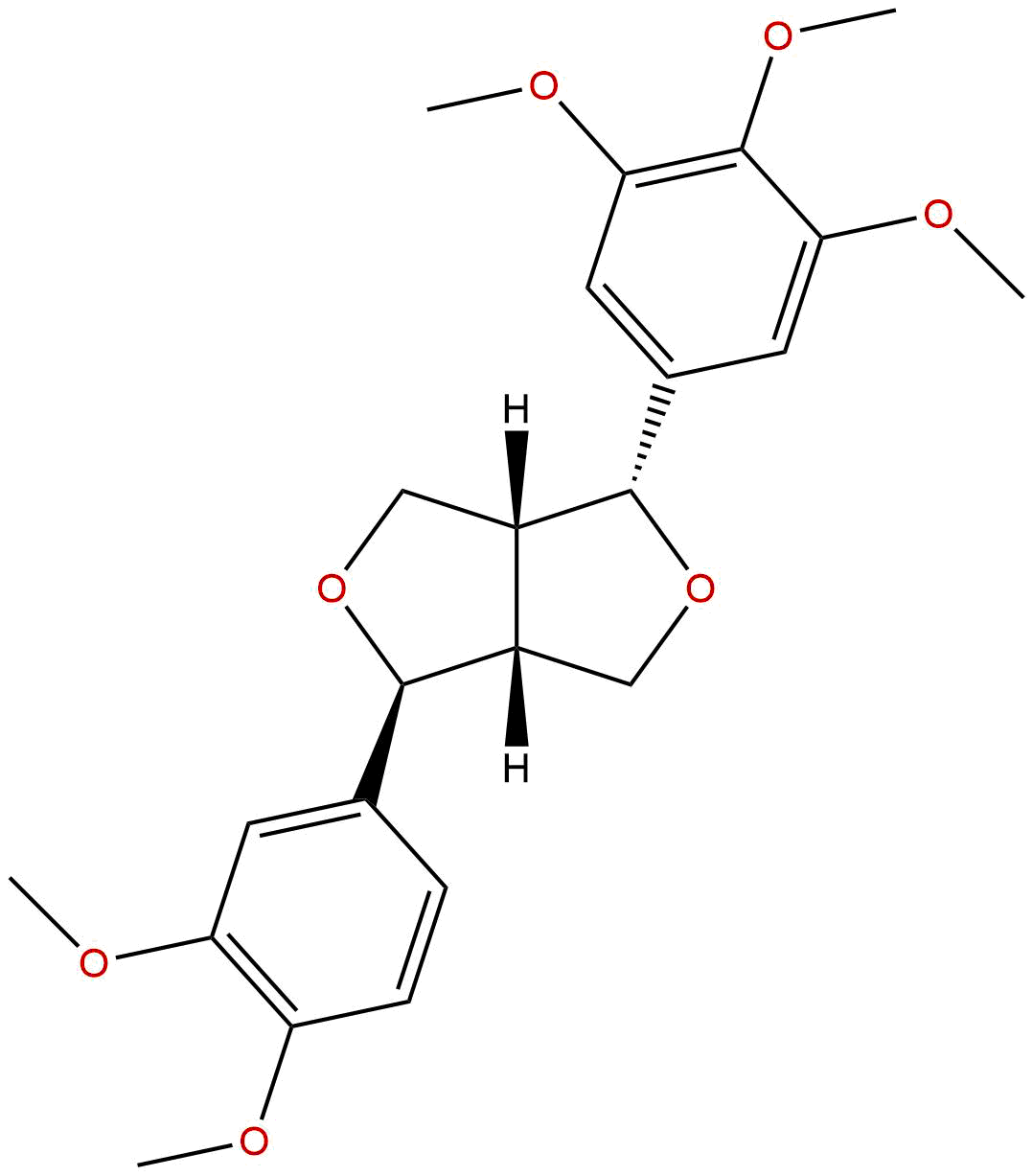
Epimagnolin A, also known as Epimagnolin A and CAS number 41689-51-4, is a typical furan lignan. The characteristic of this type of lignan is that its molecular skeleton contains a double ring core structure of tetrahydrofuran and tetrahydrofuran, namely the 2,6-diaryl-3,7-dioxabebicyclo [3.3.0] octane structure. Magnolialignan A was initially isolated and identified from plants of the Magnolia genus, and the prefix "Epi -" in its name suggests differences in specific chiral center configurations compared to its homolog Magnolin. Preliminary pharmacological studies have revealed that magnolol A has moderate anti malaria activity and is effective against malignant malaria parasites(Plasmodium falciparum)The half maximal inhibitory concentration (IC50) is 5.7 μ g/mL, and it does not show significant cytotoxicity to normal mammalian cells. This selective toxicity feature provides an important basis for its development as a candidate drug or lead compound for malaria.
However, the pharmacological activity of magnolol A goes far beyond this. In recent years, with the deepening of research on its biological activity, especially in the field of neurological diseases, magnolol A has shown significant anti anxiety potential. Through modern pharmacological methods, researchers have found that it can act on multiple neurotransmitter systems and their targets closely related to the pathogenesis of anxiety disorders, including monoamine oxidase A (MAOA), serotonin transporter (SLC6A4), serotonin receptors 2A (HTR2A) and 1A (HTR1A), dopamine receptor D2 (DRD2), gamma aminobutyric acid type A receptor subunits (GABR1, GABRB2, GABRG2), cAMP response element binding protein 1 (CREB1), and brain-derived neurotrophic factor (BDNF). This multi-target synergistic mode of action demonstrates unique advantages in the treatment of complex mental illnesses, distinct from the potential side effects such as addiction, tolerance, and cognitive impairment that traditional single target anti anxiety drugs (such as benzodiazepines) may have.
This article aims to provide a systematic review of natural product A, which has important research value. We will start with its chemical structure and physicochemical properties, sort out its plant origin and extraction and separation methods, focus on its pharmacological activities in anti malaria and anti anxiety, deeply explore its mechanism of action and molecular targets, evaluate its pharmacokinetic characteristics and development potential based on drug parameters, and finally look forward to its clinical application prospects. Through comprehensive and in-depth sorting and analysis, it is expected to provide valuable references for the subsequent research, development, and utilization of magnolol A.
Chemical structure and physicochemical properties
The chemical structure of Magnolia lignan A belongs to the typical Furofuran lignan, and its core skeleton is 2,6-diaryl-3,7-dioxabicyclo [3.3.0] octane. The skeleton consists of two phenylpropanoid units (C6-C3) connected by C8-C8 'bonds, and further formed into two parallel tetrahydrofuran rings through C7-O-C7' and C9-O-C9 ', forming a rigid bicyclic system. In the structure of magnolol A, two aryl substituents (usually 3,4,5-trimethoxyphenyl) are connected to the C2 and C6 positions of the core skeleton, respectively. The main difference between it and its homolog Magnolin is the relative configuration of the C2 and C6 aromatic groups. The C2 and C6 aromatic groups of magnolol A are in the cis position(cis)Configuration, while magnolol is trans(trans)Configuration. This subtle difference in stereochemistry may lead to different interaction modes with biological targets such as proteins, enzymes, and receptors, resulting in differentiated biological activities.
In terms of physical and chemical properties, the molecular formula of magnolol A is C23H28O7, with a molecular weight of 416.4700 g/mol. Its lipid water partition coefficient (LogP) is 3.1711, indicating that the compound has a certain lipophilicity, which facilitates its penetration through biological membranes, including the blood-brain barrier (BBB). In fact, its pharmacological parameters clearly indicate that it has a "high" blood-brain barrier penetration ability, which is crucial for its neuropharmaceutical activities such as anti anxiety in the central nervous system (CNS). Its topological polar surface area (TPSA) is 64.6100 Å ², which is within an ideal range. Molecules with TPSA less than 90 Å ² are generally considered to have good oral absorption and blood-brain barrier penetration potential. In terms of water solubility, the water solubility of magnolol A is 0.0185 mg/mL, making it a poorly soluble compound. This characteristic may limit its oral bioavailability and is a dosage form issue that needs to be focused on and addressed in subsequent drug development. In addition, the hERG inhibition experiment, an important indicator for evaluating drug cardiac toxicity, yielded a negative result, indicating a lower risk of inducing cardiac arrhythmias such as QT interval prolongation at therapeutic concentrations. The Ames test result is 0.0, indicating that it does not have significant genetic toxicity or mutagenicity. These preliminary pharmacological evaluation results provide positive signals for the safety of magnolol A.
Plant sources and extraction methods
The main source of magnolol A in the Magnoliaceae family is the Magnoliaceae genus(Magnolia)Plants. There are about 90 species of this genus of plants worldwide, widely distributed in East Asia and North America, many of which have a long history of application in traditional medicine. For example, Wangchun Yulan(Magnolia biondii)Wudang Yulan(Magnolia sprengeri)Jade Orchid(Magnolia denudata)And Purple Magnolia(Magnolia liliiflora)The dried flower buds of plants (i.e. traditional Chinese medicine "Xinyi") are an important source of magnolol A. In addition, in some other families and genera of plants, such as the Schisandraceae family, the Schisandraceae genus(Schisandra)The compound or its structural analogues may also exist in plants.
Extracting magnolol A from plant materials usually follows the classic process of natural product chemistry. Firstly, crush the dried plant materials (such as magnolia) to increase the solvent contact area. Then, organic solvents are used for extraction or reflux extraction. Given that the LogP value of magnolol A is 3.17, indicating a certain degree of moderate polarity, methanol, ethanol, or their mixed aqueous solutions are often used as extraction solvents. For example, using a 70% -95% ethanol aqueous solution for reflux extraction is a common choice. After filtration and vacuum concentration of the extract, the total extract is obtained.
Due to the complex composition of plant extracts, which contain a large amount of impurities such as lignin, flavonoids, and volatile oils, further separation and purification steps are required. Common separation methods include liquid-liquid extraction, column chromatography (CC), and high performance liquid chromatography (HPLC). Liquid liquid extraction usually uses solvents of different polarities (such as petroleum ether, ethyl acetate, n-butanol) to grade the total extract, and magnolol A is often enriched in the ethyl acetate extraction site due to its polarity. Subsequently, the area was subjected to column chromatography separation. Common stationary phases include silica gel, reverse silica gel (such as C18), dextran gel (such as Sephadex LH-20), etc. By gradient elution (such as petroleum ether ethyl acetate, chloroform methanol, methanol water, etc.), the target compound can be preliminarily enriched. Finally, by combining thin-layer chromatography (TLC) and HPLC for monitoring, further purification of the fraction containing epimagnolol A is carried out, usually using preparatory HPLC to obtain high-purity monomeric compounds. The entire extraction and separation process requires the use of spectroscopic methods such as nuclear magnetic resonance (NMR) and mass spectrometry (MS) for structural identification to confirm that the obtained compound is epimagnolol A.
Pharmacological activity research
The pharmacological activity research of magnolol A mainly focuses on its anti malaria and anti anxiety aspects. In addition, some studies also suggest that it may have other biological activities such as anti-inflammatory and antioxidant effects.
1. Anti malaria activity
Early studies reported that magnolol A has certain anti malaria activity. In vitro experiments have shown that it has an effect on Plasmodium falciparum(Plasmodium falciparum)Chloroquine sensitive strains (such as 3D7 strain) and resistant strains (such as Dd2 strain) both exhibit inhibitory effects, with IC50 values of approximately 5.7 μ g/mL (approximately 13.7 μ M). Compared with widely used antimalarial drugs in clinical practice such as artemisinin and chloroquine, this activity intensity is at a moderate level. However, its most notable feature is its selective toxicity. At the same or higher concentrations, magnolol A exhibits low cytotoxicity towards normal mammalian cells (such as African green monkey kidney fibroblast CV-1, human umbilical vein endothelial cell HUVEC, etc.), demonstrating a good Selectivity Index (SI). The characteristic of high efficiency against pathogens and low toxicity to host cells is a core requirement for the development of anti infective drugs, and it also makes epimagnolol A a noteworthy lead compound for anti malaria. The anti malaria mechanism may be related to inhibiting specific metabolic enzymes of malaria parasites or interfering with their cell membrane function, but the specific mechanism remains to be elucidated.
2. Anti anxiety activity
In recent years, breakthroughs have been made in the research of magnolol A in the field of neurological diseases, especially its significant anti anxiety effect. Anxiety disorder is a common mental disorder with a complex pathogenesis involving multiple neurotransmitter systems, including the serotonin (5-HT) system, dopamine (DA) system, gamma aminobutyric acid (GABA) system, and neurotrophic factors. Traditional anti anxiety drugs, such as benzodiazepines (acting on GABAA receptors) and selective serotonin reuptake inhibitors (SSRIs), although effective, have limitations such as addiction, slow onset, and multiple side effects.
Animal behavior experiments, such as elevated maze tests, open field experiments, and light dark box experiments, are the gold standard for evaluating the anti anxiety effects of compounds. Research has shown that after administration of magnolol A, mice showed a significant increase in exploratory behavior and a decrease in anxiety like behaviors (such as defecation, grooming, and immobility) in an anxiety model, demonstrating clear anti anxiety effects. More importantly, its efficacy is comparable to the positive control drug Diazepam, but no significant side effects such as sedation, muscle relaxation, or motor coordination disorders were observed, suggesting that it may have superior safety.
Mechanism of action and molecular targets
The molecular mechanism of the anti anxiety effect of magnolol A is a research hotspot. Unlike single target drugs, its mechanism of action exhibits typical "multi-target, multi pathway" characteristics, which is consistent with the advantages of natural products in the treatment of complex diseases. The study revealed its interactions with multiple key targets through various techniques such as molecular docking, surface plasmon resonance (SPR), enzyme activity measurement, and gene expression analysis.
1. Regulating the monoamine neurotransmitter system
- Monoamine oxidase A (MAOA)MAOA is a key enzyme that degrades serotonin, norepinephrine, and dopamine. Inhibiting MAOA activity can increase the concentration of these monoamine neurotransmitters in synaptic cleft, thereby producing antidepressant and anti anxiety effects. Research has shown that magnolol A can reversibly inhibit the activity of MAOA, which may be one of its mechanisms for exerting anti anxiety effects.
- 5-hydroxytryptamine transporter (SLC6A4)SLC6A4 is responsible for reuptake of serotonin in the synaptic cleft back into presynaptic neurons and is a classic target of SSRIs drugs. It has been found that magnolol A can inhibit the function of SLC6A4, thereby increasing the concentration of serotonin in synaptic cleft and enhancing serotonergic neurotransmission.
- 5-hydroxytryptamine receptor (HTR2A, HTR1A)Magnolia A can also directly act on serotonin receptors. It may act as an antagonist or selective agonist of the HTR2A receptor, as well as a partial agonist of the HTR1A receptor. HTR1A receptor agonists (such as buspirone) are commonly used non benzodiazepine anti anxiety drugs in clinical practice, while excessive activation of HTR2A receptors is associated with anxiety and depression. Therefore, the regulatory effect of magnolol A on these two receptors constitutes the molecular basis of its anti anxiety effect.
- Dopamine receptor D2 (DRD2)The dopamine system plays a crucial role in emotions, rewards, and cognition. The regulatory effect of magnolol A on DRD2 receptors may also be involved in its anti anxiety effect, especially in improving cognitive dysfunction associated with anxiety.
2. Regulating the GABAergic system
- GABAA receptor subunits (GABRA1, GABRB2, GABRG2)GABAA receptors are the main inhibitory receptors in the central nervous system, and benzodiazepines exert anti anxiety, sedative, and hypnotic effects by enhancing the binding of GABA to GABAA receptors. It has been found that magnolol A can upregulate the expression of key subunits such as GABRA1, GABRB2, and GABRG2, thereby enhancing the function of the GABAergic system. This regulatory effect may differ from the direct allosteric modulation of benzodiazepines, thus potentially avoiding their typical side effects.
3. Regulating intracellular signaling pathways and neurotrophic factors
- CAMP response element binding protein 1 (CREB1)CREB is a key transcription factor involved in regulating neuronal survival, synaptic plasticity, and memory formation. Under chronic stress and anxiety, the phosphorylation level of CREB often changes. Magnolia A can regulate the activity of CREB1, which may restore normal cellular signaling by affecting its phosphorylation status.
- Brain derived neurotrophic factor (BDNF)BDNF is an important member of the neurotrophic factor family and is crucial for the survival, differentiation, and synaptic plasticity of neurons. Anxiety and depression patients often have a decrease in serum and brain BDNF levels. Research has shown that magnolol A can significantly upregulate the expression of BDNF in anxiety related brain regions such as the hippocampus and prefrontal cortex. The upregulation of BDNF is considered one of the ultimate common pathways through which many antidepressant/anti anxiety drugs exert long-term efficacy.
In summary, magnolol A enhances GABAergic system function and activates the CREB-BDNF signaling pathway by simultaneously acting on monoamine targets such as MAOA, SLC6A4, HTR2A, HTR1A, and DRD2, forming a synergistic network regulatory pattern. This multi-target mechanism not only explains its powerful anti anxiety effect, but also provides a reasonable explanation for its low side effect characteristics, as it avoids the risk of excessive activation or inhibition of a single target.
Evaluation of drug properties and pharmacokinetics
Based on the provided pharmacological parameters, a preliminary evaluation of the drug development potential of arbagliflozin A can be conducted. Its molecular weight (416.47 Da) is slightly higher than the classical "Lipinski Five Rules" requirement of molecular weight less than 500 Da, but still within an acceptable range. The LogP value (3.17) is moderate, indicating good membrane permeability. The TPSA value (64.61 Å ²) also meets the requirements for oral absorption and blood-brain barrier penetration. Most importantly, its blood-brain barrier penetration ability has been rated as' high ', which is a huge advantage for the development of central nervous system drugs. In addition, the low risk of hERG inhibition and negative Ames test provide preliminary guarantees for its cardiac safety and genotoxicity safety.
However, its water solubility (0.0185 mg/mL) is poor, which is a significant shortcoming. Low water solubility directly affects the oral absorption and bioavailability of drugs, and is one of the main reasons for the failure of many candidate drugs in preclinical or clinical stages. Therefore, the formulation design of magnolol A is crucial. Possible strategies include: preparing salts (if the molecule contains ionizable groups), using co solvents or surfactants, preparing solid dispersions, inclusion complexes (such as cyclodextrin inclusion), liposomes or nanoparticles, and other novel drug delivery systems to improve their apparent solubility and dissolution rate.
There is currently insufficient publicly available literature data on its specific pharmacokinetic (PK) parameters, such as oral bioavailability, half-life, distribution volume, metabolic pathway, and excretion mode. Given its good lipid solubility and high blood-brain barrier penetration, it can be inferred that after oral administration, it can be absorbed by the gastrointestinal tract and widely distributed in the body, especially in brain tissue. Its metabolism may mainly occur in the liver, through oxidation or demethylation reactions by the cytochrome P450 enzyme system (CYP450). Future research requires systematic in vivo PK experiments to clarify the ADME (absorption, distribution, metabolism, excretion) characteristics in animals, providing a basis for the design of clinical dosing regimens.
Clinical application prospects and prospects
As a natural product derived from traditional Chinese medicine, paeoniflorin A has shown broad clinical application prospects due to its unique anti anxiety activity and multi-target mechanism of action.
1. Development of new anti anxiety drugs
Given the limitations of existing anti anxiety drugs such as benzodiazepines and SSRIs, the development of new drugs with precise efficacy, fast onset, and minimal side effects is an urgent clinical need. The anti anxiety effect of magnolol A in animal models is comparable to that of diazepam, but it has no significant sedative, muscle relaxant, or movement disorder side effects, making it an attractive candidate drug. Its multi-target mechanism of action, especially the simultaneous regulation of 5-HT, DA, and GABA systems, and upregulation of BDNF, may not only rapidly alleviate anxiety symptoms, but also achieve more fundamental therapeutic effects by promoting neural plasticity, and may even improve comorbidities of anxiety disorders such as depression and insomnia.
2. Optimization of antimalarial lead compounds
Although the anti malarial activity of magnolol A is moderate, its low toxicity to mammalian cells deserves attention. It can be used as a lead compound for structural modification and optimization through medicinal chemical methods. For example, the methoxy group on its aromatic ring can be replaced or other substituents can be introduced, or the furan ring core skeleton can be modified to obtain more active and selective antimalarial derivatives. Combined with their good safety, these derivatives are expected to become candidates for the next generation of antimalarial drugs.
3. Other potential applications
Based on its multi-target effect, magnolol A may also have potential applications in other diseases related to neurotransmitter disorders, such as depression, cognitive impairment, chronic pain, etc. In addition, its anti-inflammatory and antioxidant activities also deserve further exploration, which may provide new ideas for its application in neurodegenerative diseases such as Alzheimer's disease and Parkinson's disease.
Future research directions:
- In depth mechanism research More advanced molecular biology techniques, such as gene knockout/knock in animal models, CRISPR-Cas9, proteomics, metabolomics, etc., are needed to accurately elucidate their specific binding patterns, signaling pathway networks, and synergistic effects between different targets.
- Pharmacokinetic and Toxicological Studies It is necessary to conduct systematic ADME research in animals to clarify their metabolites and metabolic pathways. At the same time, a comprehensive acute and chronic toxicology evaluation is required, including potential toxicity to important organs such as the liver, kidneys, and heart, as well as reproductive and developmental toxicity.
- Research on Structural Optimization and Structure Performance Relationship Synthesize a series of derivatives of magnolol A, systematically study the relationship between their chemical structure and anti anxiety, anti malaria and other activities (SAR), and search for candidate compounds with stronger activity, higher selectivity and better pharmacokinetic properties.
- Formulation development To address the issue of poor water solubility, develop suitable drug delivery systems such as nanoemulsions, liposomes, phospholipid complexes, etc., to improve their oral bioavailability and achieve brain targeted delivery.
Conclusion
Magnolialignan A, a furan type lignan derived from Magnoliaceae plants, is gradually demonstrating its enormous potential as a multi-target anti anxiety candidate drug from a natural product with moderate antimalarial activity. Its unique chemical structure endows it with the ability to cross the blood-brain barrier, and its multi-target mechanism of action - simultaneously regulating the monoamine neurotransmitter system, GABAergic system, and CREB-BDNF signaling pathway - gives it unparalleled advantages in the treatment of complex psychiatric disorders compared to traditional single target drugs. The preliminary pharmacological evaluation also provides positive signals for its safety, although poor water solubility is the main challenge it faces.
From the active ingredients in "Xinyi" to the star molecule in modern drug development, the history of magnolol A once again confirms that natural products are an inexhaustible source of drug discovery. In the future, with the in-depth analysis of its mechanism of action, comprehensive elucidation of its pharmacokinetic properties, and structural optimization based on structure-activity relationships, it is highly expected that magnolol A and its derivatives will be developed into new drugs for the treatment of anxiety disorders and other central nervous system diseases, bringing new hope to patients suffering from mental illness. The study of paeoniflorin A is not only an exploration of a specific compound, but also a vivid practice of the deep integration of traditional Chinese medicine wisdom and modern pharmaceutical science.