Introduction/Overview
Allergic diseases, such as allergic asthma, allergic rhinitis and atopic dermatitis, have become a global public health problem, and their incidence rate continues to rise globally. The pathological and physiological processes of such diseases are complex, involving abnormal activation of multiple immune cells, inflammatory mediators, and signaling pathways. Although existing therapies such as antihistamines, glucocorticoids, and leukotriene receptor antagonists can effectively control symptoms, there are still issues with inadequate efficacy, side effects, or patient tolerance. Therefore, searching for lead compounds with novel structures, unique mechanisms of action, and high safety from natural products has always been an important direction in drug development.
Isogermafrenolide (CAS: 20267-89-4) is a star molecule that has entered the field of researchers in this context. As a cytotoxic sesquiterpene lactone isolated from endemic plants in Madagascar, early research focused on its anti-tumor activity. However, with a deeper understanding of the molecular network of allergic diseases and the rise of multi-target drug design concepts, the potential of isogemafurolactone in the field of anti allergy is gradually becoming apparent. Its unique chemical structure enables it to interact with multiple key targets in allergic reactions, such as 5-lipoxygenase (ALOX5), histamine H1 receptor (HRH1), and interleukin (IL-4, IL-5, IL-13) signaling axis, demonstrating the potential for multi pathway synergistic inhibition. This article aims to provide a systematic review of the chemical properties, plant sources, pharmacological activities, and particularly the multi-target mechanisms underlying the anti allergic effects of isojimarone. It also aims to provide a scientific evaluation and outlook on its pharmacological properties and clinical application prospects.
Chemical structure and physicochemical properties
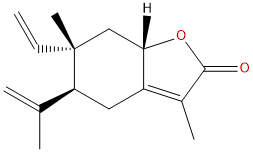
The molecular formula of isoproterenol is C15H20O2, with a molecular weight of 232.3230 g/mol. Structurally, it is a typical guaiaceae sesquiterpenoid lactone. Its core skeleton is a ten membered ring (usually a seven membered and five membered ring system, depending on the numbering method), with an alpha, beta unsaturated gamma lactone ring attached to the ring, which is the key pharmacophore for its biological activity. The alpha, beta unsaturated carbonyl structure of the lactone ring allows it to act as a Michael addition receptor, covalently binding with biomolecules such as thiol groups in proteins, which may be the basis for its interaction with certain targets. In addition, the molecule also contains multiple methyl and methylene substituents, with a compact overall structure and strong hydrophobicity.
Based on its chemical structure calculation, the drug properties related parameters show that its lipid water partition coefficient (LogP) is 3.43, indicating that the compound has moderate to high lipophilicity, which is beneficial for its penetration of cell membranes but may also affect its water solubility. Its topological polar surface area (TPSA) is relatively low, only 26.3 Å ², which further confirms its good membrane permeability. The predicted value of water solubility is 0.1106 mg/mL, which belongs to the category of slight solubility. This is more common in natural terpenoids, but may need to be improved through salt formation or the use of solubilizers during formulation development. It is worth noting that its blood-brain barrier permeability is predicted to be "high", indicating that it may have central nervous system activity or a risk of side effects, which needs to be carefully evaluated in subsequent studies. In early safety screening, isojimaride did not show significant hERG potassium channel inhibitory activity (predicted as' no '), indicating a lower risk of inducing cardiac QT interval prolongation. Meanwhile, the Ames test predicted a value of 0.0, indicating that it may not have direct genetic toxicity, providing preliminary safety evidence for subsequent development.
Plant sources and extraction methods
Isogemafurolactone is mainly derived from the medicinal plant Zebra Grass, which is unique to the rainforests of Madagascar(Zebrina pendula Or it refers to a plant that is unique to the local area and often requires specific species identification in literature. As a hotspot for biodiversity, Madagascar's unique ecological environment has nurtured a large number of plant resources with special chemical structures and biological activities, and zebra grass is one of them. This plant may have specific uses in traditional medicine, while modern plant chemistry research aims to elucidate its active ingredients.
Its extraction and separation usually follow the standard process of natural product chemistry. Firstly, the dried zebra grassland is partially crushed and extracted or percolated using a medium polarity solvent (such as dichloromethane, ethyl acetate, or methanol) at room temperature or heating conditions to fully extract the terpenes and lactones. After vacuum concentration, the crude extract obtained is preliminarily separated using silica gel column chromatography, commonly using gradient elution systems such as petroleum ether ethyl acetate or chloroform methanol. The fraction containing isogemafurolactone was monitored by thin layer chromatography (TLC) or high performance liquid chromatography (HPLC). Further purification often requires the use of reverse phase silica gel column chromatography (such as C18 packing, with methanol water as the mobile phase) or preparative high performance liquid chromatography (Prep HPLC) to ultimately obtain high-purity monomeric compounds of isojimarone. Structural identification involves the comprehensive use of nuclear magnetic resonance (NMR, including 1H, 13C, 2D-NMR such as COSY, HSQC, HMBC), mass spectrometry (MS), infrared spectroscopy (IR), and X-ray single crystal diffraction techniques to confirm its planar structure and relative/absolute configuration. At present, there are few reports on its total synthetic route, and the main source still relies on plant extraction. Therefore, sustainable utilization of plant resources or the development of synthetic biology methods are issues that need to be considered in the future.
Pharmacological activity research
Early pharmacological research on isogemafurolactone mainly focused on its cytotoxicity. Studies have shown that this compound has a moderate inhibitory activity on proliferation of many human tumor cell lines, such as lung cancer, breast cancer, leukemia cells, etc. Its IC50 value is usually in the micromolar level. Its cytotoxic mechanism may involve inducing cell cycle arrest, mitochondrial dysfunction, and caspase dependent apoptosis pathway.
However, what is more remarkable is its extensive activity in anti allergic and anti-inflammatory aspects. In various in vitro and in vivo models, isogemafurolactone exhibits strong anti allergic potential:
1. Effects on mast cells and eosinophils In anti IgE or compound 48/80 induced rat peritoneal mast cell or RBL-2H3 cell degranulation models, isogemafurol can dose dependently inhibit the release of β - aminocaproidase and histamine, which are key steps in initiating allergic reactions.
2. Regulation of Th2 type immune response In a mouse model of allergic asthma induced by ovalbumin (OVA), pretreatment with isogemafurolactone significantly reduced the total number of inflammatory cells, especially eosinophils, in bronchoalveolar lavage fluid (BALF). At the same time, it can inhibit lung inflammation infiltration and goblet cell proliferation, reducing airway hyperresponsiveness.
3. Regulation of inflammatory mediators This compound can effectively inhibit the production of various pro-inflammatory factors in macrophages, epithelial cells, or mast cells under lipopolysaccharide (LPS) or allergen stimulation, including tumor necrosis factor - α (TNF - α), interleukin-6 (IL-6), and key Th2 cytokines IL-4, IL-5, and IL-13.
4. The impact on acute allergic reactions In the Passive Skin Allergic Reaction (PCA) model, oral or local administration of isogemafurolactone can significantly inhibit increased vascular permeability and pigment exudation, indicating its ability to counteract IgE mediated immediate hypersensitivity reactions.
These studies collectively indicate that isogemafurolactone not only inhibits the effector phase of allergic reactions (such as mediator release), but also intervenes in their immune regulatory phase (such as Th2 cell differentiation and cytokine production), possessing a multi link anti allergic property.
Mechanism of action and molecular targets
The anti allergic effect of isoproterenol is not achieved through a single target, but rather acts on multiple key nodes in the allergic inflammation network, reflecting the strategy of multi-target synergistic intervention. According to existing research, its potential targets and mechanisms of action include:
-
Inhibition of 5-lipoxygenase (ALOX5)ALOX5 is the rate limiting enzyme for the metabolism of arachidonic acid to produce leukotrienes (LTs). Leukotrienes, especially LTB4 and cysteine leukotrienes (CysLTs such as LTC4, LTD4), are potent inflammatory mediators and bronchoconstrictors, crucial in diseases such as asthma. The structure of isoproterenol may inhibit leukotriene synthesis by competitively binding to the active site of ALOX5 or affecting its activator protein (FLAP), which is consistent with its role in reducing airway inflammation and contraction in asthma models.
-
Antagonistic histamine H1 receptor (HRH1)Histamine is the earliest released core mediator in allergic reactions, causing vasodilation, increased permeability, smooth muscle contraction, and itching by activating HRH1. Molecular docking and functional experiments suggest that isogemafurolactone may act as an antagonist of HRH1, directly blocking the action of histamine, which explains its rapid onset in PCA models and inhibition of histamine induced smooth muscle contraction experiments.
-
Regulating Th2 cytokine signaling IL-4, IL-5, and IL-13 are the core driving factors of Th2 immune response. Isogemafurolactone can downregulate the expression of these cytokines. The mechanism may involve:
- Inhibition of transcription factor STAT6 activation The signals of IL-4 and IL-13 are mainly transmitted through the JAK-STAT6 pathway. Isogemafurolactone may interfere with JAK kinase activity or phosphorylation and nuclear translocation of STAT6, thereby blocking the transcription of downstream genes such as eotaxin and IgE synthesis related genes.
- Affects upstream signals It may globally suppress the expression of various inflammatory genes, including IL-4, IL-5, and IL-13, by inhibiting upstream transcription factors such as nuclear factor kappa B (NF - κ B) or activator protein-1 (AP-1).
-
Intervention in the initiation process of allergies:
- Inhibition of high affinity IgE receptor (Fc ε RI) signaling Fc ε RI cross-linking is the initiating event that triggers degranulation of mast cells. Isogilurolactone may inhibit degranulation by affecting the activity of Fc ε RI related kinases (such as Lyn, Syk) or interfering with downstream calcium ion influx and microtubule recombination.
- Inhibition of thymic stromal lymphopoietin (TSLP)TSLP is an epithelial cell-derived alarm cytokine that plays a "master switch" role in initiating Th2 type immune responses. Inhibiting the production or signaling of TSLP can curb the allergic process from the source.
- Antagonistic thromboxane A2 receptor (TBXA2R)Thromboxane A2 is another important metabolite of arachidonic acid, which has pro-inflammatory and vasoconstrictive effects. Antagonism against TBXA2R may help alleviate bronchial constriction and inflammation in allergic reactions.
In summary, isoproterenol forms a three-dimensional anti allergic network by simultaneously acting on mediator synthase (ALOX5), receptors (HRH1, TBXA2R, Fc ε RI), cytokines (IL-4/5/13), and their signaling pathway (STAT6). This multi-target characteristic may provide better comprehensive therapeutic effects for complex allergic diseases and may reduce drug resistance caused by single target inhibition escape.
Evaluation of drug properties and pharmacokinetics
Based on calculations and preliminary experimental data, a preliminary evaluation of the pharmacological properties of isogemafurolactone is conducted
Advantage aspects Moderate molecular weight (232 Da), in compliance with the drug like rules. Higher lipid solubility and lower TPSA indicate good oral absorption and cell membrane permeability potential. The absence of hERG inhibition and Ames mutagenicity warning provides preliminary green light for its safety.
Challenge aspect Poor water solubility is its main drawback, which may affect its oral bioavailability (especially at high doses) and the development of intravenous dosage forms. Its high blood-brain barrier permeability is a double-edged sword: if the target disease is central nervous system related allergy or inflammation, this is an advantage; If the main treatment is peripheral diseases, the risk of central side effects needs to be evaluated. In addition, although the α, β - unsaturated lactone structure may be an essential functional group for its activity, it may also pose a risk of reacting with nucleophilic substances such as glutathione, leading to potential metabolic instability or non-specific toxicity.
At present, the pharmacokinetic study of isogemafurolactone is not systematic, and the publicly available data is limited. It can be inferred that:
* absorb Due to its lipophilicity, it may be well absorbed through passive diffusion in the small intestine after oral administration, but the first pass effect may be significant.
* distribution Due to its high lipid solubility and BBB permeability, it is expected to have a large distribution volume and may be widely distributed in tissues throughout the body, including fat, liver, and central nervous system.
* Metabolism As terpenoid lactones, their metabolism may mainly occur in the liver. The CYP450 enzyme system, especially CYP3A4, may be involved in its oxidative metabolism. The lactone ring may be hydrolyzed by esterases to open the ring, which is one of its possible inactivation pathways. The Michael addition reaction with glutathione is also an important metabolic and detoxification pathway.
* excretion Metabolites may be mainly excreted through bile and kidneys.
In the future, systematic preclinical pharmacokinetic studies are needed, including determination of absolute bioavailability, plasma protein binding rate, identification of major metabolites, and metabolic stability in liver microsomes, to comprehensively evaluate its potential as a drug.
Clinical application prospects and prospects
As a multi-target natural lead compound for anti allergic reactions, isogemafurolactone has broad clinical application prospects, but also faces a series of challenges.
Potential application directions:
1. allergic asthma It simultaneously inhibits leukotriene synthesis, antagonizes histamine and thromboxane receptors, and suppresses the multiple effects of Th2 cytokines, making it highly suitable for the treatment of moderate to severe asthma, especially for phenotypes with poor response to existing single target drugs. Consider developing it as an oral or inhalation formulation.
2. Atopic dermatitis/eczema By inhibiting TSLP, IL-4/IL-13 signaling, and degranulation of mast cells, the disease process can be intervened from the two core links of immunity and itching, which is expected to become a new choice for local topical or systemic treatment.
3. allergic rhinitis Its rapid antagonism of HRH1 and inhibition of mediator release can be used to alleviate acute symptoms such as nasal congestion, runny nose, and sneezing.
4. Other Th2 related diseases Such as chronic spontaneous urticaria, eosinophilic esophagitis, etc.
Challenges faced and future research directions:
1. structural optimization Systematic structure-activity relationship (SAR) studies and structural modifications were conducted using isogemafurolactone as the parent nucleus. The goal is to: ① improve water solubility and metabolic stability; ② Optimize the efficacy and selectivity towards each target while retaining multi-target activity; ③ If necessary, reduce BBB permeability to minimize potential central side effects. For example, modifying the lactone ring, hydrophobic side chains, or introducing polar groups.
2. In depth mechanism verification Currently, multi-target interactions are mostly based on phenotype experiments and computational predictions, requiring direct confirmation of their interaction patterns and binding sites with targets such as ALOX5, HRH1, STAT6 through techniques such as surface plasmon resonance (SPR), isothermal titration calorimetry (ITC), co crystallization, gene knockout/knockdown, etc.
3. Comprehensive preclinical development Complete standardized pharmacological (validated in more disease models and species), pharmacokinetic, and toxicological (acute, subchronic, reproductive toxicity, etc.) studies to clarify their therapeutic window.
4. Formulation development Exploring advanced formulation technologies such as nanocrystals, liposomes, and cyclodextrin inclusion complexes to improve their delivery efficiency and bioavailability in response to their low water solubility.
5. Explore combination therapy Consider combining it with existing standard therapies (such as inhaled steroids), which may have a synergistic effect, reduce their respective dosages, and minimize side effects.
Conclusion
Isogemafurolactone is a sesquiterpene lactone with a unique chemical structure and multi-target pharmacological activity discovered from the biodiversity treasure trove of Madagascar. Its research focus has successfully expanded from early cytotoxicity to the field of anti allergy. This compound can ingeniously intervene in multiple key links in the allergic reaction chain, including the release and action of effector mediators (histamine, leukotrienes), polarization and effect of Th2 type immune response, and transmission of allergy initiation signals (IgE receptors, TSLP), demonstrating potential advantages beyond traditional single target anti allergic drugs. Although there are challenges in drug formulation, especially in terms of water solubility and metabolic stability, its clear pharmacological activity, multi-target mechanism of action, and good preliminary safety prediction make it a highly valuable lead compound and drug design template. Through the comprehensive methods of modern medicinal chemistry, pharmacology, and formulation, the study and optimization of isogemafurolactone and its derivatives are expected to open up new paths for the development of a new generation of efficient and safe anti allergic treatment drugs, ultimately benefiting billions of patients with hypersensitivity diseases worldwide.