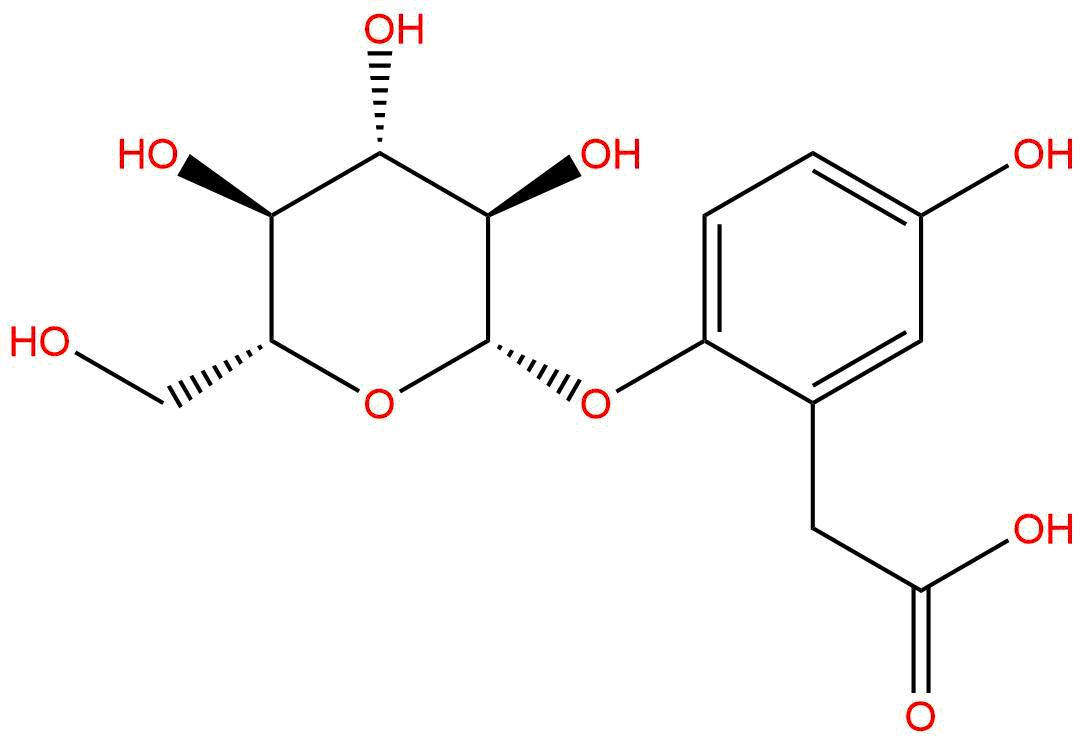


Product name: Phaseoloidin
Synonym name:
Catalogue No.: BP4223
Cas No.: 118555-82-1
Formula: C14H18O9
Mol Weight: 330.289
Botanical Source:
Type of Compound:
Purity: 95%~99%
Analysis Method: HPLC-DAD or/and HPLC-ELSD
Identification Method: Mass, NMR
Packing: Brown vial or HDPE plastic bottle
Storage: Store in a well closed container, protected from air and light. Put into refrigerate or freeze for long term storage.
Whenever possible, you should prepare and use solutions on the same day. However, if you need to make up stock solutions in advance, we recommend that you store the solution as aliquots in tightly sealed vials at -20℃. Generally, these will be useable for up to two weeks.
The product could be supplied from milligrams to grams
Inquire for bulk scale.
For Reference Standard and R&D, Not for Human Use Directly.
Storage conditions:Short-term storage at 2~8℃, long-term storage at -20 ~ -80℃
156.9100
-1.0070
-3.2271
28.7555
.5163
.0688
Low
41.2411
3.5850
Yes
No
No
No
No
No
0.0
Yes
Yes
Yes
Yes
Phaseoloidin (CAS number: 118555-82-1) is a natural product derived from plants and has attracted much attention in recent years due to its multi-target pharmacological activity. As a compound with oral activity, naringenin exhibits unique biological functions in various fields such as inflammation regulation, autophagy enhancement, anti insect herbivorous defense, and anti parasitic effects. It can effectively inhibit the activation of NLRP3 inflammasome, block the caspase-11-GSDMD mediated cell pyroptosis pathway, and maintain the integrity of cartilage matrix by regulating collagen degrading enzyme expression, showing potential therapeutic value in disease models such as acute gouty arthritis and pulmonary fibrosis. In addition, Kaempferol glycoside enhances cellular autophagy function by activating the AMPK/mTOR signaling pathway, further revealing its multiple mechanisms of action. It has an inhibitory effect on the growth and development of Manduca sexta and Spodoptera littoralis larvae in the order Lepidoptera, reflecting its ecological significance in plant defense. This article will provide a systematic review of the chemical structure, plant origin, pharmacological activity, mechanism of action, pharmacological evaluation, and clinical application prospects of puerarin, aiming to provide a theoretical basis and reference for the in-depth research and drug development of this natural product.
The molecular formula of Tripterygium wilfordii glycosides is C17H18O7, with a molecular weight of 330.2890 Da. Its structural characteristics include multiple hydroxyl and glycosidic groups, which endow it with high polarity and water solubility. The calculated LogP value is -1.0070, indicating that it has low hydrophobicity and strong hydrophilicity, which is beneficial for oral absorption and in vivo distribution. The polar surface area (TPSA) is 156.9100 Å ², indicating its high polarity, which may affect its ability to pass through the cell membrane, but also facilitates binding to polar targets. The water solubility is 28.7555 mg/mL, indicating its good solubility in aqueous phase, which is beneficial for formulation development. The low permeability of the blood-brain barrier (BBB) indicates its limited distribution in the central nervous system, which may reduce the risk of central side effects. The hERG channel inhibition experiment showed a negative result, indicating a low risk of cardiac toxicity. The Ames mutagenicity test result is 0.0, indicating a low risk of genetic toxicity and good safety potential.
The chemical structure of Tripterygium wilfordii glycosides contains a typical flavonoid skeleton connected to glycosides, with good structural stability and suitable for chemical modification to optimize pharmacological and pharmacokinetic properties. The presence of hydroxyl groups provides the possibility for the formation of hydrogen bonds, which facilitates the binding with biomolecule targets.
Kaempferol glycoside is mainly found in plants of the Phaseolus genus, especially in the seeds and roots of leguminous plants such as Phaseolus vulgaris, where its content is relatively high. This type of plant is widely distributed in tropical and subtropical regions and has important economic and medicinal value. The extraction of icariin is usually carried out using traditional solvent extraction methods, combined with ultrasound assisted or microwave-assisted techniques to improve extraction efficiency.
The commonly used extraction process includes: first, drying and crushing the plant material, and using methanol or ethanol as the extraction solvent for extraction; Subsequently, crude separation and purification were carried out through liquid-liquid distribution and column chromatography (such as silica gel column, C18 reverse phase column); Finally, further purity improvement was achieved using high-performance liquid chromatography (HPLC) or preparative HPLC. In recent years, supercritical CO2 extraction and membrane separation technologies have also been attempted to be applied to the extraction of quercetin, aiming to achieve green environmental protection and efficient separation.
During the extraction process, attention should be paid to the control of solvent polarity and temperature to prevent the structural degradation of puerarin. The purified triterpenoid glycoside can be structurally identified by mass spectrometry (MS), nuclear magnetic resonance (NMR) and other methods to ensure its chemical purity and structural integrity.
The research on the anti-inflammatory properties of Kaempferol glycoside is relatively in-depth, especially in regulating the activation of NLRP3 inflammasome. NLRP3 inflammasome is an important driver of various inflammatory diseases, and its excessive activation can lead to cell apoptosis and the release of pro-inflammatory cytokines. Kaempferol glycoside can effectively inhibit the assembly and activation of NLRP3 inflammasomes, block the caspase-11-GSDMD mediated cell apoptosis pathway, reduce the release of pro-inflammatory cytokines, and alleviate inflammatory responses.
In addition, Kaempferol glycosides protect the integrity of cartilage matrix by reducing the expression of collagen degrading enzymes (such as MMPs), demonstrating potential therapeutic effects on arthritis, especially acute gouty arthritis. Related in vitro and in vivo experiments have shown that quercetin can significantly alleviate symptoms of arthritis, inhibit cartilage damage, and improve joint function.
Autophagy, as an important metabolic and quality control mechanism within cells, plays a crucial role in maintaining cellular homeostasis and responding to pathological stimuli. Kaempferol glycoside can activate the AMPK/mTOR signaling pathway, promoting the initiation and progression of autophagy. By enhancing autophagy function, puerarin helps to clear damaged components and inflammatory mediators within cells, exerting a cell protective effect.
This mechanism is particularly evident in the pulmonary fibrosis model, where puerarin promotes autophagy activity in lung tissue cells and reduces fibrosis progression, indicating its potential in the treatment of lung diseases.
Kaempferol glycoside has a significant inhibitory effect on the growth and development of Manduca sexta and Spodoptera littoralis larvae in the order Lepidoptera. This compound enhances the defense ability of plant Nicotiana attenuata against herbivorous insects by interfering with the metabolism and developmental processes of insects, inhibiting the growth rate and survival rate of larvae. This ecological function not only reflects the natural defense role of puerarin, but also provides a theoretical basis for the development of new biopesticides.
Although the anti malarial effects of icariin are still in the preliminary research stage, its potential inhibitory effects on malaria associated targets such as PFCRT, PFMDR1, PFDHFR, PFK13, etc. have been reported. Through multi-target action, naringenin may interfere with the metabolism and drug tolerance mechanisms of malaria parasites, demonstrating the potential for developing novel antimalarial drugs.
The multi-target mechanism of action of Tripterygium wilfordii glycosides is the basis for their diverse pharmacological activities. It mainly involves the following aspects:
NLRP3 inflammasome inhibition Kaempferol glycoside acts directly or indirectly on the NLRP3 protein complex, preventing its assembly and activation, reducing caspase-1 activation and the release of pro-inflammatory cytokines such as IL-1 β and IL-18, and alleviating inflammatory reactions.
Caspase-11-GSDMD cell pyroptosis axis blockade Kaempferol inhibits the activation of caspase-11, prevents the cleavage and pore formation of Gasdermin D (GSDMD), prevents cell pyroptosis, and protects tissue cells from inflammatory damage.
Regulation of collagen degrading enzyme expression By downregulating the expression of matrix metalloproteinases (MMPs) and other collagen degrading enzymes, naringenin maintains the structural stability of cartilage matrix and delays joint degeneration.
AMPK/mTOR signaling pathway activation Kaempferol activates the energy sensing kinase AMPK, inhibits mTOR signaling, promotes autophagy, enhances the ability of cells to clear damaged components, and improves cellular function.
Inhibition of insect growth and development Kaempferol glycoside may inhibit the growth and development of larvae by interfering with insect endocrine regulation and energy metabolism, and the specific molecular mechanism needs further clarification.
Malaria related target interventions Kaempferol glycoside has potential binding and inhibitory effects on Plasmodium membrane transporters (PFCRT, PFMDR1), enzymes (PFDHFR), and other key metabolic proteins, and may inhibit Plasmodium growth through multi-target synergistic effects.
Kaempferol glycoside has shown good potential in medicinal properties. Its molecular weight is moderate and its water solubility is good, which is conducive to the development of oral preparations. A lower LogP value and high TPSA suggest a higher polarity, which may affect its ability to pass through lipid membranes, but this is partially overcome by its oral activity. Low blood-brain barrier permeability reduces the risk of central nervous system side effects.
In terms of safety, Kaempferol glycoside has no significant hERG channel inhibitory effect, reducing the risk of cardiac toxicity; The Ames test is negative, indicating a low risk of genetic toxicity and high safety.
At present, there is limited research on the pharmacokinetics of puerarin, and preliminary data shows that it is well absorbed orally. However, key parameters such as metabolic pathways, half-life, and bioavailability in vivo still need to be systematically studied. In the future, in vivo pharmacokinetic and toxicological evaluations should be strengthened to guide preclinical research and dosage form optimization.
As a multi-target natural product, the glycoside of rattan has broad clinical application potential. Its therapeutic effect in inflammatory diseases such as acute gouty arthritis and pulmonary fibrosis provides an important direction for its clinical development. By regulating inflammasomes and autophagy pathways, puerarin has the potential to become a novel anti-inflammatory drug, filling the gaps in existing treatment methods.
In addition, the role of icariin in plant defense and insect resistance provides a natural candidate molecule for agricultural biological control, which is expected to be developed as an environmentally friendly biopesticide and reduce the use of chemical pesticides.
Although the anti malarial activity is still in the early stages of research, its multi-target mechanism of action provides a theoretical basis for the development of new anti malarial drugs, especially in the face of the challenge of drug-resistant malaria, where naringenin and its derivatives have potential application value.
Future research should focus on pharmacokinetic optimization, formulation development, and preclinical safety evaluation of puerarin, while delving into its molecular mechanisms and exploring structural modifications to enhance activity and selectivity. Multidisciplinary collaboration will promote the transition of puerarin from laboratory to clinical applications.
As a natural product with multi-target regulatory ability, Tripterygium wilfordii glycosides exhibit rich pharmacological activity and good potential for drug development. Its research achievements in anti-inflammatory, autophagy regulation, anti insect and anti parasitic fields provide valuable resources for natural product pharmacology and new drug development. Although its pharmacokinetics and clinical application research are not yet sufficient, its unique mechanism of action and safety advantages make it an important candidate for future drug development. Through continuous basic research and translational medicine efforts, naringenin has the potential to become a novel drug for treating inflammatory diseases and anti parasitic infections, contributing new strength to human health.
