Introduction/Overview
Diabetes is a global chronic metabolic disease, its incidence rate continues to rise, has become a serious public health challenge. At present, although there are many kinds of hypoglycemic drugs in clinical application, there are still some problems such as insufficient efficacy, side effects, secondary failure, etc. Therefore, it is always an important direction for drug research and development to find new anti diabetes lead compounds with high efficiency and low toxicity from natural products. Siraitia grosvenorii(Siraitia grosvenorii)As a traditional dual-use plant for medicine and food in China, its sweet taste is mainly derived from the rich cucurbitane triterpene saponins, such as mogroside V, which has been proved to have antitussive, expectorant, antioxidant and potential hypoglycemic activities. In recent years, with the progress of separation and identification technology, its structural analogs have been found continuously. Among them, 11 epi mogroside V (11 epi mogroside V), as a stereoisomer, gradually shows its unique pharmacological activity and application potential. The purpose of this paper is to systematically review the chemical structure, plant origin, pharmacological activity, especially the multi target mechanism of its anti diabetes effect of 11 epi momordica grosvenorii saponin V, and to further explore its pharmaceutical properties and clinical application prospects, in order to provide scientific basis for the in-depth development of this natural product.
Chemical structure and physicochemical properties
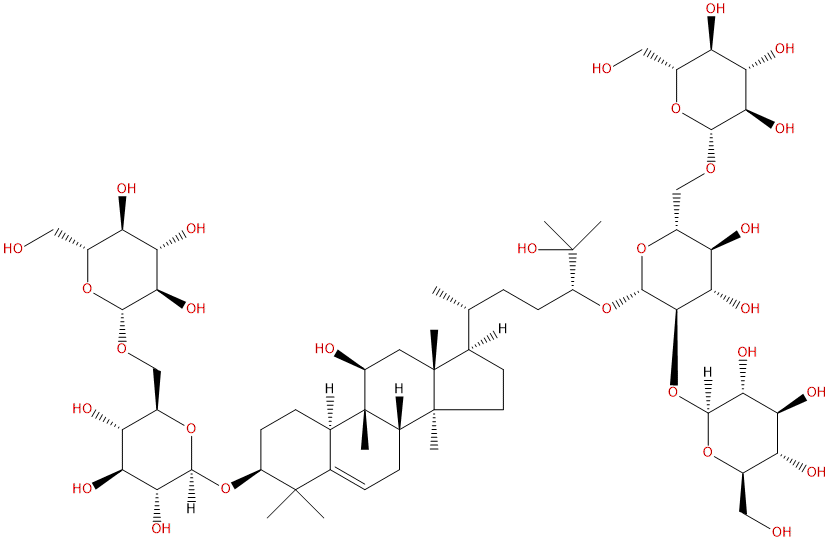
11 Table - Momordica grosvenorii saponin V, CAS No. 2146088-12-0, is the C-11 epimer of Momordica grosvenorii saponin V. Its parent nucleus is cucurbitane triterpenoid, and the core difference between it and siraitin V is that the stereo configuration of the C-11 hydroxyl has been reversed. This small stereochemical change may significantly affect its molecular conformation, interaction with target proteins, and ultimately its biological activity.
The molecular formula of this compound is C60H102O29, with a molecular weight of 1287.4470 Da, belonging to the category of large molecular glycosides. Its sugar chain is usually connected at positions C-3 and C-24 of the sapogenin, composed of multiple glucose units, which endows the molecule with high polarity and hydrophilicity. The calculated lipid water partition coefficient (LogP) is 0.9948, indicating a certain degree of amphiphilicity, but overall leaning towards hydrophilicity. The topologically polar surface area (TPSA) is as high as 476.6700 Å ², further confirming its strong polarity characteristics, mainly attributed to the large number of hydroxyl and glycosidic oxygen atoms in the molecule. Its water solubility value is 0.8433 (LogS or related units), indicating good solubility in water, which is beneficial for its dispersion and action in aqueous systems such as cell culture media and body fluids. However, the enormous molecular weight and high TPSA also pose challenges to its ability to penetrate biofilms, predicting low blood-brain barrier permeability, which to some extent limits its potential applications in central nervous system related diseases, but may also reduce the risk of central nervous system side effects. The preliminary pharmacological risk assessment shows that the hERG inhibition risk is "no", and the Ames test result is 0.0 (indicating no mutagenicity), which provides preliminary positive signals for its safety as a drug lead compound.
Plant sources and extraction methods
11 Table - Momordica grosvenorii saponin V mainly comes from the cucurbitaceae plant Momordica grosvenorii(Siraitia grosvenorii The dried fruit of Swingle. In Siraitia grosvenorii, it usually exists as a trace accompanying component of Siraitia grosvenorii saponin V, and its content is relatively low. Its existence may be related to the plant growth environment, harvesting period, and processing technology (especially traditional baking technology), as heat treatment may cause the isomerization of certain saponin components.
Extraction of 11- Table - Momordica grosvenorii saponin V from Momordica grosvenorii generally follows the general extraction and separation process of natural product saponins. Firstly, the dried Siraitia grosvenorii powder was refluxed or ultrasonically assisted with alcohol water (such as methanol, ethanol) solution to fully extract saponins. After vacuum concentration, the extract is preliminarily enriched and decolorized using macroporous adsorption resins (such as D101, AB-8). Strong polar impurities such as polysaccharides and inorganic salts are removed by water washing, and gradient elution is performed using ethanol solutions of different concentrations to collect the saponin rich fraction.
Due to the extremely similar physical and chemical properties of 11 Table - Momordica grosvenorii saponin V and Momordica grosvenorii saponin V and other major saponins, it is difficult to separate them by conventional column chromatography. Efficient separation and purification rely on modern chromatographic techniques, especially preparative high-performance liquid chromatography (Prep HPLC). Usually, a reverse phase C18 chromatographic column is used, with acetonitrile water or methanol water as the mobile phase for gradient elution, utilizing their small polarity differences to achieve separation. In recent years, high-speed countercurrent chromatography (HSCCC), as a liquid-liquid partition chromatography technology, has also been applied to the separation of cucurbitane triterpene saponin homologues and isomers due to its advantages of no irreversible adsorption and high recovery, providing a powerful tool for obtaining high-purity 11 epi siraitin V. The isolated compounds need to undergo structural confirmation using techniques such as nuclear magnetic resonance (NMR, especially 1D and 2D NMR) and high-resolution mass spectrometry (HR-MS) to clarify their stereoisomers at the C-11 position.
Pharmacological activity research
The existing research shows that 11- epi - momordica grosvenorii saponin V inherits the biological activities of momordica grosvenorii saponins in many aspects, and shows a particularly prominent potential in anti diabetes.
1. Anti diabetes activity: This is currently the most focused pharmacological direction of research on this compound. In cell models (such as insulin resistant HepG2 hepatocytes, C2C12 myotube cells, 3T3-L1 adipocytes) and animal models (such as streptozotocin induced diabetes mice, high-fat diet combined with low-dose streptozotocin induced diabetes rats), 11 epi siraitin V showed significant hypoglycemic effect. Its function is not limited to lowering fasting blood glucose, but can also improve glucose tolerance and enhance insulin sensitivity. Compared to positive drugs such as metformin, it has shown comparable or even superior efficacy in certain models. In addition, research also suggests that it may have a protective effect on diabetes complications, such as diabetes nephropathy and liver injury, which is closely related to its anti-inflammatory and antioxidant properties.
2. Antioxidant and anti-inflammatory activities: As a natural product, 11 epi momordica grosvenorii saponin V has a strong ability to scavenge free radicals (such as DPPH, ABTS free radicals), and can enhance the activity of intracellular antioxidant enzymes (such as superoxide dismutase SOD, glutathione peroxidase GSH Px), and reduce the level of malondialdehyde (MDA). In the macrophage inflammation model induced by lipopolysaccharide (LPS), it can effectively inhibit the excessive production of nitric oxide (NO), prostaglandin E2 (PGE2), and pro-inflammatory cytokines (such as TNF - α, IL-6, IL-1 β). Its anti-inflammatory mechanism is related to the regulation of signaling pathways such as NF - κ B and MAPK. These activities are essential to alleviate oxidative stress and chronic low-grade inflammation in chronic diseases such as diabetes.
3. Other potential activities: Based on its core chemical structure, 11- epi - momordica grosvenorii saponin V may also have the common activities of momordica grosvenorii saponins, such as antitussive, expectorant, liver protective, and immune regulation, but the special research on this specific isomer has yet to be in-depth.
Mechanism of action and molecular targets
11 Table - The anti diabetes effect of mogroside V is not achieved by a single way, but presents the characteristics of multi target and multi pathway synergy, which is related to the multiple interaction sites that may exist in its complex chemical structure. Existing research has preliminarily revealed that it involves the following key targets and pathways:
1. Activate the AMPK signaling pathway: AMP activated protein kinase (AMPK) is a core regulatory factor in cellular energy metabolism. 11 Table - Momordica grosvenorii saponin V can directly or indirectly activate AMPK (composed of PRKAA1 and other subunits). Activation of AMPK leads to phosphorylation and inhibition of acetyl CoA carboxylase (ACC), promoting fatty acid oxidation; Meanwhile, by upregulating the membrane translocation of glucose transporter 4 (GLUT4, encoded by the SLC2A4 gene), the uptake of glucose by skeletal muscle and adipose tissue is enhanced. In addition, AMPK activation can also inhibit hepatic gluconeogenesis.
2. Regulating the insulin signaling pathway: This compound can enhance tyrosine phosphorylation of insulin receptor substrate 1 (IRS1) and activate the downstream phosphatidylinositol 3-kinase (PI3K, whose regulatory subunit is PIK3R1) - protein kinase B (Akt, AKT1) signaling axis. Activated Akt promotes the translocation of GLUT4 on one hand, and promotes glycogen synthesis by regulating targets such as glycogen synthesis kinase 3 (GSK3 β) on the other hand. This pathway is the core pathway through which insulin exerts its hypoglycemic effect, and its improvement implies the alleviation of insulin resistance.
3. Regulating key metabolic enzymes and nuclear receptors: Studies have shown that 11 epi siraitin V may inhibit the sodium glucose cotransporter 2 (SGLT2) in the proximal tubule of the kidney, reduce the renal reabsorption of glucose, and increase urinary glucose excretion, which is similar to the mechanism of action of the new hypoglycemic drug SGLT2 inhibitor. At the same time, it may activate glucokinase (GCK), promoting the liver's utilization of glucose. As a partial agonist or regulator of peroxisome proliferator activated receptor gamma (PPARG), it may improve adipocyte function, increase adiponectin secretion, and potentially avoid related side effects in a manner different from classical thiazolidinedione drugs.
4. Inhibition of dipeptidyl peptidase-4 (DPP4): DPP4 is a key enzyme for degrading intestinal insulinotropic substances such as GLP-1. Preliminary studies have shown that 11 epi siraitin V may have DPP4 inhibitory activity, thus prolonging the action time of endogenous GLP-1 and promoting glucose dependent insulin secretion.
To sum up, 11 table siraitin V exerts its anti diabetes effect from multiple dimensions such as increasing peripheral glucose utilization, improving insulin sensitivity, inhibiting hepatic glucose output, promoting urinary glucose excretion, and protecting pancreatic β cells through synergistic action on multiple targets such as AMPK, insulin signaling pathway, SGLT2, PPARG, and DPP4.
Evaluation of drug properties and pharmacokinetics
Although 11 epi momordica grosvenorii saponin V has excellent pharmacological activity, its pharmaceutical properties still face some challenges, mainly due to its inherent characteristics as a natural macromolecular saponin.
Pharmacokinetic characteristics: At present, there are few reports on the pharmacokinetics of this compound system, but it can be inferred by referring to the studies of similar siraitin. The oral bioavailability of large molecule saponins is usually low due to several reasons, including: ① gastrointestinal stability: gastric acid and gut microbiota may cause hydrolysis or transformation. ② Poor membrane permeability: High polarity and high molecular weight result in weak passive diffusion ability through intestinal epithelial cells, which may rely on limited active transport mechanisms. ③ First pass effect: Metabolism may occur in the liver. Therefore, after oral administration, the amount of the original drug entering the systemic circulation may be limited. Although non oral routes (such as injection) can avoid first pass effects, their solubility and safety should be considered. The distribution in the body may be concentrated in organs with abundant blood flow, but it is difficult to penetrate the blood-brain barrier. The metabolic pathway may involve the hydrolysis of glycans (gradual deglycosylation) and further redox reactions, with excretion mainly through the kidneys and bile.
Optimization strategy for drug properties: To improve its medicinal properties, future research could consider the following directions: 1 Structural modification On the premise of retaining the pharmacophore, sugar groups can be modified (such as replacing or removing some sugar groups), sapogenins can be derivatized to improve their lipid solubility and membrane permeability, or enhance their affinity for specific targets. two Formulation innovation Develop new drug delivery systems, such as nanoparticles, liposomes, microemulsions, self microemulsifying drug delivery systems, etc., to improve their oral bioavailability or achieve targeted delivery. three Prodrug design Prepare it as a prodrug that is stable in the gastrointestinal tract and converted into an active form in vivo after absorption.
Preliminary safety evaluation: Based on its natural source background and preliminary computer prediction (no hERG inhibition, no mutagenicity), 11 Table siraitin V may have a good safety window. However, comprehensive preclinical safety evaluation (such as acute toxicity, chronic toxicity, reproductive toxicity, etc.) is still an indispensable part of its clinical application.
Clinical application prospects and prospects
As a new natural source anti diabetes candidate molecule, 11 epi siraitin V has broad clinical application prospects, but also full of challenges.
Potential application directions:
1. Development of new anti diabetes drugs: Its multi target mechanism of action is in line with the concept of "multi pronged approach" in the treatment of modern diabetes. It may be developed into a single component multi target drug or a compound preparation with other hypoglycemic drugs with other mechanisms of action to enhance the efficacy, reduce side effects and dosage.
2. Prevention and treatment of complications of diabetes With its antioxidant and anti-inflammatory properties, it has potential value in preventing and treating diabetes nephropathy, retinopathy, neuropathy and cardiovascular complications.
3. Functional foods and health products: Siraitia grosvenorii itself is a safe source of sweeteners. 11 Table - Siraitia grosvenorii saponin V can be used as a functional sweet ingredient to develop low calorie food and beverage with auxiliary hypoglycemic function suitable for diabetes patients and obese people.
Challenges and future research directions:
1. Resources and Synthesis This ingredient has low content in natural plants and high separation and purification costs. In the future, efficient chemical synthesis or synthetic biology methods (such as using microbial cell factories such as yeast) need to be developed for large-scale production to meet research and development needs.
2. Deep analysis of mechanism At present, the research on its mechanism of action is still mostly based on phenotype and known pathways, and more direct target validation (such as surface plasmon resonance, co crystallization, gene knockout/knockdown experiments) is needed to clarify its precise molecular mode of action, especially the evidence of its direct interaction with targets such as PPARG and DPP4.
3. Research on Drug Forming Systems Systematic and standardized preclinical pharmacokinetic and toxicological studies must be conducted to clarify their absorption, distribution, metabolism, excretion processes, and safe dose ranges.
4. clinical translation Ultimately, strict clinical trials (phases I, II, III) are required to validate its effectiveness, safety, and optimal dosing regimen in humans.
Conclusion
11- Table - Siraitia grosvenorii saponin V, as a triterpenoid saponin of cucurbitane found in the traditional medicinal plant Siraitia grosvenorii, has become a highlight in the research of natural product hypoglycemic drugs due to its unique multi target anti diabetes activity, good preliminary safety prediction, and clear anti oxidant and anti-inflammatory effects. Through co regulating multiple key targets such as AMPK, insulin signaling pathway, SGLT2, PPARG, etc., it intervenes in glucose metabolism disorder in a multidimensional manner, showing great potential as a new generation of anti diabetes lead compound. However, its low natural abundance, inherent pharmacological bottlenecks of large molecule saponins (such as oral bioavailability), and the yet to be fully elucidated precise mechanism of action are obstacles that it must overcome on its path towards clinical application. In the future, through interdisciplinary cooperation, in combination with the latest progress in synthetic chemistry, structural biology, pharmacy and clinical medicine, in-depth research will be carried out on its structure optimization, mechanism of action, delivery system and clinical evaluation, which is expected to successfully transform this natural molecule into an innovative drug or health product benefiting the majority of diabetes patients, providing new options for the treatment of diabetes.