pick To:Yam RootSophorae Tonkinensis Radix et RhizomaThe drug has a long history and is commonly used in clinic,It has the effect of clearing away heat and toxin, reducing swelling and promoting swallowing. At present, it has been identified from the root of Sophora tonkinensis200A variety of compounds,. The root of Sophora tonkinensis has a wide range of effects on the immune system, digestive systemcirculatory systemIt has many pharmacological effects, such as anti-tumor, anti-inflammatory, liver protection, blood pressure reduction, immune enhancement, spasmolysis and diarrhea relief, and blood glucose rise. The chemical constituents and main pharmacological effects of Sophora tonkinensis were reviewed to provide references for further research of Sophora tonkinensis.
Sophora tonkinensis, also known as guangdougen, is a legume plant Sophora japonicaSophora tonkinensis Gagnep.Its dry roots and rhizomes are mainly produced in Yunnan, Guizhou, Guangxi and other places. The root of Sophora tonkinensis is bitter, cold, and toxic. It belongs to the lung and stomach meridian. It has the effects of clearing heat and detoxification, reducing swelling and promoting swallowing. It is used for the accumulation of fire toxin, cough due to lung heat, laryngeal obstruction caused by milk moth, sore throat, swollen gingiva, sore mouth and tongue, and damp heat jaundice. As an important medicine for the treatment of sore throat, sophora root is often used in combination with Radix Isatidis, Platycodon grandiflorum, perilla, Arctium lappa, etc. to treat sore throat. Miao medicine Kaihoujian spray contains eight claw golden dragon, sophora root, cicada slough, menthol4Traditional Chinese medicine can also treat sore throat caused by heat accumulation in lung and stomach. According to the recent domesticThe research of Sophora tonkinensis in foreign countries, the chemical constituents and main pharmacological effects of Sophora tonkinensis were reviewed, which provided references for further research and application of Sophora tonkinensis.
1 chemical composition
1.1 Flavonoids
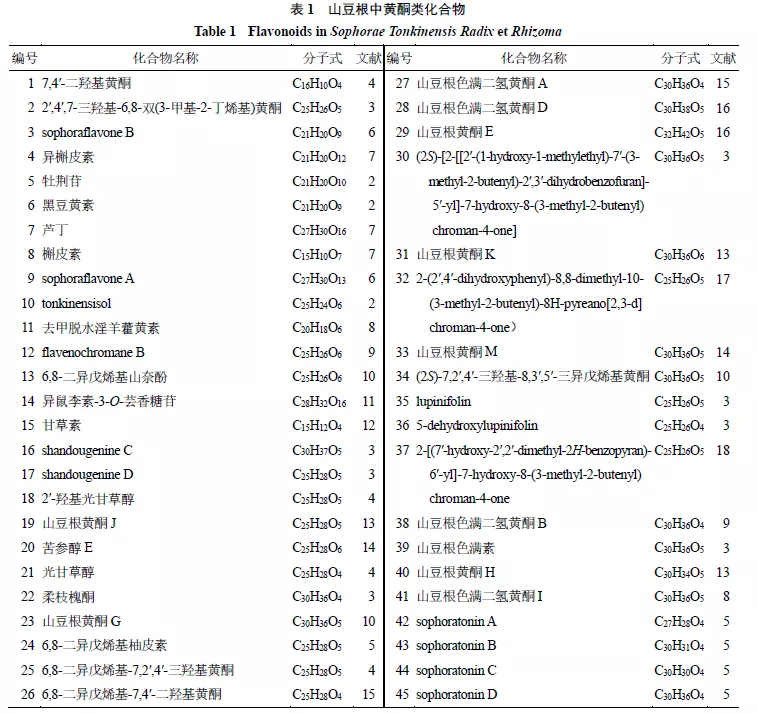
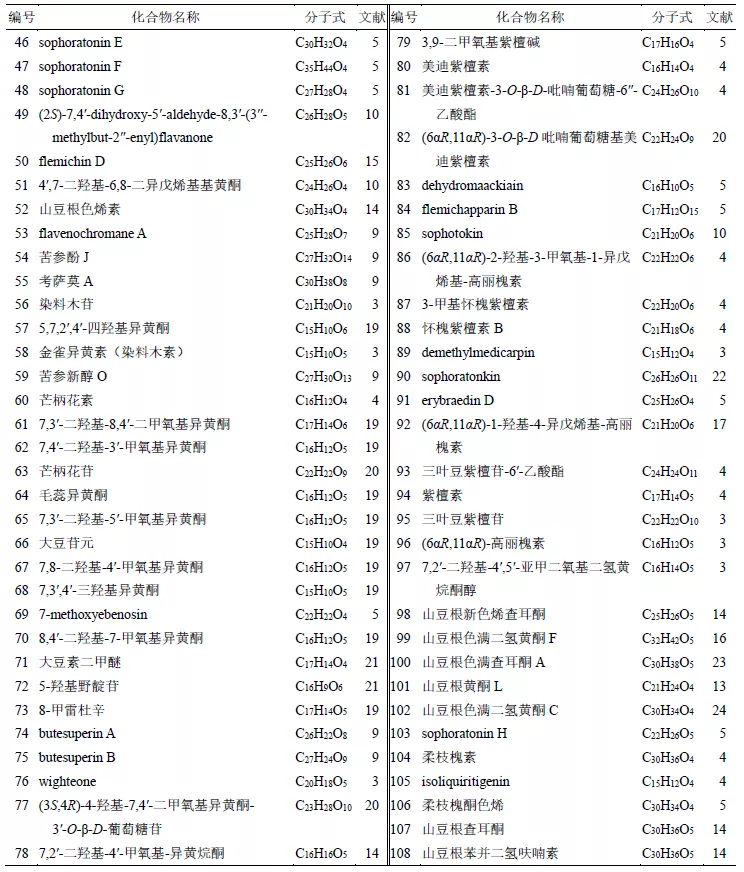
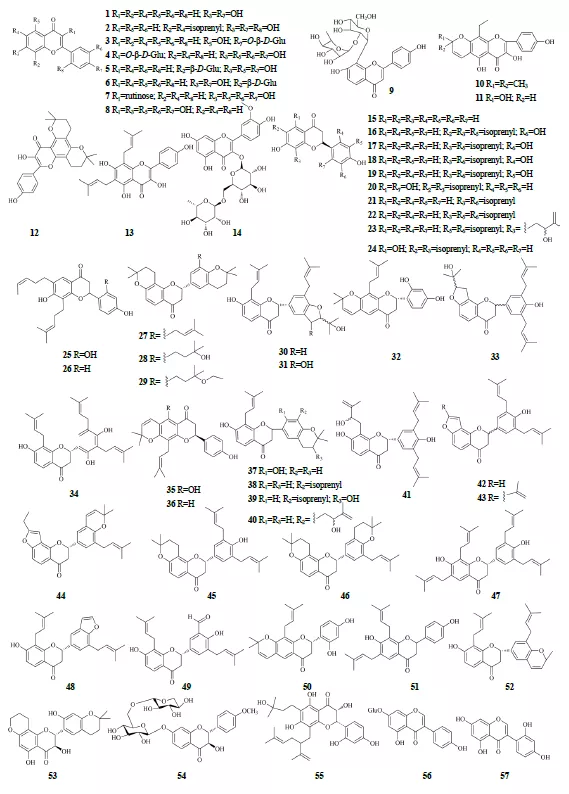
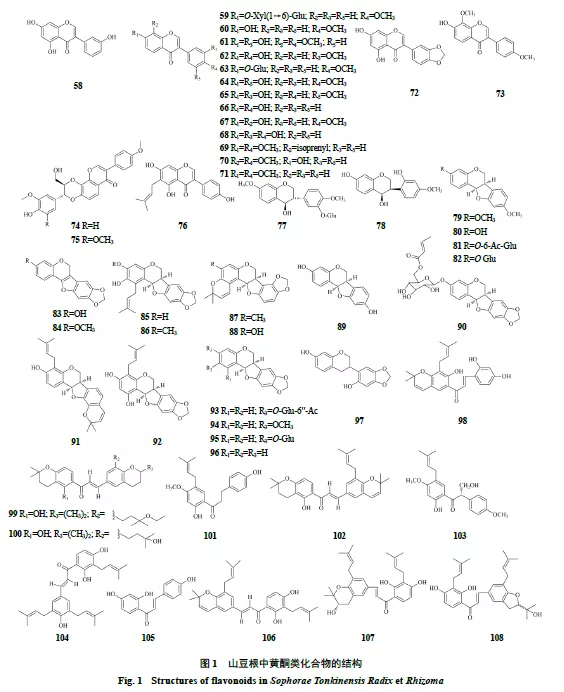
The content of flavonoids in the root of Sophora tonkinensis is higher, zouyulong et al[1]useAl(NO3)3And other chromogenic agents, and spectrophotometric method was used to determine the content ofThe total flavonoid content was5.7%The root of Sophora tonkinensis contains flavonoids, dihydroflavonoids, flavonols, isoflavones, chalcones, pterostilbene and other compounds, among which dihydroflavonoids are the most, and most of the substituents are hydroxyl, methyl and isopentenyl.Dengetc.[2]Daidzein, Vitexin and new flavonol compounds were isolated from the root of Sophora tonkinensistonkinensisol。Luoetc.[3]First isolated from the root of Sophora tonkinensis2A new isoprenyl flavanoneshandougenineC、shandougenineDAnd other known flavonoids such as genistein, homosophorin, and santalurin.Yooetc.[4]Isolated from the root of Sophora tonkinensis3New flavonoids2′-Hydroxyglycyrrhizin3-Pterostilbene methyl Huaihuai(6αR, 11αR)-2-hydroxy-3-methoxy-1-(3-methyl-2-butenyl)-maackiain。Ahnetc.[5]Isolated and identified from the root of Sophora tonkinensis7New flavonoidssophoratoninA~G, new flavonoid compoundssophoratoninH, and other known compoundslonchocarpolA, robinianone chromene7-methoxyebenosin、homopterocarpin、dehydromaackiai、flemichapparinB、erybraedin D、maackiapterocarpan AThis paper summarizes the results of100A variety of flavonoids, see table for specific information1The specific structure is shown in Fig1。
1.2 Alkaloids
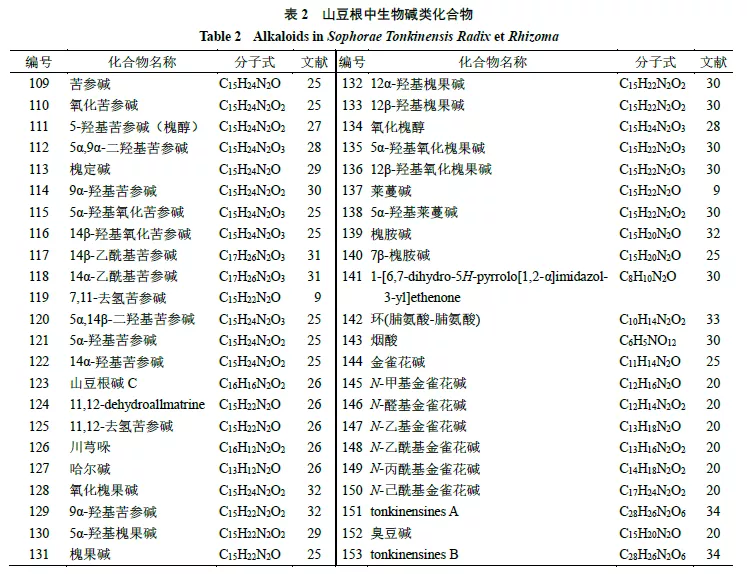
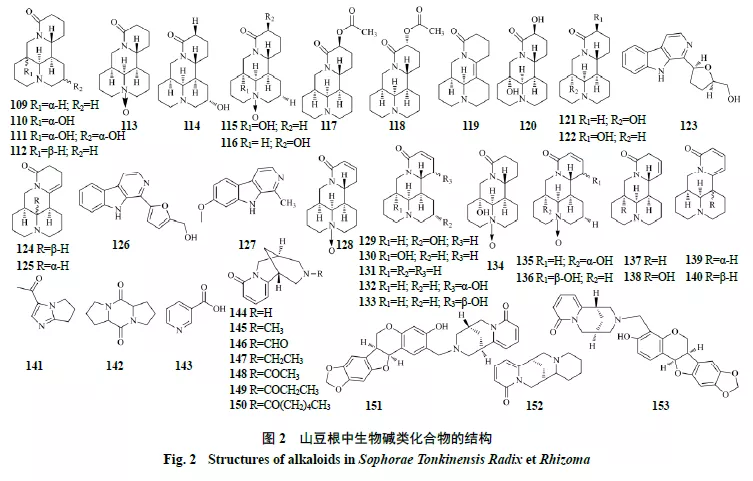
Alkaloids are the main effective components of Sophora tonkinensis, and the main active components are matrine and oxymatrine.Panetc.[20]The yam roots were sliced95%; A new alkaloid of genistein type was isolated for the first time (−)-N-Hexanoyl genistein andN-Methylgenistein(−)-N-Ethyl genisteinN-Aldehyde genistein(−)-N-Acetylgenistein(−)-N-Propionyl genistein(−)-Putrescine.Heetc.[25]Isolated from the root of Sophora tonkinensis for the first time2Sophora flavescens alkaloids, respectively5α,14β-Dihydroxymatrine and7β-Sophoramine base.Wuetc.[26]Isolated from the root of Sophora tonkinensis5Alkaloids, respectively, were from Sophora tonkinensisRadineC、11,12-dehydroallmatrine、11,12-dehydromatrine、Chuanxiongle, Haar base. The alkaloids in the root of Sophora tonkinensis are mainly quinolizidine alkaloids, which are matrine type, lupine type, genistein type and chickpea type, respectively. See table for details.The specific information.The following table is provided:the main alkaloids in the root of Sophora tonkinensis are as follows:the alkaloids in the root of Sophora tonkinensis are quinolizidine type, lupine2The specific structure is shown in Fig2。
1.3 Triterpenoids
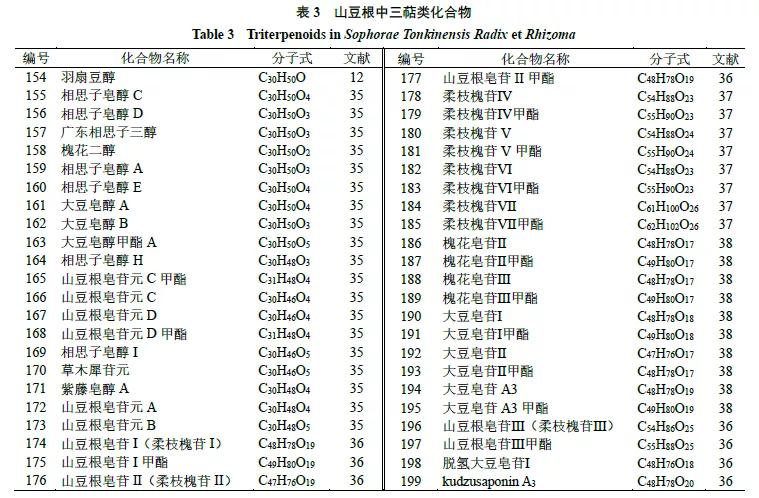
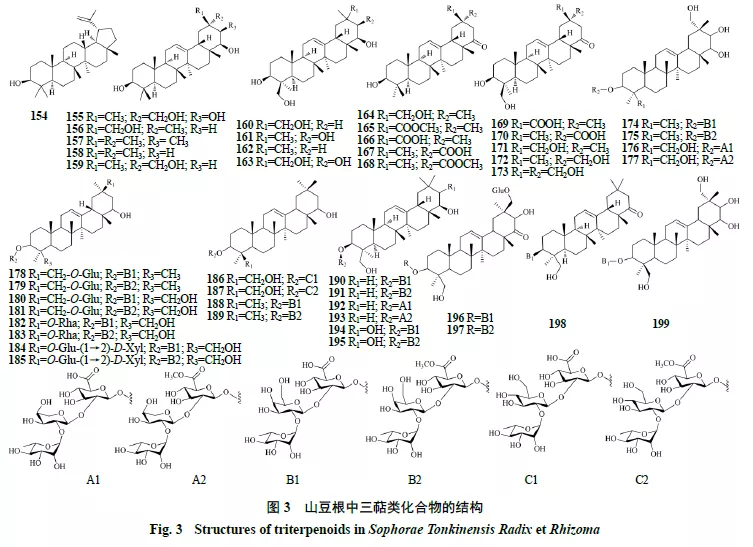
Triterpenoids in the root of Sophora tonkinensis30There are many kinds, most of which are oleanane type and less lupane type. See table for details3The specific structure is shown in Fig3。
1.4 other
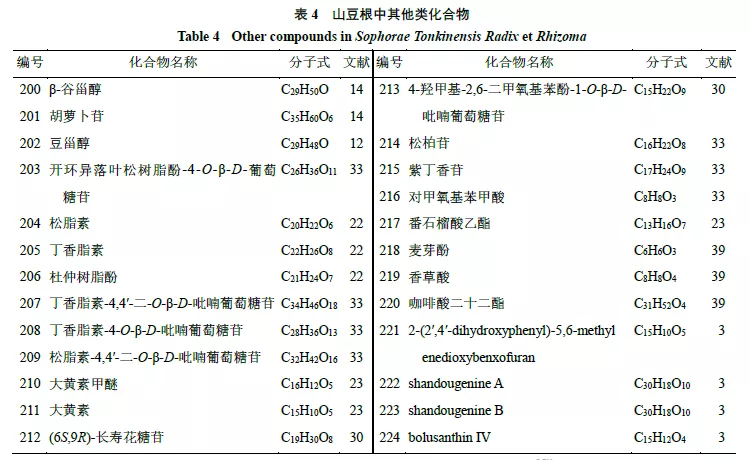
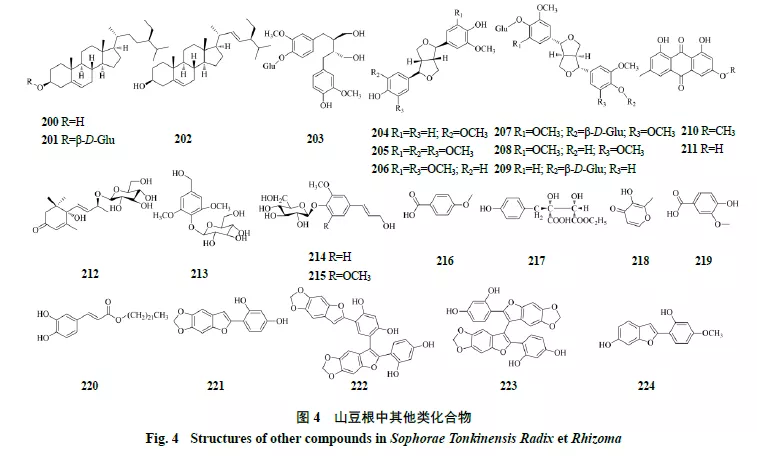
Sophora tonkinensis has eradicated flavonoids, alkaloids, triterpenoids and their saponins. It also contains anthraquinones, sterols, phenolic acids, alkenes and polysaccharidesClass compounds.Luoetc.[3]Isolated from the root of Sophora tonkinensisshandougenines A、shandougenines B、bolusanthin IV、2-(2′,4′-Dihydroxybenzene)-5,6-Methylene dihydroxy benzofuran, whereshandougenines A、shandougenines BFor the first time isolated2New benzofuran compounds. [22]See table for details of other components of Sophora tonkinensis root4The specific structure is shown in Fig4。
2 pharmacological action
2.1 antitumor activity
Extract of Sophora tonkinensis root inhibits human non-small cell lung cancerA549Cells and melanomaB16-BL6Cell proliferation and inhibition were positively correlated with the concentration of extract[40-41]。Chuietc.[42]It was found that the extracts from the root of Sophora tonkinensis LHepG2Cell, human liver cancerHep3BCell, human breast cancerMDA-MB231CellsA549Cell and acute myeloid leukemiaKG-1The proliferation of cells was inhibited, and most of them were inducedMDA-MB231、HepG2andHep3BCell line apoptosis. Further studies showed that[42], the extract of Sophora tonkinensis root can activate aspartic protease3, thereby inducingHepG2cellDNAFragmentation, resulting in apoptosis, which was significantly reducedHepG2Cell viability. Yam Root Granules and decoction pieces can improveH22Tumor bearing miceS180Interleukin in serum of tumor bearing mice-2, interferon-γ、tumor necrosis factor-αEqual cytokine content, inhibiting tumor growth[43]。Lu Haibin, etc[44]The study showed that the polysaccharide from the root of Sophora tonkinensis increased byLewisThe thymus index of lung cancer mice increasedTLymphocyte subsetsCD4+ TCellsCD8+ TCell level andCD4+/CD8+Ratio to improve immunity and serum tumor necrosis factor in mice-α, vascular endothelial growth factor levels inhibit tumor cell growth.
2.2 Anti inflammatory and immune enhancing effects
Yam Root Granules and decoction pieces can inhibit the production of nitric oxide, nitric oxide synthase and other inflammatory factors; Reduce malondialdehyde and vitamins in mouse serumC, tumor necrosis factor-α, interleukin-6And prostaglandinsE2The anti-inflammatory mechanism of sophora root and its granules may be related to the adrenal cortical system, and through the inhibition of free radicalsInhibiting lipid peroxidation of cell membrane and alleviating inflammatory reaction[45]。Pterostilbene from Sophora japonica rootB[46]And pentenyl flavones8-Dipentenyl-7,4′-Diflavanone[15]、(2S)-[2-[[2′-(1-hydroxy-1-methylethyl)-7′-(3-methyl-2-butenyl)-2′,3′-dihydrobenzofuran]-5′-yl]-7-hydroxy-8-(3-methyl-2-butenyl)chroman-4-one](30)Hemerocallin(39)[47]. The human intestinal flora can convert the flavonoid glycosides in the roots of Sophora tonkinensis into the corresponding flavonoid aglycones, enhance its anti complement activity, thereby inhibiting the production of nitric oxide by cells, and enhancing the anti-inflammatory effect of the flavonoid compounds of Sophora tonkinensis[7]。Xiaetc.[10]The study found that pterostilbene compounds in the root of Sophora tonkinensissophotokinIt has anti neuroinflammatory effect,sophotokinIt can penetrate the blood-brain barrier and significantly inhibit nitric oxide and interleukin-1β, tumor necrosis factor-αAnd prostaglandinsE2Production ofProduce and inhibit nitric oxide synthase and tumor necrosis factor in microglia-α、Interleukin-1βAnd cyclooxygenase-2Expression of.SophotokincanBe able to communicate withPU.1Target binding inhibitionpeopleLeukocyte differentiation antigen14OfExpression, inhibitionTollLike receptor4signaling pathway、nuclear factor-κBSignaling pathway and mitogen activate protein kinase signaling pathway to inhibit the production of proinflammatory mediators. Matrine and Sophoridine in the root of Sophora tonkinensis[48]It can significantly reduce acetic acid-induced mucosal pain in mice; Oxymatrine and sophocarpine can significantly inhibit xylene induced ear swelling in mice.
The root of Sophora tonkinensis can also improve immunity. The non alkaloid compounds from the root of Sophora tonkinensis can cause immunosuppression to cyclophosphamide, which can improve the immunity of mice by improving the organ index of thymus and spleen, macrophage phagocytosis, hemolysin antibody; Inhibition of lipopolysaccharide inducedBLymphocyte transformation and concanavalinACaused byTLymphocyte transformation enhances specific immunity in mice[49]The polysaccharide from Sophora tonkinensis can significantly inhibit the abnormal increase of free radicals in mice caused by dexamethasone, significantly inhibit the activities of myeloperoxidase and xanthine oxidase, enhance the activity of glutathione peroxidase, remove abnormal free radicals and peroxides in vivo, protect thymus and spleen, and enhance the immune function of the body[50]。
2.3 Liver protection
The crude polysaccharide fraction (precipitation) obtained by water extraction and alcohol precipitation method of Sophora tonkinensis root and the alkaloid removal fraction in mother liquor can significantly reduceCCl4Abnormally elevated levels of alanine aminotransferase and aspartate aminotransferase in serum of rats caused by acute liver injury[51]The polysaccharide compounds from the root of Sophora tonkinensis had obvious protective effects on liver injury induced by paracetamol, and the polysaccharide compounds from the root of Sophora tonkinensis significantly alleviated the pathological changes of liver injury in mice; It has a strong scavenging effect on free radicals; In vivo, it can inhibit the production of aspartate aminotransferase, malondialdehyde and reactive oxygen species, and increase the content of glutathione, glutathione peroxidase, total superoxide dismutase and catalase in the liver, so as to improve the antioxidant activity of mouse liver[52]Ganyanling injection is an extract of Sophora tonkinensis root, which can improve hepatitis B virus(hepatitis B virus,HBV)Liver tissue lesions in transgenic mice, which were significantly reducedHBVSurface antigenHBV-DNA; Clinically, it can be used to treat chronic hepatitis and active hepatitis[53-54]。
2.4 Effects on cardiovascular system
Huang Xiaoyan et al[55]Objective to study the hemodynamic effects of oxymatrine on spontaneously hypertensive rats10Week old spontaneously hypertensive rats were randomly divided into4Group A: control group, captopril positive control group and Oxymatrine30、60 μg/gGroup, continuous administration21Weeks, hemodynamic indexes were measured. The experimental results showed that Oxymatrine could reduce theSystolic blood pressure and diastolic blood pressure in spontaneously hypertensive rats increase left ventricular systole/Maximum diastolic rate; Oxymatrine group also increased left ventricular systolic pressure and decreased left ventricular end diastolic pressure, thereby improving cardiac systolic and diastolic function caused by hypertension and delaying heart failure. Oxymatrine can also reduce brain edema and cerebral infarction area in rats with cerebral ischemia-reperfusion, and improve neurological function. E2Correlation factor2(nuclear factor E2 related factor 2,Nrf2)/Heme oxygenase-1(hemeoxygenase,HO-1)Expression of,HO-1andNrf2The number of positive cells was significantly increased and the degree of lipid peroxidation in rat brain tissue was reduced. The neuroprotective effect of oxymatrine on cerebral ischemia-reperfusion may be related to its activationNrf2/HO-1Pathway related[56]。
2.5 Other roles
2.5.1 Role of gastrointestinal tract The methanol extract of Sophora tonkinensis root has antidiarrheal effect on diarrhea mice caused by castor oil, and its antidiarrheal effect is positively correlated with the dose of Sophora tonkinensis root. The extract of Sophora tonkinensis root can reduce the emptying index of mice and prolong the defecation time of semi-solid feces in mice, and its mechanism may be through regulating the water and electrolyte permeability of intestinal mucosa, or by inhibiting the abnormal increase of prostaglandins; The ethanol extract of the root of Sophora tonkinensis can inhibit the spasm of rabbit smooth muscle caused by acetylcholine. The contraction frequency of rabbit jejunum decreases with the increase of the concentration of the methanol extract of the root of Sophora tonkinensis. The mechanism may be related to blockingCa2+Channel related[57]。
2.5.2 Hypoglycemic The ethyl acetate extract of Sophora tonkinensis root can specifically activate the adenylate activated protein kinase pathway to promote2Type 2 diabetes modelKK-AymiceGlucose transporter4Transfer increases glucose uptake, improvesKK-AyHyperglycemia and hyperinsulinemia in mice; At the same time, it can reduce total cholesterol, triacylglycerol, low-density lipoprotein cholesterol and free fatty acids, increase high-density lipoprotein cholesterol, reduce blood lipids, and protect liver and pancreas injury caused by diabetes.The results showed that the treatment of diabetes mellitus could reduce the blood lipid level, and the treatment of diabetes mellitus could reduce the blood lipid level, and the treatment of diabetes mellitus could reduce the blood[58]。
3 epilogue
The chemical composition of the root of Sophora tonkinensis is complex, which mainly contains alkaloids, flavonoids, triterpenoids, phenolic acids, polysaccharides and other compounds. At present, there are many reports on the pharmacological effects and mechanisms of alkaloids, flavonoids and polysaccharides in the root of Sophora tonkinensis, and there is a lack of research on other components. The root of Sophora tonkinensis is a traditional Chinese medicine with a long history of medication. It was first recorded in many ancient books such as Kaibao Materia Medica, compendium of Materia Medica, Jingyue encyclopedia, and materia medica preparation in Song Dynasty. In ancient books, Zhongshan Dougen is mostly used to treat sore throat, cough due to lung heat, swollen gums, jaundice due to damp heat, etc. With the deepening of modern research, it is found that Sophora tonkinensis also has the effects of protecting cardiovascular system, anti-tumor, protecting liver, increasing blood glucose and so on. However, studies on the pharmacological effects of Sophora tonkinensis are mostly at the cellular or animal level, and it is still necessary to further explore its pharmacological mechanism and metabolic rules in combination with the relevant knowledge of molecular biology, metabolomics and other disciplines.
Conflict of interest
References (omitted)
Come ; Yi, Liu Suxiang, Tian Chengwang, Chen Changqing. Research progress on chemical constituents and pharmacological effects of Sophora tonkinensis root [J] . Chinese herbal medicine, 2021, 52 (5): 1519 -1521
