
Pick To:Salvia miltiorrhiza, which contains tanshinones, salvianolic acids, volatile oils, polysaccharides, nitrogen-containing compounds and other chemical components, has the effects of anticoagulation, anti-inflammatory, antioxidant, anti fibrosis, anti-tumor, and organ protection, and has become a commonly used traditional Chinese medicine in the compatibility of traditional Chinese medicine and related preparations. Based on the chemical components and pharmacological activities of Salvia miltiorrhiza, the specificity, effectiveness, measurability, blood entering components and network pharmacology of the components were predicted5Quality marker of Salvia miltiorrhiza from different angles(quality marker,Q-Marker)Make analysis and prediction, and recommend that the6Phenolic acids (tanshinol, Protocatechualdehyde, rosmarinic acid, purpuric acid, salvianolic acidAAnd salvianolic acidB)And4Species of tanshinones (dihydrotanshinonesI, cryptotanshinone, TanshinoneIAnd TanshinoneIIA)As Salvia miltiorrhizaQ-MarkerIn order to establish a more scientific quality evaluation system to solve the quality problems of Salvia miltiorrhiza, and provide references for formulating high-level quality standards.
Salvia miltiorrhiza is a Labiatae plantSalviamiltiorrhiza Bge.The dried roots and rhizomes were first published in Shennong materia medica Sutra and were listed as top-grade. Later generations of Wupu materia medica and rihuazi materia medica have recorded. Salvia miltiorrhiza is bitter in taste and slightly cold in nature. It enters the heart and liver meridians, and has the effects of activating blood circulation and removing blood stasis, dredging meridians and relieving pain, clearing the heart and removing vexation, cooling blood and eliminating carbuncle[1]Mainly produced in Hebei, Shanxi, Shaanxi, Shandong, Henan, Jiangsu, Zhejiang, Anhui and other places[2]Pharmacological studies have shown that the components of Salvia miltiorrhiza have the effects of scavenging free radicals, anti-inflammatory, antioxidant, inhibiting platelet aggregation, and expanding blood vessels[3-5],Clinically, it is mainly used to protect cardiovascular and cerebrovascular system, protect liver, anti-inflammatory, anti-oxidation, anti-tumor, anti fibrosis, etc[6]With the more and more extensive clinical application of Salvia miltiorrhiza, its quality control problems such as unclear pharmacodynamic substances, single quality evaluation index, imperfect quality control system, and weak correlation between traditional efficacy and modern pharmacological activity mechanism and material basis need to be solved. Therefore, on the basis of summarizing the research progress of the chemical constituents and pharmacological activities of Salvia miltiorrhiza, the quality marker(quality marker,Q-Marker)In order to provide the basis for the accurate evaluation and control of the quality of Salvia miltiorrhiza Bge.
1 chemical composition
More than 100 kinds of chemical components have been isolated and identified in Salvia miltiorrhiza, mainly including tanshinones, salvianolic acids, volatile oils, polysaccharides, nitrogen-containing compounds, etc.
1.1 Tanshinones
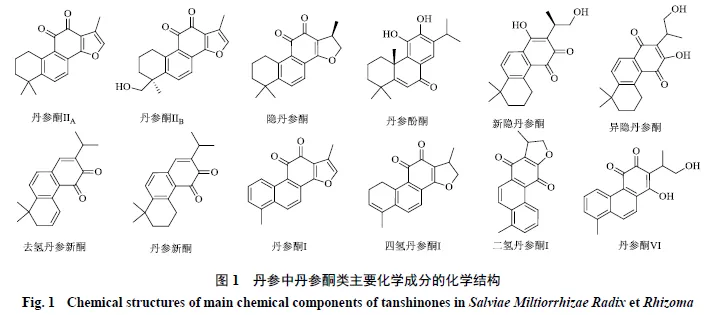
Tanshinones in Salvia miltiorrhiza are mostly diterpenes, which are fat soluble and mainly synthesized and accumulated in the root periderm of Salvia miltiorrhiza. Currently separated50More than species, such as TanshinoneI、Tanshinone iia 、Tanshinone iib , cryptotanshinone, dihydrotanshinoneI, isocyantanshinone, tanshinone, etc[7-8]The biosynthesis of tanshinones includes the synthesis, cyclization, and hypotanshinone diene modification3Phases[9]According to the biogenic pathway of tanshinones[10], hypotanshinone diene is the second most important factor in the formation of the framework of tanshinone compounds1Step, through a series of biosynthetic pathways, and finally in cytochromeP450Tanshinone is formed under the catalysis of enzyme oxidase, decarboxylase, dehydrogenase and reductaseIIAAnd cryptotanshinone and other active ingredients[11]The chemical structures of the main chemical components of tanshinones are shown in Fig1。
1.2 Salvianolic acids
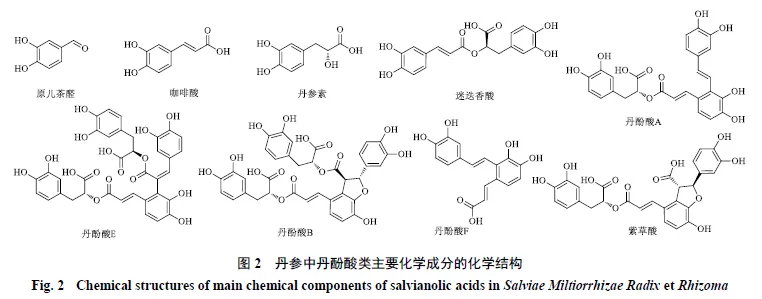
Salvianolic acids in Salvia miltiorrhiza are water-soluble and mainly synthesized and accumulated in the phloem and xylem of its roots. At present, salvianolic acids have been isolated from Salvia miltiorrhiza30More than species. The main active ingredient is salvianolic acidA , salvianolic acidB, Danshensu, caffeic acid, rosmarinic acid, protocatechuic aldehyde, shikonic acid, etc[12-13]。Among them, most salvianolic acids can be regarded as derivatives of caffeic acid, for example, rosmarinic acid is a dimer of caffeic acid and tanshinol, salvianolic acidBIt is a dimer of rosmarinic acid, salvianolic acidAfrom1Molecular tanshinol and2Molecular caffeic acid condensed[14]The chemical structures of the main chemical components of salvianolic acids are shown in Fig2。
1.3 volatile oils
The content of volatile oil in Salvia miltiorrhiza Bunge is low, and it has been extracted from Salvia miltiorrhiza BungeIt was isolated and identified from hair oil30More than compounds, mainly including peachTophenol, ferruginous alcohol, caryophyllene7-Isopropyl-1,1,4α-Trimethyl-1,2,3,4,4α,9,10,10α-Octahydrophenylene lactone, hexadecanoic acid, diisobutyl phthalate, caryophyllene macrorrhizaeD, oleic acid and n-eicosane, etc[15-17]。
1.4 Polysaccharides
Polysaccharides from Salvia miltiorrhiza have attracted extensive attention due to their functions of enhancing immunity and protecting the liver[18]。Wangetc.[19]Polysaccharides were isolated from Salvia miltiorrhizaSMPA, which is composed of galactose, glucose, rhamnose, mannose and glucuronic acid. Wang Hong et al[20]Polysaccharides were obtained after purification of crude polysaccharides from Salvia miltiorrhiza by high flow rate ionic agarose gelSMP1andSMP0.5. Tangwei[21]Isolated from crude polysaccharide of Salvia miltiorrhizaSMP1、SMP2andSMP3 3Components and the corresponding activity studies were carried out.
1.5 Nitrogenous compounds and other components
The nitrogen-containing compounds isolated from Salvia miltiorrhiza includeneosalvianen、salvianen、salvianan、salviadione、5-(methoxymethyl)-1H-pyr-role-2-carbaldehydeAnd cyclophenyllactam, etc[22-23]In addition, Salvia miltiorrhiza also containssalviamone[24]And Salvia miltiorrhiza Spironolactone[25]And other lactone compounds.
2 pharmacological action
2.1 Pharmacological activity based on traditional efficacy of Salvia miltiorrhiza
2.1.1 activate blood circulation and remove blood stasis Studies have shown that TanshinoneIIABy expanding arteries, reducing blood viscosity and repairing damaged vascular endothelial cells, it can promote blood circulation and remove blood stasis[26]The different effective parts of Salvia miltiorrhiza can significantly improve the abnormal Hemorheology and coagulation function of acute blood stasis model rats, and the blood activating and stasis removing effect of the compatibility of total Salvia miltiorrhiza phenolic acid and total tanshinoneBetter[27]。Salvianolic acidA, salvianolic acidB, TanshinoneIIAAnd TanshinoneICan act on thrombin, plasminogen activator inhibitor-1, peroxideChemosome proliferator activated receptorα、3-hydroxyl3-Methylglutaryl coenzymeAReductase and other key targets of blood stasis, giving play to the effect of activating blood circulation and removing blood stasis[28]。
2.1.2 Tongjing Zhitong Xuqinfang[29]Through clinical research, it is found that Danshen injection at Sanyinjiao acupoint can not only dredge meridians and activate blood circulation, but also enhance the drug effect and give better play to the analgesic effect. The estrogen like bioactivity of total tanshinones can inhibit the excessive secretion of progesterone and reduce prostaglandinsF2Level, inhibit the strong contraction of uterine smooth muscle, and achieve the effect of treating primary dysmenorrhea[30]。
2.1.3 Clear your mind and get rid of trouble Salvia miltiorrhiza is cold and enters the heart meridian. It has the effects of clearing the heart and cooling blood, removing annoyance and calming the mind. The "herbal medicine Chongyuan" says that "it can stop annoyance and replenish qi, and treat the evil Qi of the heart. The husband can stop annoyance and treat the evil of the heart, stop fullness and treat the evil of the abdomen, and benefit the healthy qi, so it can treat the evil Qi". 《Chinese Pharmacopoeia》2015The Chinese patent medicines used to treat palpitations in the79Pieces, including176The frequency of Salvia miltiorrhiza was the highest, which was31second[31]Clinical research shows that Danshen injection at Anmian point can effectively treat intractable insomnia[32]Salvia miltiorrhiza injection DC iontophoresis in the treatment of cervical insomnia can also reduce the adverse reactions of sleeping pills[33]。
2.1.4 Cooling blood and eliminating carbuncle Salvia miltiorrhiza, which is cold and enters the blood, can not only cool blood and activate blood circulation, but also disperse blood stasis and eliminate carbuncle. It can be used for sore carbuncle swelling and pain caused by heat toxin and blood stasis. According to the Taiping Shenghui prescription, Salvia miltiorrhiza was taken with hot wine to treat cold hernia, pain in the lower abdomen and Yin, spontaneous sweating, etc; If the vaginal organs are painful or swollen, Danshen powder will be selected[34]。
2.2 Pharmacological activity based on the expanding efficacy of Salvia miltiorrhiza
2.2.1 Anticoagulant Salvia miltiorrhiza can inhibit platelet aggregation and activation, prevent microthrombosis, promote nitric oxide production, expand blood vessels, improve blood flow, and improve blood hypercoagulability, thus playing an anticoagulant role[35]Tanshinol inhibits the disulfide bond isomerization of platelet proteinsEnzyme endoplasmic reticulum protein57And integrinsαIIbβ3To significantly reduce thrombin induced platelet aggregation[36]。Salvianolic acidAWithout affecting the coagulation function, it can increase the content of cyclic adenosine monophosphate in platelets and inhibit thrombin and adenosine diphosphate(adenosine diphosphate,ADP)And arachidonic acid-induced platelet aggregation, with significant antithrombotic activity[37]. TanshinoneIIAIt can induce the differentiation of vascular intimal smooth muscle apoptosis, improve the state of vascular smooth muscle cells, and inhibitADPAnd collagen induced platelet aggregation[38]; TanshinoneIIASodium sulfonate can increase coronary flow, improve myocardial hypoxia tolerance, improve myocardial metabolic disorder, and effectively inhibit platelet aggregation and antithrombotic formation in patients with coronary heart disease and heart failure[39-40]In vitro antihemogenic effect of cryptotanshinoneThe relative potency of plate aggregation was about salvianolic acidBOf40Times, and the study proved that cryptotanshinone was the pharmacodynamic substance of anti platelet aggregation in Salvia miltiorrhiza[41]。
2.2.2 antiinflammatory Salvianolic acids and tanshinones in Salvia miltiorrhiza have certain therapeutic effects on various inflammatory models. Salvianolic acidACan effectively reduce lipopolysaccharide(lipopolysaccharide,LPS)In the spleen of septic micetumor necrosis factor-α(tumor necrosis factor-α,TNF-α), interleukin-6(interleukin-6,IL-6)Content of, increasingIL-10It can effectively inhibit spleen inflammation[42]. Danshensu andTNF-αThe target has strong binding force and can reduce theLPSStimulation of mouse peritoneal macrophages, competitive inhibitionTNF-αMediated inflammatory response[43]. TanshinoneIIABy reducingLPSStimulate inflammatory cytokines produced by mouse monocyte macrophages and inhibit them in a concentration dependent mannerNIK-IKKAnd mitogen activated protein kinase(mitogen-activated protein kinase,MAPK)Activation of the signaling pathway, thereby inhibitingLPSInduced nuclear factor-κBArrestin-α(inhibitory protein-α of nuclear factor-κB,IκB-α)Degradation and nuclear factor-κB(nuclear factor-κB,NF-κB)Activation to exert anti-inflammatory activity[44]. liyuanyuan et al[45]Through the xylene induced mouse ear swelling model andLPSThe study of mouse peritoneal macrophage inflammation model stimulated by Salvia miltiorrhiza water-soluble components can significantly inhibit the degree of mouse ear swelling andIL-6The phagocytic ability of mouse peritoneal macrophages to neutral red was significantly enhanced.
2.2.3 antioxidant The phenolic hydroxyl groups in the structure of salvianolic acids have the characteristics of easy oxidation. Liweitao et al[46]Research shows that,4The antioxidant activity of salvianolic acids was caffeic acid > salvianolic acidB> salvianolic acidA> Danshensu. Salvianolic acidBCan enhance superoxide dismutase(superoxide dismutase,SOD)And glutathione peroxidase activity, reducing malondialdehyde(malondialdehyde,MDA)Content, reduce the levels of creatine kinase and lactate dehydrogenase, scavenge excess oxygen free radicals in the body, and inhibit their overproduction and accumulation. Its antioxidant effect may be related to the induction of bone marrow mesenchymal stem cells activating nuclear factorE2Correlation factor2-Antioxidant response element signaling pathway related proteinThe expression of[47-48]. salvianolic acidACan reduce the total antioxidant capacity, reduceMDA, oxidized glutathione, andTNF-αLevels, inhibition of caspases-3Activity, elevatedSODlevel[49],Upregulation of antioxidant genesSOD, glutathione peroxidase1Expression of[50]。Danshensu can reduceH2O2In vascular endothelial cells induced injuryMDAContent, increaseSODActivity, enhance the ability of cells to scavenge oxygen free radicals, and improve the viability of vascular endothelial cellsH2O2The induced oxidative damage of vascular endothelial cells plays a protective role[51]。
2.2.4 Antifibrotic By inhibiting myofibroblast activation and extracellular matrix deposition, Salvia miltiorrhiza can effectively resist fibrosis in a variety of tissues and organs, and restore the pathophysiological state of fibrotic organs to a certain extent[52]. TanshinoneIIAAt the stage of liver fibrosis, it can inhibit the activation of hepatic stellate cells, decompose excessive extracellular matrix, ensure the smooth liver microcirculation, and finally reverse liver fibrosis[53]. TanshinoneVIBy attenuating insulin-like growth factor-1(insulin-like growth factor 1,IGF-1)Induced phosphorylation of extracellular signal regulated kinases and phosphorylated protein kinasesB, thereby weakeningIGF-1Induced myocardial fibrosis[54]. salvianolic acidACan reduceαSmooth muscle actin(α-smooth muscle actin,α-SMA)、transforming growth factor-β1(transforming growth factor-β1,TGF-β1)AndSmad3 mRNALevels, by inhibitingTGF-β1/SmadSignaling pathway to delayCCl4Progression of liver fibrosis in rats[55]. salvianolic acidBCan be regulated by activating silent signaling factors1(silent information regulator 1,Sirt1)Mediated autophagy, attenuates renal fibrosisEpithelium in the process-Interstitial transformation(epithelial-mesenchymal transition,EMT)Expression of related proteins to improve renal dysfunction[56]。
2.2.5 Antitumor Salvia miltiorrhiza multi components have a wide range of anti-tumor effects through regulating cell cycle, inhibiting cell proliferation, inducing apoptosis and other biological processes. IIAIt can induce autophagy in lung cancer cells and arrest the cells inG0/G1Phase, which leads to the inhibition of cell proliferation, thus achieving the purpose of treating lung cancer[57]Cryptotanshinone can play an anti-tumor role by inducing tumor apoptosis, inhibiting the proliferation, metastasis and invasion of tumor cells, and anti angiogenesis of tumor cells[58]. Salvia miltiorrhiza diterpenoid quinonergic concentration related inhibition of human lung adenocarcinoma cellsPC9Proliferation, by triggering endoplasmic reticulum stress, activates protein kinasesRLike endoplasmic reticulum kinase-Eukaryotic translation initiation factoreIF2OfαSubunit pathway, promote apoptosis, and play an anti lung cancer role[59]。
2.2.6 Organ protection and other functions High dose of Salvia miltiorrhiza can improve liver function and liver tissue lesions, inhibitIL-1βExpression and nucleotide oligomerization domain like receptor thermoprotein domain related proteins3The activation of inflammasome can effectively reduce1,4-Dihydrogen-2,4,6-Trimethyl-3,5-PyridoxineBile stasis induced liver injury in mice induced by diethyl picolinate[60]. TanshinoneIIABy inhibiting insulin-like growth factor in cardiomyocytesIIApoptosis activated by receptor signaling and has the effect of protecting the heart[61]. salvianolic acidBBy reducingNF-κB p65、p53andBLymphoblastoma-2(B-cell lymphoma-2,Bcl-2)RelatedXProtein(Bcl-2 associated X protein,Bax)Expression, elevatedSirt1andBcl-2Expression, response to hypoxia/Hepatocyte injury induced by oxygen enrichment plays a protective role[62]。Salvia miltiorrhiza polysaccharide90~360 mg/kgIt can effectively prevent immune liver injury in mice, and its mechanism may be related to the reduction of nitric oxide in mouse liver by Salvia miltiorrhiza polysaccharideTNF-αandIL-1βThe generation of[63]. TanshinoneIIAIt can stabilize hemodynamics and improve cardiac function in patients undergoing off-pump coronary artery bypass grafting[64]Total salvianolic acid can improve the learning and memory impairment caused by ischemia-reperfusion, and significantly improve the hypoxia tolerance of cerebral ischemia-reperfusion mice[65]Salvianolic acid can also maintain mitochondria during myocardial ischemiaNa+, K+-ATPEnzymes andCa2+-ATPThe activity of the enzyme can effectively reduce the damage of cardiomyocyte mitochondria during ischemia-reperfusion and significantly reduce the myocardial infarction size[66]。
3 Q-MarkerPrediction analysis of
The origin, harvesting and processing methods, and storage conditions of Salvia miltiorrhiza all affect the type and content of its chemical components[67-69]。《Chinese Pharmacopoeia》2020Salvianolic acid in Salvia miltiorrhizaBThe content of shall not be less than3.0%, TanshinoneIIA, cryptotanshinone, and TanshinoneIThe total amount of shall not be less than0.25%In order to better and more scientifically control the quality of Salvia miltiorrhiza, according to academician liuchangxiao[70]ProposedQ-MarkerConcept, combinedQ-MarkerBased on the literature review and analysis, the scientific connotation and research ideas of Salvia miltiorrhiza BgeQ-MarkerThe overall analysis and prediction were carried out to provide a scientific basis for the establishment of the quality control method system of Salvia miltiorrhiza.
3.1 Based on plant phylogeny and chemical composition specificityQ-MarkerPredictive analysis
Labiatae are common worldwide220Yu Geng,3500More than species, of which, China has99Genera, ca800species[71]The chemical constituents of Salvia plants are mainly diterpenes, triterpenoids, alkaloids and glycosides, which have pharmacological activities such as anti-inflammatory, hypoglycemic, antibacterial, hepatoprotective, anti-tumor and antioxidant activities, among which the subgenus lycheeIncluding Salvia miltiorrhiza group, Salvia miltiorrhiza group, lychee grass group and duoqiusu group[72]。Salvia miltiorrhiza in southern Europe is mainly distributed in northern China, Salvia yunnanensis is mainly distributed in Southwest China, and Salvia miltiorrhiza is widely distributed; Salvia miltiorrhiza Bge. And Salvia yunnanensis Bge. Are both rhizomes, and the main components are salvianolic acids and tanshinones, while Salvia miltiorrhiza Bge. From southern Europe are mainly stems, leaves and inflorescences, and the main components are volatile oils; I, TanshinoneIIA, Protocatechualdehyde and salvianolic acidAIt is a common component of Salvia miltiorrhiza Bge. And Salvia yunnanensis Bge., but its content is quite different[73]. yangguiya et al[74]Tanshinones and salvianolic acids in the cortex and xylem of Salvia miltiorrhiza from different habitats were analyzed8The content determination of the main active ingredients revealed that the tanshinones (dihydrotanshinoneI, cryptotanshinone, TanshinoneIAnd TanshinoneIIA)The content of salvianolic acids (tanshinol, rosmarinic acid, purple oxalic acid, salvianolic acidB). The content determination results of components in roots, stems, leaves and flowers of Salvia miltiorrhiza showed that tanshinones and stachyose were the main components in roots, flavonoids and triterpenoids were the main components in aerial parts, and salvianolic acids were found in roots and aerial parts[75]. Zhang Ling et al[76]The determination of trace elements in Salvia miltiorrhiza Bge. And Salvia miltiorrhiza Bge. Showed that the contents of copper, boron, titanium and strontium in the roots and nickel, boron and copper in flowers of Salvia miltiorrhiza Bge. Were significantly higher than those of Salvia miltiorrhiza Bge.
3.2 Component validity basedQ-MarkerPredictive analysis
3.2.1 Correlation between ingredients and traditional efficacy Tanshinones have pharmacological effects such as activating blood circulation and removing blood stasis, dredging meridians and relieving pain, anticoagulant, antifibrotic and antitumor; ; Volatile oil and polysaccharides have anti-inflammatory, antioxidant and organ protective effects. The pharmacological effects of its main components are consistent with the traditional efficacy of Salvia miltiorrhiza in activating blood circulation and removing blood stasis, dredging meridians and relieving pain, clearing heart and removing vexation, cooling blood and eliminating carbuncle, which can be used as Salvia miltiorrhizaQ-MarkerSelection reference for.
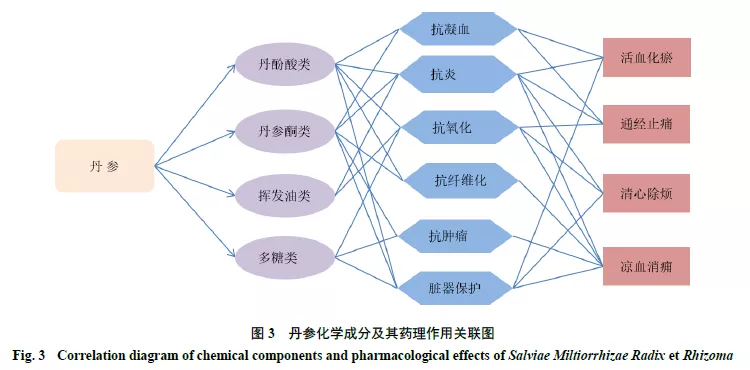
3.2.2 Correlation between ingredients and traditional medicinal properties Salvia miltiorrhiza has bitter taste and mild cold nature. It can return to the heart and liver meridian. Bitter drugs are mostly cold and cool. They have the effects of purging, purging fire, reducing Qi, strengthening Yin, drying dampness and so on. They mainly belong to the liver, lung and stomach meridian. Their chemical components mainly include alkaloids, volatile oils, glycosides, quinones, flavonoids and sugars[77]Antipyretics, antimalarial drugs, wind dampness dispelling drugs, antitumor drugs, purgative drugs, narcotic analgesics are generally bitter drugs[78]In the research on the correlation between the material components and drug properties of Labiatae traditional Chinese medicine, salvianolic acid, a component of salvianolic acidsA, salvianolic acidB, purple oxalic acid and TanshinoneI, TanshinoneIIAAnd other components are most closely related to cold and bitter taste[79]The chemical components of Salvia miltiorrhiza and their pharmacological effects are shown in Fig3According to the related pharmacological effects of salvianolic acids and tanshinones mentioned above, it is predicted that they can be used as Salvia miltiorrhizaQ-MarkerSelection reference for.
3.3 Based on the measurability of chemical compositionQ-MarkerPredictive analysis
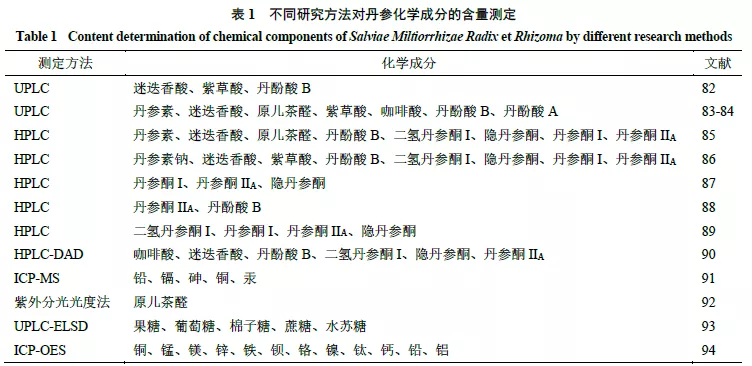
Chenjiahui et al[80]Ultra performance liquid chromatography tandem quadrupole time-of-flight mass spectrometry was used(UPLC-Q-TOF-MS/MS)Methods a total of72Ingredients, including Danshensu, caffeic acid, protocatechuic aldehyde, salvianolic acidA, salvianolic acidB, purple oxalic acid, TanshinoneIIA, TanshinoneIIB, neocryptotanshinone, dihydrotanshinoneI, isocryptotanshinone, etc. [74]adoptHPLCDanshensu, rosmarinic acid, purple oxalic acid, salvianolic acid were detected by HPLCB, dihydrotanshinoneI, cryptotanshinone, TanshinoneIAnd TanshinoneIIA 8The fingerprints of the chemical constituents of the cortex and wood of Salvia miltiorrhiza were analyzed. [81]High resolution mass spectrometry and grey correlation analysis were used to5The quality of Radix Salviae Miltiorrhizae from different producing areas was studied11Components (tanshinol, rosmarinic acid, salvianolic acidA, salvianolic acidB, salvianolic acidE, salvianolic acidFAnd TanshinoneIIA, TanshinoneIA, cryptotanshinone, dihydrotanshinone, tanshinone) were the common components of Salvia miltiorrhiza from different habitats. See table for the content determination of chemical components of Salvia miltiorrhiza by different research methods1。
3.4 Based on accessible blood componentsQ-MarkerPredictive analysis
Liu Yang et al[95]For ratsigThe prototype components and metabolites of Salvia miltiorrhiza water extract in vivo were analyzed, and it was clear that16Danshensu, protocatechuic aldehyde, caffeic acid and rosmarinic acid in the blood components were introduced into the blood as prototype components, and the rest12. Feng Ying et al[96]adoptLC-MS/MSMethod in ratsigTanshinone was detected in plasma after administration of tanshinone extractI, TanshinoneIIAAnd cryptotanshinone.Liuetc.[97]For tanshinol, rosmarinic acid, cryptotanshinone, dihydrotanshinone, TanshinoneIAnd TanshinoneIIA 6It was found that cryptotanshinone could be further biotransformed into Tanshinone in ratsIIA, and in the rat plasma after administration of salvia extract, TanshinoneIIAThe concentration of tanshinone wasIIAAnd accumulation of cryptotanshinone metabolites. Wang Xiaoping et al[98]adoptHPLC-MSMethods: after injection of Danhong injection into rats, the levels of3Salvianolic acids (rosmarinic acid, purple oxalic acid, salvianolic acidB)The content of salvianolic acid was detectedBThe content of rosmarinic acid and purpuric acid in rat plasma was significantly higher than that of rosmarinic acid and purpuric acid.
3.5 Prediction based on network pharmacologyQ-Markerforecastanalysis
At present, many scholars have applied technologies such as network pharmacology and molecular docking to the "ingredients" of Salvia miltiorrhiza-Target-access-Research on the network mechanism of "disease". Studies have shown that TanshinoneIIAWith core target protein kinaseB(proteinkinase B,Akt)1、IL-6, fructooligosaccharides, vascular endothelial growth factorA、MAPK1And epidermal growth factor receptor, which is the main component of Salvia miltiorrhiza in the treatment of ischemic stroke[99]; isocryptotanshinone, tetrahydro TanshinoneIAnd TanshinoneIIAActing onβ2Adrenergic receptors, humanα-Opioid receptor gene, prostaglandin endoperoxide synthase1, prostaglandin endoperoxide synthase2And other key targets to play a role in the treatment of chronic hepatitis by intervening in biological processes such as reactive oxygen species metabolism, vascular function of the circulatory system, and oxidative stress response[100]; TanshinoneIIAAnd cryptotanshinone viaAkt1、IL-6And tumor proteinsP53The regulation of signaling pathway plays a role in the treatment of osteoarthritis[101]; dihydrotanshinone and serine protease inhibitors that degrade the function of misfolded proteins in the liverA1Target, interferon inducible protein closely related to liver inflammatory response.The research of interferon induced protein in liver tissue of rats with chronic hepatitis B and chronic hepatitis B;the research of interferon induced protein in liver tissue of rats with chronic hepatitis B and chronic hepatitis B and its application in liver tissue of rats10Target, fibrinogen and synthesis of liver fibrinαChain targets and platelet-derived growth factor targets involved in inhibiting the early onset of liver fibrosis have strong correlation, and are the main active ingredients for the prevention and treatment of liver cirrhosis[102]。
4 epilogue
. On the basis of summarizing the chemical constituents and pharmacological effects of Salvia miltiorrhiza, the chemical constituents ofQ-MarkerThe prediction analysis found that although polysaccharides and volatile oil components in Salvia miltiorrhiza have certain biological activities, they are not suitable for selection due to volatile oil substances, low content in Salvia miltiorrhiza, poor repeatability and stability of content determination and other factorsQ-MarkerPolysaccharides are not suitable for selection because of their complex structure and difficult extraction and purificationQ-MarkerTherefore, salvianolic acids and tanshinones are recommended as components of Salvia miltiorrhizaQ-MarkerMain categories of ingredients screened; It is suggested that salvianolic acids such as Danshensu, protocatechuic aldehyde, rosmarinic acid, purpuric acid and salvianolic acid should be used as single ingredientsBAnd salvianolic acidA, and dihydrotanshinone, a tanshinone componentI, cryptotanshinone, TanshinoneIAnd TanshinoneIIA, as Salvia miltiorrhizaQ-Marker. In order to ensure the clinical efficacy of Salvia miltiorrhiza and its related preparations, it is recommended to conduct in-depth research on the above ingredients in order to establish a scientific quality evaluation and control method.
Conflict of interest All authors declare no conflict of interest
References (omitted)
Come Source: Feng; Hui, liuxianlei, chenyulong, Li Kun, Tang Jinfa. Prediction and analysis of chemical constituents, pharmacological effects and quality marker (q-marker) of Salvia miltiorrhiza [J] . Chinese herbal medicine, 2022, 53(2): 609-618 .