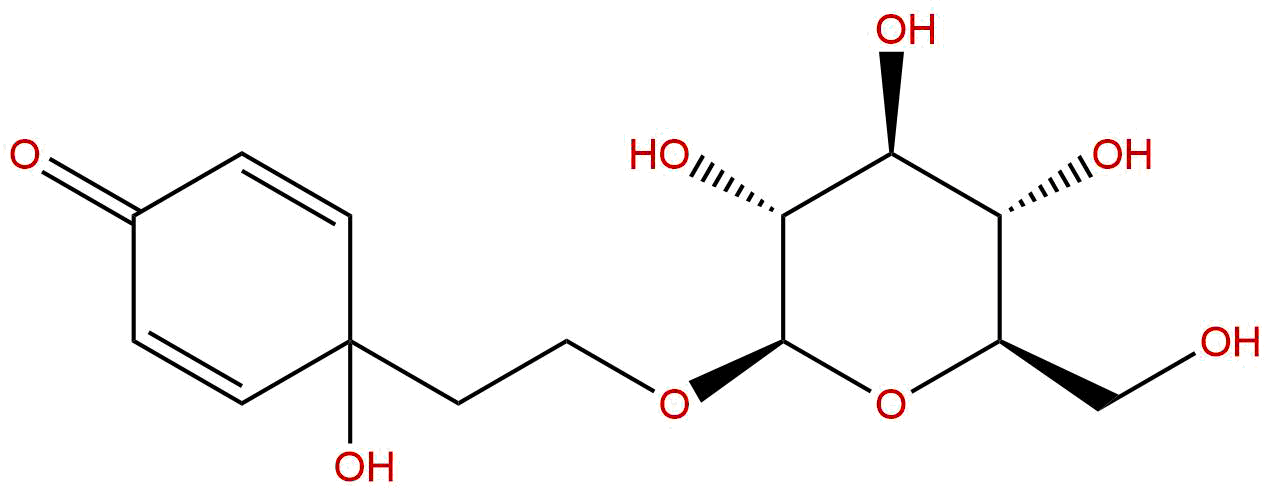
Storage conditions:Short-term storage at 2~8℃, long-term storage at -20 ~ -80℃
136.6800
-1.2295
-1.2295
35.2818
.4734
.4498
Low
22.6607
4.2681
Yes
Yes
No
No
Yes
No
0.0
Yes
Yes
Yes
Yes
Natural products, as an important source of drug discovery, play an irreplaceable role in the long history of human fight against diseases. From classic aspirin to complex paclitaxel, countless natural compounds and their derivatives derived from plants, microorganisms, and marine organisms have become a core component of modern pharmaceutical systems. Among numerous natural products with biological activity, phenolic glycosides have attracted much attention due to their wide pharmacological activity and relatively low toxicity. As a typical phenolic glycoside, Cornoside has gradually entered the field of vision of researchers in recent years, showing a wide range of biological activity potential, especially in the field of anti-tumor and diabetes complication treatment.
The first isolation and identification of spinoside can be traced back to the late 20th century, and its name comes from the plant genus it was originally discovered in - Kaempferol(Cornus). This compound has a unique chemical structure, consisting of a phenylethanolic glycoside linked to a six carbon sugar (usually glucose) through a glycosidic bond. This structural feature endows spinoside with good water solubility and specific biological activity. Early research mainly focused on its inhibitory effect on aldose reductase (AR). Aldose reductase is a key rate limiting enzyme in the polyol pathway, and plays a central role in the occurrence and development of diabetes complications (such as cataract, neuropathy, kidney disease). Research shows that echinocandin can effectively inhibit the activity of rat lens aldose reductase, and its half inhibitory concentration (IC ≮₀) is 150 μ M, which suggests that echinocandin has potential value in the prevention and treatment of diabetes cataract.
However, the pharmacological activity of spinoside goes far beyond this. In recent years, with the deepening of research, its anti-tumor activity has gradually become a new research hotspot. Preliminary cellular and molecular biology experiments have revealed that spinoside can exert multiple effects such as inhibiting tumor cell proliferation, inducing apoptosis, inhibiting angiogenesis and metastasis by regulating multiple signaling pathways and targets closely related to tumor occurrence and development, such as MCL1, BCL2, STAT3, MMP2, TOP1, HIF1A, TOP2A, MAPK1, ESR1, and CYP19A1. These findings greatly expand the potential application scope of spinoside, transforming it from a simple aldose reductase inhibitor to a lead compound with multi-target and multi pathway action characteristics.
Despite the encouraging multiple pharmacological activities exhibited by spinoside, there are still many challenges in its transition from laboratory research to clinical application. The in-depth pharmacokinetic characteristics, in vivo pharmacodynamics, toxicology, and systematic drug efficacy evaluation of it are not yet sufficient. This article aims to systematically review and summarize the research progress of spinoside in terms of chemical structure, plant origin, pharmacological activity, mechanism of action, and medicinal properties. It also looks forward to its future clinical application prospects, in order to provide comprehensive scientific basis for the in-depth development and utilization of this natural product.
The chemical structure of spinoside is the basis for its biological activity. From a chemical classification perspective, spinoside belongs to the phenylethanol glycoside class, which is a natural glycoside composed of phenylethanol or its derivatives as aglycones, connected to glycosides (mainly glucose, rhamnose, etc.) through β - glycosidic bonds. Its system name is usually 2- (3,4-dihydroxyphenyl) ethyl - β - D-glucopyranose, with CAS registration number 40661-45-8.
Chemical structural characteristics:
The core structure of spinoside consists of two parts: aglycone and glycosylation.
1. Glycoside component Hydroxytyrosol, also known as 3,4-dihydroxyphenylethanol. This catechol structural unit (catechol group) is a key pharmacophore for the antioxidant activity of spinoside. Two adjacent phenolic hydroxyl groups can effectively chelate transition metal ions (such as Fe ² ⁺, Cu ² ⁺) and act as hydrogen atoms or electron donors to scavenge free radicals (such as hydroxyl radicals and superoxide anion radicals), thereby interrupting the lipid peroxidation chain reaction.
2. Glycosyl portion Usually β - D-glucopyranose. The presence of sugar groups greatly alters the physicochemical properties of aglycones. Firstly, it endows spinoxylin with good water solubility, enabling it to dissolve and transport in physiological environments. Secondly, the steric hindrance effect and hydrophilicity of sugar groups can affect the binding mode and affinity of molecules with biological targets such as enzymes and receptors. In some cases, the glycosyl portion may also be hydrolyzed by glycosidases in the body, releasing active aglycones (hydroxytyrosol), thereby producing more direct pharmacological effects.
Physical and chemical property analysis:
Based on computational chemistry and experimental data, the physicochemical parameters related to the pharmacological properties of spinoside are as follows:
- Molecular weight (MW)316.3060 Da. This molecular weight meets the requirement of Lipinski's Rule of Five for molecular weight less than 500 Da, indicating its good oral absorption potential.
- Lipid water partition coefficient (LogP)-1.2295. A negative LogP value indicates that spinoside is a hydrophilic compound with a much higher solubility in water than in lipophilic media such as octanol. This is consistent with the structural feature of the molecule containing multiple hydroxyl groups (phenolic hydroxyl groups on glycosides and glycosides). Although high hydrophilicity is beneficial for dissolution and transport in aqueous phase, it may limit its passive diffusion through the lipid bilayer of the cell membrane, thereby affecting oral bioavailability.
- Topological Polarity Surface Area (TPSA): 136.68 Å ². TPSA is an important indicator for measuring the ability of molecules to penetrate cell membranes. It is generally believed that molecules with TPSA less than 140 Å ² have good oral absorption and potential to penetrate the blood-brain barrier. The TPSA of spinoside is slightly lower than 140 Å ², indicating that it may have some oral absorption capacity, but its ability to penetrate the blood-brain barrier is relatively low.
- Water solubility: 35.2818 mg/mL (calculated value). This value indicates that spinoside has excellent water solubility, far exceeding the solubility requirements of general drugs (usually>0.1 mg/mL). High water solubility is beneficial for the dissolution and absorption of drugs in the gastrointestinal tract, but it may also lead to their rapid clearance in the body.
- Blood-brain barrier (BBB) permeability: Low. Combined with its high polarity (negative LogP) and large TPSA, spinoside is difficult to cross the blood-brain barrier through passive diffusion. This limits its application in the treatment of central nervous system diseases (such as brain tumors and neurodegenerative diseases), but it may be an advantage for the treatment of peripheral tissue diseases (such as diabetes complications and peripheral tumors), which can reduce the side effects related to the central nervous system.
- HERG inhibition: No. HERG (human Ether - à - go Related Gene) potassium ion channels are closely associated with prolonged QT interval and fatal arrhythmias (apical twisted ventricular tachycardia) in the heart. Spinoside has no inhibitory activity on hERG channels, indicating a low risk of cardiac toxicity, which is an important safety advantage.
- Ames test: 0.0. The Ames test is used to detect the mutagenicity (genotoxicity) of compounds. The Ames test result of spinoside is negative, indicating that it does not pose a direct risk of DNA damage or mutagenesis and has low genetic toxicity.
In summary, the chemical structure of spinoside determines its characteristics of both antioxidant activity and good water solubility. Overall, its physicochemical properties show good drug like properties and preliminary safety characteristics, but also suggest potential limitations in oral absorption and central nervous system targeting.
Spinoside is not a widely distributed common compound, and its source is relatively specific, mainly existing in a few plant families and genera, among which the Cornaceae family (Cornaceae) and the Kaempferol genus(Cornus)Plants are the most famous. In addition, it has also been found in some plants of the Oleaceae and Scrophulariaceae families.
Main plant sources:
1. The genus Kaempferol in the family Cornaceae This is the most classic source of spinoside. For example, the commonly used medicinal plant in Europe, the Eurasian Cornus officinalis(Cornus mas The fruit and bark of Cornus officinalis, also known as European dogwood, are rich in spinoside. In addition, the distribution in North America Cornus florida(Big Flower Four Illumination Flower) and Cornus sericea(Red Ruimu) and others are also important sources. In China, plants of the same genus, such as Cornus officinalis The fruit of (Cornus officinalis) is a traditional Chinese medicinal herb, but its main active ingredients are iridoid glycosides (such as loganin and mononucleoside), with relatively low content of spinoside.
2. Oleaceae plants For example,Fraxinus Some species of the genus (Paracel), such as Fraxinus excelsior The bark and leaves of the European white wax tree have also been reported to contain spinoside.
3. Scrophulariaceae plants As follows:Verbascum Spinoside has also been detected in certain species belonging to the genus (Physcomitrella).
Extraction and Separation Purification Methods:
Efficient and high-purity extraction of spinoside from plant materials is the foundation for subsequent research and development. The extraction process usually follows the classic paradigm of natural product chemistry and is optimized using modern chromatographic techniques.
The pharmacological activity research of spinoside has gone through an expansion process from single target to multiple targets, and from specific diseases to multiple diseases. Its core activity is mainly reflected in the following aspects:
1. Aldose reductase inhibitory activity and prevention and treatment of complications of diabetes
This is the earliest discovered and studied pharmacological activity of spinoside. Aldose reductase (AR) is the first enzyme in the polyol pathway that is activated in a hyperglycemic environment, reducing glucose to sorbitol. The massive accumulation of sorbitol in cells leads to the imbalance of osmotic pressure and the increase of oxidative stress, which in turn leads to a series of complications of diabetes, such as cataract, retinopathy, peripheral neuropathy and nephropathy. Spinoside has been proven to effectively inhibit AR activity in rat lenses, with an IC ₅₀ value of 150 μ M. This activity is closely related to the catechol group in its molecular structure, which can form hydrogen bonds and π - π stacking with key amino acid residues in the AR active site (such as Tyr48, His110, Trp111), thereby competitively inhibiting the binding of glucose to enzymes. Although the IC ₅₀ value of 150 μ M is relatively less active compared to some potent synthetic inhibitors (such as epastat, where IC ₅₀ is at the nM level), as a natural product, its low toxicity and potential synergistic effects still make it valuable for research. In addition, its antioxidant activity may also synergistically enhance its anti cataract effect, as oxidative stress is also an important trigger for cataract formation.
2. Antitumor activity
In recent years, the anti-tumor activity of spinoside has become a research focus. Several in vitro cell experiments have shown that echinocandin has significant proliferation inhibition and cytotoxicity effects on a variety of human cancer cell lines, including but not limited to breast cancer, prostate cancer, lung cancer, liver cancer and colon cancer cells. Its mechanism of action involves multiple levels:
- Inducing cell apoptosis Spinoside can induce tumor cell apoptosis through two pathways: endogenous (mitochondrial) and exogenous (death receptor). Research has shown that it can downregulate the expression of anti apoptotic proteins MCL1 and BCL2, while upregulating the expression of pro apoptotic protein BAX, leading to a decrease in mitochondrial membrane potential, release of cytochrome c, activation of Caspase-9 and Caspase-3, and ultimately triggering an apoptotic cascade reaction. In addition, it can upregulate the expression of death receptors (such as Fas) and activate Caspase-8.
- Inhibit cell proliferation and cycle arrest Spinoside can block tumor cells in the G0/G1 or G2/M phase by regulating the expression of cell cycle related proteins such as Cyclin D1, CDK4, and p21, thereby inhibiting their unlimited proliferation. This effect is related to the regulation of the MAPK1 (ERK2) signaling pathway, which is a key hub for regulating cell proliferation and differentiation.
- Inhibit tumor metastasis Spinoside can inhibit the migration and invasion ability of tumor cells. The mechanism is related to the downregulation of the expression and activity of matrix metalloproteinase MMP2. MMP2 can degrade the extracellular matrix and is a key enzyme for tumor cells to break through the basement membrane and undergo metastasis. In addition, it can also reduce the transcription of downstream metastasis related genes such as VEGF and MMP9 by inhibiting the phosphorylation of the STAT3 signaling pathway.
- Inhibit angiogenesis The growth and metastasis of tumors rely on the provision of oxygen and nutrients by neovascularization. Spinoside can inhibit the expression and stability of hypoxia inducible factor HIF1A, which is a core transcription factor regulating the expression of angiogenic factors such as vascular endothelial growth factor (VEGF). By downregulating HIF1A, spinoside can reduce the secretion of VEGF, thereby inhibiting tumor angiogenesis.
- Affects hormone signaling pathways For hormone dependent tumors (such as breast cancer and prostate cancer), echinocandin shows potential endocrine regulation activity. It can interact with the estrogen receptor ESR1 and inhibit the activity of aromatase CYP19A1. Aromatase is a key enzyme that catalyzes the transformation of androgen into estrogen and is highly expressed in breast cancer tissues. Inhibition of CYP19A1 can reduce the local estrogen level, thus inhibiting the growth of estrogen receptor positive breast cancer cells.
- Inhibition of Topoisomerase Spinoside also has inhibitory effects on DNA topoisomerases TOP1 and TOP2A. Topoisomerases are responsible for unwinding DNA supercoiled structures during DNA replication, transcription, and repair processes, and are important targets for anti-tumor drugs. Inhibiting the activity of these enzymes can lead to DNA damage, thereby inducing tumor cell death.
3. Antioxidant and anti-inflammatory activities
The catechol structure of spinoxyloside makes it an effective free radical scavenger and metal ion chelating agent. It can directly scavenge DPPH radicals, ABTS cationic radicals, and hydroxyl radicals, and inhibit lipid peroxidation. In addition, it can exert anti-inflammatory effects by inhibiting the activation of the NF - κ B signaling pathway, reducing the production of pro-inflammatory cytokines (such as TNF - α, IL-6, IL-1 β) and inflammatory mediators (such as NO, PGE2). These activities are closely related to their anti-tumor and anti diabetes complications.
The pharmacological activity of spinoside is not mediated by a single mechanism, but by acting on multiple molecular targets and signaling pathways, forming a complex network regulatory pattern. This multi-target characteristic is an important feature of it as a natural product and provides a theoretical basis for its application in complex diseases such as cancer.
Core molecular targets and signaling pathways:
Apoptosis related targets: MCL1 and BCL2
MCL1 and BCL2 are key anti apoptotic proteins in the Bcl-2 family, overexpressed in various tumor cells, and are important factors leading to chemotherapy resistance in tumor cells. Spinoside can downregulate the mRNA and protein levels of MCL1 and BCL2. The mechanism may involve inhibiting the PI3K/AKT/mTOR signaling pathway, which is an upstream key pathway regulating the expression of MCL1 and BCL2. By reducing the levels of these anti apoptotic proteins, spinoside increases mitochondrial outer membrane permeability, promotes cytochrome c release, and initiates the mitochondrial apoptosis pathway.
Signal transduction and transcription activator: STAT3
STAT3 is an important transcription factor involved in regulating cell proliferation, survival, angiogenesis, and immune escape. STAT3 is abnormally activated (continuously phosphorylated) in various cancers. Spinoside can inhibit the tyrosine phosphorylation of STAT3 (Tyr705 site), preventing its dimerization and translocation into the nucleus, thereby suppressing the transcription of downstream target genes such as Cyclin D1, Survivor, VEGF, MMP9. This explains the multiple roles of spinoside in inhibiting proliferation, inducing apoptosis, suppressing angiogenesis, and metastasis.
Extracellular matrix remodeling: MMP2
Matrix metalloproteinase MMP2 is a key enzyme that degrades type IV collagen (the main component of the basement membrane) and plays a central role in tumor invasion and metastasis. Spinoside can inhibit the enzymatic activity of MMP2 and downregulate its protein expression. This effect is partially achieved by inhibiting the MAPK/ERK and PI3K/AKT signaling pathways, which are important upstream signals regulating MMP2 transcription.
DNA Topoisomerase: TOP1 and TOP2A
TOP1 and TOP2A are essential enzymes in DNA replication and transcription processes. Spinoside has been found to inhibit the activity of these two enzymes. Its mechanism of action may be through intercalation between DNA double strands or binding with enzyme DNA complexes, forming stable "cleavable complexes" that prevent DNA strand reconnection, leading to DNA damage and cell death. This is similar to the mechanism of action of classical topoisomerase inhibitors such as camptothecin and etoposide.
Hypoxia response and angiogenesis: HIF1A
HIF1A is a core transcription factor for cells to cope with low oxygen environments. It is stably expressed in solid tumors due to internal hypoxia, driving the transcription of angiogenic factors such as VEGF. Spinoside can inhibit the activity of HIF1A through various pathways: on the one hand, it may reduce the translation of HIF1A protein by inhibiting the PI3K/AKT/mTOR pathway; On the other hand, it may accelerate the ubiquitination degradation of HIF1A by promoting its proline hydroxylase (PHD) activity. In addition, its antioxidant activity may indirectly inhibit the stability of HIF1A by reducing intracellular reactive oxygen species (ROS) levels.
Proliferation and differentiation signals: MAPK1 (ERK2)
MAPK1 (ERK2) is a key member of the RAS-RAF-MEK-ERK signaling pathway, which is crucial in regulating cell proliferation, differentiation, and survival. The regulation of MAPK1 by spinoside is bidirectional and may exhibit inhibition or activation under different cell types and conditions. In tumor cells, it is commonly observed that spinoside inhibits the phosphorylation of ERK, thereby suppressing cell proliferation.
Hormone signaling pathway: ESR1 and CYP19A1
For hormone dependent tumors, spinoside exhibits a dual effect. It can directly bind to the estrogen receptor ESR1 and exert a selective estrogen receptor modulator (SERM) like effect, which may manifest as an antagonistic effect. Meanwhile, it can also inhibit the activity of aromatase CYP19A1 and reduce the synthesis of estrogen in the body. This dual mechanism makes it unique in the treatment of estrogen receptor positive breast cancer.
Multi target networks and synergistic effects:
Spinoside forms a synergistic network by simultaneously acting on multiple targets mentioned above. For example, inhibiting STAT3 and HIF1A can simultaneously reduce the production of VEGF and strongly inhibit angiogenesis; Downregulation of MCL1/BCL2 and activation of Caspase cascade reaction can efficiently induce apoptosis; Inhibiting MMP2 and HIF1A can simultaneously inhibit metastasis and angiogenesis. This multi-target mode of action makes it difficult for spinoside to develop resistance and may achieve therapeutic effects at lower doses, thereby reducing toxic side effects.
To promote the application of spinoside from laboratory research to clinical practice, a systematic evaluation of its drug properties (Druglikeness) and pharmacokinetic (ADME) characteristics is necessary. Based on the physical and chemical properties parameters and preliminary research mentioned earlier, a preliminary evaluation of its potential for drug development can be conducted.
Drug Evaluation:
- Advantage:
- Complies with the drug classification rules The molecular weight (316 Da) and LogP (-1.23) both conform to the Lipinski Five Rules, indicating its fundamental potential as an oral medication.
- Good water solubility High water solubility is beneficial for the development and in vivo dissolution of drug formulations.
- Low risk of cardiac toxicity Lack of hERG inhibitory activity reduces the risk of arrhythmia.
- Low genetic toxicity risk A negative Ames test indicates that it does not have mutagenicity.
- Multi-target activity Its multiple activities such as anti-tumor, antioxidant, and anti-inflammatory make it advantageous in the treatment of complex diseases.
- challenge:
- Oral bioavailability may be low Although high polarity (LogP negative) and high TPSA are beneficial for water solubility, they limit their ability to penetrate intestinal epithelial cells through passive diffusion, resulting in poor oral absorption. This may be the biggest bottleneck for its medicinal properties.
- Metabolic stability Phenolic glycosides are easily hydrolyzed by gut microbiota or glycosidases in the liver in the body, producing glycosides (hydroxytyrosol). Although aglycones themselves are also active, the hydrolysis process may lead to a shortened half-life of spinoside itself and a shorter duration of drug efficacy. In addition, phenolic hydroxyl groups are prone to undergo phase II metabolism (such as glucuronidation and sulfation), leading to rapid clearance.
- Plasma protein binding rate High polarity compounds typically have lower binding rates with plasma proteins such as albumin, which may result in higher free drug concentrations but may also make them more easily filtered by the kidneys and rapidly excreted.
Speculation and Preliminary Study on Pharmacokinetic (ADME) Characteristics:
At present, there are few systematic studies on the pharmacokinetics of spinoside in vivo, but based on its structural characteristics and research on similar compounds, the following speculations can be made:
- Absorption Oral absorption may be poor and bioavailability may be low. Its absorption may partially rely on active transport by intestinal transporters such as glucose transporters GLUTs, as its glycosyl portion may be recognized. Improving its oral bioavailability may require the use of formulation techniques such as liposomes, nanoparticles, phospholipid complexes, or prodrug design.
- Distribution Due to its high water solubility, spinoside is mainly distributed in extracellular fluid and blood. Its apparent distribution volume (Vd) may be relatively small. As mentioned earlier, its ability to penetrate the blood-brain barrier is low and mainly distributed in peripheral tissues.
- Metabolism Metabolism is a key link in the in vivo disposal of spinoside. The main metabolic pathways may include:
1. hydrolysis In the intestine and liver, β - glucosidase can hydrolyze it into hydroxytyrosol and glucose. Hydroxytyrosol can then be further metabolized.
2. II combined reaction The phenolic hydroxyl groups on spinoxyloside and its hydrolyzed product hydroxytyrosol are excellent substrates for phase II metabolic enzymes such as UGT and SULT, which can undergo glucuronidation and sulfation to generate more water-soluble metabolites that are easily excreted from urine and bile.
- Excretion Spinoside and its metabolites are mainly excreted through the kidneys (urine) and bile (feces). Due to its high water solubility and low molecular weight, glomerular filtration may be the main clearance pathway, resulting in a shorter half-life.
Strategies for improving drug efficacy:
Given the challenges posed by the pharmacological properties of spinoside, future research directions should include:
1. Structural modification Chemical modification of the glycosyl or aglycone portion of spinoside, such as introducing lipophilic groups (such as acetyl, methyl) to improve LogP, or designing it as a prodrug (such as phosphorylating or esterifying phenolic hydroxyl groups), which is released after enzymatic hydrolysis in vivo.
2. Development of new formulations Using nanotechnology, such as lipid nanoparticles and polymer micelles, to encapsulate spinoside and improve its oral bioavailability, targeting, and stability.
3. combination therapy When used in combination with bioavailability enhancers (such as piperine, which can inhibit glucuronidation) or other anti-tumor drugs, it exerts a synergistic effect and reduces the effective dose.
Based on the existing pharmacological activity research and pharmacological evaluation of spinoside, it has shown potential clinical application prospects in the following fields, but also faces many challenges.
1. Anti tumor therapy
This is the most promising application direction of spinoside. Its multi-target mechanism, especially its simultaneous action on multiple key links such as apoptosis, proliferation, metastasis, and angiogenesis, gives it unique advantages in the treatment of complex and recurrent solid tumors.
- Potential indications: breast cancer (especially hormone receptor positive type), prostate cancer, lung cancer, liver cancer, colorectal cancer, etc.
- application mode The most likely application mode is not as a monotherapy, but as an adjuvant drug for chemotherapy or targeted therapy. For example, when used in combination with traditional chemotherapy drugs such as paclitaxel and cisplatin, it may overcome drug resistance and enhance chemotherapy efficacy by downregulating MCL1/BCL2. Combined with aromatase inhibitors (such as itraconazole), it may have a synergistic inhibitory effect on estrogen signaling. Combined with immune checkpoint inhibitors such as PD-1/PD-L1 antibodies, their anti-inflammatory and immunomodulatory activities may help improve the tumor microenvironment and enhance the efficacy of immunotherapy.
- challenge A large number of in vivo animal model experiments are needed to verify its anti-tumor activity and safety. We need to address the issue of low oral bioavailability and develop dosage forms suitable for clinical administration, such as injectable liposomes.
2. Prevention and treatment of complications of diabetes
As an aldose reductase inhibitor, echinocandin has potential value in the prevention and treatment of diabetes cataract, neuropathy and nephropathy.
- Advantage Compared to synthetic AR inhibitors such as epastat, spinoside, as a natural product, may have higher safety for long-term use. Its antioxidant activity can synergistically enhance and combat oxidative stress damage caused by high blood sugar from multiple perspectives.
- challenge Its AR inhibitory activity (IC ₅₀=150 μ M) is relatively weak and requires a higher concentration to achieve effective inhibition. Improving its in vivo AR inhibition efficacy is key. In addition, a long-term, chronic dosing regimen is required, with extremely high requirements for drug safety and tolerability.
3. Other potential applications
- Anti inflammatory and immune regulation Its anti-inflammatory activity makes it potentially applicable in the treatment of chronic inflammatory diseases such as arthritis and inflammatory bowel disease.
- neuroprotection Although the blood-brain barrier penetration is low, its glycoside hydroxytyrosol is known to have neuroprotective effects. Through prodrug design or special delivery systems, it may be possible to use it for the treatment of neurodegenerative diseases such as Alzheimer's disease and Parkinson's disease.
- Cosmetics and health products Based on its strong antioxidant activity, spinoside can be added as an active ingredient to anti-aging cosmetics or functional foods.
Future research directions:
1. In depth in vivo pharmacological and toxicological studies Conduct systematic animal model experiments to clarify its anti-tumor spectrum, effective dosage, administration route, and long-term toxicity.
2. Pharmacokinetic optimization Focus on studying how to improve its oral bioavailability, elucidate its metabolic pathways and metabolite activity in vivo.
3. Structure Activity Relationship (SAR) Study By synthesizing a series of spinoside analogues, systematically studying the effects of structural changes such as sugar group types and glycoside substituents on activity and pharmacokinetic properties, and searching for lead compounds with stronger activity and better drug properties.
4. Fine analysis of the mechanism of action Using omics techniques such as proteomics and transcriptomics, as well as chemical biology methods, to more comprehensively reveal the molecular network of its multi-target effects and clarify its direct targets of action.
5. Drug delivery system development To address its strong water solubility and poor lipid solubility, a targeted delivery system (such as tumor targeted nanoparticles) has been developed to increase its concentration at the lesion site and reduce systemic side effects.
Spinoside, a phenolic glycoside originating from plants such as Kaempferol, is gradually transforming from a classic aldose reductase inhibitor to a natural product lead compound with multi-target and multi pathway action characteristics. Its unique chemical structure endows it with a variety of biological activities such as antioxidant, anti-inflammatory, anti-tumor and prevention and treatment of complications of diabetes. Especially its ability to regulate multiple key targets such as MCL1, BCL2, STAT3, MMP2, TOP1, HIF1A, MAPK1, ESR1, CYP19A1, etc. in the field of anti-tumor treatment, indicates its enormous potential in the treatment of complex diseases.
However, the journey from natural products to innovative drugs for the conversion of thorn wood glycosides is still long and challenging. Its high polarity and low oral bioavailability are the main bottlenecks currently faced, while the comprehensive evaluation of in vivo efficacy, pharmacokinetics, and toxicology is still blank. Future research should focus on overcoming drug defects through structural modifications, novel formulations, and other means, and using modern molecular biology and pharmacology methods to further elucidate its mechanism of action.
Despite the long road ahead, the multi-target and low toxicity characteristics of natural products represented by spinoside are highly compatible with the current concepts of precision medicine and combination therapy. We have reason to believe that with the continuous deepening of research and technological progress, echinocandin and its derivatives are expected to provide new ideas and candidate drugs for human beings to overcome major diseases such as cancer and diabetes complications in the future. The continuous exploration of such natural products is not only an important direction for medicinal chemistry and pharmacology research, but also an unremitting effort for humanity to draw wisdom from nature and safeguard health.
Batch can search by a CAS number,one per line