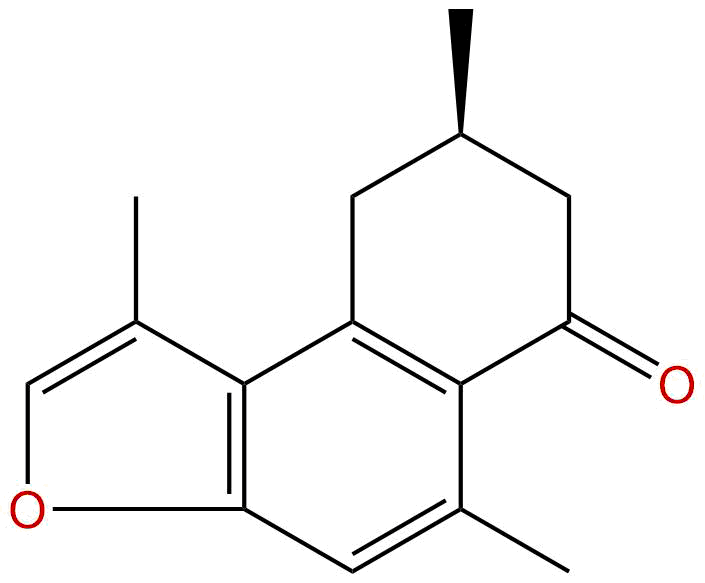
Introduction/Overview
Natural products have always been an important source of innovative drug discovery, and their structural diversity and wide range of biological activities provide unique molecular frameworks and pharmacological clues for addressing various disease challenges. Terpenes, as the largest class of natural products, have shown great potential in anti-inflammatory, anti infective, anti-tumor and other fields. Myrhone (CAS number: 183551-83-9) is one of them, which is a terpenoid compound isolated from traditional medicinal resin myrrh. As an ancient aromatic resin, myrrh is commonly used in traditional medical systems such as Ayurvedic medicine and traditional Chinese medicine to treat inflammation, infections, wounds, and various types of pain. Modern pharmacological research has gradually revealed its active substance basis.
Early research has found that myrrh ketone has significant anti malaria activity, indicating its application value in the field of anti infection. However, in recent years, research has further expanded its pharmacological spectrum, especially its powerful anti-inflammatory effects, which have attracted widespread attention. Inflammation is a common pathological basis for many acute and chronic diseases, such as arthritis, neurodegenerative diseases, metabolic syndrome, cancer, etc. The development of highly effective and low toxicity new anti-inflammatory drugs is currently a research hotspot. Myrrh ketone exhibits multi pathway and multi-target regulatory properties by acting on multiple key inflammatory targets, providing a solid scientific basis for its transformation from traditional medicinal ingredients to modern therapeutic drugs. This article aims to systematically review the chemical properties, plant sources, pharmacological activities, mechanisms of action, pharmacological properties, and clinical application prospects of myrrh ketone, in order to provide comprehensive references for the in-depth research and development of this compound.
Chemical structure and physicochemical properties
Myrrh ketone is a sesquiterpene compound. Its molecular formula is C15H24O and its molecular weight is 228.2910 g/mol. Structurally, myrrh ketone typically has a core skeleton of decalin and carries oxygen-containing functional groups (such as ketone groups), which is an important basis for its biological activity. Its specific stereoconfiguration has a decisive impact on its interaction and activity with the target.
In terms of physical and chemical properties, myrrh ketone exhibits typical lipophilic characteristics. The calculated lipid water partition coefficient (LogP) is 3.7949, indicating that the compound has good lipid solubility and is easy to penetrate cell membranes, but at the same time, it also means that its water solubility is poor. According to the predicted data, its water solubility is approximately 0.0020 mg/mL. Its topological polar surface area (TPSA) is 30.2100 Å ², which is a relatively small value, further confirming its low molecular polarity. These physicochemical parameters collectively determine the distribution and behavior of myrrh ketone in the body: high lipid solubility makes it easy to absorb and can efficiently penetrate the blood-brain barrier (predicted as "high"), which provides the possibility for its application in central nervous system related inflammatory diseases such as neuralgia, meningitis, Alzheimer's disease, etc. However, low water solubility also poses challenges for the development of its formulations, especially for intravenous drug formulations, which may require improvement through techniques such as salt formation, cyclodextrin inclusion, and nano formulations.
Plant sources and extraction methods
Myrrh ketone is mainly derived from the Burseraceae genus in the olive family(Commiphora)Plant resins, especially Commiphora myrrha(Nees) Engl. and Commiphora molmol Engl. and other species. These plants are mainly distributed in northeastern Africa (such as Somalia, Ethiopia) and southern Arabia. When the bark is damaged, a light yellow to reddish brown oily resin called myrrh will seep out, which gradually solidifies in the air.
The extraction and separation of myrrh ketone usually follow the standard process of natural product chemistry. Firstly, the dried myrrh resin is crushed and continuously extracted using organic solvents. Common solvents include petroleum ether, dichloromethane, ethyl acetate, etc., which utilize their lipophilicity to extract terpenoid components from resins. The crude extract obtained was subjected to preliminary separation by silica gel column chromatography, and different polar eluents (such as n-hexane ethyl acetate gradient system) were used to separate the components. The fraction containing myrrh ketone usually requires further purification, which can be achieved by preparative thin layer chromatography (PTLC) or high performance liquid chromatography (HPLC, normal or reverse phase) to obtain high-purity compounds. Modern analytical techniques such as gas chromatography-mass spectrometry (GC-MS) and nuclear magnetic resonance (NMR, including 1H-NMR and 13C-NMR) are key means for identifying the chemical structure of myrrh ketone. For sustainable development and increased yield, plant cell culture and synthetic biology methods have also been explored for the production of rare terpenoids, including myrrh ketone.
Pharmacological activity research
The pharmacological activity research of myrrh ketone has expanded from its initial anti malaria activity to a wider range of fields, among which anti-inflammatory activity is its most concerned core pharmacological effect.
-
anti-inflammatory activity Numerous in vitro and in vivo experiments have confirmed the powerful anti-inflammatory effect of myrrh ketone. In cell models, myrrh ketone can significantly inhibit the production of nitric oxide (NO) and prostaglandin E2 (PGE2) by macrophages (such as RAW264.7 cells) induced by stimuli such as lipopolysaccharide (LPS), which are key mediators of inflammatory response. In animal models, myrrh ketone has shown dose-dependent anti-inflammatory effects in acute inflammation models such as carrageenan induced rat paw edema, xylene induced mouse ear swelling, and chronic inflammation models such as Freund's complete adjuvant (CFA) induced arthritis. Its efficacy is often comparable to or better than commonly used nonsteroidal anti-inflammatory drugs (NSAIDs) in clinical practice.
-
Anti malaria activity As its earliest discovered activity, myrrh ketone acts against Plasmodium falciparum(Plasmodium falciparum)Specific strains exhibit inhibitory activity. Although its half maximal inhibitory concentration (IC50) may not be as good as some first-line antimalarial drugs, its unique chemical structure provides lead compounds for designing new antimalarial drugs, especially considering the increasingly severe problem of malaria parasite resistance.
-
Analgesic activity Consistent with the traditional analgesic use of myrrh, myrrh ketone also exhibits analgesic effects. Its analgesic mechanism may be related to anti-inflammatory effects (reducing pain inducing inflammatory mediators) and direct action on ion channels related to pain perception (such as TRP channels, which will be described below).
-
Other potential activities Based on its ability to resist inflammation and regulate key signaling pathways, myrrh ketone has also shown potential research value in the fields of anti-tumor (especially cancer associated with chronic inflammation), neuroprotection, metabolic diseases, etc. However, these activities still require further in-depth research to confirm.
Mechanism of action and molecular targets
The anti-inflammatory effect of myrrh ketone is not achieved through a single target, but exhibits the characteristics of multi-target and networked regulation, which enables it to intervene in multiple key links of the inflammatory cascade reaction. According to existing research, its effects involve the following main targets and pathways:
-
Nuclear factor kappa B (NF - κ B) signaling pathway This is one of the core mechanisms of the anti-inflammatory effect of myrrh ketone. NF - κ B is a key transcription factor that regulates the expression of inflammatory genes. Myrrh ketone can inhibit the activity of IKB kinase (IKBKB), prevent the phosphorylation and degradation of inhibitory protein I κ B, thereby causing NF - κ B dimers (such as p65/RELA) to remain in the cytoplasm and unable to enter the nucleus to initiate the transcription of inflammatory factors such as TNF - α, IL-6, and NOS2 (inducible nitric oxide synthase).
-
Signal transduction and transcription activator 3 (STAT3) pathway STAT3 is another important pro-inflammatory and pro survival signaling pathway. Myrrh ketone can inhibit the phosphorylation activation of STAT3 by JAK kinases downstream of cytokine receptors such as IL-6, block its nuclear translocation and DNA binding ability, and thereby downregulate the expression of a series of target genes related to cell proliferation, survival, and inflammation.
-
Inflammasome and caspase-1 (CASP1)Myrrh ketone has been shown to inhibit the activation of NLRP3 inflammasome. After activation, inflammasomes will cleave pro-CAS1, producing activated CASP1, which then processes pro-IL-1 β and pro-IL-18 into mature and secreted pro-inflammatory cytokines. The inhibition of this process by myrrh ketone effectively reduces the release of IL-1 β and IL-18.
-
Cyclooxygenase-1 (PTGS1/COX-1) and nitric oxide synthase 2 (NOS2/iNOS)Myrrh ketone can directly or indirectly inhibit the activity of COX-1 and reduce the production of prostaglandin inflammatory mediators. At the same time, by inhibiting pathways such as NF - κ B and downregulating iNOS expression, excessive NO production is reduced.
-
Transient receptor potential (TRP) channel Myrrh ketone can activate or regulate TRPV1 and TRPA1 channels. These two channels are important sensors for pain and neurogenic inflammation. The regulatory effect of myrrh ketone on them may be directly related to its analgesic and local anti neuroinflammatory effects. This effect on ion channels also suggests its potential for rapid onset.
In summary, myrrh ketone forms a synergistic anti-inflammatory network by simultaneously acting on transcription factors (RELA/NF - κ B, STAT3), kinases (IKBKB), proteases (CASP1), enzymes (PTGS1, NOS2), and ion channels (TRPV1, TRPA1), inhibiting inflammatory responses at multiple levels from gene transcription, protein post-translational modifications to rapid membrane signaling. This may be the molecular basis for its efficient anti-inflammatory effect and potential reduction of drug resistance.
Evaluation of drug properties and pharmacokinetics
Based on calculations and preliminary experimental data, a preliminary evaluation of the pharmacological properties of myrrh ketone can be conducted.
-
Pharmacokinetic (ADME) characteristics:
- absorb A higher LogP value indicates good passive diffusion absorption in the small intestine after oral administration, and the bioavailability may be moderate. However, low water solubility may limit its dissolution rate in gastrointestinal fluids, becoming the limiting step for oral absorption.
- distribution High lipid solubility and low TPSA enable it to be widely distributed in various tissues, especially in efficiently penetrating the blood-brain barrier, which is a significant advantage for the development of central nervous system targeted drugs.
- Metabolism As a terpenoid compound, it is likely to be mainly metabolized through the liver cytochrome P450 (CYP) enzyme system, undergoing reactions such as hydroxylation and oxidation. Further research is needed to determine its main metabolic enzymes and metabolites in order to assess potential drug drug interaction risks.
- excretion Metabolites may be primarily excreted through bile or urine.
-
Preliminary evaluation of safety:
- cardiotoxicity Inhibition of hERG potassium channels is a common cause of QT interval prolongation and cardiac toxicity. The predicted data shows that there is no risk of hERG inhibition for myrrh ketone, which is a positive signal but requires experimental verification.
- Genotoxicity Ames test is a standard method for evaluating the mutagenicity of compounds. The predicted value is 0.9 (usually the threshold is around 0.8-1.0, below which it is considered risky), indicating a low risk of genetic toxicity. However, it still needs to be confirmed through a standardized combination of in vitro and in vivo genetic toxicity tests.
- acute toxicity Currently, there is a lack of systematic acute toxicity research data, and it is necessary to determine the median lethal dose (LD50) and maximum tolerated dose in animal models in the future.
-
Challenges and optimization directions in drug development:
The main challenge lies in its Low water solubility This will affect its formulation development and administration route. The strategy includes: ① Prodrug design Introducing ionizable or hydrophilic groups into molecules to improve water solubility and explain the release of active ingredients in vivo. ② New delivery system Develop formulation technologies such as liposomes, nanoparticles, micelles, or solid dispersions to improve their solubility and bioavailability. ③ Pharmacokinetic optimization Improving metabolic stability and prolonging half-life through structural modification while maintaining activity.
Clinical application prospects and prospects
The multi-target anti-inflammatory properties of myrrh ketone depict broad prospects for its application in various disease fields.
-
Potential therapeutic areas:
- Inflammatory pain and arthritis Its dual anti-inflammatory and analgesic effects make it potentially effective in treating rheumatoid arthritis, osteoarthritis, gouty arthritis, and other conditions. It may be used as a supplement or alternative to NSAIDs or glucocorticoids, especially for neuropathic pain mixtures that require central analgesia.
- Neuroinflammatory related diseases With its excellent blood-brain barrier permeability, myrrh ketone can be used to treat diseases such as Alzheimer's disease, Parkinson's disease, multiple sclerosis, and cerebral ischemia-reperfusion injury accompanied by significant neuroinflammation.
- skin disease For conditions such as eczema, psoriasis, allergic dermatitis, etc., topical preparations can be developed to utilize their local anti-inflammatory and possible TRP channel regulatory effects to relieve itching.
- Inflammatory bowel disease (IBD)After oral administration, it may exert a local effect in the intestine, regulating intestinal immunity and inflammatory response.
- Anti infective adjuvant therapy Its anti malarial activity and anti-inflammatory effect may be used as an adjuvant drug to control excessive inflammatory damage (such as the inflammatory storm in severe malaria) while resisting infection.
-
Future research directions:
- Deepening the mechanism of action More precise clarification is needed on the direct binding sites, binding constants, and detailed molecular pathways regulated by myrrh ketone to each key target (such as IKBKB, STAT3, CASP1).
- Preclinical development Complete the pharmacological (validated in animal models closer to human diseases), pharmacokinetic (absolute bioavailability, tissue distribution, metabolic profile), and safety (long-term toxicity, reproductive toxicity) evaluations of the system.
- Structural optimization and development of analogues Using myrrh ketone as the lead compound, structural modification is carried out to improve activity, selectivity, water solubility, and metabolic stability, and to discover more promising candidate drugs.
- Research on Compound Preparations Explore whether the combination of myrrh ketone and other anti-inflammatory or antimalarial drugs with different mechanisms of action can produce synergistic effects, reduce their respective dosages and side effects.
Conclusion
As a natural sesquiterpene compound derived from the traditional medicine myrrh, the value of myrrh ketone has far exceeded the initial understanding of its antimalarial activity. Modern pharmacological research has revealed its powerful and multi-target anti-inflammatory mechanism, involving key inflammatory network nodes such as NF - κ B, STAT3, inflammasomes, COX, TRP channels, etc. The characteristics of this multi-channel intervention make it uniquely advantageous in dealing with complex inflammatory diseases, especially those involving the central nervous system. Despite facing challenges such as poor water solubility in terms of drug properties, these challenges are expected to be overcome through modern medicinal chemistry and formulation methods. Overall, myrrh ketone is not only a bridging molecule between traditional medicine and modern pharmacy, but also a highly promising lead compound for anti-inflammatory drugs. In the future, in-depth research and development are expected to transform it from active molecules in the laboratory into clinical drugs that benefit patients, providing new options for the treatment of inflammatory diseases.