Introduction/Overview
Natural products, as an important source of drug discovery, play an irreplaceable role in the history of human disease treatment. Among them, steroid alkaloids have always been a hot topic in medicinal chemistry and pharmacology research due to their structural diversity and wide range of biological activities. Yibeissin (CAS number: 143502-51-6) is a steroid alkaloid with significant pharmacological potential isolated from traditional medicinal plants. It originally originated from the bulbs of the Fritillaria pallioiflora Schren plant, which is commonly used in traditional medicine to relieve cough and phlegm, clear heat and disperse nodules. In recent years, with the deepening of research, Ibexin's anti-tumor activity, especially its potential in the field of breast cancer treatment, has attracted increasing attention. Breast cancer is the highest incidence of malignant tumors among women in the world, and its treatment faces severe challenges such as drug resistance, metastasis and recurrence. Therefore, it is of great clinical significance to find new, efficient and low toxic lead compounds against breast cancer. This article aims to provide a systematic review of the chemical structure, plant origin, pharmacological activity, mechanism of action, pharmacological evaluation, and clinical application prospects of ibuprofen, in order to provide comprehensive scientific references for the in-depth research and development of this compound.
Chemical structure and physicochemical properties
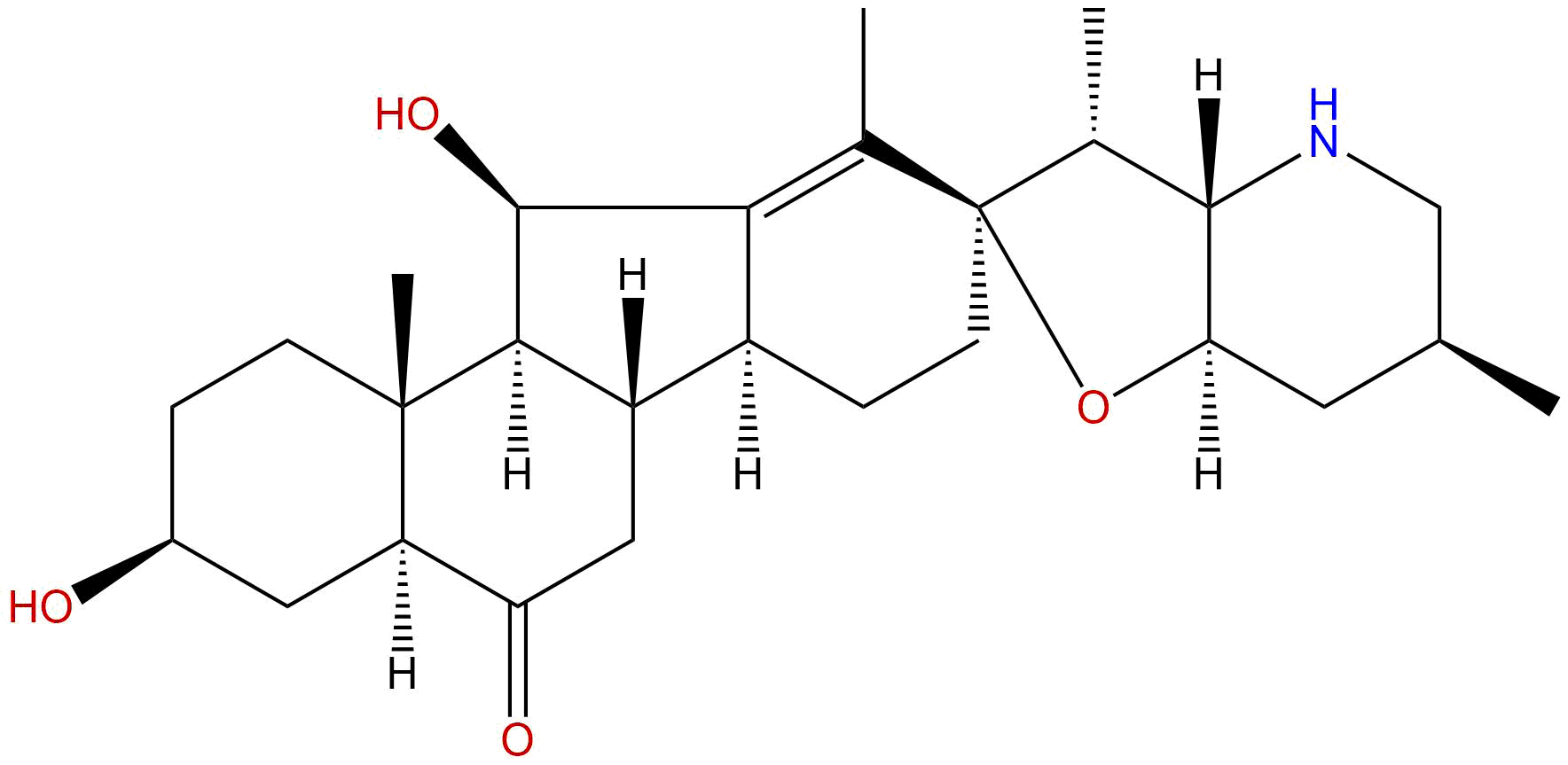
Ibetaxel is a structurally complex steroid alkaloid. Its molecular formula is C27H41NO4, with a molecular weight of 443.6280 Da. As a steroid alkaloid, its core skeleton is cyclopentane and phenanthrene (steroid nucleus), connected to a nitrogen-containing heterocyclic structure, which is the source of its alkaloid properties and closely related to its diverse biological activities.
From the analysis of physical and chemical properties, Ibrahim exhibits a certain degree of lipophilicity. The calculated lipid water partition coefficient (LogP) is 2.4219, indicating that the compound has moderate lipophilicity, which is beneficial for its penetration of cell membranes, but may also affect its water solubility. Its topological polar surface area (TPSA) is 78.7900 Å ², which is relatively moderate. According to the existing data model prediction, its water solubility value is 0.1952 (usually measured in mg/mL or log mol/L, which is the model calculation value indicating limited solubility). These physical and chemical parameters collectively determine the initial absorption and distribution characteristics of ibuprofen in living organisms. It is worth noting that the predictive model shows low blood-brain barrier permeability, suggesting that it may not easily enter the central nervous system. For treatments primarily targeting the peripheral system (such as breast tumors), this may help reduce potential neurotoxicity. In addition, preliminary pharmacological risk assessment showed that the hERG inhibition risk was "no", and the Ames test predicted a value of 0.0, indicating a low potential risk of arrhythmia and gene mutations, providing favorable preliminary safety signals for its further development.
Plant sources and extraction methods
The natural source of Epicin is the dried bulbs of Fritillaria pallioiflora Schren, a plant in the lily family. There are a wide variety of plants in the genus Fritillaria, which are widely distributed in China, Central Asia, and other regions. They are important traditional Chinese medicinal materials, often used in medicine under the names of "Sichuan Fritillaria" and "Zhejiang Fritillaria", and have the effects of clearing heat, moistening the lungs, resolving phlegm, and relieving cough. Fritillaria pallioiflora Schren is one of them, and its bulbs contain various nonsteroidal alkaloids including ibuprofen.
The extraction and separation of ibuprofen from plant materials usually follow the conventional process of natural product chemistry. Firstly, the dried plant bulbs are crushed and subjected to leaching or reflux extraction using appropriate solvents such as methanol, ethanol, or acidic aqueous solutions to dissolve the alkaloid components from the plant tissues. Due to the fact that alkaloids usually exist in the form of salts, acid water extraction helps to improve yield. After filtration and concentration, the crude extract is preliminarily enriched using the characteristics of alkaloids, such as salt formation with acids and reaction with precipitation reagents. Subsequently, various modern chromatographic separation techniques were comprehensively utilized for purification, such as silica gel column chromatography, reverse phase silica gel column chromatography (RP-C18), high performance liquid chromatography (HPLC), and preparative thin layer chromatography (PTLC). Thin layer chromatography (TLC) or high-performance liquid chromatography are often used for tracking and detection during the separation process. Finally, the isolated monomeric compound was structurally identified using spectroscopic methods such as nuclear magnetic resonance (NMR, including 1H-NMR, 13C-NMR, 2D-NMR), mass spectrometry (MS), and X-ray single crystal diffraction, confirming its identity as Ibeson. Optimizing the extraction and separation process to improve the yield and purity of the target compound is the foundation for subsequent pharmacological research and development.
Pharmacological activity research
At present, the pharmacological activity of Ibexin is mainly concentrated in the field of anti-tumor, especially for breast cancer, showing a variety of inhibitory effects.
1. Anti proliferative and cytotoxic effects: Several in vitro studies have shown that Ibexin can effectively inhibit the proliferation of many breast cancer cell lines (such as MCF-7, MDA-MB-231, T47D, etc.) in a concentration and time-dependent manner. It can induce tumor cell cycle arrest, such as blocking cells in the G0/G1 or G2/M phase, thereby preventing cells from entering the DNA synthesis and mitotic stages and inhibiting their unlimited proliferation.
2. Inducing cell apoptosis: Inducing tumor cell apoptosis is one of the core mechanisms by which Ibrahim exerts its anti-tumor effects. It was found that Ibexin treatment could significantly increase the expression of pro apoptotic proteins (such as Bax) in breast cancer cells, while down regulating the level of anti apoptotic proteins (such as Bcl-2), leading to the decline of mitochondrial membrane potential, the release of cytochrome C, and then activating caspase cascade reaction, which ultimately led to programmed cell death.
3. Inhibit cell migration, invasion, and metastasis: Tumor metastasis is the main cause of death in breast cancer patients. Ibexin has been proved to inhibit the migration and invasion of breast cancer cells. This effect is closely related to its downregulation of the expression of matrix metalloproteinases such as MMP2 and MMP9. MMPs can degrade the extracellular matrix, opening channels for tumor cell invasion and metastasis. Ibrahim weakens the metastatic potential of tumor cells by inhibiting the activity of MMPs.
4. Reversing multidrug resistance (MDR): Multidrug resistance is a key factor in chemotherapy failure. Breast cancer cells often overexpress members of the ABC transporter family, such as P-glycoprotein (ABCB1) and breast cancer resistance protein (ABCG2), which can pump chemotherapeutic drugs out of the cell and reduce the concentration of intracellular drugs. Research shows that Ibexin may be used as a modulator or inhibitor of these efflux pumps to increase the sensitivity of drug-resistant breast cancer cells to conventional chemotherapy drugs (such as doxorubicin and paclitaxel), thus playing the role of chemotherapy sensitizer.
5. Other potential activities: In addition to the above core anti breast cancer activity, based on the structural characteristics of its steroid alkaloids, Ibexin may also have the traditional pharmacological activities of fritillaria compounds such as antitussive, anti-inflammatory, neuroprotective, but these aspects of research need to be further deepened.
Mechanism of action and molecular targets
The anti breast cancer effect of Ibexin is not achieved through a single target, but the result of multi target and multi pathway synergy. Existing research has revealed that it is closely related to multiple key signaling molecules and pathways:
1. AMPK signaling pathway (target: PRKAA1): AMP activated protein kinase (AMPK) is a core regulatory factor in cellular energy metabolism and is also considered an important tumor suppressor. Ibrahim can activate AMPK (composed of its catalytic subunit PRKAA1, etc.). The activation of AMPK can inhibit the mammalian rapamycin target protein (mTOR) signaling pathway, thereby suppressing protein synthesis and cell growth, while promoting autophagy and apoptosis, playing an important role in inhibiting tumor growth.
2. Apoptosis regulatory target (target: BCL2): B-cell lymphoma 2 (Bcl-2) family proteins are the core regulators of the mitochondrial apoptosis pathway. Ibrahim can significantly downregulate the expression of anti apoptotic protein Bcl-2, disrupt the balance of Bcl-2/Bax, promote increased mitochondrial outer membrane permeability, and initiate the intrinsic apoptotic pathway.
3. STAT3 signaling pathway (target: STAT3): Signal transducer and activator of transcription factor 3 (STAT3) is continuously activated in various cancers, promoting cell proliferation, survival, angiogenesis, and immune escape. Ibrahim has been shown to inhibit the phosphorylation (activation) of STAT3, block its nuclear translocation, and inhibit the transcription of downstream target genes (such as Cyclin D1, Bcl-2, MMP-2, etc.), thereby comprehensively suppressing the malignant phenotype of tumors.
4. Estrogen receptor pathway (target: ESR2): Estrogen receptor β (ER β, encoded by ESR2) is often considered to have different or even tumor inhibitory functions from ER α in breast cancer. Ibexin may affect the growth of estrogen dependent breast cancer cells by regulating the signal transduction of ER β.
5. Drug efflux pump (targets: ABCB1, ABCG2): As mentioned above, Ibexin may directly or indirectly inhibit the function of P-glycoprotein (ABCB1) and breast cancer resistance protein (ABCG2), reversing multidrug resistance.
6. Protein kinase C (target: PRKCA): Protein kinase C alpha (PKC alpha) is involved in regulating cell proliferation, differentiation, migration, and apoptosis. Ibrahim may interfere with downstream signaling networks by affecting the activity of PKC α.
7. Tau protein (target: MAPT): The abnormal phosphorylation of microtubule associated protein Tau (encoded by MAPT gene) is associated with various neurodegenerative diseases, but it is also expressed abnormally in some cancers. Its specific relationship with the anti breast cancer effect of Ibexin is still unclear, which may involve the regulation of cytoskeleton stability.
8. Lymphocyte specific protein tyrosine kinase (target: LCK): LCK is a key kinase in the T cell receptor signaling pathway. The potential impact of Ibrahim on LCK suggests its potential to regulate immune cell function in the tumor microenvironment, but this requires experimental verification.
In summary, Ibuprofen regulates multiple pathways such as energy metabolism, survival signaling, apoptosis, and metastasis by acting on key targets such as AMPK, STAT3, and Bcl-2, forming a multi-target anti-tumor network.
Evaluation of drug properties and pharmacokinetics
Based on its physical and chemical properties and preliminary in vitro activity data, evaluating the pharmacological properties of Ibrahim is a necessary step in promoting its development into a drug.
1. Drug like properties and ADME properties:
* Absorption: The moderate LogP value (2.42) and TPSA value (78.79) conform to the typical "five principles" range of oral medications, suggesting that they may have some potential for oral absorption. However, limited water solubility may become a limiting factor for its oral bioavailability, which may need to be improved through formulation techniques such as making salts, nanocrystals, solid dispersions, etc.
* Distribution: The predicted low permeability of the blood-brain barrier indicates that it is mainly distributed in peripheral tissues and organs, which may be beneficial for the treatment of peripheral tumors such as breast cancer, and can reduce the risk of central side effects. But its specific distribution and accumulation ability in tumor tissue still need to be confirmed by in vivo experiments.
* Metabolism and Excretion: As a steroid alkaloid, ibuprofen is likely to undergo phase I (such as cytochrome P450 enzyme catalysis) and phase II (such as glucuronidation and sulfation) metabolism in the liver. At present, its specific metabolites, main metabolic enzymes, and excretion pathways (bile or kidney) are still unknown, and in-depth in vitro liver microsomal metabolism research and in vivo pharmacokinetic experiments are needed.
2. Preliminary safety: The computational model predicts no significant hERG channel inhibitory activity and genotoxicity (Ames test negative), which is a positive early signal. However, a comprehensive safety assessment still requires standardized in vitro cytotoxicity screening (examining the toxicity window to normal cells), as well as in vivo acute toxicity, subchronic toxicity, and long-term toxicity experiments.
3. Pharmacokinetic research gap: Currently, there are few reports on systematic pharmacokinetic studies of Ibrahim. The key pharmacokinetic parameters such as absolute bioavailability, plasma protein binding rate, tissue distribution characteristics, elimination half-life, and clearance rate urgently need to be elucidated through animal experiments (rats, mice, dogs, etc.). Good pharmacokinetic properties are the foundation for ensuring its in vivo efficacy and safety.
Clinical application prospects and prospects
Ibexin, as a natural steroid alkaloid derived from traditional medicinal plants, shows a unique application prospect and development value in the field of breast cancer treatment.
1. As a new candidate drug or lead compound against breast cancer: Its multi-target mechanism of action helps overcome the disadvantage of single target drugs easily developing resistance. In particular, its potential to reverse multidrug resistance makes it possible to combine with existing chemotherapy drugs (such as anthracyclines and taxanes), improve the therapeutic effect of drug-resistant breast cancer, and has the potential to develop as a chemosensitizer.
2. Combination therapy strategy: The combination of Ibrahim and targeted therapy (such as drugs targeting HER2, CDK4/6) or immune checkpoint inhibitors (such as PD-1/PD-L1 antibodies) is a direction worth exploring. It may produce synergistic anti-tumor effects by regulating the tumor microenvironment or enhancing immune response.
3. Structural optimization and derivative development: Structural modification using Ibrahim as the parent nucleus is an important way to enhance its activity and improve its drug properties. Pharmaceutical chemists can address issues such as poor water solubility and unknown metabolic stability by synthesizing derivatives or prodrugs, optimizing their pharmacokinetic properties, enhancing targeting, and reducing potential toxicity, thereby obtaining better candidate drugs.
4. Challenges faced:
* In depth research mechanism: At present, the understanding of its mechanism of action is still mostly based on association studies, and more direct evidence (such as target binding experiments, gene knockout/overexpression validation) is needed to clarify its direct target of action.
* System efficacy and toxicity evaluation: It is urgent to validate its in vivo anti-tumor efficacy in tumor bearing animal models, especially patient derived xenograft models, and conduct systematic preclinical safety evaluations.
* Resources and synthesis: Plant sources are limited and their content is low, making it difficult to meet the needs of large-scale research and development. Therefore, developing efficient fully synthetic or semi synthetic routes is the key to achieving sustainable supply.
Conclusion
Ibexin is a steroid alkaloid with significant anti breast cancer activity, which was excavated from traditional Fritillaria plants. It exerts multiple pharmacological effects such as inhibiting proliferation, inducing apoptosis, preventing metastasis, and reversing drug resistance by regulating multiple key signaling pathways such as AMPK, STAT3, Bcl-2, etc., demonstrating the advantages of natural product multi-target intervention in diseases. Although it has shown some potential in drug like properties and preliminary good safety predictions, there are still many challenges in transforming it from a potential natural compound into a true clinical candidate drug. Future research needs to focus on its precise molecular mechanism of action, systematic preclinical pharmacological and pharmacokinetic evaluation, as well as structure based derivative design and optimization. With the in-depth development of these studies, Ibexin is expected to provide a new and promising treatment strategy or drug lead structure for the treatment of breast cancer, especially drug-resistant breast cancer, and continue the glory of natural products in innovative drug discovery.