Introduction/Overview
Natural products, as an important source of drug discovery, play an irreplaceable role in human health maintenance and disease treatment. Rhodiola rosea(Rhodiola rosea L. As a traditional medicinal plant, it has a long history of application in traditional Chinese medicine and Nordic folk medicine, mainly used to enhance the body's stress resistance, relieve fatigue, improve cognitive function, etc. Salidroside is one of the recognized main active ingredients in plants of the Sedum genus, with a wide range of pharmacological activities including anti fatigue, anti hypoxia, anti-inflammatory, antioxidant, neuroprotective, and anti-tumor effects. However, there are multiple phenolic and alcohol hydroxyl groups in the natural salidroside molecule, resulting in its high polarity and poor lipid solubility, which to some extent limits its transmembrane absorption and blood-brain barrier permeability, affecting its bioavailability and full efficacy in vivo.
In order to improve the pharmacokinetic properties of salidroside, especially its lipid solubility and bioavailability, medicinal chemists employed structural modification strategies to protect the hydroxyl groups in its molecule through acetylation, resulting in the formation of salidroside pentaacetate (CAS number: 39032-08-1). This derivative significantly alters the physicochemical properties of the original molecule by introducing acetyl groups at the five hydroxyl sites of salidroside. More importantly, pentaacetyl salidroside not only retains some of its biological activity, but also exhibits some unique pharmacological effects, such as acting as a prolyl endopeptidase (PEP) inhibitor, alleviating tumor cachexia by activating mTOR signaling, and protecting dopaminergic neurons by enhancing PINK1/Parkin mediated mitochondrial autophagy. These findings suggest that pentaacetyl salidroside is not just a simple prodrug of salidroside, but may have unique pharmacological significance and potential therapeutic value on its own.
This article will provide a systematic review of the research progress of pentaacetyl salidroside from the aspects of chemical structure and physicochemical properties, plant sources and extraction methods, pharmacological activity, mechanism of action, drug evaluation, and clinical application prospects, in order to provide reference for the in-depth research and development of this compound.
Chemical structure and physicochemical properties
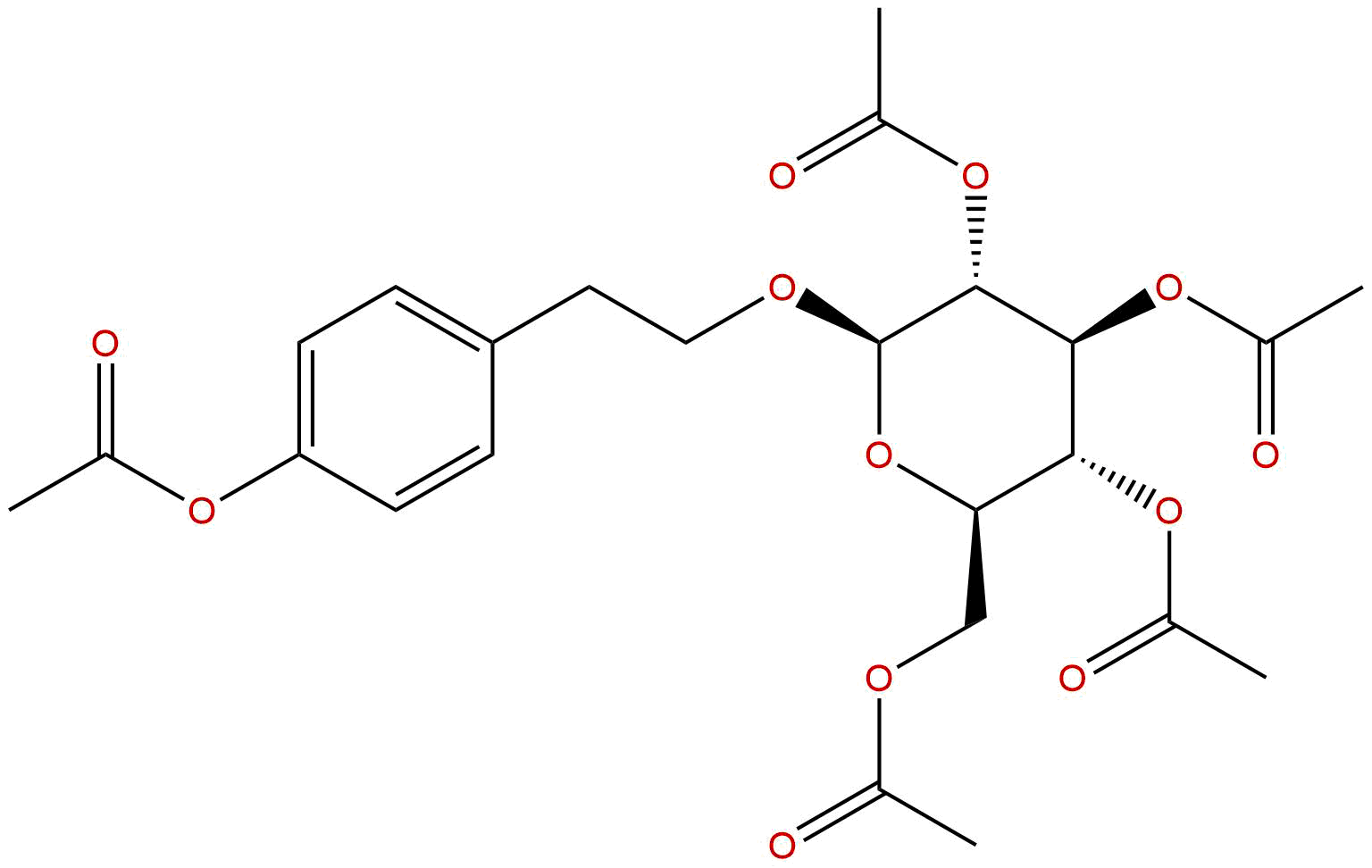
Pentaacetyl salidroside is a fully acetylated derivative of salidroside. The chemical name of salidroside is 2- (4-hydroxyphenyl) ethyl - β - D-glucopyranoside, which is composed of a tyrosol (4-hydroxyphenylethanol) glycoside linked to a glucose molecule via a β - glycosidic bond. In the salidroside molecule, there are five hydroxyl groups that can be acetylated: four are located at positions 2, 3, 4, and 6 of the glucose ring, and one is a phenolic hydroxyl group located on the phenyl ring of the glycoside. By acetylation reaction, all five hydroxyl groups are converted into acetoxy groups (- OCOCH ∝), resulting in pentaacetyl salidroside.
From a chemical structure perspective, the molecular formula of pentaacetyl salidroside is C ₂₅ H ∝₄ O ₁₂, with a molecular weight of 510.4920 g/mol. Compared with the parent compound salidroside (molecular weight 300.30 g/mol), the molecular weight has significantly increased due to the introduction of five acetyl groups (- COOH ∝, each increasing by 42 Da). The introduction of acetyl groups has had a profound impact on the physicochemical properties of molecules. The calculated LogP value is 1.3618, which is much higher than the LogP value of salidroside (about -0.3), indicating a significant increase in its lipid solubility. This change is beneficial for compounds to penetrate biological membranes, especially for drugs that need to cross the blood-brain barrier to exert central nervous system effects. Its polar surface area (TPSA) is 149.96 Å ², which is still at a moderate level but slightly increased compared to salidroside (about 140 Å ²), possibly due to the contribution of carbonyl oxygen atoms from acetyl groups.
In terms of water solubility, the calculated water solubility of pentaacetyl salidroside is 0.3006 mg/mL, which belongs to the category of slight solubility and is much lower than salidroside (which is easily soluble in water). The decrease in water solubility is the inevitable result of acetylation modification and also the cost of improving its lipid solubility. However, in vivo, pentaacetyl salidroside may act as a prodrug, gradually hydrolyzing and releasing the active parent drug salidroside under the action of esterase, thereby achieving sustained release and targeted delivery of the drug while retaining good absorption characteristics. In addition, the molecular structure of pentaacetyl salidroside no longer contains free phenolic hydroxyl groups, which may weaken its antioxidant activity. However, it also reduces its first pass metabolism and glucuronidation binding reaction in the gastrointestinal tract and blood, which is beneficial for improving oral bioavailability.
Plant sources and extraction methods
Pentaacetyl salidroside is not a naturally occurring secondary metabolite in plants, but a derivative of salidroside obtained through chemical semi synthetic methods. Therefore, its "plant source" actually refers to the plant source of its precursor, salidroside. Rhodiola glycoside is widely present in the Crassulaceae family, Crassulaceae genus(Rhodiola)Among various plants, the species with higher content include Rhodiola rosea(Rhodiola rosea L.)、 Dahua Hongjingtian(Rhodiola crenulata (Hook. f. et Thoms.) H. Ohba)、 Alpine Rhodiola rosea(Rhodiola sachalinensis A. Bor, etc. In addition, in the genus Ligustrum(Ligustrum)Rhododendron genus(Rhododendron)The presence of salidroside has also been found in plants.
The extraction of salidroside is usually carried out using solvent extraction method. Due to the high polarity of salidroside, water or ethanol water solutions of different concentrations are commonly used as extraction solvents. Traditional methods include reflux extraction, percolation extraction, and impregnation extraction. In recent years, some modern extraction techniques have been widely used to improve extraction efficiency and purity, such as ultrasound assisted extraction, microwave-assisted extraction, enzyme assisted extraction, and supercritical fluid extraction. After concentration, the extract is usually purified using macroporous adsorption resin column chromatography (such as D101, AB-8 resin) to remove impurities such as sugars and proteins. Subsequently, high-purity salidroside can be obtained by further separation and purification using silica gel column chromatography, polyamide column chromatography, or preparative high-performance liquid chromatography (Prep HPLC).
After obtaining pure salidroside, the preparation of pentaacetyl salidroside is mainly achieved through chemical acetylation reaction. The classic synthetic route is to dissolve salidroside in anhydrous pyridine, add excess acetic anhydride in the presence of a catalytic amount of 4-dimethylaminopyridine (DMAP), and react at room temperature or under appropriate heating conditions. After the reaction is completed, the solvent and excess reagents are removed by vacuum distillation, and the crude product is purified by silica gel column chromatography or recrystallization to obtain pure pentaacetyl salidroside. The reaction conditions are mild, the yield is high, and it is easy to scale up, making it a commonly used method in laboratory and industrial production. It is worth noting that strict control of anhydrous conditions is required during the reaction process to prevent hydrolysis of acetyl groups. In addition, enzymatic acetylation can also be used, utilizing biocatalysts such as lipases for selective or complete acetylation in organic solvents. This method has the advantages of mild reaction conditions and environmental friendliness, but the cost is relatively high.
Pharmacological activity research
In recent years, research on the pharmacological activity of pentaacetyl salidroside has gradually deepened, revealing its potential therapeutic effects in multiple disease models, with particular attention paid to its anti fatigue, anti-tumor cachexia, and neuroprotective effects.
1. Anti fatigue effect
Fatigue is a complex physiological state that involves multiple factors such as energy metabolism disorders, oxidative stress, and neurotransmitter imbalances. Rhodiola rosea glycoside itself has significant anti fatigue activity, and as a derivative of it, pentaacetyl salidroside should theoretically retain or even enhance this effect. Research has shown that pentaacetyl salidroside may promote glucose uptake and fatty acid oxidation in skeletal muscle cells by regulating the AMPK signaling pathway, thereby increasing energy supply and delaying the occurrence of exercise-induced fatigue. In addition, it may also exert a central anti fatigue effect by inhibiting the activity of monoamine oxidase A (MAOA), reducing the degradation of monoamine neurotransmitters such as serotonin, and maintaining the excitability of the central nervous system. The potential regulatory effect of pentaacetyl salidroside on targets such as SIRT1, PPARG, and BDNF suggests that it may exert anti fatigue effects through multiple pathways such as improving mitochondrial biosynthesis, regulating energy metabolism, and promoting neuroplasticity.
2. Relieve tumor cachexia
Tumor cachexia is a metabolic syndrome characterized by skeletal muscle atrophy, loss of adipose tissue, and weight loss, which seriously affects the quality of life and survival of cancer patients. Pentaacetyl salidroside has demonstrated unique therapeutic potential in this field. Research has found that in a mouse model of tumor cachexia, treatment with pentaacetyl salidroside can significantly inhibit weight loss, improve muscle atrophy and fat consumption. Mechanism studies have shown that this protective effect is closely related to the activation of the mTOR (mammalian target protein of rapamycin) signaling pathway. MTOR is a key regulatory factor for cell growth and protein synthesis, and its activity is often inhibited in cachexia. Pentaacetyl salidroside promotes skeletal muscle protein synthesis by activating mTOR and its downstream effector molecules (such as p70S6K, 4E-BP1), thereby combating tumor induced muscle atrophy. This discovery provides new candidate drugs for the treatment of tumor cachexia.
3. Neuroprotective effect
Parkinson's disease (PD) is a common degenerative disease of the central nervous system, characterized by progressive loss of dopaminergic neurons in the substantia nigra pars compacta. Mitochondrial dysfunction and autophagy abnormalities play key roles in the pathogenesis of PD. Pentaacetyl salidroside exhibits remarkable activity in neuroprotection. Research has shown that in MPTP or 6-OHDA induced PD cells and animal models, pentaacetyl salidroside can significantly protect dopaminergic neurons from damage. In depth mechanism research has found that its neuroprotective effect is mainly achieved by enhancing PINK1/Parkin mediated mitochondrial autophagy. PINK1 is a mitochondrial serine/threonine kinase that accumulates on the surface of damaged mitochondria, recruiting and activating the E3 ubiquitin ligase Parkin. Parkin ubiquitinated mitochondrial outer membrane proteins, labeled damaged mitochondria, and ultimately cleared them through autophagy pathway. Pentaacetyl salidroside can upregulate the expression of PINK1 and Parkin, promote selective clearance of damaged mitochondria, maintain mitochondrial network homeostasis, reduce the production of reactive oxygen species (ROS) and cell apoptosis, thereby protecting dopaminergic neurons. This discovery provides new ideas for the treatment of PD.
4. Other pharmacological activities
In addition to the main activities mentioned above, pentaacetyl salidroside has also been reported to have anti-inflammatory, antioxidant, and anti apoptotic effects. For example, in the lipopolysaccharide (LPS) - induced inflammation model, pentaacetyl salidroside can inhibit the NF - κ B signaling pathway and reduce the expression of pro-inflammatory factors such as TNF - α and IL-6. Its antioxidant activity may be achieved by activating the Nrf2/ARE pathway and upregulating the expression of antioxidant enzymes such as heme oxygenase-1 (HO-1). These activities may be closely related to their protective effects against various diseases.
Mechanism of action and molecular targets
The pharmacological effects of pentaacetyl salidroside involve multiple signaling pathways and molecular targets, and its mechanism of action exhibits the characteristics of multi-target and multi pathway.
1. Prolyl endopeptidase (PEP) inhibition
Pentaacetyl salidroside has been identified as a prolyl endopeptidase (PEP) inhibitor. PEP is a serine protease highly expressed in the brain, involved in the metabolism of various neuropeptides such as substance P, thyrotropin releasing hormone (TRH), arginine vasopressin, etc. Abnormal PEP activity is closely related to cognitive dysfunction, Alzheimer's disease, depression, and other neurological and psychiatric disorders. Inhibiting PEP activity can increase the levels of certain neuropeptides in the brain, thereby improving cognitive function. The inhibitory effect of pentaacetyl salidroside on PEP may be one of the mechanisms by which it exerts neuroprotection and improves cognitive function. However, the specific binding mode and kinetic parameters for its inhibition of PEP are not yet fully understood and require further research.
2. Activation of mTOR signaling pathway
The mTOR signaling pathway is a core regulatory hub for cell growth, proliferation, metabolism, and autophagy. Pentaacetyl salidroside activates the mTOR signaling pathway in tumor cachexia models, promotes protein synthesis, and inhibits muscle atrophy. The mechanism by which it activates mTOR may involve the regulation of upstream signaling molecules, such as the PI3K/Akt pathway. Akt phosphorylation can directly activate mTORC1, or indirectly activate mTORC1 by phosphorylating and inhibiting the TSC1/TSC2 complex. In addition, pentaacetyl salidroside may also affect mTOR activity by regulating amino acid sensing or energy sensing pathways (such as AMPK). It is worth noting that excessive activation of mTOR is closely related to the occurrence and development of tumors. Therefore, the long-term safety of pentaacetyl salidroside in the treatment of tumor cachexia, especially its impact on tumor growth, needs to be carefully evaluated.
3. PINK1/Parkin mediated enhanced mitochondrial autophagy
Mitochondrial autophagy is an important quality control mechanism for selectively clearing damaged mitochondria. The PINK1/Parkin pathway is a classic pathway that mediates mitochondrial autophagy. Pentaacetyl salidroside promotes ubiquitination of damaged mitochondria and recruitment of autophagic receptors (such as p62, OPTN, NDP52) by upregulating the expression of PINK1 and Parkin, thereby enhancing mitochondrial autophagy flow. This effect helps to clear dysfunctional mitochondria, reduce the production of mitochondrial ROS and the release of cytochrome c, inhibit cell apoptosis, and ultimately protect dopaminergic neurons. In addition, the PINK1/Parkin pathway is also involved in regulating mitochondrial dynamics (fusion and fission), and pentaacetyl salidroside may maintain the health of the mitochondrial network by affecting this process.
4. Anti fatigue related targets
The anti fatigue effect of pentaacetyl salidroside involves multiple targets. AMPK, as a cellular energy sensor, is activated when energy is scarce, promoting catabolism and producing ATP. Pentaacetyl salidroside may enhance energy supply by activating AMPK, promoting fatty acid oxidation and glucose uptake in skeletal muscle. MAOA is a key enzyme that degrades monoamine neurotransmitters such as serotonin and norepinephrine. Inhibiting MAOA can increase the levels of these neurotransmitters in the central nervous system, improve mood and cognition, and delay central fatigue. SIRT1 is an NAD ⁺ - dependent deacetylase involved in regulating mitochondrial biosynthesis, antioxidant defense, and metabolic homeostasis. PPARG is a key transcription factor that regulates adipocyte differentiation and glucose and lipid metabolism. BDNF is a neurotrophic factor that promotes neuronal survival, synaptic plasticity, and cognitive function. The regulatory effect of pentaacetyl salidroside on these targets constitutes its multi-target anti fatigue network mechanism.
Evaluation of drug properties and pharmacokinetics
The evaluation of drug properties is a crucial step in determining whether candidate compounds can successfully enter clinical research. Preliminary evaluation of the pharmacological properties of pentaacetyl salidroside based on existing data.
1. Physical and chemical properties and drug like properties
The molecular weight of pentaacetyl salidroside is 510.49 Da, slightly higher than the classical "Lipinski Five Rules" limit of molecular weight less than 500 Da. Its LogP is 1.3618, which meets the requirement of LogP less than 5. The number of hydrogen bond donors (HBD) is 0 (all hydroxyl groups are acetylated), and the number of hydrogen bond acceptors (HBA) is 12, exceeding the limit of HBA not exceeding 10 in the "Five Rules". Therefore, there are two violations of the Lipinski rule for pentaacetyl salidroside (molecular weight>500, HBA>10), indicating that its oral bioavailability may be challenging. However, as a prodrug design, it can be rapidly converted into an active matrix in the body after absorption, so the applicability of Lipinski's rule needs to be comprehensively judged based on its prodrug characteristics.
2. Absorption, distribution, metabolism, and excretion (ADME)
The enhanced lipid solubility of pentaacetyl salidroside facilitates its passive diffusion through the intestinal epithelial cell membrane, which may improve oral absorption rate. Its blood-brain barrier permeability is predicted to be "high", which is crucial for exerting central nervous system activity such as neuroprotection and anti fatigue. The presence of acetyl groups can protect phenolic and alcohol hydroxyl groups from glucuronidation and sulfation binding reactions in first pass metabolism, which may improve oral bioavailability. After entering the systemic circulation, pentaacetyl salidroside can be rapidly hydrolyzed by esterases (such as carboxylesterase CES1, CES2) in the blood and tissues, sequentially removing the acetyl group, and ultimately releasing the active parent salidroside. This prodrug strategy achieves sustained release and targeted delivery of drugs. The main metabolites are salidroside and its further metabolites (such as tyrosol, glucuronic acid conjugates, etc.), which are mainly excreted through urine and bile.
3. Safety evaluation
The preliminary safety evaluation results show that pentaacetyl salidroside has no hERG inhibitory activity, indicating a low risk of cardiac toxicity. The Ames test result is 0.0, indicating no mutagenicity. These data provide preliminary support for the safety of pentaacetyl salidroside. However, a comprehensive toxicological evaluation, including acute toxicity, chronic toxicity, reproductive toxicity, carcinogenicity, etc., still needs to be carried out. Especially considering its activation of the mTOR signaling pathway, it is necessary to be alert to potential pro tumor risks. In addition, the impact of long-term use on liver and kidney function also needs to be systematically evaluated.
Clinical application prospects and prospects
Pentaacetyl salidroside, as a derivative of salidroside with unique pharmacological activity, has shown broad clinical application prospects.
1. Treatment of tumor cachexia
Tumor cachexia is a common complication in advanced cancer patients, and there is currently a lack of effective treatment drugs. Pentaacetyl salidroside provides a new candidate drug for the treatment of tumor cachexia by activating the mTOR signaling pathway, promoting protein synthesis, and inhibiting muscle atrophy. In the future, preclinical studies are needed to validate its effectiveness in various tumor cachexia models and evaluate its impact on tumor growth. If it can be proven to effectively alleviate cachexia without promoting tumor growth, it will have important clinical translational value.
2. Treatment of Parkinson's disease
Parkinson's disease currently relies mainly on symptomatic treatment, lacking disease modifying therapies that can delay disease progression. Pentaacetyl salidroside enhances PINK1/Parkin mediated mitochondrial autophagy, protects dopaminergic neurons, and demonstrates potential as a modifier for PD disease. Future research should focus on its long-term efficacy and safety in PD animal models, and explore its synergistic effects with existing therapeutic drugs such as levodopa. In addition, developing dosage forms that can efficiently cross the blood-brain barrier, such as nanoparticles and liposomes, will help improve their brain concentration and efficacy.
3. Anti fatigue and cognitive enhancement
The anti fatigue and potential cognitive improvement effects of pentaacetyl salidroside make it promising for application in functional foods, health foods, military medicine, aerospace medicine, and other fields. However, as a drug development, its indications need to be more clear, such as chronic fatigue syndrome, postoperative fatigue, age-related cognitive decline, etc. A rigorously designed randomized controlled clinical trial is needed to validate its effectiveness and safety.
4. Challenges and Prospects
Despite its promising prospects, the clinical translation of pentaacetyl salidroside still faces many challenges. Firstly, although its oral bioavailability may be better than that of salidroside, it still needs to be accurately determined through pharmacokinetic experiments. Secondly, its multi-target mechanism of action is both advantageous and may bring off target effects and potential toxicity. Especially the activation of the mTOR pathway requires strict evaluation of its long-term safety. Thirdly, as a prodrug, its pharmacokinetics and tissue distribution of active metabolites in vivo need to be further studied. Fourthly, large-scale and high-quality synthesis processes need to be further optimized to reduce costs and meet the needs of preclinical and clinical research.
Future research directions should include: 1) in-depth elucidation of the interaction patterns between pentaacetyl salidroside and targets such as PEP, mTOR, PINK1/Parkin, etc; 2) Using systems pharmacology and network pharmacology methods, comprehensively analyze its multi-target action network; 3) Develop new drug delivery systems to improve their targeting and bioavailability; 4) Conduct comprehensive preclinical pharmacological and toxicological evaluations; 5) Explore its combination application strategies with other drugs.
Conclusion
As a fully acetylated derivative of salidroside, pentaacetyl salidroside significantly improves the physicochemical and pharmacokinetic properties of the parent compound through structural modification, and exhibits a unique pharmacological activity spectrum. As a prolyl endopeptidase inhibitor, mTOR signaling activator, and PINK1/Parkin mediated mitochondrial autophagy enhancer, it has shown important therapeutic potential in the fields of tumor cachexia, Parkinson's disease, and anti fatigue. The preliminary pharmacological evaluation also provides favorable support for its further development. However, from laboratory discovery to clinical application, pentaacetyl salidroside still faces many scientific and technological challenges. In the future, collaborative efforts from multidisciplinary researchers such as pharmacology, medicinal chemistry, pharmacy, toxicology, etc. are needed to deeply reveal its mechanism of action, optimize its drug properties, systematically evaluate its safety, and promote the early benefit of this unique natural product derivative to patients.