Introduction/Overview
Natural products, as an important source of drug discovery, play an irreplaceable role in the history of human disease treatment. Among them, sesquiterpene lactones have always been a hot topic in medicinal chemistry and pharmacology research due to their structural diversity and significant biological activity. Hydroxylinderstrinolide, as a structurally unique sesquiterpene lactone, has attracted much attention since its discovery due to its potential anti-tumor activity. Its CAS number is 20267-92-9, and the molecular skeleton contains key pharmacophores such as lactone rings and hydroxyl groups, laying the foundation for its interaction with various biological targets. In recent years, with the deepening of molecular biology and oncology research, the anti-tumor pharmacological activity and mechanism of action of hydroxycinnamomum camphora resin have gradually been revealed, showing its potential to exert its effects through intervening in multiple pathways such as cell apoptosis, signal transduction, angiogenesis, and cell cycle. This article aims to systematically review the chemical structure, plant origin, pharmacological activity, molecular mechanism of action, pharmacological characteristics, and clinical application prospects of hydroxycinnamomum camphora internal lipids, in order to provide comprehensive scientific references for the in-depth research and development of this compound.
Chemical structure and physicochemical properties
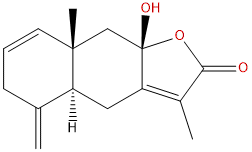
The molecular formula of hydroxyl camphor resin is C15H18O4, with a molecular weight of 246.3060. Its core structure belongs to the guaiaceae type sesquiterpene lactone, characterized by a ten membered carbon ring fused with a gamma lactone ring, and a hydroxyl group (- OH) attached to a specific carbon position. The presence of this hydroxyl group significantly enhances the polarity of the molecule and may serve as a key hydrogen bond donor to participate in the binding of target proteins.
From the analysis of physical and chemical properties, the calculated lipid water partition coefficient (LogP) is 2.0613, indicating that the compound has moderate lipophilicity, which is conducive to its penetration of cell membranes, but not to narrow distribution or increase toxicity in vivo due to high lipid solubility. The topologically polar surface area (TPSA) is 46.5300 Å ², which is relatively small, consistent with its molecule containing only one hydroxyl group and one lactone carbonyl oxygen as the main polar groups, indicating that it may have good membrane permeability. The water solubility value is 0.2692 mg/mL, which belongs to the category of slight solubility. This suggests that solubilization strategies may need to be considered in the formulation development process to improve its bioavailability.
Taking into account its moderate molecular weight, ideal LogP value, and small TPSA, hydroxycinnamomum camphora resin preliminarily meets the basic requirements of the Rule of Five, providing a favorable chemical basis for its use as an oral candidate drug. The lactone ring and hydroxyl group in its structure are potential active sites and entry points for structural modification to optimize activity and pharmacokinetic properties.
Plant sources and extraction methods
Hydroxycinnamic acid is mainly isolated from Lauraceae plants, especially Lindera Belonging to plants such as fragrant leaved trees(Lindera communis)Waiting is its important natural source. These plants are often used in traditional medicine for anti-inflammatory and analgesic purposes, and in-depth research on their chemical composition has revealed various active sesquiterpenes, including hydroxycinnamomum camphora lipids.
Its extraction and separation usually follow the classic process of natural product chemistry. Firstly, the dried parts of the plant (such as roots, stem bark, or leaves) are crushed and subjected to cold soaking or reflux extraction using organic solvents (such as methanol, ethanol, or acetone) to maximize the extraction of secondary metabolites with a wide range of polarities. After the crude extract is concentrated under reduced pressure, it is subjected to preliminary fractionation using liquid-liquid extraction method (such as sequentially extracting with petroleum ether, ethyl acetate, and n-butanol). The hydroxyl camphor resin is often enriched in the ethyl acetate fraction due to its equal polarity.
Further purification relies on various chromatographic techniques. Silica gel column chromatography is commonly used for preliminary separation, using solvent systems of different polarities (such as petroleum ether ethyl acetate gradient elution) for elution. Subsequently, the target stream was refined by more efficient techniques such as reverse phase high performance liquid chromatography (RP-HPLC), preparation thin layer chromatography (PTLC) or gel chromatography (Sephadex LH-20) until high-purity hydroxycinnamomum lactone monomer was obtained. Structural identification is accomplished through the comprehensive use of techniques such as nuclear magnetic resonance (NMR, including 1H-NMR, 13C-NMR, 2D-NMR), mass spectrometry (MS), infrared spectroscopy (IR), and X-ray single crystal diffraction. In order to meet the needs of pharmacological research, semi synthetic or total synthetic studies are also being explored, aiming to achieve large-scale acquisition of the compound and facilitate structural derivatization.
Pharmacological activity research
The most notable pharmacological activity of hydroxycinnamomum camphora resin is its wide range of antitumor activity A large number of in vitro studies have shown that this compound has significant proliferation inhibitory activity on a variety of human tumor cell lines, including breast cancer, liver cancer, lung cancer, colon cancer and leukemia cells. Its anti-tumor effect is mainly achieved through inducing cell apoptosis, blocking the cell cycle, inhibiting cell migration and invasion, and other pathways.
- Inducing cell apoptosis Hydroxyl camphor resin can effectively trigger programmed cell death in tumor cells. Research has shown that it can cause a decrease in mitochondrial membrane potential, release cytochrome C, and activate caspase cascade reactions (such as caspase-3, -9), ultimately leading to cell apoptosis. This pro apoptotic effect is one of the core mechanisms of its anti-tumor activity.
- cell cycle arrest This compound can block tumor cells at specific phases of the cell cycle, such as G2/M phase or S phase, preventing them from undergoing mitosis and thus inhibiting the unlimited proliferation of tumor cells.
- Inhibit metastasis and invasion Tumor metastasis is the main cause of treatment failure and patient death. Hydroxycinnamic acid has been shown to dose dependently inhibit the migration and invasion ability of tumor cells, which is closely related to its downregulation of matrix metalloproteinases (MMPs) expression.
- Other potential activities In addition to its clear anti-tumor effect, based on its structural characteristics and preliminary research, hydroxycinnamomum camphora resin may also have certain anti-inflammatory and antioxidant activities. These auxiliary effects may synergize with its anti-tumor effect, but further research is needed to confirm.
Mechanism of action and molecular targets
The anti-tumor effect of hydroxycinnamomum camphora resin is not achieved through a single pathway, but is characterized by multi-target and multi pathway intervention, which provides potential advantages for overcoming tumor drug resistance. At present, it has been found that its effects involve the following key targets and signaling pathways:
- Regulating apoptosis related proteins (BCL2 family and MCL1)B-cell lymphoma 2 (BCL2) and myeloid leukemia 1 (MCL1) are important anti apoptotic proteins. Hydroxycinnamomum camphora resin can downregulate the expression of BCL2 and MCL1, and may upregulate the expression of pro apoptotic proteins such as BAX, thereby disrupting mitochondrial outer membrane permeability and initiating intrinsic apoptotic pathways.
- Inhibition of Signal Transduction and Transcription Activation Factor 3 (STAT3)STAT3 is a key oncogenic transcription factor in the occurrence and development of tumors. Continuously activated STAT3 promotes cell proliferation, survival, and immune escape. Hydroxycinnamic acid can effectively inhibit the phosphorylation (activation) of STAT3, block its nuclear translocation and the transcription of downstream target genes (such as Cyclin D1, BCL2, MMPs), thereby exerting various anti-tumor effects.
- Inhibition of Matrix Metalloproteinase 2/9 MMP2 and MMP9 are the main enzymes that degrade extracellular matrix and play a central role in tumor invasion and metastasis. Hydroxycinnamomum camphora resin can significantly inhibit the activity and expression of MMP2 and MMP9, which directly explains its molecular basis for inhibiting tumor cell migration and invasion.
- Intervention of DNA Topoisomerase (TOP1/TOP2A)DNA topoisomerases I (TOP1) and II α (TOP2A) are key enzymes that regulate the topological state of DNA and are targets of many chemotherapy drugs. Research has shown that hydroxycinnamomum camphora lipids may induce cell death by interfering with the functions of TOP1 and TOP2A, leading to irreparable damage during DNA replication and transcription processes.
- Affects hypoxia inducible factor 1A (HIF1A) and related pathways In the hypoxic microenvironment of tumors, HIF1A is activated and promotes angiogenesis and metabolic reprogramming. Hydroxycinnamic acid may interfere with tumor adaptation and angiogenesis by inhibiting the stability or transcriptional activity of HIF1A.
- Regulating mitogen activated protein kinase (MAPK1/ERK) and hormone related targets The MAPK1 (ERK2) pathway regulates cell growth and differentiation. The regulation of its activity by hydroxyl camphor resin may affect the proliferation signal of tumor cells. In addition, its potential effects on estrogen receptor (ESR1) and aromatase (CYP19A1) suggest that it may have special value in the treatment of hormone dependent tumors (such as breast cancer).
In summary, hydroxycinnamomum camphora lipids synergistically act on multiple targets mentioned above, constructing a complex anti-tumor network that ultimately leads to tumor cell growth inhibition, apoptosis, cycle arrest, and decreased metastatic ability.
Evaluation of drug properties and pharmacokinetics
Based on computational chemistry and preliminary experimental data, hydroxycinnamomum camphora resin has shown certain potential as a drug, but there are also areas that need to be optimized.
Analysis of drug properties parameters:
- Absorption and distribution Moderate LogP value (2.06) and small TPSA (46.53 Å ²) indicate good oral absorption potential and cell membrane permeability. It is worth noting that it Prediction of blood-brain barrier permeability as' high 'This means that it may have therapeutic value for brain tumors or central nervous system related diseases, but potential neurotoxicity risks need to be monitored and validated in subsequent research.
- Preliminary safety warning:HERG inhibitory prediction is' no 'This is a positive signal indicating a low likelihood of causing prolonged QT interval in the heart (a serious risk of arrhythmia).The Ames test predicted a result of 0.0 (negative)It is suggested that it may not have direct genetic toxicity, but this conclusion still needs to be confirmed through standard experiments.
- Water solubility Micro solubility (0.27 mg/mL) is its main physicochemical defect, which may limit its solubility and absorption rate in gastrointestinal fluids, and is a technical difficulty that needs to be addressed in the development of formulations.
Prospects of pharmacokinetics (ADME):
At present, there are insufficient reports on the in vivo pharmacokinetic studies of the hydroxycinnamomum camphora lipid system. Based on its structure, it can be inferred that after oral administration, its lactone ring may undergo a certain degree of hydrolysis in the gastrointestinal tract or liver, generating an open chain acid form, which may affect its bioavailability and active form. Its distribution in the body may be widespread, especially its high BBB permeability deserves attention. In terms of metabolism, the hydroxyl and lactone rings in its molecules are potential metabolic sites that may undergo II and I phase metabolic reactions such as glucuronidation, sulfation, or oxidation. The excretion pathway may mainly be through the kidneys or bile. Future research urgently needs to clarify key pharmacokinetic parameters such as absolute bioavailability, plasma protein binding rate, tissue distribution characteristics, major metabolites, and elimination half-life through in vitro and in vivo experiments, providing a basis for dosage form design and administration regimens.
Clinical application prospects and prospects
Hydroxycinnamomum camphora resin, as a multi-target anti-tumor natural lead compound, has broad clinical application prospects, but the road is long and requires in-depth exploration from multiple dimensions
- As a lead compound for novel anti-tumor drugs Its multi-target mechanism of action helps overcome the resistance problem of single target drugs, especially showing intervention potential for difficult to develop drug targets such as STAT3 and MCL1. It can be used as a mother core for systematic processing Structural modification and optimization Intended to enhance its anti-tumor activity, selectivity, water solubility, and pharmacokinetic properties. For example, esterification or etherification of hydroxyl groups, or modification of lactone rings, to explore structure-activity relationships and discover better candidate drugs.
- Combination therapy strategy Given its unique mechanism of action, the combination of hydroxycinnamomum camphora resin with existing chemotherapy drugs (such as topoisomerase inhibitors, microtubule inhibitors) or targeted drugs may produce synergistic effects, reduce their respective dosages and toxic side effects, and reverse tumor resistance.
- Expand the field of disease treatment In addition to tumors, its potential anti-inflammatory and immune regulating activities are worth exploring and may be applied in the treatment research of autoimmune diseases or inflammation related diseases.
- Formulation development To address the issue of poor water solubility, advanced drug delivery systems such as nanocrystals, liposomes, polymer micelles, or cyclodextrin inclusion complexes need to be developed to improve their solubility, stability, and targeting, especially for developing brain targeted formulations using their high BBB permeability.
- In depth safety evaluation and preclinical research A comprehensive preclinical pharmacological and toxicological evaluation must be completed, including acute toxicity, long-term toxicity, reproductive toxicity, carcinogenicity, etc., and the treatment window must be clearly defined. Its high BBB permeability is a double-edged sword, and its potential impact on the central nervous system needs to be evaluated in detail.
Conclusion
Hydroxycinnamic acid is a sesquiterpene lactone compound with important research value discovered from traditional medicinal plants. Its chemical structure is novel, exhibiting multi-channel anti-tumor pharmacological activity by acting on multiple key tumor related targets such as MCL1, BCL2, STAT3, MMP2, TOP1/2A, HIF1A, etc. The preliminary pharmacological prediction shows that it has good drug like properties and safety potential, especially characterized by high blood-brain barrier permeability, but poor water solubility is the main obstacle to its clinical application. Future research should focus on the pharmacokinetic behavior of the system, in-depth toxicological evaluation, structural optimization based on structure-activity relationships, and the development of novel drug delivery systems. Through interdisciplinary collaboration, hydroxycinnamomum camphora resin is expected to gradually develop from a potential natural lead compound into a clinically applicable anti-tumor candidate drug or adjuvant therapy, providing new strategies and choices for tumor treatment.