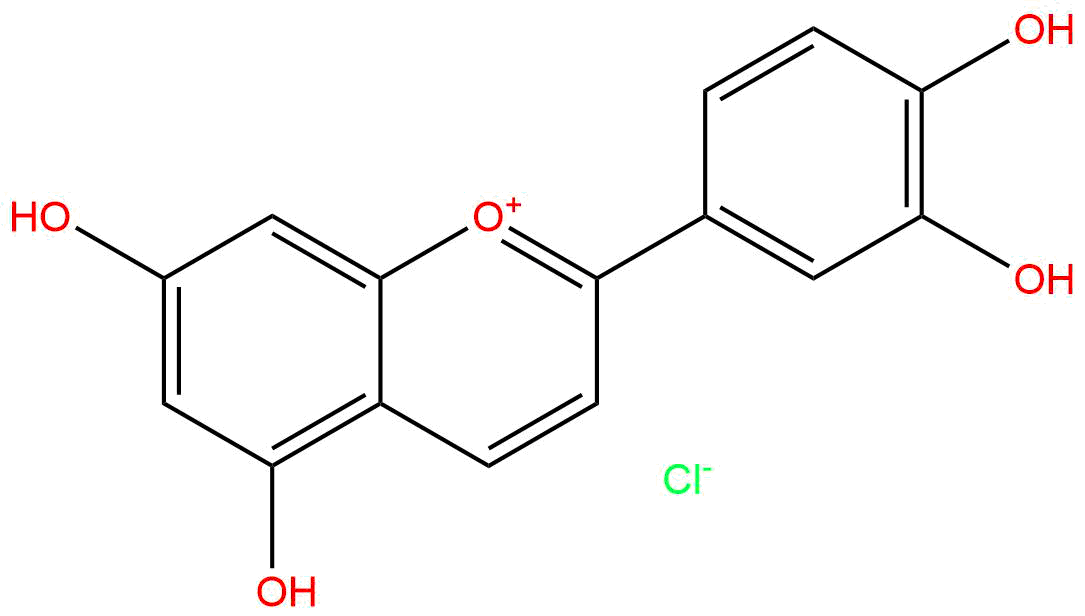


Product name: Luteolinidin chloride
Synonym name: Luteolinidin; Luteolinidol chloride
Catalogue No.: BP4449
Cas No.: 1154-78-5
Formula: C15H11ClO5
Mol Weight: 306.698
Botanical Source:
Type of Compound:
Purity: 95%~99%
Analysis Method: HPLC-DAD or/and HPLC-ELSD
Identification Method: Mass, NMR
Packing: Brown vial or HDPE plastic bottle
Storage: Store in a well closed container, protected from air and light. Put into refrigerate or freeze for long term storage.
Whenever possible, you should prepare and use solutions on the same day. However, if you need to make up stock solutions in advance, we recommend that you store the solution as aliquots in tightly sealed vials at -20℃. Generally, these will be useable for up to two weeks.
The product could be supplied from milligrams to grams
Inquire for bulk scale.
For Reference Standard and R&D, Not for Human Use Directly.
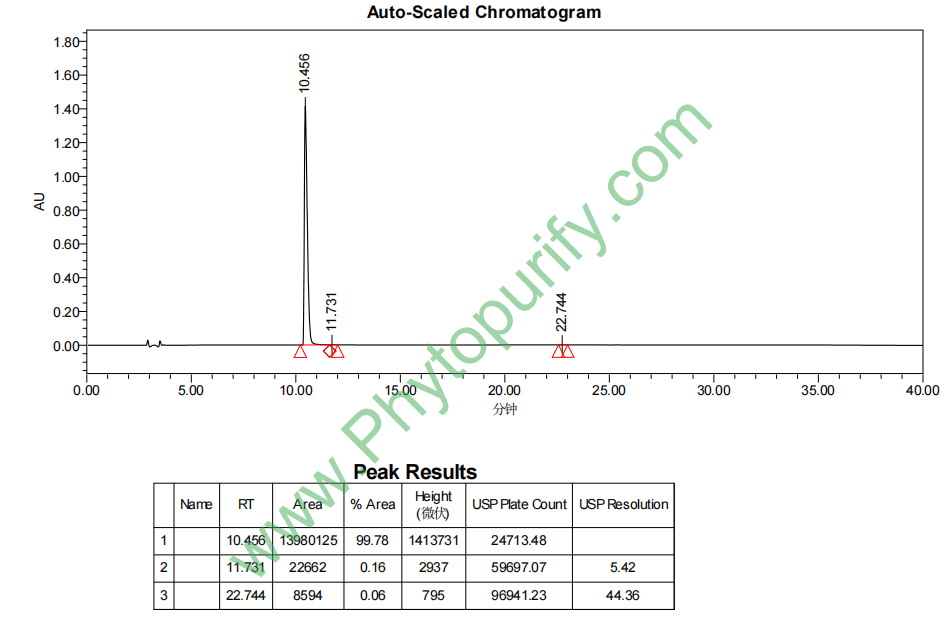
HPLC of Luteolinidin chloride
Storage conditions:Short-term storage at 2~8℃, long-term storage at -20 ~ -80℃
92.2200
-.2829
-.7338
.0490
.8105
12.6539
Low
57.9555
3.0666
Yes
No
Yes
No
Yes
No
1.2
Yes
No
Yes
No
Natural products have long been an important source of innovative drug discovery, and their structural diversity and wide range of biological activities provide valuable lead compounds for the treatment of various diseases. Anthocyanins and their derivatives, as an important class of plant secondary metabolites, have attracted much attention due to their significant antioxidant and anti-inflammatory activities. Luteolinidin chloride, as a deoxyanthocyanin compound, not only inherits the basic activity characteristics of such compounds, but also exhibits unique cardioprotective and skin pigment regulatory potential due to its effective inhibition of specific molecular targets such as CD38 and tyrosinase. This compound is mainly derived from sorghum (Sorghum bicolor), and its bright color is closely related to its biological function. In recent years, with the in-depth research on its pharmacological activity, especially in the fields of cardiovascular protection, antioxidant and anti allergic effects, iridoid chloride has transformed from a simple plant pigment component to a candidate molecule with clear molecular mechanisms and potential therapeutic value. This article aims to systematically review the chemical properties, plant sources, pharmacological activities, mechanisms of action, pharmacological evaluation, and clinical application prospects of iridoid chloride, in order to provide comprehensive scientific references for the in-depth research and development of this compound.
Chlorfenapyr, chemical name 2- (3,4-dihydroxyphenyl) -5,7-dihydroxy-1-benzopyranium chloride, CAS number 1154-78-5. Its molecular formula is C15H11O5 ⁺ · Cl ⁻, and its molecular weight is 271.2480 g/mol. Structurally speaking, it belongs to the class of deoxyanthocyanins (3-deoxyanthocyanins), with its basic skeleton being a benzopyranium cation (Huangyan salt). The difference from common anthocyanins (such as cyanidins) is the lack of a hydroxyl group at the 3rd position of the C ring. Its structural features include 5,7-dihydroxy substitution in the A ring, 3,4-ortho dihydroxy (catechol) structure in the B ring, and positively charged oxygen atoms on the C ring. This unique structure is the reason for its orange red to reddish brown appearance, and is closely related to its electron distribution and biological activity.
The key physicochemical parameters determine its bioavailability and mode of action. The calculated lipid water partition coefficient (LogP) is approximately -0.2829, indicating that the compound has a relatively hydrophilic property. The topological polar surface area (TPSA) is 92.22 Å ², reflecting the strong polarity brought by multiple hydroxyl groups in the molecule. The water solubility is 0.0490 mg/mL, which is slightly soluble, which to some extent limits its biofilm permeability. The predicted blood-brain barrier permeability is "low", indicating that it is difficult to enter the central nervous system, which may be an advantage for drugs that mainly act on the peripheral system and can reduce the risk of central side effects. Preliminary safety assessment shows that the risk of hERG channel inhibition is "no", reducing the potential for inducing QT interval prolongation in the heart; The Ames test value is 1.2 (usually considered negative if it is less than 2), indicating that there is no significant genetic toxicity. These basic pharmacological parameters provide preliminary basis for further development.
Chlorfenapyr mainly exists in plants of the sorghum genus in the Poaceae family, especially in the seed coat, leaves, and inflorescence of colored sorghum (Sorghum bicolor L. Moench), where its content is relatively high. Sorghum, as an important grain and feed crop, is rich in various phenolic compounds in its dark colored varieties (such as black sorghum and red sorghum). Among them, 3-deoxyanthocyanins, including iridoid chloride and its derivatives (such as apigenin), are the key pigments that give it a reddish brown to black color. At the same time, they also serve as plant stress metabolites to resist stress such as ultraviolet radiation and pathogenic bacteria.
The extraction of iridium chloride from plant materials is usually carried out using solvent extraction method. The common process is as follows: first, the dried sorghum seed coat or other tissues are crushed, and an acidic alcohol solution (such as methanol or ethanol containing 1% hydrochloric acid) is used for extraction or ultrasound assisted extraction. Acidic conditions help stabilize the cationic structure of Huangyan salt. After filtration and concentration, the crude extract can be enriched and purified using macroporous adsorption resins (such as AB-8, XAD-7). By utilizing their adsorption properties for phenols, impurities are first washed away with water, and then gradient elution is performed using alcohol solutions of different concentrations. Further purification relies on preparative high-performance liquid chromatography (HPLC), often using a reverse phase C18 column with methanol/water or acetonitrile/water (containing small amounts of formic acid or trifluoroacetic acid to improve peak shape) as the mobile phase for separation. Detection and collection are performed based on its specific UV visible absorption spectrum (maximum absorption wavelengths around 480-490 nm and 280 nm). The optimization of extraction processes, such as solvent selection, acidity, temperature, and time, is crucial for improving yield and maintaining compound stability. In addition, the analysis of biosynthetic pathways also provides the possibility for the future production of this compound using synthetic biology techniques.
A large number of in vitro and in vivo studies have revealed various pharmacological activities of iridoid chloride, demonstrating its potential for application in multiple disease fields.
Cardiovascular protective effect This is one of the most highly regarded activities of iridoid chloride. Research has shown that it can significantly alleviate myocardial ischemia/reperfusion injury. In animal models, pre-treatment with iridoid chloride can reduce the size of myocardial infarction and improve cardiac function. Its protective effect is closely related to reducing oxidative stress and inflammatory response. The core mechanism is related to inhibiting CD38 and protecting eNOS function (see the following section for details).
Antioxidant and anti-inflammatory activities As a polyphenolic compound, iridium chloride has strong free radical scavenging ability and metal ion chelating ability, which can effectively inhibit lipid peroxidation. The ortho dihydroxy group of its B ring is a key functional group that exerts antioxidant effects. At the same time, it can downregulate the expression of various pro-inflammatory factors (such as TNF - α, IL-6, IL-1 β), inhibit the activation of inflammatory signaling pathways such as NF - κ B, and thus exert a wide range of anti-inflammatory effects.
Antiallergic activity Based on its association with multiple allergy related targets (such as ALOX5, HRH1, IL4, IL5, IL13, FCER1A, TBXA2R, STAT6, TSLP), iridoid chloride exhibits potential anti allergic properties. It may intervene in allergic reactions through multiple pathways: inhibiting 5-lipoxygenase (ALOX5) to reduce leukotriene production; Alleviate allergic symptoms by antagonizing the histamine H1 receptor (HRH1); Regulating Th2 cytokines (IL-4, IL-5, IL-13) and their signaling transducer (STAT6), inhibiting IgE production and eosinophil activation; Affects upstream alarm factors such as high affinity IgE receptor (FCER1A) signaling on the surface of mast cells and thymic stromal lymphopoietin (TSLP). This provides a theoretical basis for its development for diseases such as allergic asthma and rhinitis.
Tyrosinase inhibition and skin whitening Chlorfenapyr is a competitive inhibitor of tyrosinase, with an IC50 value as low as 3.7 μ M and significant efficacy. It can effectively block the key step of tyrosinase catalyzing the conversion of tyrosine to melanin, thereby inhibiting melanin production. This activity makes it a natural whitening ingredient in the cosmetics industry and has potential applications in the treatment of hyperpigmentation disorders such as melasma.
Other potential activities Preliminary studies also suggest that iridoid chloride may have anti-tumor, antibacterial, antiviral and other activities, but research in these areas is still in its infancy and requires more evidence to support it.
The various pharmacological activities of iridium chloride stem from its regulatory effects on multiple key molecular targets.
CD38 inhibition and eNOS functional protection CD38 is a multifunctional enzyme that primarily catalyzes the synthesis of the second messenger cyclic adenosine diphosphate ribose (cADPR), which can mobilize intracellular calcium stores. In the state of cardiovascular disease, CD38 activity is upregulated, leading to eNOS uncoupling and the production of superoxide anions instead of nitric oxide (NO), causing endothelial dysfunction. Chlorfenapyr was identified as an effective CD38 inhibitor (Ki=11.4 μ M). By inhibiting CD38, it can reduce the generation of cADPR, decrease abnormal calcium mobilization, thereby maintaining the normal coupling state of eNOS and ensuring the biosynthesis of NO. NO is a key vasodilator and cardiovascular protective molecule, and the recovery of its levels helps improve endothelial function, inhibit platelet aggregation, and alleviate myocardial injury. This is the core molecular mechanism of its cardioprotective effect.
Competitive inhibition of tyrosinase Tyrosinase is the rate limiting enzyme in melanin biosynthesis. Chlorfenapyr competes with the substrate of tyrosinase (tyrosine/dopa) through its structure to bind to the active center of the enzyme, thereby reversibly inhibiting enzyme activity. The phenolic hydroxyl group in its molecule may interact with copper ions or surrounding amino acid residues in the enzyme active center, achieving efficient inhibition (IC50=3.7 μ M), blocking the conversion from tyrosine to dopaquinone, and ultimately reducing melanin production.
Multi target intervention for allergic reactions The anti allergic effect of iridium chloride involves a networked target group. Its inhibition of ALOX5 reduces the production of potent inflammatory mediator leukotrienes; The potential antagonistic effect on HRH1 can directly alleviate allergic symptoms such as capillary dilation and increased permeability; By affecting the IL-4/IL-13/STAT6 signaling axis, it inhibits the production of IgE by B cells and reduces the recruitment and activation of eosinophils; The regulation of FCER1A and TSLP may act on the initiation and amplification stages of allergic reactions. This multi-target characteristic makes it possible to have a synergistic inhibitory effect on complex allergic cascade reactions.
Regulation of antioxidant and anti-inflammatory signaling pathways Its direct antioxidant effect originates from the hydroxyl groups of phenols providing hydrogen atoms or electrons to neutralize free radicals. In addition, it can activate the cell's own antioxidant defense system, such as the Nrf2/ARE pathway, and upregulate the expression of protective proteins such as heme oxygenase-1 (HO-1). In terms of anti-inflammatory effects, it inhibits the phosphorylation of IKK/I κ B, prevents NF - κ B nuclear translocation, and downregulates the transcription of a series of downstream pro-inflammatory genes.
Although Chlorfenapyr has shown good biological activity, its medicinal properties still need to be comprehensively evaluated.
Absorption, distribution, metabolism, excretion (ADME)Due to its strong polarity and slight solubility, oral bioavailability may face challenges. Predict low blood-brain barrier permeability, mainly distributed in peripheral tissues. As a polyphenolic compound, it is likely to undergo extensive phase II metabolism in the body, such as glucuronidation and sulfation, producing more water-soluble metabolites that are excreted through urine or bile. The gut microbiota may also hydrolyze and transform its glycosidic form (if present). At present, there is a relative lack of research data on the pharmacokinetics of the Chlorfenapyr system, and key parameters such as absolute bioavailability, plasma protein binding rate, major metabolites, and half-life need to be clarified through standardized animal and human studies.
Advantages and challenges of pharmaceutical properties:
* Advantage The mechanism of action is relatively clear (especially the inhibition of CD38 and tyrosinase); Multi target characteristics may bring synergistic therapeutic effects; Preliminary safety evaluation shows no risk of hERG inhibition or signs of genotoxicity (Ames negative); Natural sources with high public acceptance.
* challenge Both water solubility and fat solubility are not prominent, which may affect its oral absorption and in vivo distribution; Chemical stability needs attention, especially under neutral and alkaline conditions, the structure of Huangyan salt may undergo changes; Polyphenolic structures may lead to extensive metabolism and rapid clearance, affecting the duration of drug efficacy; The multi-target effect may bring therapeutic potential, but it may also increase the risk of off target side effects, which needs to be carefully evaluated.
Formulation strategy To enhance its pharmacological properties, advanced formulation techniques such as phospholipid complexes, cyclodextrin inclusion complexes, nanocrystals, or solid dispersions can be considered to improve solubility and permeability. The development of topical preparations (such as cream and gel) for skin whitening can avoid the problem of oral absorption and directly act on the target site.
The multiple pharmacological activities of iridium chloride have depicted broad prospects for its application in multiple fields.
Future research directions should focus on: ① conducting systematic preclinical pharmacokinetic and toxicological studies to clarify their safety window; ② Using animal models of diseases to further validate their in vivo efficacy in cardiovascular protection, anti allergy, and other aspects; ③ Elucidate the primary secondary relationship and network regulatory mechanism between its multi-target effects; ④ Strengthen pharmaceutical research and solve its delivery difficulties; ⑤ Explore its potential for combined use with other drugs. Ultimately, promoting high-quality human clinical trials is a crucial step in transforming laboratory research into practical clinical applications.
Chlorfenapyr, as a natural deoxyanthocyanin derived from sorghum, is increasingly receiving attention in the fields of pharmacology and drug development due to its unique chemical structure and diverse biological activities. From explicitly inhibiting CD38 to protect the heart, to efficiently competitively inhibiting tyrosinase to regulate pigments, and to multi-target intervention in allergic reactions, the study of its mechanism of action continues to deepen, revealing its enormous potential as a multifunctional active molecule. Despite common challenges in drug formulation such as solubility and metabolic stability, these challenges are expected to be overcome through the empowerment of modern pharmaceutical chemistry and formulation technologies. In summary, iridoid chloride is not only an excellent example for studying the relationship between plant chemistry and function, but also a drug lead compound worthy of further exploration and development. With the continuous advancement of future research, it is expected to achieve a leap from "natural products" to "therapeutic drugs" or "functional ingredients" in the fields of cardiovascular protection, skin health, and treatment of allergic diseases, contributing its unique value to human health.
