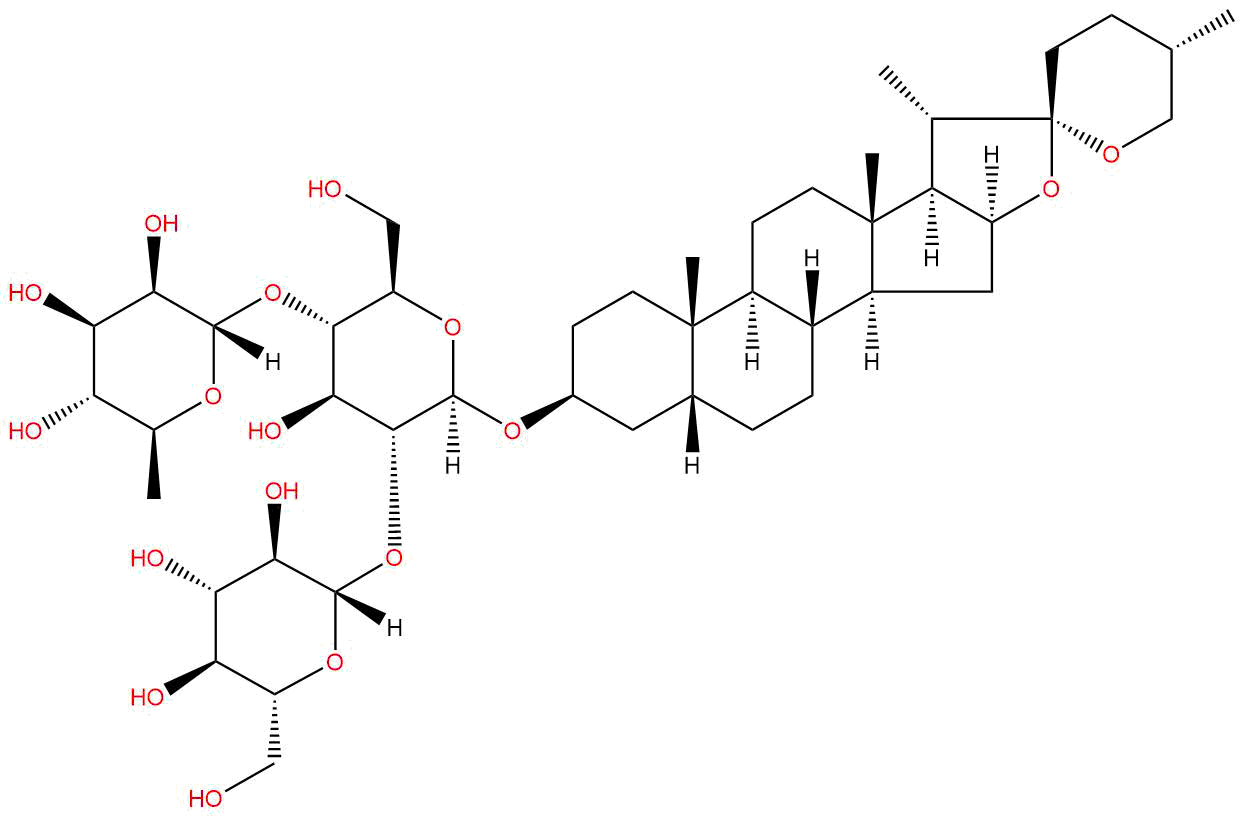


Product name: Asparanin B
Synonym name: Curillin H;Shatavarin IV
Catalogue No.: BP2167
Cas No.: 84633-34-1
Formula: C45H74O17
Mol Weight: 887.07
Botanical Source:
Type of Compound:
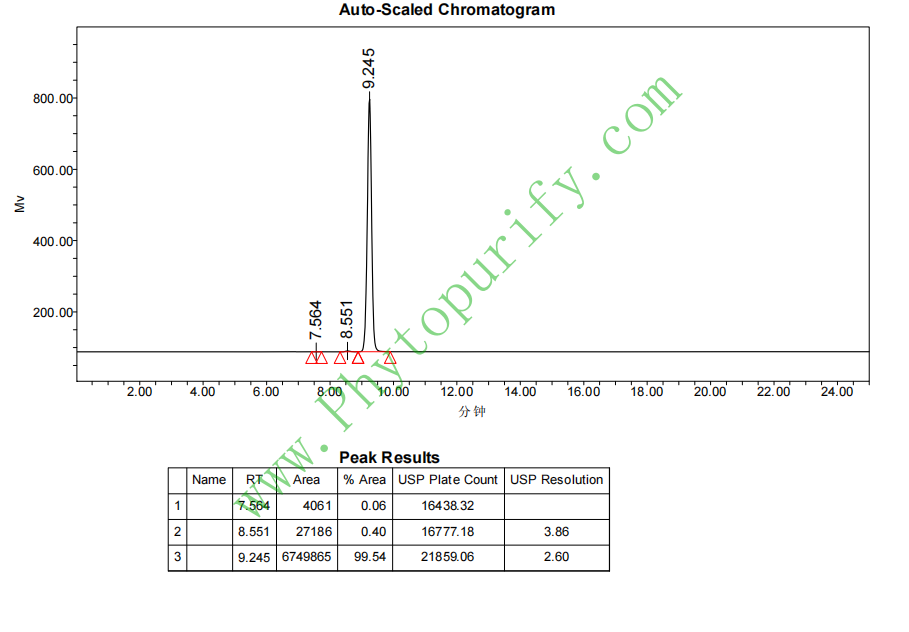
Purity: 95%~99%
Analysis Method: HPLC-DAD or/and HPLC-ELSD
Identification Method: Mass, NMR
Packing: Brown vial or HDPE plastic bottle
Storage: Store in a well closed container, protected from air and light. Put into refrigerate or freeze for long term storage.
Whenever possible, you should prepare and use solutions on the same day. However, if you need to make up stock solutions in advance, we recommend that you store the solution as aliquots in tightly sealed vials at -20℃. Generally, these will be useable for up to two weeks.
The product could be supplied from milligrams to grams
Inquire for bulk scale.
For Reference Standard and R&D, Not for Human Use Directly.
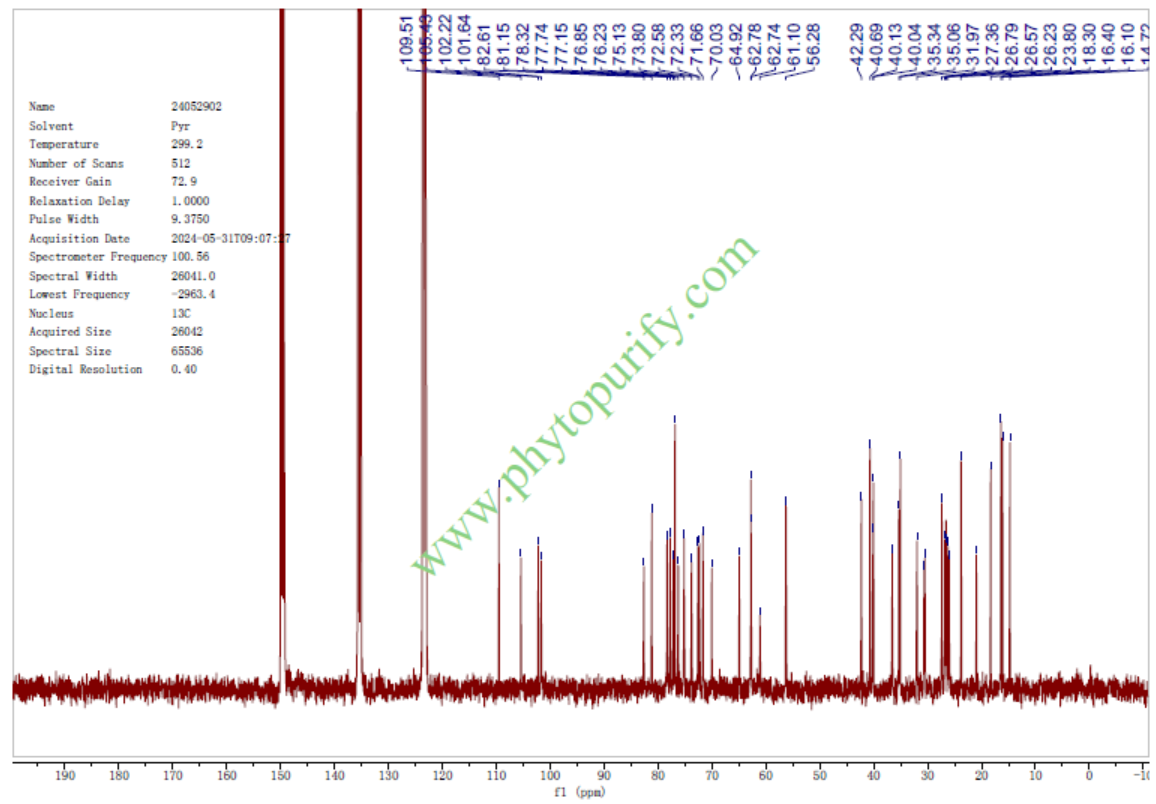
NMR of Asparanin B
HPLC of Asparanin B
Storage conditions:Short-term storage at 2~8℃, long-term storage at -20 ~ -80℃
255.9100
2.0027
2.0027
.0536
.6375
.3039
Low
61.2611
6.6753
No
No
No
No
No
No
0.3
Yes
No
No
No
Natural products are an important source of new drug discovery and development, among which triterpenoids have attracted much attention due to their structural diversity and wide range of biological activities. Asparanin B (CAS number: 84633-34-1), as a steroid saponin triterpenoid compound, is a traditional medicinal plant, Asparanin(Asparagus cochinchinensis One of the main active ingredients in (Lour. Merr.). Tianmendong, as a traditional Chinese medicine, has the effects of nourishing yin and moistening dryness, clearing the lungs and generating fluids. It is commonly used to treat symptoms such as lung dryness and dry cough, yin deficiency and cough. Modern pharmacological research has revealed that its pharmacological effects are closely related to the various steroidal saponins it contains, and aspartic acid B is one of the representative compounds.
In recent years, with the advancement of separation and purification technology and activity screening platforms, the pharmacological activity of aspartic acid B has gradually been revealed, demonstrating potential in various aspects including anti-tumor, anti-inflammatory, neuroprotective, and immune regulation. Especially in the field of tumor research, there are increasing reports of its effects through inducing cell apoptosis, blocking cell cycle, inhibiting metastasis, and other pathways, making it a potential candidate for anti-tumor drug molecules. However, compared to some other star natural products, there are not many systematic reviews on aspartic acid B. This article aims to systematically review the research progress on the chemical structure, plant origin, pharmacological activity, mechanism of action, and medicinal properties of aspartic acid B, in order to provide comprehensive scientific references for the in-depth research and development of this compound.
Aspartate B is a steroid saponin with a molecular formula of C45H74O17 and a molecular weight of 887.0700. Its basic skeleton is a spiral sterane triterpenoid, belonging to the category of spiral sterane alcohol saponins. Structurally, it is composed of a hydrophobic steroid core (spirostane) connected to a hydrophilic oligosaccharide chain through glycosidic bonds. The sugar chain is usually connected to the C-3 hydroxyl group of the parent nucleus, which is a key component determining its water solubility and biological activity. The glycosylation composition of aspartic acid B may include glucose, rhamnose, etc. The precise glycosylation sequence and connection position need to be identified by techniques such as nuclear magnetic resonance (NMR) and mass spectrometry (MS).
From the perspective of pharmacological parameters, aspartic acid B exhibits typical saponin compound characteristics. The calculated lipid water partition coefficient (LogP) is 2.0027, indicating that it has a certain lipophilicity, but due to its multiple hydroxyl and sugar groups, the overall molecular polarity is relatively high. The topologically polar surface area (TPSA) is as high as 255.9100 Å ², mainly attributed to the abundant oxygen atoms (from hydroxyl and glycosidic bonds) in the molecule, indicating that it has more hydrogen bond donor and acceptor sites. The water solubility value is 0.0536, indicating its low solubility in water, which may affect its oral bioavailability. The prediction of blood-brain barrier permeability as "low" means that it is difficult to enter the central nervous system, which is a challenge for treating central nervous system diseases, but may also reduce the potential risk of neurotoxicity. In the preliminary safety screening, hERG inhibition was "no", indicating a low risk of causing QT interval prolongation in the heart; The Ames test result is 0.3, indicating a low risk of mutagenicity under the conditions of this experiment, but this result still needs to be confirmed in a more complete genetic toxicity evaluation system.
Asparagine B mainly comes from plants of the Asparagus genus in the Liliaceae family, among which medicinal Asparagus is used(Asparagus cochinchinensis)Dry root tubers are the main source. This plant is widely distributed in East Asia and is cultivated or wild in China, South Korea, Japan, and other places. Its root is the authentic source of the traditional Chinese medicine "Tianmendong". In addition, in other plants of the same genus such as Asparagus officinalis(Asparagus officinalis)Saponins with similar structures may also be detected, but there may be differences in their content and types.
The extraction and separation of aspartic acid B from Tianmendong medicinal herbs usually follow the conventional process of natural product chemistry, which mainly includes the following steps:
1. Extract Solvent extraction method is often used. After crushing the dried Tianmen winter tubers, reflux extraction or ultrasound assisted extraction is performed using polar solvents such as methanol, ethanol, or aqueous ethanol. The alcohol extraction method can effectively dissolve saponin components from plant tissues.
2. Enrichment and Coarse Separation The extract is concentrated under reduced pressure to obtain a paste. Due to the surface activity of saponins, their adsorption properties with macroporous adsorption resins such as D101 and AB-8 can be utilized for enrichment and purification. Usually, strong polar impurities such as sugars and inorganic salts are washed away with water first, and then gradient elution is carried out with different concentrations of ethanol (such as 30% -95%). Asparagine B is usually enriched in the higher concentration ethanol elution site.
3. Separation and Purification The enriched saponin sites require further fine separation. Normal or reverse phase silica gel column chromatography, Sephadex LH-20 column chromatography, high performance liquid chromatography (HPLC) and preparative liquid chromatography (prep HPLC) are commonly used. The combination of reverse phase C18 chromatography column and methanol water or acetonitrile water gradient elution is an effective method for separating and purifying saponin monomers such as aspartic acid B.
4. appraisal The molecular weight and formula of the purified compound were determined by high-resolution mass spectrometry (HR-ESI-MS), and its planar and stereochemical structures were analyzed by one-dimensional and two-dimensional nuclear magnetic resonance spectra (1H NMR, 13C NMR, HSQC, HMBC, COSY, NOESY, etc.), and finally confirmed by comparing with literature data.
In recent years, some green extraction techniques such as supercritical fluid extraction and microwave-assisted extraction have also been applied, aiming to improve extraction efficiency and reduce the amount of organic solvents used.
Numerous in vitro and in vivo pharmacological studies have shown that aspartic acid B has multiple biological activities, with research hotspots mainly focused on anti-tumor and anti-inflammatory fields.
1. Antitumor activity
Aspartame B exhibits significant proliferation inhibitory activity against various human tumor cell lines.
* liver cancer Research has shown that aspartic acid B can dose dependently inhibit the viability of human liver cancer cells (such as HepG2 and SMMC-7721), induce cell apoptosis, and possibly arrest the cell cycle in the G2/M phase.
* Lung cancer In non-small cell lung cancer A549 cells, aspartic acid B can induce apoptosis through the mitochondrial pathway and inhibit cell migration and invasion, indicating its potential for anti metastasis.
* breast cancer: For breast cancer cells such as MCF-7, MDA-MB-231, etc., asparagine B also showed birth growth inhibition and apoptosis promotion. The mechanism may be related to regulating the expression of Bcl-2 family proteins and activating the Caspase cascade reaction.
* colon cancer In colon cancer cells such as HT-29 and HCT-116, aspartic acid B can induce autophagy and apoptosis, and its effect may be related to the excessive accumulation of reactive oxygen species (ROS).
* In vivo research In a mouse model of transplanted tumors, intraperitoneal injection or gavage of aspartic acid B can significantly inhibit tumor growth and have a small impact on mouse body weight, indicating its anti-tumor effect and safety window in vivo.
2. Anti inflammatory activity
Inflammation is a common pathological basis for many chronic diseases. Aspartate B has been proven to have anti-inflammatory effects in various inflammatory models. In the LPS induced macrophage inflammation model (such as RAW 264.7), aspartic acid B can significantly inhibit the production of nitric oxide (NO), prostaglandin E2 (PGE2), and pro-inflammatory cytokines (such as TNF - α, IL-6, IL-1 β). Its function involves inhibiting the signaling pathways of nuclear factor kappa B (NF - κ B) and mitogen activated protein kinases (MAPKs).
3. Neuroprotective activity
Preliminary research suggests that aspartic acid B may have a protective effect on the nervous system. In glutamate induced PC12 cell injury models or β - amyloid protein (A β) - induced neuronal injury models, pretreatment with aspartic acid B can improve cell survival rate and alleviate oxidative stress damage. The mechanism may be related to the activation of Nrf2/HO-1 antioxidant pathway and inhibition of inflammatory response. However, due to its low blood-brain barrier permeability, achieving effective brain delivery is key to developing its neuroprotective effects.
4. Other activities
In addition, there are studies reporting that aspartic acid B has potential activities such as immune regulation and antiviral activity (such as against influenza virus), but relevant research is still in the preliminary stage and requires more evidence to support it.
The molecular mechanism by which aspartic acid B exerts pharmacological effects is complex, involving the regulation of multiple pathways and targets. The main mechanisms of action and potential targets revealed by current research include:
1. Inducing cell apoptosis
This is one of the core mechanisms of the anti-tumor effect of aspartic acid B.
* Death receptor pathway Possible activation of Caspase-8 and initiation of exogenous apoptotic pathways may be achieved by upregulating the expression of death receptors (such as Fas) and their ligands.
* Mitochondrial pathway This is a more in-depth approach to research. Aspartate B can downregulate the expression of anti apoptotic proteins Bcl-2 and Bcl xL, upregulate the expression of pro apoptotic proteins Bax and Bad, leading to a decrease in mitochondrial membrane potential, release of cytochrome C from mitochondria to cytoplasm, and binding with Apaf-1 to form apoptotic bodies, thereby activating Caspase-9 and effector Caspase-3, ultimately leading to cell apoptosis.
* Endoplasmic reticulum stress pathway Research suggests that aspartic acid B may participate in the induction of apoptosis by inducing endoplasmic reticulum stress, activating pathways such as CHOP and Caspase-12.
2. Regulating the cell cycle
Aspartate B can block tumor cells at specific cell cycle checkpoints, such as G0/G1 phase or G2/M phase. The mechanism may be related to the regulation of the expression of cyclins, cyclin dependent kinases (CDKs), and cyclin dependent kinase inhibitors (CKIs, such as p21 and p27). For example, by downregulating the expression of Cyclin B1 and CDK1, cells are unable to pass the G2/M checkpoint smoothly.
3. Inhibit metastasis and invasion
Aspartate B can inhibit the migration, invasion, and epithelial mesenchymal transition (EMT) of tumor cells. The mechanism involves:
* Inhibition of matrix metalloproteinases (MMPs)Downregulate the expression and activity of MMP-2 and MMP-9, thereby reducing the ability to degrade extracellular matrix.
* Adjust EMT related biomarkers Upregulation of epithelial markers (such as E-cadherin) and downregulation of stromal markers (such as N-cadherin, Vimentin, Snail).
* Intervention related signaling pathways Inhibiting pathways closely related to cell migration and invasion, such as PI3K/Akt and Wnt/β - catenin.
4. Regulating oxidative stress and inflammatory signaling pathways
* Nrf2/ARE pathway In neuroprotective models, aspartic acid B may enhance cellular antioxidant defense ability by activating Nrf2, promoting the expression of downstream antioxidant enzymes such as HO-1 and NQO1.
* NF - κ B pathway In anti-inflammatory and partial anti-tumor effects, aspartic acid B can inhibit the phosphorylation and degradation of I κ B α, prevent the nuclear translocation of NF - κ B p65 subunit, and thus inhibit the transcription of downstream inflammatory factors and pro survival genes.
* MAPK pathway It can regulate the phosphorylation levels of JNK, ERK, and p38 MAPK, which are closely related to cell apoptosis, inflammation, and stress response.
5. Inducing autophagy
At certain cell types and concentrations, aspartic acid B can induce protective autophagy or autophagy that interacts with apoptosis. The mechanism may be related to the inhibition of mTOR signaling pathway and upregulation of autophagy related proteins (such as LC3-II, Beclin-1). The role of autophagy in its pharmacological effects (promoting survival or death) is context dependent.
At present, the identification of direct molecular targets of aspartic acid B (such as proteins that specifically bind to it) is still in the exploratory stage. In the future, using chemical biology methods (such as affinity chromatography probes, molecular docking and validation) for target fishing will help to more accurately elucidate its mechanism of action.
Although aspartic acid B exhibits good biological activity in vitro, its drug like and pharmacokinetic (PK) properties are the key factors determining its successful development as a drug.
1. Evaluation of drug properties
Based on its physical and chemical parameters:
* Advantages The molecular weight is moderate, the LogP value is within the ideal range (-2 to 5), there is no obvious hERG inhibition warning, and the preliminary genetic toxicity risk is low.
* challenge The main challenges it faces are extremely high TPSA and low water solubility. High TPSA typically leads to poor oral absorption and low membrane permeability. Low water solubility can affect its dissolution and absorption in the gastrointestinal tract, leading to low oral bioavailability. The poor permeability of the blood-brain barrier also limits its therapeutic application in central nervous system diseases.
2. Pharmacokinetic studies
At present, there are relatively limited reports on the pharmacokinetic studies of the aspartic acid B system. However, based on the common characteristics of saponin compounds, it can be inferred that it may face the following PK features:
* absorb After oral administration, due to its high molecular weight and polarity, its passive diffusion absorption in the small intestine may be poor. The gut microbiota may hydrolyze its sugar chain portion to produce aglycones or secondary glycosides, and the activity and absorption characteristics of these metabolites may differ from those of the prototype drug.
* distribution The prototype drug may have a wide distribution in the body, but the amount entering brain tissue is very small. The binding rate with plasma proteins is not yet clear.
* Metabolism The liver may be its main metabolic site, involved in phase I (such as oxidation and reduction) and phase II (such as glucuronidation and sulfation) metabolic reactions. Glycoside bonds may also be broken under the action of specific glycosidases.
* excretion The prototype drug and its metabolites may be mainly excreted through bile and kidneys.
In order to improve its medicinal properties, future research may consider the following strategies:
* Structural modification Chemical modification of the sugar moiety or steroid core to balance its hydrophilicity and lipophilicity, improve membrane permeability and metabolic stability.
* Formulation technology Utilizing novel drug delivery systems such as nanocrystals, liposomes, micelles, and solid dispersions to enhance their solubility and dissolution rate, and improve oral bioavailability.
* Prodrug strategy Design prodrugs that can be converted into active forms in the body to improve their absorption and distribution characteristics.
As a natural triterpenoid saponin with multi-target and multi pathway effects, aspartic acid B has shown potential application value in various disease fields.
1. Potential application directions
* Antitumor adjuvant therapy Given its inhibitory effect on various solid tumor cells and anti metastatic potential, aspartic acid B is expected to be developed as an anti-tumor drug or adjuvant drug, especially when combined with existing chemotherapy drugs, to enhance sensitivity and reduce toxicity. Developing injectable liposomes or nano formulations may be a direction to address the issue of poor water solubility.
* Anti inflammatory and immune related diseases Its clear anti-inflammatory mechanism makes it potential for treating chronic inflammatory diseases such as arthritis, colitis, asthma, etc. Further validation is needed in animal models that are closer to the disease.
* Metabolic diseases Inflammation and oxidative stress are important mechanisms of insulin resistance and complications of diabetes. The related activities of asparagine B suggest that it is worth exploring in the field of metabolic diseases.
2. Challenges faced
* Depth of mechanism of action Further clarification is needed on its direct target and the dominant signaling pathway network under different pathological contexts.
* Optimization of drug properties As mentioned earlier, its solubility, permeability, and bioavailability are the bottlenecks that constrain its development and must be addressed through chemical or pharmaceutical means.
* Systematic efficacy and toxicological evaluation More standardized preclinical pharmacodynamic (in different disease models), pharmacokinetic, and toxicological (acute toxicity, chronic toxicity, reproductive toxicity, etc.) systematic studies are needed to comprehensively evaluate their effectiveness and safety.
* Resources and Sustainability Obtaining large amounts of aspartic acid B from Tianmen winter plants may face resource limitations, and exploring chemical total synthesis, semi synthesis, or biosynthetic pathways (such as synthetic biology) is a long-term solution to achieve sustainable supply.
3. Future prospects
Future research should focus on:
1. Target discovery Using modern chemical biology techniques, identify the direct binding protein of aspartic acid B in cells, laying the foundation for precision drug design.
2. Study on Structure Activity Relationship Systematically study the relationship between its structure (especially the sugar chain) and various biological activities, guiding the design and synthesis of highly efficient and low toxicity derivatives.
3. Delivery system development Actively developing a new nano drug delivery system suitable for aspartic acid B, overcoming its physical and chemical defects, and achieving targeted delivery and controlled release.
4. Exploration of combination therapy In the field of tumors and other areas, in-depth research is conducted on the synergistic mechanism and regimen with standard therapeutic drugs.
5. Clinical translation preparation After completing sufficient preclinical research, promote regulatory new drug clinical research applications (IND).
As a steroidal saponin derived from the traditional Chinese medicine Tianmen Dong, aspartic acid B has become a promising molecule in natural product pharmacology research due to its unique chemical structure and diverse pharmacological activities. Its role in anti-tumor, anti-inflammatory and other aspects has been preliminarily confirmed, and its mechanism of action involves multiple key cellular processes such as apoptosis, cycle arrest, metastasis inhibition, oxidative stress and inflammation regulation. However, its inherent pharmaceutical defects, such as low water solubility and low blood-brain barrier permeability, are obstacles that must be overcome on the path towards drug development. With the continuous development of modern medicinal chemistry, pharmacy, and molecular biology technologies, through in-depth structural optimization, mechanism exploration, and formulation innovation of aspartic acid B, it is expected to gradually develop it from an active natural compound into a new drug candidate with clinical application value, providing new choices for the treatment of related diseases and further interpreting the connotation of modernization and scientificization of traditional Chinese medicine.
