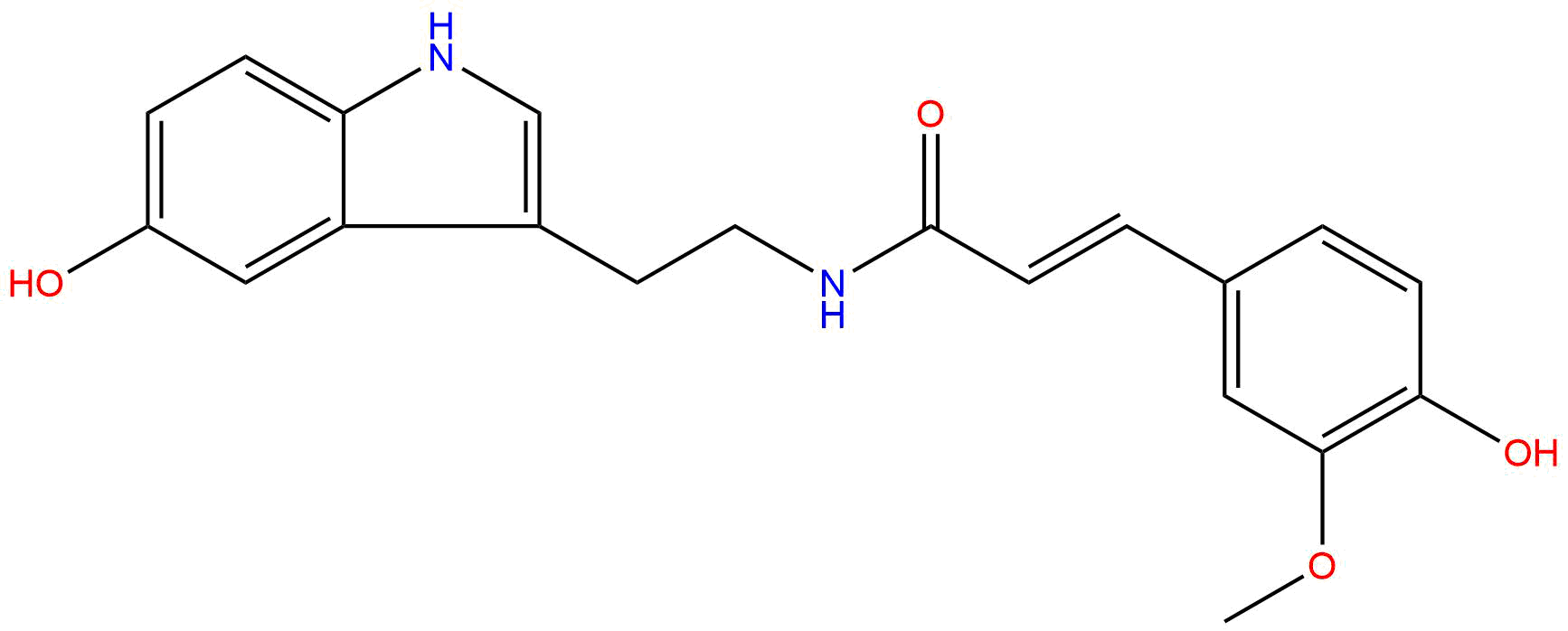


Product name: N-Feruloylserotonin
Synonym name: Moschamine
Catalogue No.: BP4400
Cas No.: 68573-23-9
Formula: C20H20N2O4
Mol Weight: 352.39
Botanical Source:
Type of Compound:
Purity: 95%~99%
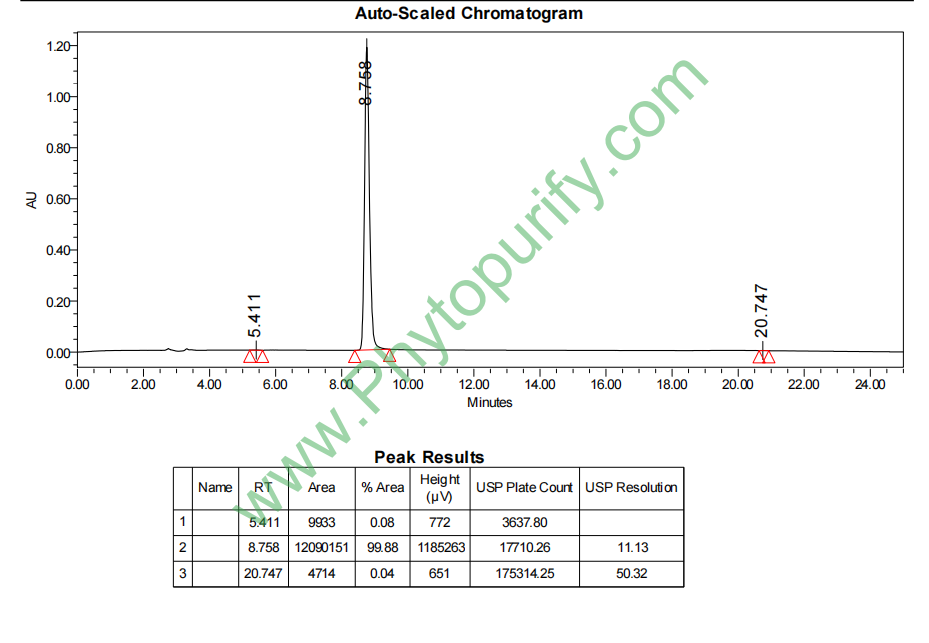
Analysis Method: HPLC-DAD or/and HPLC-ELSD
Identification Method: Mass, NMR
Packing: Brown vial or HDPE plastic bottle
Storage: Store in a well closed container, protected from air and light. Put into refrigerate or freeze for long term storage.
Whenever possible, you should prepare and use solutions on the same day. However, if you need to make up stock solutions in advance, we recommend that you store the solution as aliquots in tightly sealed vials at -20℃. Generally, these will be useable for up to two weeks.
The product could be supplied from milligrams to grams
Inquire for bulk scale.
For Reference Standard and R&D, Not for Human Use Directly.
HPLC of N-Feruloylserotonin
Storage conditions:Short-term storage at 2~8℃, long-term storage at -20 ~ -80℃
94.5800
2.6515
2.6459
.0551
2.1831
8.4443
Low
91.2910
2.2986
No
No
Yes
No
Yes
No
0.0
No
Yes
Yes
Yes
Natural products, as an important source of drug discovery, play an irreplaceable role in the long struggle between humans and diseases. Among numerous natural compounds with biological activity, N-Feruloylserotonin, as a unique serotonin derivative, has attracted widespread attention from researchers in pharmacology and medicinal chemistry in recent years. This compound was originally derived from the traditional medicinal plant safflower(Carthamus tinctorius L. It was isolated from the compound and its chemical structure combines the dual characteristics of ferulic acid and serotonin, endowing it with a unique biological activity spectrum.
The discovery of N-ferulic serotonin can be traced back to a systematic study of the active ingredients in safflower. Red flowers, as a widely used medicinal plant in traditional Chinese medicine, are believed to have the effects of promoting blood circulation, clearing meridians, dispersing blood stasis, and relieving pain in traditional Chinese medicine theory. Modern pharmacological research has confirmed that safflower extract and its active ingredients exhibit significant activities in cardiovascular protection, anti-inflammatory, antioxidant, and other aspects. As an important serotonin derivative in safflower, N-ferulate hydroxytryptamine has outstanding antioxidant activity, which lays a foundation for its potential application in cardiovascular diseases such as atherosclerosis and aortic wall swelling.
It is worth noting that the pharmacological activity of N-ferulic serotonin is not limited to the cardiovascular system. Recent studies have revealed that this compound has regulatory effects on multiple targets closely related to the pathogenesis of depression, including monoamine oxidase (MAO), glycogen synthase kinase-3 β (GSK3B), serotonin transporter (SLC6A4), and others. This discovery expands the research scope of N-ferulic serotonin from traditional cardiovascular protection to the field of neurological and psychiatric disorders, especially the treatment of depression. Depression, as a global mental health issue, involves multiple mechanisms such as neurotransmitter imbalance, changes in neural plasticity, and inflammatory response. The multi-target action characteristics of N-ferulic serotonin perfectly meet the demand for multi-target intervention strategies in the complex pathophysiological processes of depression.
This review aims to systematically review the research progress of N-ferulic serotonin, covering its chemical structure and physicochemical properties, plant sources and extraction methods, pharmacological activity research, mechanism of action and molecular targets, pharmacological evaluation and pharmacokinetic characteristics, as well as clinical application prospects, in order to provide comprehensive academic references for the in-depth research and development of this natural product.
The chemical name of N-ferulic serotonin is N - [2- (5-hydroxy-1H-indol-3-yl) ethyl] -3- (4-hydroxy-3-methoxyphenyl) acrylamide, with a molecular formula of C ₂ ₀ H ₂ ₀ N ₂ O ₅ and a molecular weight of 352.3900 g/mol. Structurally, the compound is composed of two key pharmacophores connected by amide bonds: one end is the ferulic acid (4-hydroxy-3-methoxycinnamic acid) structural unit, and the other end is the serotonin (5-hydroxytryptamine) structural unit. This unique hybrid structure endows N-ferulic serotonin with the biological activity characteristics of both parent molecules.
Specifically, the ferulic acid moiety contains a phenylacrylic acid structure substituted with one phenolic hydroxyl group and one methoxy group, which is the core skeleton of many natural antioxidants. The serotonin moiety contains an indole ring and an ethylamine side chain, which is the complete characteristic of the neurotransmitter serotonin (5-hydroxytryptamine). The connection method of amide bonds enables the two structural units to maintain a relatively flexible conformation, which is conducive to interacting with various biological targets.
In terms of physicochemical properties, N-ferulic serotonin exhibits moderate lipid solubility, with a calculated LogP value of 2.6515, indicating that the compound has a certain degree of lipophilicity and can penetrate biological membranes to a certain extent. Its topological polar surface area (TPSA) is 94.5800 Å ², which is at a moderate level and reflects the presence of multiple polar groups (phenolic hydroxyl groups, amide bonds, indole nitrogen atoms) in the molecule. The water solubility parameter is 0.0551 mg/mL, indicating that the compound has a low solubility in water, which may affect its oral bioavailability and formulation development strategy.
It is worth noting that the blood-brain barrier penetration ability of N-ferulic serotonin has been assessed as low. This feature has dual significance for its development as a central nervous system drug: on the one hand, low blood-brain barrier penetration may limit its ability to directly act on central targets; On the other hand, this may also reduce the risk of adverse reactions in the central nervous system. For the treatment of depression, ideal antidepressants need to maintain central efficacy while reducing peripheral side effects. Therefore, the blood-brain barrier properties of N-ferulic serotonin need to be further improved through drug chemical modification or delivery system optimization.
In addition, preliminary safety assessments have shown that N-ferulic serotonin has no significant inhibitory activity on hERG potassium channels, indicating a low risk of cardiac toxicity. The Ames test result was negative (0.0), indicating that the compound did not exhibit mutagenicity in the bacterial recovery mutation test. These preliminary safety data provide favorable conditions for the further development of N-ferulic serotonin.
The main natural source of N-ferulic serotonin is the Asteraceae plant safflower(Carthamus tinctorius L.), This plant is widely cultivated worldwide, and its dried tubular flowers are the medicinal parts of the traditional Chinese medicine saffron. Saffron has a long history of cultivation and medicinal use in Asia, Europe, and North Africa. In addition to being used as a blood activating and stasis removing medicine, it is also used as a natural dye and food coloring agent.
The chemical composition of safflower is extremely rich, and the reported types of compounds include flavonoids (such as safflower glycosides and kaempferol derivatives), quinones (such as safflower quinone glycosides), polyphenols, fatty acids, and alkaloids. N-Ferulidine, as a derivative of serotonin, has a relatively low content in safflower and is a trace active ingredient. In addition to safflower, the presence of N-ferulic serotonin has also been detected in some other plants such as certain Solanaceae and Rubiaceae plants, but safflower remains the most important and reliable natural source.
Researchers have established multiple effective extraction processes for the extraction of N-ferulic serotonin. Traditional solvent extraction methods typically use ethanol or methanol as extraction solvents to extract target compounds from safflower powder through methods such as cold soaking, percolation, or reflux extraction. Considering the moderate polarity of N-ferulic serotonin, ethanol water mixed solvents (usually 60% -80% ethanol) often achieve good extraction efficiency. After filtration and concentration, the extract can be preliminarily purified through liquid-liquid extraction (such as ethyl acetate extraction).
Modern extraction techniques such as ultrasound assisted extraction and microwave-assisted extraction have been applied to optimize the extraction process of N-ferulic serotonin. Ultrasound assisted extraction utilizes the cavitation effect of ultrasound to destroy plant cell walls, promote the dissolution of target components, significantly shorten extraction time, and improve extraction efficiency. Microwave assisted extraction rapidly increases the internal temperature of plant tissues through microwave radiation, accelerating the dissolution of target components by solvents. The application of these green extraction technologies not only improves extraction efficiency, but also reduces the use of organic solvents, which is in line with the concept of green chemistry.
In terms of separation and purification, column chromatography technology is the main means to obtain high-purity N-ferulic serotonin. Commonly used stationary phases include silica gel, C18 reverse silica gel and Sephadex gel (LH-20). Taking silica gel column chromatography as an example, gradient elution is usually performed using chloroform methanol or ethyl acetate methanol systems, and the elution process is monitored by thin layer chromatography (TLC) to collect fractions rich in target compounds. For further purification, the application of high-performance liquid chromatography (HPLC) column preparation can obtain N-ferulic serotonin monomers with a purity of over 98%.
It is worth noting that due to the low content of N-ferulic serotonin in safflower, large-scale preparation often requires a large amount of plant raw materials, which poses a challenge to the sustainable utilization of resources. In recent years, research on chemical synthesis methods has provided alternative pathways for the acquisition of N-ferulic serotonin. The complete synthesis of this compound can be achieved under laboratory conditions through the condensation reaction between ferulic acid derivatives and serotonin, providing stable material guarantees for subsequent pharmacological research and drug development.
The antioxidant activity of N-ferulic serotonin is one of its earliest discovered and studied pharmacological properties. Multiple in vitro experiments have shown that the compound can effectively scavenge various free radicals, including 1,1-diphenyl-2-trinitrophenylhydrazine (DPPH) free radical, 2,2 '- diazobis (3-ethylbenzothiazole-6-sulfonic acid) (ABTS) free radical, and superoxide anion free radical. Its antioxidant activity is mainly attributed to the phenolic hydroxyl structure of the ferulic acid moiety in the molecule, which can neutralize free radicals and block free radical chain reactions through hydrogen atom transfer or single electron transfer mechanisms.
At the cellular level, N-ferulic serotonin can protect various cells from oxidative stress damage. Research has shown that this compound can significantly reduce the increase in cellular reactive oxygen species (ROS) levels induced by hydrogen peroxide (H ₂ O ₂) or tert butyl hydroperoxide (t-BHP), alleviate the production of lipid peroxidation product malondialdehyde (MDA), and increase the activity of endogenous antioxidant enzymes such as superoxide dismutase (SOD), glutathione peroxidase (GSH Px), and catalase (CAT) in cells. These cell protective effects have been reported in various cell lines such as endothelial cells, neurons, and liver cells.
Based on its antioxidant activity, the protective effect of N-ferulic serotonin in cardiovascular disease models has received widespread attention. In the research of atherosclerosis, this compound can inhibit the oxidative modification of low-density lipoprotein (LDL), reduce the vascular endothelial cell injury and foam cell formation induced by oxidized LDL (ox LDL). In addition, N-ferulic serotonin can also delay the progression of atherosclerotic plaque by inhibiting the abnormal proliferation and migration of vascular smooth muscle cells.
In the study of aortic wall dilation (aortic aneurysm), N-ferulic serotonin has shown the potential to inhibit vascular wall remodeling. Its mechanism of action involves inhibiting the overexpression and activity of matrix metalloproteinases (MMPs), particularly MMP-2 and MMP-9, which play a critical role in the degradation of extracellular matrix in the aortic wall. By maintaining the integrity of collagen and elastin in the vascular wall, N-ferulic serotonin helps prevent progressive dilation and rupture of the aortic wall.
In recent years, the antidepressant activity of N-ferulic serotonin has become a research hotspot. In classic animal behavior models such as forced swimming test (FST) and tail suspension test (TST), this compound can significantly shorten the immobility time of mice, exhibiting effects similar to antidepressant drugs. It is worth noting that the antidepressant effect of N-ferulic serotonin has been validated in various animal models of depression, including chronic unpredictable mild stress (CUMS) model and corticosterone induced depression model.
In the CUMS model, long-term administration of N-ferulic serotonin can reverse depression like behaviors caused by chronic stress, such as decreased sugar water preference, slowed weight gain, and reduced spontaneous activity. Meanwhile, the compound can also improve stress-induced hippocampal neuron damage, promote neurogenesis, and increase the expression level of brain-derived neurotrophic factor (BDNF). These findings suggest that N-ferulic serotonin may exert antidepressant effects by promoting neuroplasticity.
In addition to the main activities mentioned above, N-ferulic serotonin also exhibits pharmacological activities such as anti-inflammatory, neuroprotective, and anti-tumor effects. In terms of anti-inflammatory effects, this compound can inhibit the production of pro-inflammatory cytokines (such as TNF - α, IL-6, IL-1 β) in macrophages induced by lipopolysaccharide (LPS), and its mechanism is related to the inhibition of the activation of the nuclear factor kappa B (NF - κ B) signaling pathway. In terms of neuroprotection, N-ferulic serotonin can alleviate neuronal toxicity induced by β - amyloid protein (A β) and has a certain protective effect on Alzheimer's disease models. In addition, some studies have reported the inhibitory effect of this compound on the proliferation of certain tumor cell lines, but its anti-tumor activity still needs further validation.
The pharmacological activity of N-ferulic serotonin involves the regulation of multiple molecular targets and signaling pathways, and this multi-target action characteristic is its significant advantage over single target drugs. The following will explain its mechanism of action from two aspects: antidepressant related targets and other key signaling pathways.
Monoamine oxidase (MAO) is a key enzyme that degrades monoamine neurotransmitters such as serotonin, dopamine, and norepinephrine, including MAO-A and MAO-B subtypes. MAO-A mainly metabolizes serotonin and norepinephrine, and its excessive activity is closely related to the occurrence of depression. Research has shown that N-ferulic serotonin has inhibitory activity on both MAO-A and MAO-B, with a more significant inhibitory effect on MAO-A. This inhibitory activity increases the concentration of monoamine neurotransmitters in the synaptic cleft, thereby enhancing neurotransmission function and producing antidepressant effects.
Molecular docking studies have revealed that the indole ring of N-ferulic acid can insert into the active site of MAO-A, forming π - π stacking interactions with FAD cofactors. At the same time, the phenolic hydroxyl group of ferulic acid forms a hydrogen bond network with the amino acid residues of the enzyme active center, stabilizing the enzyme inhibitor complex. This dual binding mode endows N-ferulic serotonin with selective inhibitory activity against MAO-A.
The serotonin system plays a central role in emotion regulation, and its functional abnormalities are an important pathological basis for depression. N-ferulic serotonin has multi-level regulatory effects on the serotonin system. Firstly, this compound can interact with the serotonin transporter (SLC6A4), inhibiting its reuptake of serotonin in the synaptic cleft, thereby increasing the availability of serotonin. This mechanism of action is similar to selective serotonin reuptake inhibitors (SSRIs), but the inhibitory activity of N-ferulic serotonin is relatively mild.
Secondly, N-ferulic serotonin exhibits partial excitatory activity towards the serotonin 1A receptor (HTR1A). The HTR1A receptor is one of the most abundant receptor subtypes in the serotonin system, located in the presynaptic and postsynaptic membranes. The presynaptic HTR1A receptor acts as a self receptor, and its activation can negatively feedback regulate the release of serotonin; The activation of HTR1A receptors after synapses directly produces antidepressant effects. The partial activation of HTR1A receptors by N-ferulic serotonin may result in complex regulatory effects, which ultimately depend on receptor distribution and signal background.
Glycogen synthase kinase-3 β (GSK3B) is a multifunctional serine/threonine kinase involved in regulating various physiological processes such as cell proliferation, differentiation, and apoptosis. In the pathological mechanism of depression, excessive activity of GSK3B is associated with neuronal damage and decreased synaptic plasticity. Research has shown that N-ferulic serotonin can inhibit the activity of GSK3B, which may involve competitive binding to ATP binding sites or indirect regulation through upstream signaling pathways.
The inhibition of GSK3B leads to the stabilization and nuclear translocation of its downstream substrate β - catenin, which in turn activates the transcription factor CREB (cAMP response element binding protein). The phosphorylation activation of CREB can promote the transcription and expression of BDNF (brain-derived neurotrophic factor). BDNF is a key regulator of neural plasticity, playing a neurotrophic and protective role in emotion regulating brain regions such as the hippocampus and prefrontal cortex. N-Ferulidine promotes neurogenesis and synapse formation through the regulation of the GSK3B/CREB/BDNF signaling cascade, improving neurological structural damage caused by depression.
Gamma aminobutyric acid (GABA) is the main inhibitory neurotransmitter in the central nervous system, and its functional abnormalities are closely related to emotional disorders such as anxiety and depression. N-Ferulidine has a regulatory effect on GABRA1 (GABAA receptor alpha 1 subunit). GABAA receptors are ligand gated chloride ion channels, and their activation leads to neuronal hyperpolarization, producing inhibitory postsynaptic potentials. Research has shown that N-ferulic serotonin may enhance the function of GABAA receptors through allosteric regulation, thereby producing anti anxiety and anti depression effects.
COMT is a key enzyme that degrades catecholamine neurotransmitters such as dopamine and norepinephrine, and plays an important role in neurotransmitter clearance in brain regions such as the prefrontal cortex. Excessive COMT activity can lead to a decrease in dopamine levels in the prefrontal cortex, which is associated with cognitive dysfunction and depressive symptoms. N-ferulic serotonin has a certain inhibitory activity on COMT, which helps maintain appropriate levels of dopamine in the prefrontal cortex and improve depression related cognitive impairment.
Based on Lipinski's "Rule of Five", the physicochemical properties of N-ferulic serotonin basically meet the requirements of drug likeness. Its molecular weight is 352.3900 g/mol (less than 500), the LogP value is 2.6515 (less than 5), the number of hydrogen bond donors is 3 (phenolic hydroxyl and amide N-H), and the number of hydrogen bond acceptors is 5 (carbonyl, ether oxygen, and indole N). These parameters indicate that the compound has good drug like characteristics and meets the basic conditions for becoming an oral medication.
However, the water solubility of N-ferulic serotonin is poor (0.0551 mg/mL), which may limit its oral absorption and bioavailability. In addition, its TPSA value is 94.5800 Å ², slightly higher than the recommended range of 60-90 Å ² for oral medications, which may affect its intestinal permeability. These properties suggest the need for appropriate formulation strategies in drug development, such as solid dispersions, lipid nanoparticles, or cyclodextrin inclusion complexes, to improve their solubility and bioavailability.
The blood-brain barrier penetration ability of N-ferulic serotonin has been evaluated as low, which has important implications for its development as an antidepressant drug. The treatment of depression requires drugs that can effectively enter the central nervous system and act on relevant targets. Low blood-brain barrier penetrability means that higher doses of N-ferulic serotonin may be required to reach effective concentrations in the central nervous system, which may increase the risk of peripheral side effects.
Strategies to improve blood-brain barrier penetration include prodrug design, nano delivery systems, and chemical structural modifications. For example, esterification modification of the phenolic hydroxyl group of N-ferulic serotonin can increase its lipophilicity and enhance its blood-brain barrier penetration ability; Alternatively, it can be encapsulated in poly (lactic acid glycolic acid) copolymer (PLGA) nanoparticles and delivered to the brain through receptor-mediated endocytosis.
The preliminary safety assessment shows that N-ferulic serotonin has good safety characteristics. The negative result of hERG potassium channel inhibition test indicates that the compound has a low risk of causing QT interval prolongation in the heart. The Ames test result is negative (0.0), indicating no genetic toxicity. These preliminary data support the potential for further development of N-ferulic serotonin as a lead compound.
However, the safety evaluation of the system still needs to be conducted, including studies on acute toxicity, subchronic toxicity, reproductive toxicity, and carcinogenicity. In addition, due to the inhibitory activity of N-ferulic serotonin on MAO, attention should be paid to the "cheese effect" (hypertensive crisis) that may occur when it is consumed together with foods rich in tyramine, which is a typical safety issue of MAO inhibitor antidepressants.
At present, there is insufficient systematic research on the pharmacokinetics of N-ferulic serotonin. Based on its physicochemical properties and preliminary research data, it can be inferred that the oral absorption of this compound may be incomplete and its bioavailability may be low. Its distribution volume may be moderate, and due to binding with plasma proteins, the concentration of free drugs may be low. In terms of metabolism, N-ferulic serotonin may undergo phase II metabolic reactions such as glucuronidation and sulfation, as well as possible oxidative metabolism. The main excretion pathways may be bile and urine.
It is worth noting that the inhibitory activity of N-ferulic serotonin on MAO may affect its own metabolic stability, as MAO is involved in the metabolism of various endogenous and exogenous amine substances. In addition, the impact of this compound on the CYP450 enzyme system still needs to be studied to assess its potential drug drug interaction risks.
Based on the multi-target antidepressant mechanism of N-ferulic serotonin, this compound has unique application prospects in the treatment of depression. Compared with traditional antidepressant drugs, N-ferulic serotonin simultaneously acts on multiple targets such as monoamine oxidase, serotonin transporter, serotonin receptor, GSK3B, and COMT. This multi-target mode of action may produce more comprehensive antidepressant effects while reducing adverse reactions caused by excessive inhibition of a single target.
Of particular note is that the inhibitory activity of N-ferulic serotonin on GSK3B may give it an advantage in the treatment of depression patients with cognitive impairment. The excessive activity of GSK3B is associated with decreased synaptic plasticity and cognitive impairment, while N-ferulic serotonin may improve both emotional symptoms and cognitive function by inhibiting GSK3B and activating the CREB-BDNF pathway.
In addition, the antioxidant and neuroprotective activities of N-ferulic serotonin may have a reparative effect on neuronal damage caused by chronic stress, which is of great significance for the treatment of refractory depression and the prevention of depression recurrence. Future clinical studies should focus on the efficacy of N-ferulic serotonin in specific subtypes of depression, such as patients with elevated inflammation or oxidative stress markers.
The protective effects of N-ferulic serotonin on atherosclerosis and aortic wall swelling lay a foundation for its application in cardiovascular diseases. Considering the close comorbidity between depression and cardiovascular disease, N-ferulic serotonin may be particularly suitable for patients with cardiovascular disease accompanied by depressive symptoms. The advantage of this "dual effect" approach may simplify treatment plans and improve patient compliance.
However, there are still many challenges from cardiovascular protection to clinical application. Firstly, it is necessary to confirm the cardiovascular protective effect of N-ferulic serotonin in the human body, which requires the design of rigorous clinical trials. Secondly, the safety of long-term medication needs to be systematically evaluated, especially its impact on cardiovascular parameters such as blood pressure and heart rate. In addition, the interaction between N-ferulic serotonin and other cardiovascular drugs such as antiplatelet drugs and statins also needs to be further studied.
The following strategies can be considered for the development of drugs targeting N-ferulic serotonin:
structural optimization Improve its pharmacokinetic properties through medicinal chemical modification, especially enhancing water solubility and blood-brain barrier penetration ability. For example, introducing alkaline or polar groups into molecules, or designing them in prodrug form.
Formulation development Adopting modern formulation technologies to improve oral bioavailability, such as lipid nanoparticles, self microemulsifying drug delivery systems, or phospholipid complexes.
combination therapy Explore the synergistic effects of N-ferulic serotonin with traditional antidepressants or cardiovascular drugs, and develop compound formulations.
Indications expansion Based on its multi-target mechanism of action, explore the potential application of N-ferulic serotonin in other neurological and psychiatric disorders (such as anxiety, bipolar disorder) and neurodegenerative diseases (such as Alzheimer's disease).
Despite the encouraging pharmacological activity and development prospects of N-ferulic serotonin, its transformation from a natural product to a clinical drug still faces many challenges. Firstly, the production from natural sources is limited, and the cost-effectiveness of chemical synthesis needs to be optimized. Secondly, the improvement of pharmacokinetic properties is currently the main bottleneck faced. In addition, although multi-target action has therapeutic advantages, it also increases the complexity of toxicological evaluation.
Future research should focus on the following aspects: establishing efficient and economical chemical synthesis routes; Conduct systematic pharmacokinetic and toxicological studies; Using structural biology and computational chemistry methods to elucidate its interaction patterns with key targets; Design a reasonable clinical trial plan to verify its clinical efficacy and safety.
N-Ferulidine, as a natural serotonin derivative derived from the traditional medicinal plant safflower, has shown significant research value in the field of natural product pharmacology due to its unique chemical structure and multi-target pharmacological activity. This compound combines the antioxidant skeleton of ferulic acid with the neural activity characteristics of serotonin, making it potentially applicable in two seemingly independent fields: cardiovascular protection and antidepressant treatment.
From a chemical structure perspective, N-ferulic serotonin is a typical representative of natural product "hybrid molecules". The two pharmacophores in its structure are connected by amide bonds, producing a biological activity spectrum that exceeds that of a single parent molecule. This structural feature provides valuable lead compound templates for medicinal chemists, inspiring the design of novel drug molecules with multi-target effects.
In terms of pharmacological activity, N-ferulic serotonin has a regulatory effect on multiple targets related to the pathogenesis of depression, such as MAO, GSK3B, SLC6A4, HTR1A, GABRA1, CREB, BDNF, and COMT. This multi-target mode of action is in line with the need for comprehensive intervention strategies for the complex pathophysiological processes of depression. Meanwhile, its antioxidant and cardiovascular protective activities provide unique drug options for treating comorbidities of depression and cardiovascular disease.
However, the road from laboratory discovery to clinical application is still long. The pharmacokinetic properties of N-ferulic serotonin, especially its low water solubility and blood-brain barrier penetration ability, are the main challenges facing its drug development. Future research needs to overcome these obstacles through drug chemical modification, formulation optimization, and delivery system development, while conducting systematic safety evaluations and clinical trials.
In summary, N-ferulic serotonin, as a typical case in the field of natural product drug discovery, not only provides an important research model for understanding the multi-target mechanism of action of natural products, but also opens up new directions for the development of novel multi-target antidepressants and cardiovascular protective drugs. With the deepening of research and advances in technology, this active molecule derived from traditional medicinal plants is expected to play an important role in future clinical treatments and contribute to human health.
