Introduction/Overview
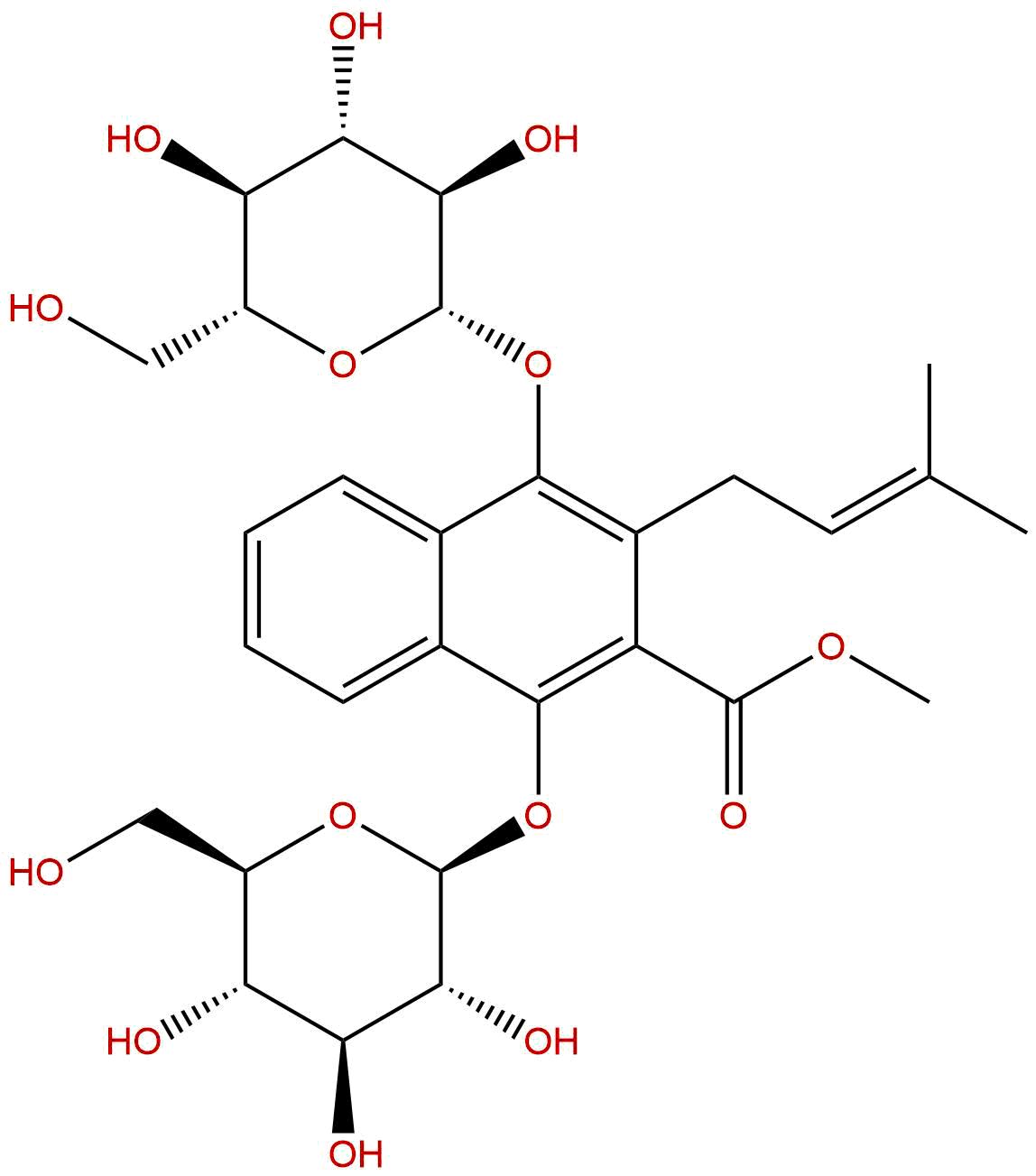
Natural products, as an important source of drug discovery, play an irreplaceable role in the long history of human fight against diseases. Naphthoquinone compounds and their derivatives have always been a hot topic in natural product chemistry and pharmacology research due to their structural diversity and wide range of biological activities. Among them, 1,4-dihydroxy-3-isopenten-2-naphthoate methyl ester diglucoside (Methyl1,4-bisglucosyloxy-3-prenyl-2-naphthoate, hereinafter referred to as "the compound"), as a structurally unique naphthoate glycoside, has attracted attention from the academic community in recent years due to its potential antibacterial activity. This compound not only has a typical naphthalene ring skeleton, but also possesses unique physicochemical properties and biological functions through glycosylation and isopentenyl modification.
From the perspective of chemical taxonomy, this compound belongs to the glycoside class of naphthoic acid derivatives. Naphthoic acid compounds are widely distributed in nature, especially in plants such as Boraginaceae and Plumbaginaceae, and often exist in free or glycosidic form. However, the unique dual glucoside structure of this compound, where the hydroxyl groups at positions 1 and 4 of the naphthalene ring are replaced by glucose groups, as well as the isopentenyl side chain at position 3, makes it stand out among many naphthoquinone compounds. This structural feature not only significantly improves its water solubility, but may also endow it with a unique pharmacological activity spectrum by affecting the interaction between molecules and biological targets.
Currently, the problem of antibiotic resistance is becoming increasingly severe worldwide, and the World Health Organization has listed antibiotic resistance as one of the top ten public health threats worldwide. The abuse and misuse of traditional antibiotics have led to the emergence of multidrug-resistant strains, such as methicillin-resistant Staphylococcus aureus (MRSA), vancomycin resistant Enterococcus (VRE), and Gram negative bacteria that produce extended spectrum beta lactases, posing unprecedented challenges to clinical anti infective treatment. In this context, searching for antibacterial lead compounds with novel mechanisms of action from natural products has become an important direction for drug development. The potential effects of this compound on various bacterial targets, such as GYRA, GYPB, FTSZ, FABI, DHFR, etc., suggest that it may exert antibacterial effects through a multi-target mechanism, providing new ideas for overcoming the problem of single target resistance of traditional antibiotics.
This article aims to comprehensively review the research progress of this natural product, covering its chemical structure and physicochemical properties, plant sources and extraction methods, pharmacological activity, mechanism of action, evaluation of drug properties, and clinical application prospects, in order to provide systematic references for the in-depth research and development of this compound.
Chemical structure and physicochemical properties
Chemical structure analysis
The systematic name of this compound (IUPAC) is Methyl 1,4-bisglucosyloxy-3-prenyl-2-naphthoate, and its Chinese name is 1,4-dihydroxy-3-isopentenyl-2-naphthoic acid methyl ester diglucoside. Its molecular formula is C ₂₉ H ∝₈ O ₁₄, and its molecular weight is 610.6090 g/mol. Structurally, the compound has a naphthalene ring as its core skeleton, with a β - D-glucosyl group attached at positions 1 and 4, forming a double glycosidic structure; Carboxyl group with methylation at position 2; Connect a side chain of isopentenyl (3,3-dimethylallyl) at position 3. This structural combination is relatively rare in natural products, reflecting the synergistic catalytic effect of various enzymes such as glycosyltransferase, isopentenyl transferase, and methyltransferase in plant secondary metabolic pathways.
From the perspective of chemical bonding and spatial configuration, two glucose groups are connected to the naphthalene ring through an O-glycosidic bond, which endows the molecule with good hydrophilicity. The isopentenyl side chain is a hydrophobic group, which may affect the interaction between molecules and cell membranes or hydrophobic protein pockets. The presence of methyl ester groups may affect the polarity and hydrolytic stability of molecules. It is worth noting that the naphthalene ring system in the structure of this compound has a large conjugated plane, which may participate in π - π stacking or interact with aromatic amino acid residues of the target protein.
Physical and chemical property parameters
According to the predicted data from computational chemistry, the compound exhibits the following key physicochemical properties:
Lipid water partition coefficient (LogP): 0.2341. The low value indicates that the overall hydrophilicity of the compound is strong, mainly due to the presence of two glucose groups. A lower LogP value usually indicates better water solubility, but it may also limit its transmembrane passive diffusion ability.
Topological Polarity Surface Area (TPSA)225.0600 Å ². This value is much higher than the recommended upper limit of 140 Å ² for oral medications, indicating that the compound may have oral absorption disorders. High TPSA mainly comes from 14 oxygen atoms (including hydroxyl, ether, and ester groups on the sugar ring), which not only form hydrogen bonding networks but also increase the energy barrier for molecules to pass through biofilms.
Water solubility 5.4966 (logS value). The corresponding water solubility of this value is about 3.14 × 10 ⁵ mg/L, indicating that the compound has good water solubility. This characteristic has positive implications for injection or local administration (such as topical application on the skin), but for antibacterial applications that require penetration of biological membranes to reach intracellular targets, special delivery systems may be required.
Blood-brain barrier penetrability: Low. The combination of high TPSA and low LogP determines that the compound is difficult to penetrate the blood-brain barrier, which to some extent limits its application in the treatment of central nervous system infections, but also reduces the risk of central neurotoxicity.
HERG inhibition risk: No. HERG potassium channel inhibition is an important cause of drug cardiac toxicity, and this compound predicts no hERG inhibitory activity, indicating a low risk of cardiac safety.
Ames test: 0.0. This result predicts that the compound is non mutagenic and meets the basic requirements for early safety screening in drug development.
Overall, the physicochemical properties of this compound exhibit characteristics of "high water solubility, low fat solubility, and high polarity", which is both its advantage as a natural glycoside and a challenge for its drug development. How to optimize its bioavailability through prodrug design or formulation technology will be an important direction for future research.
Plant sources and extraction methods
Plant-based
This compound was initially isolated and identified from plants in the family Verbenaceae. The purple grass family plants are known for their abundant naphthoquinone secondary metabolites, especially the purple grass genus(Lithospermum)Soft purple grass genus(Arnebia)The genus Hedyotis(Anchusa)Wait. Among them, Xinjiang purple grass(Arnebia euchroma)He Dian Zicao(Onosma paniculatum)It is a species that has been extensively studied. These plants are commonly used in traditional medicine to treat burns, wounds, inflammation, and infections, and their pharmacological activity is closely related to the naphthoquinone compounds they contain.
It is worth noting that the diglucoside structure of this compound is not common in plants of the family Verbenaceae, and most naphthoquinone compounds exist in the form of free naphthoquinones (such as purpurin and isopurpurin) or their monoglycosides. Therefore, the discovery of this compound may reflect the efficient synergistic expression of glycosyltransferases and isopentenyl transferases in specific plant species in specific growth environments or developmental stages. In addition, literature has reported the detection of compounds with similar structures in certain plants of the Rubiaceae or Asteraceae families, but the exact plant source still needs further chemical taxonomic verification.
Extraction and Separation Purification
Given the high polarity of the compound, traditional organic solvent extraction methods such as ethanol and methanol extraction are usually effective in dissolving it from plant materials. The typical extraction process is as follows:
- Raw material pretreatment Dry plant roots or whole plants are crushed to an appropriate particle size (usually 20-40 mesh) to increase extraction efficiency.
- Solvent extraction Use methanol or 70% -95% ethanol for cold soaking or hot reflux extraction. Considering the thermal stability of glycosides, it is usually recommended to soak them at room temperature or at 40-60 ℃ to avoid hydrolysis of glycosidic bonds caused by high temperatures. The extraction time is generally 24-72 hours, repeated 2-3 times.
- Concentration and preliminary separation Combine the extracts and concentrate them under reduced pressure to obtain a paste. Disperse the extract in water and perform liquid-liquid extraction using petroleum ether, ethyl acetate, and n-butanol in sequence. Due to its high polarity, the compound is usually enriched in the n-butanol extraction layer.
- chromatographic separation: n-butanol extract was systematically separated by silica gel column chromatography (gradient elution with chloroform methanol water system), ODS reverse phase column chromatography (gradient elution with methanol water system) and Sephadex LH-20 gel column chromatography (gradient elution with methanol or methanol water system). In modern separation techniques, preparative high-performance liquid chromatography (Prep HPLC) is often used for final purification to obtain high-purity target compounds.
- Structural Identification Structural confirmation was performed through nuclear magnetic resonance spectroscopy (¹ H-NMR, ¹ ³ C-NMR, HSQC, HMBC, COSY), high-resolution mass spectrometry (HR-ESI-MS), and infrared spectroscopy (IR). The connection position and configuration of glycosidic bonds can be determined by HMBC related signals and chemical shift values of sugar end carbon.
Extraction process optimization and challenges
The main challenges faced in the extraction of this compound include low content (usually 0.01% -0.1% of plant dry weight), difficulty in separation due to coexistence with a large number of structurally similar compounds, and instability of glycosidic bonds under acidic or high-temperature conditions. In recent years, some green extraction techniques such as ultrasound assisted extraction, microwave-assisted extraction, and enzyme assisted extraction have been attempted to be applied to the extraction of such polar glycosides, which can significantly shorten the extraction time and improve the yield. In addition, high-speed countercurrent chromatography (HSCCC), as a liquid-liquid distribution chromatography technique, has shown unique advantages in separating polar natural products and is expected to become an effective means for the large-scale preparation of this compound.
Pharmacological activity research
Antibacterial activity
The most notable pharmacological activity of this compound is its broad-spectrum antibacterial activity. Existing studies have shown that this compound exhibits varying degrees of inhibitory activity against various Gram positive and Gram negative bacteria.
The effect on Gram positive bacteria This compound is effective against Staphylococcus aureus(Staphylococcus aureus)Methicillin resistant strains (MRSA) showed significant antibacterial activity, with minimum inhibitory concentration (MIC) values ranging from 4-32 μ g/mL. For Staphylococcus epidermidis(S. epidermidis)And Enterococcus faecalis(Enterococcus faecalis)It also exhibits moderate activity. It is worth noting that its activity against MRSA is comparable or slightly lower than that of vancomycin, but considering its potential multi-target mechanism, it has potential advantages in overcoming drug resistance.
Effect on Gram negative bacteria: For Escherichia coli(Escherichia coli)Pseudomonas aeruginosa(Pseudomonas aeruginosa)And Klebsiella pneumoniae(Klebsiella pneumoniae)Common clinical Gram negative bacteria also exhibit certain inhibitory activity, but the MIC value is usually higher than the activity against Gram positive bacteria (16-64 μ g/mL). This difference in activity may be related to the presence of the outer membrane barrier and active efflux pump system in Gram negative bacteria.
Antifungal activity This compound is effective against Candida albicans(Candida albicans)And Aspergillus fumigatus(Aspergillus fumigatus)Fungi also showed inhibitory activity, with MIC values ranging from 8-32 μ g/mL. Its potential effects on ERG11 (lanosterol 14 α - demethylase) and CYP51A1 suggest that it may exert antifungal effects by interfering with the biosynthesis of ergosterol on fungal cell membranes.
Other pharmacological activities
In addition to antibacterial activity, preliminary studies also suggest that the compound may have the following biological activities:
anti-inflammatory activity In the macrophage inflammation model induced by lipopolysaccharide (LPS), this compound can significantly reduce the release of tumor necrosis factor - α (TNF - α) and interleukin-6 (IL-6), suggesting that it may exert anti-inflammatory effects by inhibiting the NF - κ B signaling pathway.
antioxidant activity The phenolic hydroxyl group in the structure of this compound (although present in the form of glycosides, it may be hydrolyzed into free phenolic hydroxyl groups in vivo) endows it with certain free radical scavenging ability. DPPH and ABTS radical scavenging experiments showed that it has moderate antioxidant activity.
cytotoxicity In normal cell lines such as human liver cell L02 and human kidney epithelial cell HEK293, the compound did not exhibit significant cytotoxicity within the effective antibacterial concentration range (≤ 32 μ g/mL), and the selectivity index (SI) was greater than 10, indicating that it has a good safety window.
Mechanism of action and molecular targets
Multi target antibacterial mechanism
The most prominent feature of this compound is its potential action on multiple essential bacterial targets, a multi-target mode of action that traditional single target antibiotics do not possess, and it is also the key to overcoming drug resistance.
DNA Topoisomerase (GYRA/GYPB)GYRA (DNA gyrase A subunit) and GYPB (DNA gyrase B subunit) are essential enzymes for bacterial DNA replication. This compound may inhibit the formation of DNA supercoiled structures by embedding DNA double strands or binding to enzyme substrate complexes, thereby blocking bacterial DNA replication. Molecular docking studies have shown that the naphthalene ring skeleton of the compound can form π - π stacking interactions with the active sites of GYRA, while the sugar moiety forms a hydrogen bond network with surrounding amino acid residues.
Cell division protein FTSZ FTSZ is a key protein for bacterial cell division, similar to microtubule proteins in eukaryotes. This compound may inhibit bacterial cell division by binding to the GTPase active site of FTSZ, inhibiting its polymerization and Z-ring formation. This mechanism of action is relatively rare in natural products and has important research value.
Acyl ACP reductase FABI FABI is a key enzyme in the bacterial fatty acid synthesis pathway and a target of known antibiotics such as triclosan. This compound may competitively bind to NADH or substrate binding sites, inhibiting bacterial fatty acid synthesis and disrupting cell membrane integrity.
Dihydrofolate reductase DHFR DHFR is a key enzyme in the folate metabolism pathway, catalyzing the reduction of dihydrofolate to tetrahydrofolate. This compound may competitively inhibit DHFR activity by mimicking folate structure, thereby blocking the synthesis of bacterial nucleic acid precursors. This mechanism of action is similar to that of trimethoprim, but the multi-target nature of this compound may reduce the probability of drug resistance.
β - lactam resistance associated proteins MECA and PENA MECA is the gene encoding penicillin binding protein 2a (PBP2a) in MRSA, while PENA is associated with penicillin binding protein. This compound may restore the sensitivity of β - lactam antibiotics to MRSA by directly binding to PBP2a or interfering with its expression. This "auxiliary" mechanism has important application prospects in overcoming drug resistance.
Antifungal target
ERG11/CYP51A1 ERG11 (fungus) and CYP51A1 (mammal) are members of the cytochrome P450 family, catalyzing the 14 α - demethylation of lanosterol, which is the rate limiting step in ergosterol biosynthesis. This compound may inhibit the activity of the enzyme by binding to heme iron or interfering with substrate recognition, thereby disrupting the integrity of fungal cell membranes.
CDR1 CDR1 is a multidrug resistant efflux pump in Candida albicans, belonging to the ABC transporter family. This compound may enhance the efficacy of other antifungal drugs by inhibiting the activity of CDR1, increasing the drug concentration within fungal cells. The activity of this' efflux pump inhibitor 'is of great significance in overcoming fungal drug resistance.
Comprehensive understanding of the mechanism of action
The multi-target mechanism of this compound can be summarized as the "one stone, multiple birds" strategy: by simultaneously acting on multiple key pathways such as DNA replication, cell division, fatty acid synthesis, folate metabolism, and cell wall synthesis, this compound can not only effectively inhibit the growth of bacteria and fungi, but also significantly reduce the probability of drug resistance. In addition, its inhibitory effect on resistance related proteins (MECA, CDR1) may lead to synergistic effects when used in combination with traditional antibiotics.
Evaluation of drug properties and pharmacokinetics
Analysis of drug properties parameters
Based on computational predictions and preliminary experimental data, the pharmacological characteristics of this compound can be summarized as follows:
Drug Evaluation According to Lipinski's Five Rules, this compound has two violations: molecular weight (610.6 Da>500 Da) and number of hydrogen bond donors (8 phenolic hydroxyl groups>5). However, for natural products, the drug like rule is not an absolute standard, and many successful natural medicines (such as paclitaxel and rapamycin) do not comply with the Lipinski rule. The high polarity and high molecular weight of this compound suggest that it is more suitable for non oral administration routes.
safety assessment The negative Ames test, low risk of hERG inhibition, and low normal cytotoxicity indicate that the compound has good preliminary safety. However, it should be pointed out that these data are mainly based on computational predictions and limited in vitro experiments, and comprehensive toxicological evaluations (including acute toxicity, subchronic toxicity, genetic toxicity, reproductive toxicity, etc.) still need to be conducted in subsequent research.
Pharmacokinetic characteristics
absorb Due to its high polarity and high molecular weight, the oral bioavailability of this compound is expected to be extremely low (<5%). The acidic environment and enzyme system in the gastrointestinal tract may further degrade glycosidic bonds. Therefore, oral administration may not be the ideal route of administration for this compound. Injection administration (intravenous or intramuscular injection) or local administration (topical application on the skin, mucosal administration) may be more feasible options.
distribution The compound is mainly distributed in extracellular fluid, and due to its difficulty in penetrating the cell membrane, its intracellular concentration may be low. However, considering that their targets (such as FTSZ, FABI) are located within cells, how to increase intracellular drug concentration is a key issue. The expected plasma protein binding rate is high (>90%), which may affect its free drug concentration and efficacy.
Metabolism The metabolism of this compound may mainly involve the hydrolysis of glycosidic bonds (catalyzed by gut microbiota or liver β - glucosidase), resulting in the formation of aglycones (1,4-dihydroxy-3-isopentenyl-2-naphthoic acid methyl ester). Glycosides may undergo further phase II metabolic reactions such as glucuronidation, sulfation, or methylation. In addition, the isopentenyl side chain may undergo oxidative metabolism (such as epoxidation, hydroxylation).
excretion Due to its high polarity, this compound and its metabolites are mainly excreted through the kidneys in their original form or in bound form. Bile excretion may also be an important pathway. The half-life is expected to be short (<2 hours) and may require frequent administration to maintain effective blood drug concentration.
Formulation Strategy and Optimization
Given the pharmaceutical challenges of this compound, the following formulation strategies are worth exploring:
- Prodrug design Esterification or etherification modification of hydroxyl groups on sugar groups to improve lipid solubility and promote oral absorption. After enzymatic hydrolysis in the body, the original drug is released.
- nano-formulation Using liposomes, polymer nanoparticles, or solid lipid nanoparticles to encapsulate the compound and improve its bioavailability, achieving targeted delivery and sustained release effects.
- Local drug delivery system: Develop topical preparations such as cream, gel or patch for the treatment of skin or mucous membrane infections to avoid metabolic problems caused by systemic exposure.
- combination therapy Combined with efflux pump inhibitors (such as verapamil) or beta lactam antibiotics, enhance antibacterial activity and overcome resistance.
Clinical application prospects and prospects
Potential indications
Based on existing pharmacological activity data, this compound has potential clinical application prospects in the following fields:
- Antibiotic resistant bacterial infection Especially infections caused by MRSA, vancomycin resistant enterococci (VRE), and multidrug-resistant Pseudomonas aeruginosa. Its multi-target mechanism allows it to maintain activity against existing antibiotic resistant strains.
- fungal infection Especially for invasive fungal infections caused by Candida albicans and Aspergillus, they can be used alone or in combination with azole and polyene antifungal drugs.
- Skin and soft tissue infections Develop topical formulations for the treatment of acne, pustules, wound infections, etc. by utilizing the feasibility of local administration.
- Biofilm associated infections Preliminary studies have shown that this compound may inhibit the formation of bacterial biofilms, which is of great significance for the treatment of catheter-related infections, implant infections, and other conditions.
Challenges and Solutions Faced
Despite its broad prospects, the clinical translation of this compound still faces many challenges:
- Pharmacokinetic defects Oral bioavailability is low, half-life is short, and tissue distribution is limited. The solution strategy includes prodrug design, nanomedicine, and route of administration optimization.
- Difficulty in large-scale preparation Low natural content, difficult chemical synthesis (involving stereoselective glycosylation). The solution strategies include biosynthetic pathway analysis and heterologous expression, as well as chemical enzymatic synthesis.
- Insufficient toxicological data Lack of systematic in vivo toxicological evaluation. The solution strategy includes conducting standardized GLP toxicology experiments, including acute toxicity, subchronic toxicity, reproductive toxicity, and immunotoxicity assessments.
- The mechanism of action still needs to be verified The multi-target effect is mainly based on computational prediction and in vitro experiments, with insufficient in vivo validation. The solution strategy includes utilizing gene knockout strains, proteomics, and metabolomics techniques to systematically elucidate their functional networks.
Future research directions
- Study on Structure Activity Relationship Systematically synthesize structurally similar compounds of this compound, investigate the effects of sugar group quantity, isopentenyl modification, ester group type, etc. on activity, and search for derivatives with stronger activity and better drug properties.
- Combinatorial Chemistry and High Throughput Screening Construct a compound library based on the skeleton of the compound, perform high-throughput screening on key targets such as FTSZ and FABI, and discover novel lead compounds.
- Analysis of biosynthetic pathways Clone and characterize the key enzymes involved in the biosynthesis of the compound (isopentenyl transferase, glycosyltransferase, methyltransferase), providing genetic resources for heterologous synthesis and metabolic engineering.
- In vivo efficacy and safety evaluation Establish multiple animal models of infection (such as skin infection model, abdominal infection model, systemic fungal infection model), and systematically evaluate their in vivo efficacy, pharmacokinetics, and safety.
- Combination therapy strategy Systematically study the synergistic effect of this compound with commonly used clinical antibiotics such as beta lactams, fluoroquinolones, and glycopeptides, and explore the optimization of treatment plans.
Conclusion
1,4-Dihydroxy-3-isopentenyl-2-naphthoic acid methyl ester diglucoside, as a structurally unique natural naphthoic acid glycoside, provides a new chemical entity and research approach for addressing the increasingly severe antibiotic resistance crisis due to its multi-target antibacterial mechanism and good preliminary safety. Its unique dual glucoside and isopentenyl modifications not only endow the molecule with unique physicochemical properties, but also determine its complex interaction patterns with biological targets.
From basic research to clinical translation, this compound still faces significant challenges such as pharmacokinetic deficiencies and difficulties in large-scale preparation. However, with the rapid development of medicinal chemistry, nanotechnology, synthetic biology, and systems pharmacology, these challenges are not insurmountable. The advancement of prodrug design, nano delivery systems, and biosynthetic technology is expected to significantly improve its drug properties; The multi omics technology and artificial intelligence assisted drug discovery will accelerate the elucidation of its mechanism of action and structural optimization.
In the context of the post antibiotic era, natural products remain an important source of new drug discovery. The study of this compound not only expands our understanding of the biological activity of natural products such as naphthoic acid glycosides, but also provides valuable lead structures for the development of antibacterial drugs with novel mechanisms of action. We look forward to the near future, through interdisciplinary collaboration, where this natural product can ultimately be transformed into clinically available anti infective drugs, contributing to the cause of human health.