Introduction/Overview
In the long exploration of life sciences, maintaining the homeostasis of the intracellular environment is the cornerstone of the body's health and longevity. Among them, the regulation of redox balance plays a crucial role. Among numerous endogenous antioxidant molecules, glutathione (GSH) is known as the "king of intracellular antioxidants" and the "core regulator of life activities" due to its unique chemical structure and extensive biological functions. As a tripeptide composed of glutamic acid, cysteine, and glycine, glutathione is not just a simple antioxidant. It is deeply involved in almost all key life processes, from cell signal transduction, gene expression regulation, drug detoxification to cell proliferation and apoptosis.
The discovery of glutathione can be traced back to the late 19th century, but its chemical structure was not elucidated until the 1930s. In the following decades, scientists gradually revealed its core role in resisting oxidative stress, maintaining protein thiol states, and serving as a cofactor for various enzymes. Especially in recent years, with the in-depth understanding of aging, neurodegenerative diseases, cardiovascular diseases, diabetes, cancer and other complex disease mechanisms, the physiological and pathological significance of glutathione has been raised to an unprecedented height. The imbalance of its level - whether it is reduced synthesis, increased consumption, or inhibited regeneration - has been proven to be closely related to over 200 disease states. Therefore, a deep understanding of the chemical nature, pharmacological activity, mechanism of action, and potential for drug development of glutathione has significant theoretical value and practical significance for the development of new therapeutic strategies and health interventions.
Chemical structure and physicochemical properties
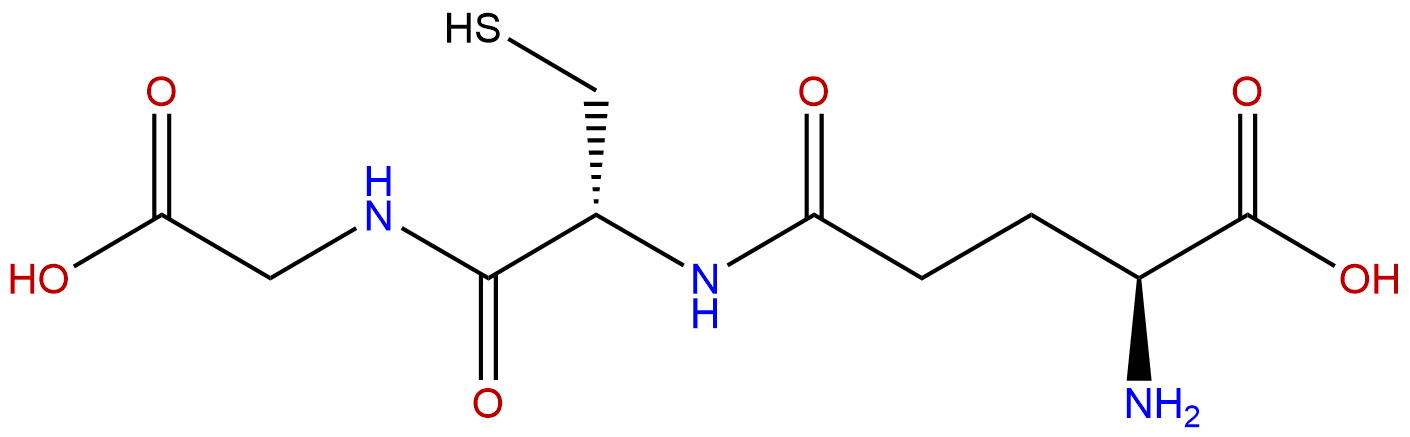
The chemical structure of glutathione (CAS number: 70-18-8) is the basis of its biological function. Its molecular formula is C ₁₀ H ₁₇ N ∝ O ₆ S, with a molecular weight of 307.33 Da. Structurally, it is not connected to the typical α - carboxyl group and α - amino group, but forms a peptide bond between the γ - carboxyl group of glutamic acid and the α - amino group of cysteine. This unique γ - glutamyl bond enables it to resist hydrolysis by common peptidases, thereby maintaining stability in cells. Subsequently, the carboxyl group of cysteine forms a second peptide bond with the amino group of glycine, ultimately forming a linear tripeptide: gamma glutamyl cysteine glycine.
The physicochemical properties of glutathione are highly dependent on the key functional groups in its structure. There are two carboxyl groups (from glutamic acid and glycine) and one amino group (from glutamic acid) in its molecule, making it negatively charged at physiological pH and exhibiting strong hydrophilicity. The calculated LogP value is -1.55, indicating that it is almost insoluble in lipids and has good water solubility (6.39 mg/mL). The topologically polar surface area (TPSA) is as high as 158.82 Å ², further confirming its high polarity and low membrane permeability. These properties determine that glutathione must rely on specific transporters to cross the cell membrane.
However, the most essential chemical characteristic of glutathione is the thiol group (- SH) on its cysteine residue. This thiol group endows glutathione with strong reducing ability. Under physiological conditions, glutathione mainly exists in the form of reduced glutathione (GSH), and its thiol group can serve as a nucleophile to directly neutralize reactive oxygen species (ROS) such as hydrogen peroxide (H ₂ O ₂), superoxide anion (O ₂⁻), hydroxyl radicals (• OH), and various electrophilic exogenous toxins. When GSH provides electrons and is oxidized, two GSH molecules form disulfide bonds through their thiol groups, producing oxidized glutathione (GSSG). In normal cells, the ratio of GSH/GSSG is usually maintained above 100:1, which is a key indicator for measuring the redox status of cells. Once the ratio decreases, it indicates that the cell is in an oxidative stress state. In addition, GSH can chelate with various metal ions such as mercury, lead, and arsenic, promoting their excretion from the body and exerting detoxification effects.
Plant sources and extraction methods
Although glutathione is synthesized in almost all living cells, its distribution and content vary significantly in the plant kingdom. Glutathione is not a secondary metabolite in plants, but a core component of primary metabolism, involved in plant responses to biotic and abiotic stresses. In plants, the synthesis of glutathione mainly occurs in the cytoplasm and chloroplasts, and its content is significantly affected by factors such as light exposure, nutritional status, environmental stress (such as drought, salinity, heavy metals, and pathogen infection).
Plant sources rich in glutathione mainly include:
1. Cruciferous vegetables Such as broccoli, cauliflower, cabbage, kale, etc. Especially for broccoli flower buds and seedlings, it is considered one of the natural foods with the highest content of glutathione.
2. Allium plants Like garlic, onions, chives. These plants not only contain GSH, but also its precursor substances (such as S-allyl cysteine), which can promote the synthesis of GSH in the body.
3. fruit Such as avocado, watermelon, strawberry, citrus fruits.
4. Nuts and Seeds Such as walnuts, flaxseeds, and sunflower seeds.
5. Other Such as asparagus, spinach, okra, mushrooms, etc.
Extracting glutathione from plants or microorganisms (such as brewing yeast) usually follows the following steps:
1. Raw material pretreatment Wash, crush or homogenize GSH rich raw materials (such as yeast cells or plant tissues) to break down cell walls and membranes and release intracellular substances.
2. Extraction solvent selection Due to the good water solubility of GSH, water or a buffer solution (such as phosphate buffer solution, pH 7.0-7.5) is usually used as the extraction solvent. To prevent oxidation of GSH during extraction, it is often necessary to add reducing agents (such as dithiothreitol DTT or β - mercaptoethanol) or chelating agents (such as EDTA) to chelate metal ions and inhibit oxidase activity. The extraction process is usually carried out at low temperature (4 ℃).
3. Solid liquid separation and clarification Remove cell debris and insoluble impurities by centrifugation or filtration to obtain a supernatant containing GSH.
4. purification According to the target purity, various chromatography techniques can be used for purification.
- Ion exchange chromatography Using the charge properties of GSH at different pH values, separation can be achieved through anion or cation exchange resins.
- Gel filtration chromatography Separate based on molecular weight.
- High performance liquid chromatography (HPLC)Especially reverse phase HPLC is a commonly used method for laboratory scale high-purity preparation and quantitative analysis.
5. Concentration and drying: The purified GSH solution is concentrated under reduced pressure, freeze-dried or spray dried to obtain the final product.
In industrial production, due to the relatively low content of GSH in plants and high extraction costs, commercially available glutathione is mainly produced on a large scale through microbial fermentation methods (such as using brewing yeast or engineered strains of Escherichia coli), with higher yield and purity than plant extraction methods.
Pharmacological activity research
The pharmacological activity of glutathione is extensive and profound, and its core lies in maintaining cellular redox homeostasis. Numerous studies have confirmed that supplementing or increasing GSH levels in the body has significant protective effects on various disease models.
-
Antioxidant and anti-aging GSH is the most important non enzymatic antioxidant in cells. It directly clears ROS and acts as a cofactor for glutathione peroxidase (GPX), reducing harmful H ₂ O ₂ and lipid peroxides to water or corresponding alcohols. As age increases, intracellular GSH levels significantly decrease, which is considered one of the key driving factors in the aging process. Research has shown that increasing GSH levels can prolong the lifespan of model organisms such as nematodes and fruit flies, and improve age-related phenotypes such as cognitive decline and muscle atrophy.
-
Detoxification and liver protection The liver is the main organ for the synthesis and utilization of GSH. GSH plays a central role in the detoxification process of the liver. It is catalyzed by glutathione S-transferase (GST) and binds to various exogenous toxins (such as drugs, environmental pollutants, carcinogens) to form a more water-soluble thioether amino acid, which is then excreted from the body through bile or urine. The mechanism of acetaminophen (paracetamol) overdose poisoning is the depletion of GSH in liver cells, leading to the accumulation of toxic metabolite N-acetyl-phenylquinonimide (NAPQI) and causing liver necrosis. Therefore, N-acetylcysteine (NAC, precursor of GSH) is the standard drug for treating acetaminophen poisoning in clinical practice.
-
neuroprotection The brain is particularly sensitive to oxidative stress due to its high oxygen consumption, high content of easily oxidizable lipids, and relatively weak antioxidant capacity. The role of GSH in neurodegenerative diseases has attracted much attention. In Parkinson's disease (PD), the level of GSH in dopaminergic neurons in the substantia nigra pars compacta significantly decreases before other pathological markers. Reduced GSH levels and increased oxidative damage were also observed in the brains of Alzheimer's disease (AD) patients. Raising GSH levels is believed to protect neurons from oxidative damage and mitochondrial dysfunction induced by toxic protein aggregates such as beta amyloid (A β) and alpha synuclein.
-
Anti inflammatory and immune regulation Oxidative stress and inflammatory response are mutually causal. GSH reduces the production of pro-inflammatory cytokines such as tumor necrosis factor alpha (TNF - α) and interleukin-6 (IL-6) by inhibiting the activation of pro-inflammatory transcription factors such as nuclear factor kappa B (NF - κ B). Meanwhile, GSH is crucial for the function of immune cells. The activation, proliferation, and differentiation of T lymphocytes depend on sufficient intracellular GSH levels. Th1 type immune response (targeting intracellular pathogens) requires higher levels of GSH, while Th2 type response (targeting parasites and allergens) is associated with lower levels of GSH. Therefore, regulating GSH levels may become a potential strategy for regulating immune balance.
-
skin whitening The application of glutathione as a skin whitening agent has received much attention in recent years. The mechanism mainly includes: directly inhibiting the activity of tyrosinase (TYR) and reducing melanin synthesis; Clearing UV induced ROS through antioxidant activity, indirectly inhibiting melanin production; And shift the pathway of melanin synthesis from true melanin (dark color) to brown melanin (light color). In addition, GSH can inhibit the activity of matrix metalloproteinases (such as MMP1 and MMP3), reduce collagen degradation, and have a certain anti photoaging effect.
Mechanism of action and molecular targets
The biological effects of glutathione are achieved through interactions with multiple key molecular targets, and its action network is complex and precise.
-
Directly eliminate ROS and detoxify This is the most direct function of GSH. Its thiol group (- SH) acts as an electron donor and undergoes non enzymatic reactions with ROS (such as H ₂ O ₂, • OH) and reactive nitrogen species (RNS) to reduce it. Meanwhile, as a cofactor for enzymes such as GPX1 and GPX4, GSH provides electrons to reduce H ₂ O ₂ and phospholipid hydroperoxides. During the detoxification process, GST catalyzes the binding of GSH with electrophilic toxins.
-
Regulating key signaling pathways:
- Keap1/Nrf2/ARE pathway This is the core defense mechanism of cells in response to oxidative stress. Under normal conditions, the transcription factor NFE2L2 (NRF2) binds to the inhibitory protein Keap1 and is degraded by ubiquitination. When ROS or electrophiles (including GSH depletion signals) are present, the thiol group of Keap1 is modified, conformational changes occur, and NRF2 is released. NRF2 enters the nucleus and binds to antioxidant response elements (ARE), initiating the transcription of a series of downstream protective genes, including HMOX1(Heme oxygenase-1)SOD1、SOD2(Superoxide Dismutase)CAT(Catalase)GPX1 And GST, etc. The changes in GSH levels are important signals for activating the NRF2 pathway.
- NF - κ B pathway GSH inhibits the activity of I κ B kinase (IKK), preventing its phosphorylation and degradation, thereby causing NF - κ B to remain in the cytoplasm and unable to enter the nucleus to initiate the transcription of pro-inflammatory genes.
- MAPK pathway Changes in GSH levels can affect the activity of mitogen activated protein kinases (MAPKs) such as p38, JNK, and ERK, thereby regulating cell proliferation, differentiation, and apoptosis.
-
Regulating protein function GSH covalently attaches itself to the thiol group of protein cysteine residues through a reversible post-translational modification called S-glutathionylation. This process can protect protein thiol groups from irreversible oxidative damage and regulate the activity of various key proteins, such as:
- Tyrosinase (TYR)GSH can directly chelate with copper ions at the TYR active site or modify its cysteine residues, inhibiting its catalytic activity for melanin synthesis.
- Matrix metalloproteinases (MMP1, MMP3)GSH reduces extracellular matrix degradation by inhibiting MMP activity or downregulating its expression.
- Ion channels and transporters For example, GSH can regulate the activity of ryanodine receptors (RyR) and sarcoplasmic reticulum calcium ATPase (SERCA), affecting intracellular calcium homeostasis.
- transcription factor The activity of c-Jun and p53 is also regulated by glutathionylation.
-
Maintain mitochondrial function Mitochondria are the main source of ROS and the primary target of oxidative damage. Mitochondria have independent GSH pools (mGSH), and their levels are crucial for maintaining mitochondrial function. MGSH can clear ROS generated by mitochondrial respiratory chain, protect mitochondrial DNA and membrane lipids, and inhibit the opening of mitochondrial permeability transition pore (mPTP), thereby preventing cytochrome c release and cell apoptosis.
Evaluation of drug properties and pharmacokinetics
Although glutathione has strong pharmacological activity, its development as a drug faces significant challenges, mainly due to its unfavorable pharmacokinetic (PK) properties.
Drugability assessment:
- Molecular weight and LogP The molecular weight is 307 Da, which meets the requirement of molecular weight<500 in the "Lipinski Rule". But its LogP is -1.55, far below the lower limit of LogP<5 in the rules, indicating that it has strong hydrophilicity and extremely poor lipid solubility. This makes it difficult for it to passively diffuse through lipid rich cell membranes.
- TPSA 158.82 Å ², much higher than the 140 Å ² threshold required for passive absorption, further confirming its extremely low membrane permeability.
- Water solubility:6.39 mg/mL, Good water solubility, beneficial for making injections or oral liquids.
- Blood-brain barrier (BBB)Low penetration ability. This limits its application in the treatment of central nervous system diseases.
- HERG inhibition None, indicating a low risk of cardiac toxicity.
- Ames test The result is 0.0, indicating no mutagenicity and good safety.
Pharmacokinetic characteristics:
- absorb The bioavailability of oral glutathione is extremely low (usually less than 10%). This is because it is hydrolyzed by gamma glutamyltranspeptidase (GGT) and peptidase in the gastrointestinal tract to form amino acids. Even if a small amount of intact molecules are absorbed, they will be heavily metabolized in the liver's first pass effect. Therefore, direct oral administration of GSH is difficult to effectively increase the levels of GSH in plasma and tissues.
- distribution After intravenous injection, the half-life of GSH in plasma is very short (about 1-2 minutes), rapidly distributed to tissues throughout the body, but mainly distributed in the liver, kidneys, and lungs. Due to the inability to effectively cross the BBB, the increase in brain concentration is limited.
- Metabolism GSH is mainly metabolized in the liver, kidneys, and intestines. The metabolic pathways include: 1) hydrolysis by GGT and peptidase into cysteine glycine and glutamate; 2) Combining with electrophilic substances to form thioether amino acid; 3) Oxidized to GSSG.
- excretion GSH and its metabolites are mainly excreted through the kidneys.
Strategies for enhancing medicinal properties:
Given the PK deficiency of GSH itself, current research and clinical applications mainly adopt the following strategies:
1. Precursor supplementation This is the most commonly used strategy. By oral or intravenous injection of GSH precursor substances, such as N-acetylcysteine (NAC)、S-adenosylmethionine (SAMe)、Alpha lipoic acid、Milk thistle extract (Silymarin) and Glycine and glutamic acid To promote endogenous synthesis of GSH in the body. Among them, NAC is the most mature and effective GSH precursor in clinical practice.
2. Structural modification Develop lipid soluble derivatives of GSH, such as Glutathione ethyl ester or Glutathione monoisopropyl ester These derivatives have higher membrane permeability and can be hydrolyzed by esterases upon entering cells, releasing active GSH.
3. Nano delivery system Using liposomes, polymer nanoparticles, or micelles to encapsulate GSH to protect it from degradation and promote its transmembrane transport and targeted delivery.
4. Local administration: In skin whitening and other applications, local administration of transdermal absorption preparations (such as GSH containing cream and facial mask) can bypass the problem of low oral bioavailability.
Clinical application prospects and prospects
Based on its core antioxidant and detoxification functions, glutathione and its precursors have broad prospects for clinical application, but also face many challenges.
Current clinical applications:
- detoxify NAC is the standard medication for treating acetaminophen overdose. Intravenous injection of GSH is also used as an adjuvant therapy for heavy metal poisoning and nephrotoxicity caused by chemotherapy drugs such as cisplatin.
- liver disease GSH or NAC is used to treat non-alcoholic fatty liver disease (NAFLD), alcoholic liver disease, viral hepatitis, etc., aiming to reduce oxidative stress and inflammation, and improve liver function.
- Respiratory system diseases NAC, as a mucolytic agent, is widely used in chronic obstructive pulmonary disease (COPD), bronchitis, and other conditions. Its antioxidant properties also help alleviate airway inflammation.
- ophthalmic diseases GSH eye drops are used to treat cataracts, corneal injuries, etc., to protect the lens and cornea from oxidative damage.
Emerging application prospects:
1. Neurodegenerative diseases Although poor BBB penetration is the main obstacle, developing lipid soluble precursors (such as NAC) or nano delivery systems to increase GSH levels in the brain is expected to provide new treatment strategies for AD, PD, amyotrophic lateral sclerosis (ALS), and other conditions. There have been clinical trials exploring the efficacy of NAC in PD and AD.
2. Metabolic diseases Type 2 diabetes and obesity are often accompanied by chronic low-grade inflammation and oxidative stress. Raising GSH levels may improve insulin sensitivity and protect pancreatic beta cell function. Clinical research is evaluating the intervention effect of NAC on diabetes nephropathy and nonalcoholic steatohepatitis (NASH).
3. Anti aging and longevity medicine Given that GSH levels decrease with age, supplementing GSH precursors is considered a potential anti-aging intervention. Some small-scale clinical studies have shown that supplementing NAC and glycine can improve muscle strength, cognitive function, and immune function in elderly people.
4. Skin Health and Beauty The market demand for GSH as an oral or topical whitening agent is huge. However, there is still a lack of large-scale, high-quality clinical evidence to support its oral whitening effect. More rigorous randomized controlled trials are needed in the future to validate its effectiveness and safety, and to develop more efficient transdermal delivery systems.
5. Precision Medicine In the future, based on individual genetic background (such as GST, GPX gene polymorphism) and oxidative stress status, stratifying patients and achieving personalized and precise application of GSH supplementation therapy will be an important development direction.
Challenges and Prospects:
- bioavailability How to efficiently and safely deliver GSH or its precursors to target tissues (especially the brain and mitochondria) remains a core challenge.
- Dose and Safety The safety of long-term, high-dose supplementation of GSH or NAC needs further evaluation. Studies have shown that in certain cancer models, excessive levels of GSH may promote tumor growth or develop chemotherapy resistance.
- Clinical Evidence Despite sufficient evidence from basic research, many clinical applications such as anti-aging and whitening still lack strong support from large-scale, multicenter, randomized double-blind controlled clinical trials.
Conclusion
Glutathione, a seemingly simple tripeptide molecule, is actually the "master switch" and "guardian" of redox balance in living organisms. From a chemical structure perspective, its unique gamma glutamyl bond and active thiol group endow it with extraordinary stability and reactivity; From the perspective of pharmacological activity, it runs through multiple key life processes such as antioxidant, detoxification, neuroprotection, and immune regulation; From a molecular mechanism perspective, it finely regulates the fate of cells through precise interactions with numerous targets such as NRF2, NF - κ B, TYR, MMPs, etc.
However, the path to commercialization of glutathione is not smooth. Its extremely poor membrane permeability and oral bioavailability are the Achilles heel that propelled it from the laboratory to clinical applications. Currently, scientists are working to overcome this obstacle by supplementing precursors such as NAC, modifying their structures, or utilizing advanced nano delivery technologies. Despite the numerous challenges, the enormous potential of glutathione in major health issues such as aging, neurodegenerative diseases, and metabolic syndrome has made it a long-standing hotspot in drug development and nutritional interventions.
Looking ahead, with the continuous deepening of understanding of the GSH metabolism regulatory network, as well as the development of new delivery technologies and precision medicine concepts, we have reason to believe that glutathione and its derivatives will play a more crucial role in human health maintenance and disease treatment. The story of glutathione, from molecular probes in the laboratory to clinical remedies, is far from over. It is standing at a new starting point, waiting for scientific explorers to write a more brilliant chapter.