Introduction/Overview
Natural products, as an important source of drug discovery, play an irreplaceable role in the long history of human struggle against diseases. From the classic analgesic morphine and antimalarial artemisinin to the anticancer drug paclitaxel, natural products and their derivatives constitute the core components of modern drug libraries. Among the diverse natural products, lignans derived from plants have attracted much attention due to their structural diversity and extensive biological activity. Lignin is a dimer formed by oxidative polymerization of two molecules of phenylpropanoid derivatives (C6-C3 units). It is widely present in the roots, stems, leaves, seeds, and resins of plants and has various pharmacological effects such as anti-tumor, antiviral, anti-inflammatory, antioxidant, and hepatoprotective effects.
Isofugequinol A, as a lignan compound with a unique chemical structure, was originally derived from pepper plants in the family Piperaceae Piper futokadzura Isolation and identification of (wind vine). Fengteng, as a traditional medicinal plant, has a long history of medicinal use in East Asia, especially in China and Japan. It is commonly used to treat rheumatism, joint pain, and inflammatory diseases. Modern pharmacological research has revealed that extracts from rattan and their active ingredients have significant anti-inflammatory, analgesic, and antiviral activities. As a representative component, Quercetin A has gradually entered the field of researchers in recent years, and its potential in the antiviral field is particularly prominent.
With the continuous threat of new and recurrent viral infectious diseases worldwide, such as AIDS, herpesvirus infection and emerging coronavirus infection, it is urgent to develop efficient, low toxic and novel antiviral drugs. Due to its potential intervention ability on various viral targets such as MPO, UL42, UL54, ICP27, TK, gD, CCR5, CXCR4, HIV1-PR, INT, Yifeng Tengkuichun A has shown great potential as a multi-target antiviral lead compound. This article aims to comprehensively review the chemical structure, physicochemical properties, plant sources, extraction methods, pharmacological activity, mechanism of action, pharmacological evaluation, and clinical application prospects of Quercetin A, in order to provide a systematic scientific basis for the further development and utilization of this compound.
Chemical structure and physicochemical properties
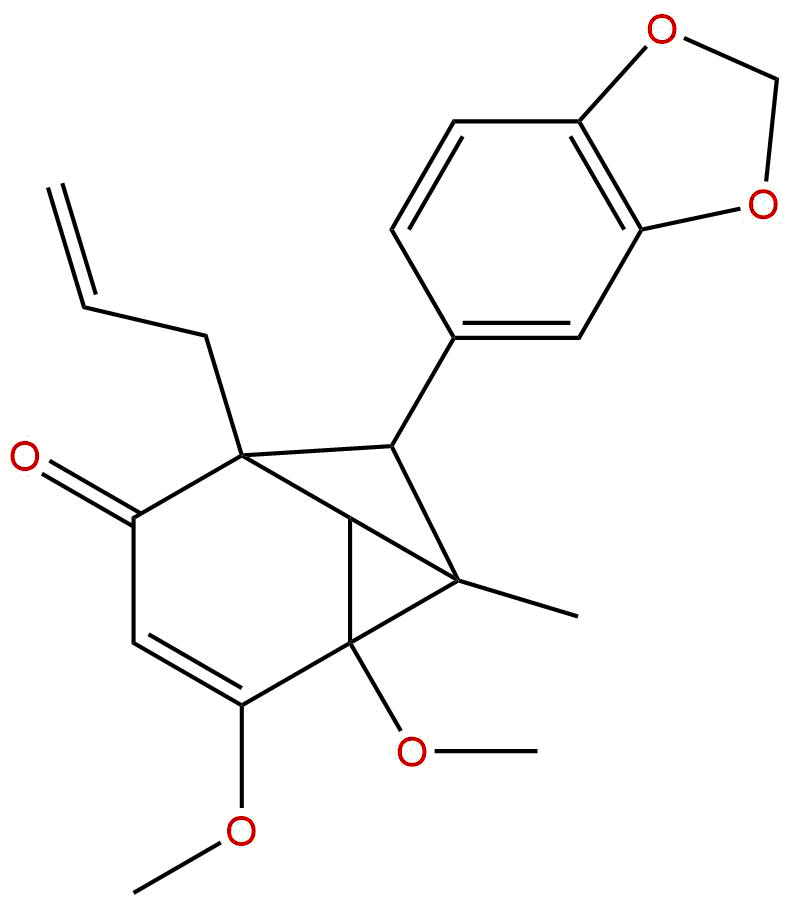
The chemical structure of Isofugequinol A belongs to the typical lignan class, and its skeleton is composed of two phenylpropanoid units connected in a specific way. According to existing literature reports, its structural feature lies in the presence of a tetrahydrofuran ring within the molecule, which is a common structural unit for many bioactive lignans such as schisandrin. The tetrahydrofuran ring is typically formed by oxidative coupling of two side chains of C6-C3 units, endowing the molecule with a certain rigidity and specific three-dimensional conformation, which is crucial for its interaction with biological targets. The molecular formula of Yifengteng Kuichun A is speculated to be C ₂₀ H ₂₆ O ₆, and its structure may contain multiple phenolic hydroxyl or methoxy substituents. These functional groups not only affect its physicochemical properties, but also serve as key sites for its antioxidant and protein interactions.
From the perspective of physical and chemical properties, the molecular weight of isofengguichun A is 354.4020 Da, which is within the ideal range for small molecule drugs (usually<500 Da), providing favorable conditions for its oral absorption and cell membrane penetration. The coefficient of lipid water partition (LogP) is 3.1735, indicating that the compound has moderate lipophilicity. According to the Lipinski Five Rules, a LogP value less than 5 is one of the good indicators for oral medication, and the LogP value of isofengtenuifen A meets this requirement, indicating that it may have good membrane permeability and in vivo distribution characteristics. The polar surface area (TPSA) is 53.9900 Å ², which is lower than the commonly believed passive absorption upper limit (140 Å ²), further supporting its potential for good oral bioavailability. However, its water solubility (0.0124 mg/mL) is relatively low, which may pose a challenge in its formulation development. Low water solubility often affects the dissolution rate and in vivo absorption of drugs, and needs to be improved through formulation techniques such as solid dispersions, nanocrystals, liposomes, etc.
In terms of early assessment of drug safety, isofengtenuifen A has shown encouraging signs. The prediction result of hERG inhibition is' no ', which means that the compound has a low risk of cardiac toxicity and is unlikely to cause QT interval prolongation and fatal arrhythmias by blocking cardiac potassium channels like some drugs (such as terfenadine). In addition, the Ames test result is 0.9 (usually considered negative for<0.5 and positive for>0.5), which is slightly higher than the negative threshold and suggests a possible genetic toxicity risk. This result requires high vigilance and must be validated and evaluated through more rigorous in vitro and in vivo genetic toxicity tests (such as chromosome aberration tests and micronucleus tests) in subsequent research and development. It is worth noting that this compound is predicted to have high blood-brain barrier penetration ability. This characteristic has positive implications for the treatment of central nervous system viral infections, such as HIV related neurocognitive disorders and herpesvirus encephalitis. However, it may also increase the risk of central nervous system side effects, such as dizziness and drowsiness, which need to be balanced between efficacy and safety.
Plant sources and extraction methods
The main plant source of Quercetin A from Yifengteng is the Piperaceae pepper plant, Fengteng(Piper futokadzura)The plant is also known as Qinglou tenuifolia and Haifeng tenuifolia, which are mainly distributed in Taiwan, China, Fujian, Guangdong and Japan. Fengteng, as a traditional Chinese medicinal herb, has a mild temperature, pungent and bitter taste when used as medicine. It belongs to the liver and spleen meridians and has the effects of dispelling wind dampness, unblocking meridians, and relieving rheumatism and pain. It is commonly used to treat wind cold dampness rheumatism, joint pain, and muscle spasm. Modern plant chemistry research has shown that rattan contains abundant secondary metabolites, including lignans, neolignans, amide alkaloids, volatile oils, etc. Among them, lignans are one of its main active ingredient groups, and isofengtengkuol A is a representative tetrahydrofuran type lignan isolated from it.
The extraction of Quercetin A usually follows the classic process of natural product chemistry. Firstly, grind the dried rattan stems to an appropriate particle size to increase the solvent contact area. The selection of extraction solvent is crucial. Given that the LogP value of isofengteng alcohol A is 3.17, which is a moderately polar compound, organic solvents with moderate polarity are often used for extraction. Common extraction solvents include methanol, ethanol, or their aqueous solutions. For example, soaking or percolating extraction with 95% ethanol or methanol at room temperature or under heating conditions (such as reflux extraction) can obtain a total extract containing various components such as lignin and alkaloids. In order to improve extraction efficiency and selectivity, modern techniques such as ultrasound assisted extraction or microwave-assisted extraction can also be used, which can shorten extraction time and increase yield by disrupting cell walls and accelerating molecular diffusion.
After obtaining the crude extract, systematic separation and purification are required to obtain high-purity isoproterenol A. Classical separation processes usually include liquid-liquid extraction, normal phase silica gel column chromatography, reverse phase silica gel column chromatography (such as ODS), gel column chromatography (such as Sephadex LH-20), and high-performance liquid chromatography (HPLC). Specifically, after vacuum concentration, the ethanol or methanol total extract can be extracted sequentially with petroleum ether, ethyl acetate, n-butanol, and water to separate the components of different polarities. Due to the moderate polarity of isofengteng alcohol A, it is usually enriched in the ethyl acetate extraction site. Subsequently, the ethyl acetate fraction can be subjected to silica gel column chromatography with gradient elution using solvent systems such as petroleum ether ethyl acetate or chloroform methanol. Similar fractions can be combined based on thin-layer chromatography (TLC) detection results. The fractions rich in target compounds can be further purified by ODS column chromatography using methanol water or acetonitrile water systems. Finally, using semi preparative HPLC, isocratic or gradient elution with an appropriate mobile phase (such as acetonitrile water) can be performed on a C18 reverse phase column to obtain isocratic or gradient elution of isocratic acid A monomer with a purity of over 98%. During the entire separation process, techniques such as nuclear magnetic resonance (NMR) and mass spectrometry (MS) are often used to confirm the structure of compounds.
Pharmacological activity research
The pharmacological activity research of Quercetin A is still in its early stages, but existing evidence suggests that it has multiple biological activities, especially in the field of antiviral activity, showing significant potential. Given that it originates from Fengteng, which has anti-inflammatory and analgesic effects, researchers first explored its anti-inflammatory activity. Preliminary in vitro experiments have shown that resveratrol A can inhibit the production of nitric oxide (NO) and prostaglandin E2 (PGE2) in macrophages induced by lipopolysaccharide (LPS), which is related to its downregulation of inducible nitric oxide synthase (iNOS) and cyclooxygenase-2 (COX-2) expression. In addition, it can also inhibit the release of pro-inflammatory cytokines such as tumor necrosis factor - α (TNF - α) and interleukin-6 (IL-6). These results indicate that Quercetin A has potential anti-inflammatory activity, and its mechanism may be related to the inhibition of key inflammatory signaling pathways such as NF - κ B, providing a modern pharmacological explanation for its application in rheumatic diseases.
However, the most notable activity of Quercetin A is its antiviral effect. According to existing data, this compound has potential inhibitory effects on various virus related targets, demonstrating broad-spectrum antiviral potential. Specifically, its targets include key proteins of human immunodeficiency virus (HIV) and herpes viruses (such as herpes simplex virus HSV). For HIV, allopurinol A may act on the co receptors CCR5 and CXCR4 for virus entry into host cells, as well as the proteases (HIV1-PR) and integrases (INT) necessary for virus replication. This means that it may simultaneously block both the invasion and replication of HIV. For herpes virus, its targets include DNA polymerase helper protein UL42, DNA polymerase catalytic subunit UL54, immediate early protein ICP27, thymidine kinase (TK), and envelope glycoprotein D (gD). These targets cover multiple life cycle stages such as viral DNA replication, gene expression regulation, and viral particle assembly and invasion. This multi-target mode of action is a significant advantage of isofengfengkuichun A as an antiviral drug, as it not only enhances antiviral efficacy but also reduces the risk of virus resistance. For example, simultaneously inhibiting TK and DNA polymerase can more effectively block the synthesis of viral DNA; Inhibiting gD can prevent the fusion of the virus with the host cell.
In addition to anti-inflammatory and antiviral activities, as a lignan compound, isofengguichun A may also have certain antioxidant activity. The phenolic hydroxyl structure in its molecule can scavenge free radicals, thereby protecting cells from oxidative stress damage. This antioxidant effect may synergize with its anti-inflammatory activity, jointly exerting a protective effect on the body. However, there are currently few direct research reports on the antioxidant activity of Quercetin A, and further experimental confirmation is needed.
Mechanism of action and molecular targets
A deep understanding of the mechanism of action of Quercetin A, especially its interaction with molecular targets, is the key to advancing it to preclinical research. As mentioned earlier, the compound is predicted to interact with a range of viruses and host targets, and its mechanism of action exhibits complex characteristics of multi-target and multi pathway.
In terms of anti HIV effects, isofengtengol A may exert its effects through two main mechanisms. Firstly, it may act as an antagonist of CCR5 or CXCR4. CCR5 and CXCR4 are essential co receptors for HIV-1 virus to enter CD4+T cells. The viral envelope glycoprotein gp120 first binds to the CD4 receptor, then undergoes conformational changes and binds to CCR5 (R5 tropic virus) or CXCR4 (X4 tropic virus), thereby initiating the membrane fusion process. Yifeng Tengkuichun A may competitively block the interaction between gp120 and these co receptors by binding to them, thereby preventing the virus from entering host cells. This mechanism is similar to the marketed drug Maraviroc, which is a CCR5 antagonist. Secondly, Quercetin A may also directly inhibit the activity of HIV-1 protease (HIV1-PR) and integrase (INT). HIV1-PR is responsible for cleaving the Gag and Gag Pol polyprotein precursors of the virus into functional proteins necessary for mature, infectious viral particles. Inhibiting this enzyme can lead to the production of immature, non infectious viral particles. HIV-1 integrase is responsible for integrating viral DNA into the host cell genome, which is a crucial step in establishing permanent infection. Inhibiting integrase can prevent the integration of the viral genome, thereby blocking the virus's replication cycle. Isoflavonol A may interfere with the catalytic function of these enzymes by binding to their active sites.
In terms of anti herpesvirus (such as HSV), the target range of action of isofengguichun A is more extensive. Thymidine kinase (TK) is a key enzyme in the replication process of HSV, responsible for phosphorylating nucleoside analogues (such as acyclovir) to activate these drugs. However, the inhibition of TK by Quercetin A may be a non classical mechanism, and its significance still needs to be elucidated. More importantly, it may directly inhibit viral DNA polymerase. The DNA polymerase of HSV is composed of the catalytic subunit UL54 and the helper subunit UL42. UL42 protein, as a continuous synthesis factor of DNA polymerase, can significantly enhance the processing ability of polymerase. Yifeng Tengkuichun A may inhibit viral DNA replication by interfering with the interaction between UL42 and UL54, or directly binding to the active site of UL54. In addition, it can also inhibit the immediate early protein ICP27. ICP27 is a multifunctional regulatory protein that plays a central role in viral gene expression, mRNA processing, and nuclear export. Inhibition of ICP27 can comprehensively downregulate the expression of viral genes. Finally, inhibition of the envelope glycoprotein gD can prevent the fusion of virus particles with the host cell membrane, thereby blocking the invasion of the virus. This comprehensive inhibition strategy, from invasion, gene expression to DNA replication, endows Quercetin A with strong anti HSV potential and may also be effective against acyclovir resistant virus strains.
In addition to directly acting on viral targets, isofengguichun A may also exert antiviral effects by regulating host immune responses. Its anti-inflammatory activity, which inhibits the NF - κ B pathway and the production of pro-inflammatory cytokines, may help alleviate the excessive inflammatory response and tissue damage caused by viral infection. For example, in herpesvirus encephalitis or HIV related neurocognitive disorders, excessive neuroinflammation is an important cause of pathological damage. The high blood-brain barrier penetrability of Quercetin A enables it to enter the central nervous system, and its anti-inflammatory effect may have a positive significance in protecting neurons and reducing viral induced neuropathological changes.
Evaluation of drug properties and pharmacokinetics
A systematic evaluation of its pharmacological properties is required to convert Quercetin A from an active natural product into a clinically available drug. The evaluation of drug properties covers multiple dimensions, including the physicochemical properties, pharmacokinetic properties (ADME: absorption, distribution, metabolism, excretion), and safety of compounds. Based on existing computational predictions and limited experimental data, we can conduct a preliminary evaluation of the pharmacological properties of isofengtengjitol A.
In terms of physical and chemical properties, as mentioned earlier, the molecular weight (354.4 Da), LogP (3.17), and TPSA (53.99 Å ²) of isofengguichun A all meet the basic requirements for oral medication, indicating its good passive absorption potential. However, its water solubility (0.0124 mg/mL) is poor, making it a low solubility drug. According to the Biopharmaceutical Classification System (BCS), these compounds may belong to Class II (low solubility, high permeability) or Class IV (low solubility, low permeability). Low solubility is the main bottleneck limiting its oral bioavailability. Therefore, developing appropriate formulation techniques, such as using surfactants, cyclodextrin inclusion complexes, lipid nanoparticles, or solid dispersions, is key to improving their solubility and oral absorption.
In terms of pharmacokinetics, high blood-brain barrier penetration is one of its most significant features. This is a huge advantage for treating central nervous system viral infections such as HIV related dementia and cytomegalovirus encephalitis, but it also brings potential neurotoxic risks. Therefore, in subsequent studies, it is necessary to carefully evaluate its therapeutic window through in vivo pharmacological and toxicological experiments, that is, the ratio between the effective concentration and the concentration that produces central nervous system side effects. Regarding metabolism, the phenolic hydroxyl and methoxy groups in the molecule of isofengfengkui alcohol A are potential sites for phase I metabolism (such as oxidation and demethylation) and phase II metabolism (such as glucuronidation and sulfation). The metabolic enzymes in the liver and intestines, especially the cytochrome P450 enzyme system (such as CYP3A4, CYP2D6), may be involved in their metabolism. Metabolic stability is an important factor determining its half-life and dosing frequency. If metabolism is too fast, it needs to be improved through structural modification or the development of prodrugs. In addition, it is necessary to evaluate whether it is a substrate for efflux transporters such as P-glycoprotein (P-gp), as P-gp-mediated efflux can limit drug absorption in the intestine and distribution in the brain.
In terms of safety, the low risk of hERG inhibition is a positive signal. However, the positive predictive result of Ames test (0.9) is a warning that needs to be taken seriously. Genetic toxicity is one of the main reasons for drug development failures. Therefore, it is necessary to immediately conduct a series of standard genetic toxicity tests, including in vitro mammalian cell chromosome aberration tests and in vivo rodent bone marrow micronucleus tests, to confirm whether it has mutagenic or chromosome breaking effects. If genetic toxicity is confirmed, a detailed risk benefit assessment is required, and consideration should be given to eliminating toxic groups through structural modifications. In addition, comprehensive acute toxicity, subchronic toxicity, and chronic toxicity studies are needed to determine its maximum tolerated dose, target organ toxicity, and no observed adverse effect level (NOAEL). Given its potential exposure to the central nervous system, neurotoxicity evaluation (such as functional observation combination tests) is also essential.
Clinical application prospects and prospects
As a natural lignan with multi-target antiviral activity, Yifeng Tengkuichun A has broad clinical application prospects, but also faces many challenges. Its most direct application potential lies in antiviral therapy, especially for HIV and herpes virus infections.
In the field of HIV treatment, although highly effective antiretroviral therapy (HAART) has been able to transform HIV infection into a controllable chronic disease, there are still problems such as the emergence of drug-resistant virus strains, the toxic side effects of long-term medication, and the inability to completely clear the virus reservoir. The multi-target mode of action of Quercetin A, especially its simultaneous action on virus entry (CCR5/CXCR4) and replication (protease, integrase), makes it a potential complementary or alternative drug to HAART regimen. It may be effective against existing drug-resistant HIV strains, and due to its action on multiple targets, the virus is more difficult to develop complete resistance. In addition, its high blood-brain barrier penetration has unique value in clearing the brain, an important virus reservoir, and treating HIV related neurocognitive disorders. In the future, it is possible to explore the potential of combining isofengtengkitol A or its derivatives with existing reverse transcriptase inhibitors, protease inhibitors, or integrase inhibitors to evaluate their synergistic antiviral effects and reduce toxicity.
In terms of anti herpesvirus, current first-line drugs such as acyclovir and its derivatives mainly exert their effects by inhibiting virus TK activation and DNA polymerase. However, TK deficient or mutated HSV strains are resistant to acyclovir, which is an increasingly serious clinical problem in immunocompromised patients (such as organ transplant recipients and AIDS patients). Yifeng Tengkuichun A inhibits multiple targets such as UL54/UL42 DNA polymerase complex, ICP27, and gD, and its mechanism of action is completely different from that of acyclovir. Therefore, it is highly likely to be effective against acyclovir resistant HSV strains. This makes it an ideal lead compound for developing novel anti herpesvirus drugs, particularly suitable for treating drug-resistant herpesvirus infections such as herpesvirus encephalitis and neonatal herpes.
In addition to antiviral applications, its anti-inflammatory activity also suggests other potential application directions. For example, in inflammatory diseases such as rheumatoid arthritis and osteoarthritis, isoflavones may alleviate symptoms by inhibiting inflammatory mediators and cytokines. However, further research is needed to determine whether its anti-inflammatory activity is superior to existing nonsteroidal anti-inflammatory drugs or biologics. In addition, given the widespread reports of lignans in anti-tumor activities, it is also worth exploring whether isofengguichun A has anti-tumor activity, especially against virus related tumors such as HPV related cervical cancer and EBV related lymphoma.
Looking ahead to the future, research on Quercetin A should focus on the following key directions: firstly, to confirm its antiviral activity and mechanism of action. It is necessary to directly verify its antiviral efficacy through virus infection experiments at the cellular level (such as HIV-1 pseudovirus experiment, HSV plaque reduction experiment), and confirm its direct binding to targets such as CCR5, HIV1-PR, UL54 through surface plasmon resonance (SPR), isothermal titration calorimetry (ITC), or molecular docking techniques. Secondly, solve the bottleneck of drug development. Through medicinal chemical methods such as modifying phenolic hydroxyl groups (into ethers, esters) or introducing hydrophilic groups, a series of derivatives are synthesized in order to improve water solubility, metabolic stability, and reduce potential genetic toxicity while maintaining or enhancing activity. Thirdly, conduct systematic in vivo pharmacological and pharmacokinetic studies. Establish appropriate animal models (such as HSV-1 encephalitis mouse model, HIV-1 transgenic mouse model) to evaluate their antiviral effects, tissue distribution, metabolic pathways, and excretion characteristics in vivo. Fourthly, conduct comprehensive toxicological evaluations, especially genetic toxicity and neurotoxicity assessments, to clarify their safety ranges.
Conclusion
Isohydantoin A, a lignan compound derived from the traditional Chinese medicine, is gradually moving from a "supporting role" of natural product research to the center of the stage with its unique chemical structure and multi-target pharmacological activity, especially its great potential in the field of anti-virus. This article systematically reviews the research status of its chemical structure, plant origin, pharmacological activity, mechanism of action, and medicinal properties. Its moderate physicochemical properties, low risk of hERG inhibition, and high blood-brain barrier penetration provide favorable conditions for its development as an oral antiviral drug, especially for central nervous system viral infections. Meanwhile, its potential inhibitory effect on multiple key targets of HIV and HSV suggests that it may become a new weapon to address the challenge of drug-resistant viruses.
However, we also need to be aware that there is still a long way to go from laboratory discovery to clinical application of isofengtenuifen A. Its low water solubility, potential genetic toxicity risk, and unclear pharmacokinetic properties in vivo are all key scientific issues that urgently need to be addressed. Future research needs to further elucidate its mechanism of action, optimize its pharmacological properties through drug chemical modification and advanced formulation techniques, and verify its safety and effectiveness through rigorous in vitro and in vivo experiments. The research process of Yifeng Tengkuichun A is a vivid embodiment of the combination of traditional Chinese medicine wisdom and modern pharmaceutical science. We have reason to believe that with the continuous deepening of research, this natural product is expected to be optimized and ultimately developed into a new type of antiviral drug, contributing to human health.