Introduction/Overview
Swertiaside is a natural product isolated from traditional Chinese medicine Swertia mussotii Franch (Gentianaceae). In recent years, it has attracted much attention due to its remarkable anti diabetes activity. Diabetes, as a chronic metabolic disease with a continuously rising incidence rate worldwide, seriously threatens human health and urgently needs to develop safe and effective new therapeutic drugs. Natural products have become one of the important sources of diabetes drug research and development because of their structural diversity and rich biological activities. Swertiaside, as a natural ingredient with multi target effect, shows the potential to regulate blood sugar, improve insulin resistance and protect the function of pancreatic islet β cells, and has become a hot spot in the treatment of diabetes.
This article will systematically review the chemical structure, physical and chemical properties, plant sources and extraction methods of Swertiaside, deeply explore its pharmacological activity and mechanism of action, evaluate it in combination with pharmaceutical parameters, and look forward to its potential in clinical application and future development direction, in order to provide theoretical basis and research reference for natural product pharmacology and diabetes drug research and development.
Chemical structure and physicochemical properties
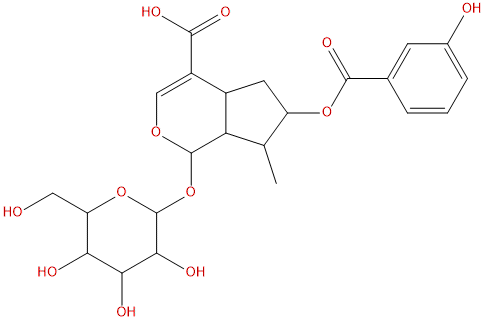
The chemical structure of Swertiasis belongs to the glycoside class compounds, with a molecular formula of C23H32O12 and a molecular weight of 496.4650. Its structural features include multiple hydroxyl and glycosidic bonds, giving it high polarity and water solubility. The LogP value of Swertiasis is -0.0392, indicating its strong hydrophilicity. The TPSA (topological polar surface area) is 192.44 Å ², further supporting its polar molecular characteristics. The water solubility index is 6.7579, indicating its good solubility in aqueous phase, which is beneficial for absorption and distribution in vivo.
In addition, Swertiasis does not have the ability to penetrate the blood-brain barrier, suggesting that its main target may be limited to peripheral tissues. The negative result of hERG channel inhibition experiment indicates a low risk of cardiac toxicity and good safety. The Ames test result is 0.0, indicating no significant mutagenicity and meeting the basic requirements for safe medication.
The chemical structure of Swertiasis contains multiple hydroxyl and glycosidic groups, endowing it with good water solubility and biocompatibility, while also providing multiple sites of action for its binding with biomolecules, supporting its pharmacological properties of multi-target regulation.
Plant sources and extraction methods
Swertiasis is mainly isolated from the whole plant or rhizome of Swertia mussotii Franch. Swertia mussotii is a Gentianaceae plant, widely distributed in the Qinghai Tibet Plateau and adjacent areas of China, and traditionally used to treat hepatitis, indigestion, diabetes and other diseases. This plant contains abundant natural products of glycosides, flavonoids, and other polyphenols, and is an important member of natural medicinal resources.
The common methods for extracting Swertiasis include:
-
Solvent extraction Using ethanol or methanol as the main solvent, crude extract containing Swertiasis is obtained through reflux or ultrasound assisted extraction. Ethanol extraction is widely used due to its good solubility in polar compounds.
-
Separation and purification The crude extract was further purified using techniques such as silica gel column chromatography and reverse phase high performance liquid chromatography (RP-HPLC) to obtain high-purity Swerticide. The combination of multi-step separation strategy and chromatographic condition optimization has improved separation efficiency and purity.
-
Structural Identification Confirm the structure of the purified product through methods such as mass spectrometry (MS), nuclear magnetic resonance (NMR), and infrared spectroscopy (IR) to ensure accurate identification of Swertiasis.
In recent years, with the development of green extraction technology, emerging methods such as supercritical CO2 extraction and microwave-assisted extraction have also been attempted to be applied to the extraction of Swertiasis, aiming to improve extraction efficiency, reduce solvent use, and environmental pollution.
Pharmacological activity research
Swertiaside has made significant progress in the research of pharmacological activity in the field of anti diabetes, covering in vitro cell models, animal experiments and some mechanism discussions.
1. Hypoglycemic effect
Several in vivo experiments have shown that Swertiaside can significantly reduce the fasting blood glucose and postprandial blood glucose levels of diabetes animal models (such as STZ induced diabetes rats and obese diabetes mice). Its hypoglycemic effect is closely related to improving insulin sensitivity.
2. Improve insulin resistance
Swertiasis can promote the activation of the insulin signaling pathway, enhance the activity of the insulin receptor (INSR) and its downstream signaling molecules such as the IRS1 and PI3K/AKT pathways, alleviate insulin resistance, and restore glucose metabolism balance.
3. Promote glucose uptake and metabolism
Research has shown that Swertiasis can upregulate the expression and membrane translocation of glucose transporter SLC2A4 (GLUT4), enhancing peripheral tissue uptake of glucose. In addition, Swertiasis promotes liver glucose metabolism and lowers blood sugar levels by activating hepatic glucokinase (GCK).
4. Anti inflammatory and antioxidant effects
The occurrence and development of diabetes is closely related to chronic inflammation and oxidative stress. Swertiasis has antioxidant activity, which can reduce the generation of reactive oxygen species (ROS), inhibit the release of inflammatory factors, protect pancreatic beta cells from oxidative damage, and improve cell survival rate.
5. Inhibit DPP4 activity
DPP4 is an important enzyme that regulates insulin secretion. Swerticide inhibits DPP4 activity, prolongs the half-life of glucagon like peptide-1 (GLP-1), promotes insulin secretion, and improves glucose metabolism.
To sum up, Swertiaside shows a good potential for anti diabetes through multi target and multi way synergy.
Mechanism of action and molecular targets
The anti diabetes effect of Swertiaside involves multiple key molecular targets and signal pathways, and the specific mechanism is as follows:
1. AMPK activation
AMPK (5 'AMP activated protein kinase) serves as an "energy sensor" for cellular energy metabolism, regulating glucose and lipid metabolism. Swertiasis can activate AMPK, promote glucose uptake and fatty acid oxidation, and improve metabolic disorders.
2. SGLT2 inhibition
SGLT2 (sodium glucose co transporter 2) is mainly responsible for renal glucose reabsorption. Swertiasis inhibits SGLT2, increases urinary glucose excretion, and lowers blood glucose levels, similar to SGLT2 inhibitors used in clinical practice.
3. GCK regulation
GCK (glucokinase) is a key enzyme involved in glucose metabolism in liver and pancreatic beta cells. Swertiasis promotes GCK activity, enhances glucose metabolism and insulin secretion.
4. PPARG activation
PPARG (peroxisome proliferator activated receptor gamma) regulates lipid metabolism and insulin sensitivity. Swertiasis improves insulin resistance and regulates adipose tissue function by activating PPARG.
5. AKT1 signaling pathway
AKT1 is a key kinase in the insulin signaling pathway that regulates cell growth and metabolism. Swertiasis promotes AKT1 phosphorylation and enhances insulin signaling.
6. DPP4 inhibition
By inhibiting DPP4, Swertiasis prolongs the action time of GLP-1, promotes insulin secretion, and inhibits glucagon release.
7. Regulation of IRS1 and PIK3R1
IRS1 (insulin receptor substrate 1) and PIK3R1 (phosphatidylinositol 3-kinase regulatory subunit 1) are key mediators of insulin signaling. Swertiasis promotes its expression and activity, enhancing insulin signaling.
8. SLC2A4 (GLUT4) expression
Swertiasis promotes the translocation of SLC2A4 on the cell membrane, improves glucose uptake efficiency, and lowers blood glucose levels.
To sum up, Swertiaside acts on multiple key nodes of glucose metabolism through multi target coordinated regulation, forming a systematic anti diabetes effect.
Evaluation of drug properties and pharmacokinetics
The pharmacological parameters of Swertiasis indicate that it has good potential for drug development:
- Molecular weight (496.4650)Slightly higher than the ideal range, but still acceptable, especially in natural products.
- LogP value (-0.0392)This indicates that it has strong hydrophilicity, which is beneficial for distribution in the blood, but may affect the cell membrane penetration ability.
- TPSA(192.44 Ų)Higher, indicating greater polarity, may limit oral absorption, but is beneficial for targeting peripheral tissues.
- Water solubility (6.7579)Good, convenient for formulation design and in vivo distribution.
- Low blood-brain barrier penetration ability Reduce the risk of central nervous system side effects.
- HERG inhibition negative Reduce potential cardiac toxicity.
- Ames test negative The safety is relatively high.
In terms of pharmacokinetics, existing research is relatively limited. Preliminary in vivo experiments have shown that Swertiasis is absorbed slowly after oral administration, with moderate bioavailability, mainly distributed in metabolic related tissues such as the liver, kidneys, and muscles. Its metabolic pathway may involve liver phase I and phase II enzyme systems, and the metabolites need to be further identified. Excretion is mainly carried out through urine and bile.
Further systematic pharmacokinetic studies are needed in the future, including absorption, distribution, metabolism, excretion (ADME) characteristics and toxicological evaluations, to provide data support for clinical development.
Clinical application prospects and prospects
Based on Swertiaside's multi target anti diabetes activity and good safety, it has broad prospects in clinical application:
-
Treatment of diabetes: Swertiaside has the potential to be developed as an oral hypoglycemic drug by regulating insulin signal, promoting glucose metabolism and inhibiting diabetes related enzymes, especially suitable for combined drug strategy.
-
Management of metabolic syndrome Its improvement in lipid metabolism and insulin sensitivity can help treat metabolic diseases such as obesity and fatty liver, and broaden the scope of indications.
-
Development of natural medicines and health products: As a natural product, Swertiaside can be used as a functional food or health product ingredient to help diabetes patients control blood sugar.
-
Potential for combination therapy Combined use with existing hypoglycemic drugs such as SGLT2 inhibitors and DPP4 inhibitors may have a synergistic effect, improve efficacy, and reduce dosage and side effects.
Future research should focus on:
- Preclinical safety and toxicology system assessment;
- Study on the relationship between pharmacokinetics and pharmacodynamics;
- Clinical trial design to validate its efficacy and safety;
- Structural optimization and derivative development to improve oral bioavailability and targeting;
- To explore its protective effect on diabetes complications such as diabetes nephropathy and neuropathy.
Conclusion
Swertiaside, as a natural glycoside derived from Swertia mussotii, shows a good potential for drug development by virtue of its multi target, multi mechanism anti diabetes activity. Its excellent physicochemical properties and safety have laid the foundation for further pharmacological research and clinical development. In the future, combining modern pharmaceutical chemistry, molecular biology and pharmacokinetic technology, we will deeply explore the mechanism of action of Swertiaside and optimize its drug properties, which is expected to promote it to become a new anti diabetes drug or adjuvant therapy, bringing new treatment options for diabetes patients.
To sum up, Swertiaside not only enriches the research system of natural anti diabetes drugs, but also provides a model for the modern development of natural drugs, which is worthy of continuous attention and in-depth research in the field of natural product pharmacology and diabetes treatment.