Introduction/Overview
Nicotinamide ribose (NR), as an emerging vitamin B3 derivative, has attracted widespread attention in the fields of natural product pharmacology and metabolic diseases in recent years. NR is an effective precursor of nicotinamide adenine dinucleotide (NAD+), which can significantly increase NAD+levels in the body through oral administration, thereby regulating multiple key metabolic pathways. NAD+, as an important coenzyme in cells, participates in various biological processes such as energy metabolism, DNA repair, and cellular signaling. Its level decreases with age, leading to metabolic dysfunction and the occurrence of age-related diseases. NR exhibits potential for improving metabolic function, delaying aging, and neuroprotection by activating NAD+- dependent deacetylases SIRT1 and SIRT3, particularly in high-fat diet induced metabolic disorders and Alzheimer's disease models.
This article provides a systematic review of the chemical structure and physicochemical properties, plant sources and extraction methods, pharmacological activity and mechanism of action of nicotinamide ribose. Combined with drug evaluation and pharmacokinetic characteristics, it explores its clinical application prospects in age-related metabolic diseases, aiming to provide scientific basis for its drug development and clinical translation.
Chemical structure and physicochemical properties
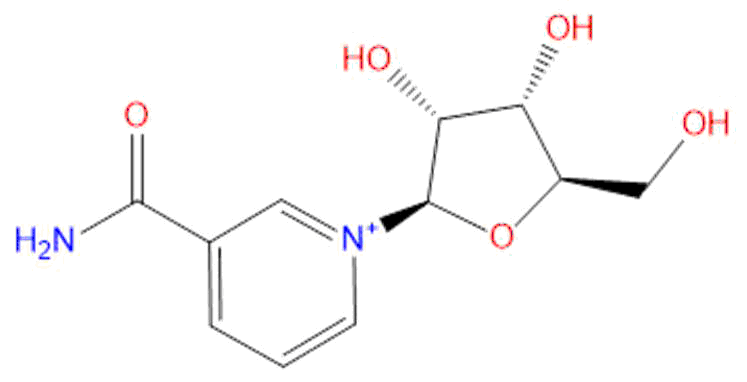
Niacinamide ribose (CAS number: 1341-23-7) has a molecular formula of C11H15N2O5 and a molecular weight of 255.25. Its structure is composed of nicotinamide (the active form of vitamin B3) and ribose connected by a β - N-glycosidic bond, belonging to nucleoside compounds. The molecule contains multiple hydroxyl groups, giving it strong hydrophilicity and exhibiting high water solubility (approximately 219.63 mg/mL), which is beneficial for its oral absorption and bioavailability.
In terms of physicochemical properties, the LogP value of nicotinamide ribose is -4.136, indicating its strong hydrophilicity and low lipid solubility, which limits its passive diffusion ability through lipid membranes. The topological polar surface area (TPSA) is 116.89 Å ², indicating its high polarity, which further affects its cell membrane permeability. The low penetration ability of the blood-brain barrier suggests that its direct role in the central nervous system may be limited, but it can still indirectly exert neuroprotective effects by increasing systemic NAD+levels. The negative result of hERG channel inhibition experiment indicates a low risk of cardiac toxicity. The Ames mutagenicity test value is 2.1, indicating a low risk of genetic toxicity and meeting safety requirements.
Overall, the chemical structure of nicotinamide ribose determines its excellent water solubility and safety, but its low fat solubility and blood-brain barrier permeability limit certain pharmacokinetic characteristics, requiring carrier or derivative design to optimize its bioavailability.
Plant sources and extraction methods
Nicotinamide ribose, as a nucleoside compound, is widely present in various natural foods, especially in plant and microbial fermentation products rich in nucleotides. Typical sources include yeast, milk, grains, and some vegetables. Yeast fermentation broth is an important raw material for industrial production of NR due to its abundant content and easy extraction.
The extraction methods mainly include the following:
-
Yeast fermentation method
By optimizing yeast strains and fermentation conditions, the yield of nicotinamide ribose can be increased. After fermentation, centrifugation and filtration are used to remove bacterial impurities, followed by ion exchange resin adsorption, concentration, and crystallization purification to obtain high-purity NR.
-
Plant extraction method
Extracting from nucleotide rich plant materials, water extraction or alcohol extraction combined with ultrasound assisted extraction techniques are commonly used, followed by separation and purification by high performance liquid chromatography (HPLC). This method is limited by low content and difficult purification, and has limited industrial applications.
-
Chemical Synthesis
The chemical synthesis of NR through nucleoside synthesis route has the advantages of high yield, good purity, and strong controllability, but the cost is high and the safety of synthetic intermediates needs to be addressed.
At present, industrial scale production mostly adopts yeast fermentation method, combined with modern separation and purification technology to achieve efficient preparation of NR. In the future, the development of genetically engineered strains and the application of green extraction technology will further promote the industrialization process of NR.
Pharmacological activity research
Nicotinamide ribose, as an effective precursor of NAD+, can significantly increase the level of NAD+in cells and tissues, thereby regulating multiple key metabolic pathways and exhibiting various pharmacological activities.
1. Enhance energy metabolism and mitochondrial function
NR promotes mitochondrial biosynthesis and functional recovery by supplementing NAD+and activating NAD+- dependent deacetylases SIRT1 and SIRT3. SIRT1 activation can regulate PGC-1 α, promote mitochondrial production and oxidative metabolism, and improve energy metabolism efficiency. SIRT3 directly acts on the mitochondrial enzyme system, enhancing antioxidant capacity and metabolic homeostasis, and reducing oxidative stress damage.
2. Anti aging and improvement of metabolic syndrome
The decrease in NAD+levels during the aging process leads to metabolic dysfunction. NR supplementation can reverse this trend, improve insulin sensitivity, and reduce levels of fatty liver and inflammation. Animal models have shown that NR significantly reduces obesity, insulin resistance, and lipid metabolism abnormalities induced by high-fat diet, and delays the progression of age-related metabolic disorders.
3. Neuroprotective effect
In a transgenic mouse model of Alzheimer's disease (AD), NR significantly improves cognitive decline by increasing brain tissue NAD+levels, activating SIRT1 and SIRT3, reducing neuroinflammation and oxidative stress, inhibiting β - amyloid deposition. This indicates that NR has potential neuroprotective and cognitive function improvement effects.
4. DNA repair and cell survival
NR increases NAD+levels, promotes PARP1 activity, enhances DNA damage repair ability, maintains genomic stability, and delays cellular aging. In addition, NR regulates NAD+metabolism key enzymes such as NAMPT and CD38, regulates intracellular NAD+dynamic balance, and maintains cellular metabolic homeostasis.
In summary, the pharmacological activities of NR cover energy metabolism regulation, anti-aging, neuroprotection, and genome maintenance, demonstrating comprehensive therapeutic potential with multiple targets and mechanisms.
Mechanism of action and molecular targets
The biological effects of nicotinamide ribose are mainly achieved through its role as a precursor of NAD+, which participates in the catalytic reactions of numerous key enzymes as a coenzyme. After NR supplementation, the body converts NAD+through the nucleoside kinase pathway, thereby regulating multiple molecular targets.
1. SIRT1 and SIRT3
SIRT1 and SIRT3 are NAD+- dependent deacetylases located in the nucleus and mitochondria, respectively. SIRT1 regulates energy metabolism, inflammatory response, and cell survival by deacetylating transcription factors such as PGC-1 α, FOXO, and NF - κ B. SIRT3 regulates mitochondrial enzyme activity, promotes antioxidant defense and energy metabolism. NR improves cellular metabolism and antioxidant capacity by enhancing NAD+activation of these two enzymes.
2. PARP1
Poly ADP ribose polymerase 1 (PARP1) is involved in DNA damage recognition and repair, relying on NAD+as a substrate. NR supplementation increases NAD+levels, promotes PARP1 activity, enhances DNA repair ability, slows down cellular aging and genomic instability.
3. CD38
CD38 is an NAD+consuming enzyme that regulates intracellular NAD+levels. Its increased activity will accelerate NAD+depletion. NR supplementation not only provides NAD+precursors, but also maintains NAD+homeostasis and delays metabolic decline by regulating CD38 expression and activity.
4. NAMPT
Nicotinamide phosphoribosyltransferase (NAMPT) is the rate limiting enzyme in NAD+biosynthesis, catalyzing the conversion of nicotinamide to NMN. NR promotes NAD+cycle regeneration by increasing NAD+supply and feedback regulating NAMPT activity.
5. Metabolic pathway regulation
NR regulates the above targets, affects metabolic signaling pathways such as AMPK and mTOR, promotes lipid oxidation, glucose metabolism, and mitochondrial function, and improves pathological states related to metabolic syndrome.
In summary, NR regulates NAD+metabolism and downstream signaling networks through multi-target synergistic effects, exerting its wide-ranging biological effects.
Evaluation of drug properties and pharmacokinetics
Nicotinamide ribose has good safety and pharmaceutical potential, but its physicochemical properties have a certain impact on pharmacokinetic properties.
1. Security
NR has high water solubility and low LogP, indicating its excellent in vivo solubility and low-fat solubility. HERG channel inhibition is negative, indicating a low risk of cardiac toxicity. The Ames test results showed a low risk of genetic toxicity and met the requirements for drug safety. Preclinical toxicology studies have not shown significant toxic side effects, supporting its clinical application.
2. Absorption and distribution
NR has good oral absorption and can be rapidly converted into NAD+precursor in the gastrointestinal tract. Its polarity is high, limiting passive diffusion through the blood-brain barrier. The concentration in the brain is low, but indirect neuroprotection is achieved through systemic elevation of NAD+levels. NR is widely distributed in the body, mainly concentrated in metabolically active tissues such as the liver, muscles, and kidneys.
3. Metabolism and excretion
NR is mainly metabolized into NMN and NAD+through the nucleoside kinase pathway, and subsequently participates in cellular energy metabolism. Unutilized NR and its metabolites are excreted through urine, with a moderate half-life and suitable for oral administration.
4. Pharmacokinetic challenges and optimization strategies
The high polarity and low fat solubility of NR limit its cell membrane permeability and brain distribution, which may affect the efficacy of some indications. To this end, researchers have attempted to enhance its bioavailability and targeting through liposome encapsulation, prodrug design, and nanocarrier technology.
Overall, NR has a good pharmaceutical basis, high safety, and good oral bioavailability. However, its pharmacokinetic properties still need to be optimized for the application of central nervous system diseases.
Clinical application prospects and prospects
With a deeper understanding of NAD+metabolism and its mechanisms in aging and metabolic diseases, the clinical application prospects of nicotinamide ribose as an NAD+supplement are increasingly broad.
1. Aging related metabolic diseases
NR has shown significant efficacy in improving metabolic syndrome models such as obesity, insulin resistance and fatty liver induced by high-fat diet, suggesting its potential application value in metabolic diseases such as type 2 diabetes and non-alcoholic fatty liver disease. Multiple clinical trials are evaluating the effects of NR on metabolic indicators, inflammation levels, and physical fitness status.
2. Neurodegenerative diseases
NR slows down cognitive degeneration in a transgenic mouse model of Alzheimer's disease, suggesting its neuroprotective potential. Although its blood-brain barrier penetration is low, NR may improve neuronal metabolism and antioxidant capacity by increasing systemic NAD+levels, slowing down the process of neurodegeneration. More clinical studies are needed in the future to validate its efficacy in neurological diseases such as cognitive impairment and Parkinson's disease.
3. Other indications
NR has also shown potential benefits for cardiovascular disease, muscle atrophy, and immune regulation, and related research is actively underway. Its good safety and oral convenience provide the possibility for long-term supplementation.
4. Development Challenges and Strategies
Although NR has multiple pharmacological activities, its low fat solubility and blood-brain barrier penetration limit its efficacy in some indications. In the future, drug delivery technology needs to be combined to optimize dosage forms, enhance targeting and bioavailability. In addition, further clinical data support is needed for long-term safety and efficacy evaluation.
In summary, NR as an NAD+supplement has broad application prospects in the fields of aging and metabolic diseases. In the future, promoting its clinical translation through multidisciplinary collaboration will bring new breakthroughs in the treatment of related diseases.
Conclusion
Nicotinamide ribose, as a novel precursor of NAD+, has become a powerful candidate molecule for regulating age-related metabolic disorders and neurodegenerative diseases due to its unique chemical structure and excellent pharmacological activity. It enhances NAD+levels, activates key enzymes such as SIRT1, SIRT3, and PARP1, regulates cellular energy metabolism, antioxidant defense, and DNA repair, demonstrating comprehensive therapeutic potential with multiple targets and mechanisms.
Although NR has shown excellent drug properties and safety, its low fat solubility and blood-brain barrier penetration limit some clinical applications, and it urgently needs to be optimized through drug design and delivery technology. In the future, by combining basic research and clinical trials, we will delve into the mechanism of action and long-term efficacy of NR, laying a solid foundation for its widespread application in the treatment of age-related diseases.
In summary, nicotinamide ribose, as a natural derivative with a wide range of biological effects, is gradually becoming a research hotspot and clinical star in the fields of anti-aging and metabolic diseases, and deserves continuous attention and in-depth development.