Introduction/Overview
In the treasure trove of natural product chemistry, anthraquinone compounds have long attracted the attention of medicinal chemists and pharmacologists due to their wide range of biological activities and unique chemical structures. Dihydrolapachenole (CAS number: 20213-26-7), as a naturally occurring anthraquinone derivative, although its research history is not as long as classical anthraquinones such as emodin and alizarin, its outstanding performance in the field of antifungal drugs in recent years has gradually made it stand out from many natural compounds and become a promising candidate molecule in the research and development of anti infective drugs. With the increasing incidence rate of invasive fungal infections worldwide, and the severe challenges of drug resistance and toxic side effects faced by existing antifungal drugs, it is urgent to develop new antifungal drugs with novel structures and unique mechanisms of action. Dihydrolapachenole has brought new hope to this field due to its significant inhibitory activity against various fungal pathogens, especially drug-resistant strains. This article aims to systematically review the chemical properties, plant origin, pharmacological activity, mechanism of action, pharmacological evaluation, and clinical application prospects of Dihydrolapachenole, in order to provide comprehensive academic references for the in-depth research and development of this compound.
Chemical structure and physicochemical properties
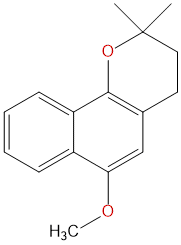
The chemical name of Dihydrolapachenole is 1,4-dihydroxy-2-methyl-5-isopropyl-9,10-anthraquinone, with a molecular formula of C16H18O4 and a molecular weight of 242.3180 g/mol. Structurally, it belongs to the hydroxy anthraquinone family, with its basic skeleton consisting of an anthraquinone mother nucleus connected to a hydroxyl group at positions 1 and 4, a methyl group at position 2, and an isopropyl group at position 5. This specific substitution pattern not only determines its physicochemical properties, but is also closely related to its biological activity.
In terms of physical and chemical properties, Dihydrolapachenole exhibits typical hydrophobic characteristics. The calculated lipid water partition coefficient (LogP) is 4.8259, indicating that the compound has high lipophilicity and is easy to penetrate cell membranes, but it also suggests poor water solubility. The theoretical polar surface area (TPSA) is 18.4600 Å ², which is a relatively low value, further confirming its non-polar characteristics. The experimental data shows that its water solubility is only 0.0011 mg/mL, which poses a challenge for its formulation development and may need to be improved through structural modification or the use of solubilizing carriers. This compound has high penetration through the blood-brain barrier (BBB), providing a structural basis for its potential treatment of central nervous system fungal infections. In early safety screening, its hERG inhibitory activity was negative, reducing the possibility of causing QT interval prolongation in the heart; The Ames test result is 0.9 (usually considered significant mutagenicity positive if>1.5), indicating a low genetic toxicity risk, but further in vitro and in vivo testing is needed to confirm.
Plant sources and extraction methods
Dihydrolapachenole is mainly isolated from plants such as Meliaceae and Bignoniaceae. Early research reported its existence in medicinal plants in South America Lapacho Bark (usually referring to Tabebuia Belonging to plants, such as Tabebuia avellanedae)Among the related extracts, this is also the origin of its name. In addition, phytochemical screening conducted on various traditional medicinal plants has also revealed the presence of this compound.
Its extraction and separation usually follow the conventional process of natural product chemistry. Firstly, crush the dried plant materials (such as bark and root bark) and extract them using organic solvents. Common solvents include methanol, ethanol, chloroform, or mixed solvents of different proportions, which are extracted using a Soxhlet extractor or room temperature impregnation method. After vacuum concentration, the crude extract was separated and purified using various chromatographic techniques. Silica gel column chromatography is commonly used as a preliminary separation method, using gradient elution systems such as petroleum ether ethyl acetate or chloroform methanol to separate components of different polarities. The components containing Dihydrolapachenole can be further refined by preparation thin layer chromatography (PTLC), reverse phase high performance liquid chromatography (RP-HPLC) or gel chromatography (such as Sephadex LH-20) to finally obtain high-purity monomer compounds. Structural identification is accomplished through a comprehensive use of spectroscopic methods such as nuclear magnetic resonance (NMR, including 1H-NMR, 13C-NMR, 2D-NMR), mass spectrometry (MS), infrared spectroscopy (IR), and ultraviolet spectroscopy (UV). In recent years, efficient separation techniques such as high-speed countercurrent chromatography (HSCCC) have also been applied to the rapid preparation of such natural products.
Pharmacological activity research
The most notable pharmacological activity of Dihydrolapachenole is its broad-spectrum and highly effective antifungal activity. Numerous in vitro studies have confirmed that it has significant inhibitory activity against various clinically relevant pathogenic fungi.
1. Anti Candida Activity: Regarding Candida albicans(Candida albicans)Smooth Candida albicans(C. glabrata)Candida krusei(C. krusei)And tropical Candida(C. tropicalis)Dihydrolapachenole exhibits lower Minimum Inhibition Concentration (MIC) values, and its activity is comparable to first-line azole drugs such as fluconazole, even effective against some fluconazole resistant clinical isolates. In addition, it also has a certain interference effect on the biofilm formation of Candida.
2. Anti filamentous fungal activity: Research shows that this compound has an effect on Aspergillus fumigatus(Aspergillus fumigatus)Aspergillus flavus(A. flavus)Fungi of the Aspergillus genus and Trichophyton genus(Trichophyton)Epidermal fungi also have inhibitory activity, although their MIC values are usually higher than their activity against Candida.
3. Anti drug resistant fungi: Of particular importance is that Dihydrolapachenole maintains a good inhibitory effect on Candida strains resistant to azole drugs due to overexpression of efflux pump proteins (such as CDR1, MDR1) or mutations in targets (such as ERG11). This indicates that its mechanism of action may be different from classical azole drugs, or it may be able to avoid common resistance pathways.
In addition to its core antifungal activity, some studies also suggest that Dihydrolapachenole may have other biological activities, such as mild antioxidant and anti-inflammatory properties, but these activities are far less prominent than its antifungal effects and require further research to confirm.
Mechanism of action and molecular targets
The antifungal activity of Dihydrolapachenole involves a complex mechanism of multiple targets and pathways, which may be the key to overcoming some drug resistance. Current research mainly focuses on the following key targets and pathways:
1. Inhibition of ergosterol biosynthesis pathway: Ergosterol is a key sterol component of fungal cell membranes, equivalent to cholesterol in mammalian cells. Dihydrolapachenole has been shown to interfere with the synthesis of ergosterol. Its target of action may involve lanosterol 14 α - demethylase (encoded by the ERG11 gene, also known as CYP51A1). This enzyme is a classic target of azole drugs. Dihydrolapachenole may interact with the active site of the enzyme in a manner different from azoles, thus still exerting inhibitory effects in azole resistant strains. In addition, it may also affect other enzymes upstream or downstream of the pathway.
2. Interference with cell wall synthesis: The fungal cell wall is another important target. Research has shown that Dihydrolapachenole can affect the activity of chitin synthase (such as CHS3) and β -1,3-glucan synthase (encoded by the FKS1 gene). These two enzymes are responsible for synthesizing the key components of cell wall, chitin and glucan, respectively. By inhibiting these enzymes, the compound causes structural defects in the cell wall, decreases osmotic stability, and ultimately leads to cell lysis.
3. Inhibition of efflux pumps and reversal of drug resistance: Overexpression of ATP binding cassette (ABC) transporter superfamily (such as CDR1, CDR2) and major chemokine superfamily (such as MDR1) in fungi is one of the main mechanisms of clinical drug resistance, as they can actively pump drugs out of cells. Dihydrolapachenole itself may not be an ideal substrate for these efflux pumps, therefore it can effectively accumulate within cells. More meaningfully, there is evidence to suggest that it may possess the characteristics of efflux pump inhibitors, which can synergistically enhance the sensitivity of drugs such as fluconazole to drug-resistant strains.
4. Other potential targets: The study also suggests that Dihydrolapachenole may affect the virulence factors of fungi. For example, it may interfere with the hyphal formation and adhesion related proteins (such as ALS3 gene products) of Candida albicans, thereby weakening its invasion and colonization ability. The impact on mitochondrial function (possibly involving genes such as MLS1) has also been reported, which may lead to energy metabolism disorders and accumulation of reactive oxygen species (ROS).
In summary, Dihydrolapachenole exerts its multi-target antifungal effect by synergistically acting on the cell membrane (ergosterol), cell wall (chitin/glucan), and possibly inhibiting drug efflux. This "multi pronged" approach makes it less likely to develop single target resistance.
Evaluation of drug properties and pharmacokinetics
Based on its physicochemical properties and preliminary biological data, a preliminary evaluation of the pharmacological properties of Dihydrolapachenole is conducted
Advantage:
1. Clear activity: Has strong and broad-spectrum antifungal activity, especially effective against drug-resistant strains.
2. Multi target effect: The unique mechanism of action may reduce the risk of drug resistance.
3. Good membrane permeability: High LogP values and low TPSA make it easy to penetrate fungal cell membranes and blood-brain barriers, with potential therapeutic value for deep and central infections.
4. Preliminary safety warning: HERG inhibition negative and Ames test negative are its early safety advantages.
Challenges and shortcomings:
1. Very poor water solubility: This is the biggest obstacle to its development into oral or injectable formulations. Suitable dosage forms need to be developed, such as nanocrystals, liposomes, cyclodextrin inclusion complexes, or prodrug strategies.
2. Lack of pharmacokinetic (PK) data: At present, there is very limited public research on its absorption, distribution, metabolism, and excretion (ADME) in the body. Its high lipophilicity may indicate good oral absorption, but key PK parameters such as first pass effect, tissue distribution, metabolic stability (especially the possible phase II metabolism of anthraquinone structure), and half-life are unknown.
3. Potential toxicity: The potential hepatotoxicity or nephrotoxicity of anthraquinone compounds in long-term use needs to be systematically evaluated. Although the Ames test is initially negative, a complete genotoxicity package test still needs to be completed.
4. Selective index: It is necessary to clarify its selectivity for fungal targets and human homologous proteins (such as human CYP51) to evaluate potential off target effects and cytotoxicity.
The future optimization of drug properties should focus on: ① improving water solubility and physicochemical balance while maintaining activity through reasonable structural modifications (such as introducing ionizable groups or polar fragments into molecules); ② Conduct systematic preclinical pharmacokinetic and toxicological studies; ③ Explore advanced drug delivery systems to overcome their solubility limitations.
Clinical application prospects and prospects
The clinical application prospects of Dihydrolapachenole mainly focus on the field of antifungal treatment, especially in addressing the challenges of drug resistance.
Potential application directions:
1. Treatment of drug-resistant candidiasis and aspergillosis: As a lead compound for novel antifungal drugs, developed for the treatment of invasive candidiasis and aspergillosis resistant to azoles and echinocandins, including bloodstream infections, abdominal infections, etc.
2. Fungal infections in the central nervous system: With its high blood-brain barrier penetration ability, it is expected to be developed for the treatment of refractory infections such as fungal meningitis and brain abscess.
3. External antifungal preparations: Consider developing fungal infections for the skin and nails (such as onychomycosis and tinea pedis), with limited solubility in topical formulations.
4. Antifungal enhancer: If the inhibitory activity of its efflux pump is confirmed, it can be used as an adjuvant in combination with existing antifungal drugs (such as fluconazole) to restore the sensitivity of drug-resistant strains to drugs and prolong the clinical service life of existing drugs.
Outlook and Future Research Directions:
1. In depth study of the mechanism of action: Using chemical biology methods such as photoaffinity labeling and proteomics to accurately identify the direct target proteins and elucidate the molecular details of their multi-target interactions.
2. Research on Structure Activity Relationship (SAR) of the System: Synthesize a series of derivatives and analogues of Dihydrolapachenole, systematically study the relationship between their chemical structure and antifungal activity, selectivity, water solubility, and toxicity, with the aim of optimizing candidate molecules with better comprehensive properties.
3. Preclinical development: Conduct comprehensive in vivo pharmacological evaluation (using systemic or local fungal infection animal models), ADME studies, and GLP toxicological evaluations on the selected candidate molecules.
4. Exploration of Combination Medication Strategies: In vitro and in vivo models, systematically evaluate its synergistic effect with existing antifungal drugs and search for the optimal combination therapy.
5. Pay attention to the balance of its "drug like" properties: In the optimization process, it is necessary to continuously pay attention to and balance its activity, solubility, metabolic stability, and safety, which is the key to whether it can ultimately enter clinical practice.
Conclusion
Dihydrolapachenole, as a naturally occurring anthraquinone compound, has become a leading molecule worth exploring in the field of anti infective drug development due to its unique chemical structure and excellent multi-target antifungal activity, especially its potential to combat drug-resistant fungi. Although there are obvious shortcomings in its drug properties, especially in terms of water solubility, this is precisely the challenge that modern medicinal chemistry and pharmacy can focus on addressing. Through in-depth structure-activity relationship research, rational structural optimization, and innovative formulation techniques, it is entirely possible to transform it into a novel antifungal drug with clinical application value. In the future, interdisciplinary collaboration - combining natural product chemistry, medicinal chemistry, pharmacology, pharmacy, and microbiology - will be the only way to drive Dihydrolapachenole and related molecules from the laboratory to clinical practice. It may not only provide clinical doctors with new weapons to combat the increasingly severe problem of fungal resistance, but also further confirm the irreplaceable value of natural products in innovative drug discovery.