Introduction/Overview
Natural products have long been an important treasure trove for the discovery and development of new drugs, among which plant derived active ingredients have attracted much attention due to their structural diversity and rich biological activity. Tectoruside (CAS number: 38784-73-5) is a phenolic glycoside compound isolated from the rhizome of the traditional Chinese herb Iris tectorum Maxim. Iris, as a traditional Chinese medicine, has long been recorded in Chinese medical literature and is commonly used to treat various diseases such as inflammation, sore throat, asthma, and cough. Its modern pharmacological research has gradually revealed its extensive biological activity. In recent years, with the deepening of research on the pathogenesis of mental and neurological disorders, especially depression, and the urgent demand for new, efficient, and low side effect antidepressant drugs in society, the search for lead compounds with antidepressant potential from natural products has become a research hotspot. Iridroside is gradually entering the field of pharmacology researchers due to its unique chemical structure and potential for interaction with various targets related to neurological and psychiatric disorders, especially its potential antidepressant activity, as demonstrated in preliminary studies. This article aims to systematically review the chemical structure, plant sources, extraction methods, pharmacological activities of iridoid glycosides, with a focus on their antidepressant effects. The possible mechanisms of action and molecular targets are explored in depth, and their pharmacological properties are evaluated. The clinical application prospects are also discussed, in order to provide comprehensive scientific references for the in-depth research and development of this compound.
Chemical structure and physicochemical properties
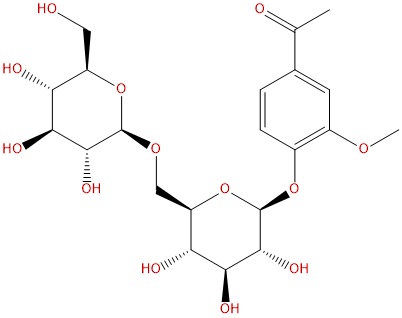
Iridroside is a typical phenolic acid glycoside compound. Its chemical structure is composed of a glycoside (phenolic acid moiety) connected to a sugar group through a glycosidic bond. Specifically, its glycoside moiety is iridone (or related phenolic acid derivatives), and its sugar moiety is usually glucose or other monosaccharides. This glycosidic structure significantly affects its physicochemical properties and biological activity. Its molecular formula is C21H30O13 and its molecular weight is 490.4580 g/mol.
In terms of physicochemical properties, iridoid glycosides exhibit typical polar molecular characteristics. The calculated lipid water partition coefficient (LogP) is -1.1952, indicating that the compound has high hydrophilicity and tends to be distributed in the aqueous phase. This characteristic is consistent with the result that its topological polar surface area (TPSA) is as high as 204.8300 Å ². A high TPSA value usually means that there are more hydrogen bond donors and acceptors (such as hydroxyl groups and oxygen atoms on sugar rings) in the molecule, which further explains its good water solubility (calculated value of about 40.2162 mg/L). These properties determine the distribution, absorption, and metabolic behavior of iridoid glycosides in organisms. For example, high hydrophilicity and large polar surface area are often unfavorable for their passive transmembrane diffusion, especially in penetrating the blood-brain barrier (BBB). Preliminary pharmacological predictions also indicate that irisin has low blood-brain barrier permeability, which poses a challenge for its development as a central nervous system (CNS) drug. However, its good water solubility is beneficial for making formulations such as injections or oral liquids. In addition, preliminary toxicity prediction data showed that irisin had no significant inhibitory risk on hERG potassium channels (hERG inhibition: No), and the Ames test predicted a value of 0.0, suggesting that it may not have direct genetic toxicity, providing preliminary positive signals for its safety evaluation.
Plant sources and extraction methods
Iridroside mainly comes from the dried rhizomes of the Iris tectorum Maxim, a plant in the Iris family. Iris is distributed in China, Japan, South Korea and other places. Its root and stem are called "Chuan She Gan" or "Tu Zhi Mu" in traditional Chinese medicine. It has the effects of clearing heat and detoxifying, eliminating phlegm and clearing the throat, promoting blood circulation and reducing swelling. It is commonly used for diseases such as sore throat, excessive phlegm, cough and asthma, and carbuncles and sores.
The extraction of irisin from iris rhizomes usually follows the conventional process of natural product chemistry. Firstly, crush the dried iris rhizome into coarse powder. Common extraction solvents include methanol, ethanol, or their aqueous solutions, and techniques such as heating reflux, ultrasound assisted extraction, or microwave-assisted extraction are used to maximize extraction efficiency. Due to the high polarity of iridoid glycosides, extraction using a medium polarity aqueous alcohol solution (such as 70% -80% ethanol) often yields better results. The crude extract is obtained by filtering and concentrating the extract.
Subsequently, it is necessary to isolate and purify irisin from complex plant crude extracts. This process usually involves multiple chromatographic techniques. Preliminary separation can be achieved using macroporous adsorption resin column chromatography, which utilizes its adsorption properties and molecular sieve action to enrich target components by gradient elution with water and different concentrations of ethanol. Further purification depends on normal or reverse phase silica gel column chromatography, dextran gel (such as Sephadex LH-20) column chromatography, and high-performance liquid chromatography (HPLC) or preparative high-performance liquid chromatography (prep HPLC). Reverse phase C18 chromatography columns are widely used due to their excellent separation performance for polar glycoside compounds, often using methanol water or acetonitrile water systems as mobile phases. By comparing the physicochemical properties of the compound (such as thin-layer chromatography behavior, HPLC retention time) and spectral data (nuclear magnetic resonance hydrogen spectrum, carbon spectrum, mass spectrometry) with the standard data reported in the literature, the isolated compound can be ultimately identified as iridoid glycoside. Optimizing extraction and separation processes to improve yield and purity is the foundation for subsequent pharmacological research and development.
Pharmacological activity research
Traditionally, iris and its extracts have been used for anti-inflammatory, cough and asthma relief purposes. Modern pharmacological research has confirmed that the total extract of iris and its various isoflavones and phenolic glycosides have anti-inflammatory, antioxidant, antiviral, cough and phlegm relieving activities. Iridroside, as an important component, has gradually been studied for its pharmacological activity in recent years, especially in the field of neuropsychiatric pharmacology, showing promising potential.
1. Antidepressant activity:
This is currently the most studied direction of iridoid glycosides. Although there are still accumulating reports on the in vitro and in vivo antidepressant effects of iridoid glycoside, its potential can be inferred based on the reported antidepressant effects of its parent plant, iris, and its similarity in structure to known active ingredients. Some preclinical studies have shown that total iris extract or components rich in irisin can improve the behavioral phenotype of depression model animals such as chronic unpredictable mild stress (CUMS) model, forced swimming test (FST), and tail suspension test (TST), such as reducing immobility time, increasing autonomous activity, and sugar water preference. These behavioral improvements suggest that irisin may have antidepressant like effects.
2. Anti inflammatory and antioxidant activity:
As a phenolic acid glycoside, iridoid glycosides possess potential antioxidant capacity due to their phenolic hydroxyl groups in their structure, which can scavenge free radicals and inhibit lipid peroxidation. Inflammation and oxidative stress are important pathophysiological processes in neurodegenerative diseases such as depression. Therefore, the anti-inflammatory and antioxidant effects of irisin may indirectly contribute to its neuroprotective and antidepressant effects. Research has shown that iris extract can inhibit the excessive production of inflammatory factors (such as TNF - α, IL-6, IL-1 β) in macrophages induced by lipopolysaccharide (LPS), and its mechanism may be related to the inhibition of inflammatory signaling pathways such as NF - κ B.
3. Other potential activities:
Based on the traditional use of iris, iridoid glycosides may also be involved in processes such as cough suppression, asthma relief, and antiviral activity. However, the direct correlation between these activities and their antidepressant effects is not yet clear and requires more specific research to clarify.
Mechanism of action and molecular targets
The mechanism of antidepressant effect of iridoid glycoside has not been fully elucidated, but based on network pharmacology prediction, molecular docking simulation, and some experimental studies, it may exert its effect through multi-target and multi pathway pathways, which is consistent with the complex pathogenesis of depression (monoamine neurotransmitter imbalance, neurotrophic factor deficiency, neuroinflammation, hypothalamic pituitary adrenal axis dysfunction, etc.). The following is an analysis of potential molecular targets related to antidepressant treatment:
1. Regulation of monoamine neurotransmitter system:
This is the main target of classical antidepressants. Prediction and preliminary research suggest that irisin may act on:
* Monoamine oxidase (MAOA/MAOB)Molecular docking studies have shown that iridoid glycosides may bind to the active sites of MAO-A and/or MAO-B, thereby inhibiting their degradation of monoamine neurotransmitters such as serotonin (5-HT), norepinephrine (NE), and dopamine (DA), and increasing the concentration of synaptic neurotransmitters.
* 5-hydroxytryptamine transporter (SLC6A4/SERT)Iridroside may prolong the action time of 5-HT in synaptic cleft by inhibiting the reuptake of 5-HT by SERT, which is similar to the mechanism of action of selective serotonin reuptake inhibitors (SSRIs).
* 5-hydroxytryptamine 1A receptor (HTR1A)HTR1A receptors are important 5-HT self receptors and heteroreceptors involved in emotion regulation. Iridroside may act as an agonist or modulator on this receptor, affecting the discharge of 5-HTergic neurons and neurotransmitter release.
* Catechin-O-methyltransferase (COMT)COMT is a key enzyme that degrades catecholamine neurotransmitters such as DA and NE. Inhibiting COMT can increase the levels of DA and NE in brain regions such as the prefrontal cortex, improving cognition and emotions.
2. Neurotrophic and neuroplasticity pathways:
Modern antidepressant theory emphasizes the core role of neurotrophic factors and neuroplasticity.
* Brain derived neurotrophic factor (BDNF) and its downstream signals BDNF is a key factor in maintaining neuronal survival, growth, differentiation, and synaptic plasticity. Research has shown that irisin or its related extracts may upregulate BDNF expression in brain regions such as the hippocampus and prefrontal cortex.
* Cyclic adenosine monophosphate effector binding protein (CREB1)CREB is an important regulatory factor for BDNF transcription. Activating the CREB-BDNF signaling pathway is a common mechanism in many antidepressant treatments. Iridroside may promote phosphorylation and transcriptional activity of CREB by activating upstream signals such as cAMP/PKA and MAPK/ERK.
* Glycogen synthase kinase-3 β (GSK3B)GSK3 β is a key negative regulator of the Wnt/β - catenin signaling pathway, and its overactivity is associated with depression and neurodegenerative diseases. Inhibition of GSK3 β activity can promote the entry of β - catenin into the nucleus, activate the expression of neurotrophic and anti apoptotic genes. Iridroside may act as an inhibitor of GSK3 β.
3. Neurotransmitter receptor regulation:
* Gamma aminobutyric acid type A receptor (GABRA1)GABA is the main inhibitory neurotransmitter in the central nervous system. The dysfunction of the GABAergic system is associated with anxiety and depression. Iridroside may enhance GABAergic neurotransmission, produce anti anxiety and sedative effects, and indirectly improve depressive symptoms by positively regulating GABAA receptors (such as GABRA1 containing the alpha 1 subunit).
In summary, irisin may exert antidepressant effects through synergistic effects on the monoaminergic system, enhancing neurotrophic support, promoting neural plasticity, and regulating inhibitory neurotransmission at multiple levels. This multi-target characteristic may give it unique advantages in treating refractory depression or reducing the side effects of existing drugs, but it also means that its mechanism of action network is very complex and requires further experimental verification.
Evaluation of drug properties and pharmacokinetics
Based on computational predictions and preliminary in vitro research data, the pharmacological properties of irisin can be preliminarily evaluated.
1. Absorption, distribution, metabolism, and excretion (ADME) characteristics:
* absorb Iridoin has strong hydrophilicity (LogP=-1.1952) and may have poor passive transmembrane absorption. After oral administration, its glycoside structure may be hydrolyzed by glycosidases in intestinal microbiota or intestinal mucosal epithelial cells to generate aglycones. Glycosides are usually more lipophilic than glycosides and may be more easily absorbed. Therefore, the oral bioavailability of irisin may be affected by first pass effects and intestinal metabolism, and specific pharmacokinetic studies are needed to confirm it.
* distribution As mentioned earlier, its high TPSA and low LogP indicate lower blood-brain barrier permeability. This is a major challenge for treating CNS diseases. In the future, it may be necessary to improve its distribution in the brain through structural modifications (such as preparing prodrugs, designing targeted delivery systems) or in combination with BBB opening agents.
* Metabolism As glycoside compounds, their main metabolic pathways may be hydrolysis (deglycosylation) and II binding reactions (such as glucuronidation and sulfation). The enzyme systems in the liver and intestines, as well as the gut microbiota, will play a crucial role in this process. The activity of metabolites needs further research.
* excretion Prototype drugs with high polarity and their bound metabolites are likely to be primarily excreted through the kidneys and urine.
2. Preliminary safety prediction:
* cardiotoxicity The inhibition of hERG potassium channels is the main cause of drug-induced long QT syndrome and apical torsion type ventricular tachycardia. The prediction shows that irisin has no risk of hERG inhibition, which is a favorable safety signal.
* Genotoxicity The Ames test predicts a negative result (0.0), indicating that it may not have direct mutagenicity.
* Other It is still necessary to comprehensively evaluate its safety through preclinical studies such as acute toxicity, long-term toxicity, and reproductive toxicity of the system.
3. Challenges and optimization directions for drug development:
The main challenge lies in Low blood-brain barrier permeability And possible existence Oral bioavailability issue Future research could consider:
* Structural modification On the premise of retaining the pharmacophore, chemical modifications are made to the glycosyl or aglycone portion to appropriately increase lipid solubility and improve membrane permeability.
* Formulation strategy Develop novel drug delivery systems such as nano formulations (such as liposomes, solid lipid nanoparticles, polymer micelles), microemulsions, or cyclodextrin inclusion complexes to improve their solubility, stability, and targeting, particularly to promote their brain delivery.
* Prodrug design Make iridoid glycosides into prodrugs that are enzymatically interpreted to release active ingredients in specific parts of the body, such as the brain.
At present, there are few reports on the in vivo pharmacokinetic studies of the iridoid glycoside system, which is a data gap that must be filled for its development.
Clinical application prospects and prospects
As a natural active ingredient derived from traditional Chinese medicine, irisin has shown unique potential in the treatment of neurological and psychiatric disorders such as depression.
1. Potential application directions:
* Lead compounds of novel multi-target antidepressants In response to the problems of slow onset, limited efficacy, and multiple side effects of existing single target antidepressants, the multi-target action characteristics of iridoid glycosides may provide new solutions, especially beneficial for patients with depression accompanied by anxiety and cognitive impairment.
* Components of adjuvant therapy or compound preparations Given its potential anti-inflammatory, antioxidant, and neurotrophic effects, iridoid glycosides may be used in combination with other antidepressants to enhance efficacy and reduce toxicity, or as an important active ingredient in compound Chinese herbal preparations for treating comorbidities of depression such as chronic pain and cardiovascular disease.
* Other neurological disorders Its neurotrophic and anti-inflammatory mechanisms also suggest that it may have research value in neurodegenerative diseases such as Alzheimer's disease and Parkinson's disease.
2. Challenges faced:
* The mechanism of action needs to be further elucidated Currently, most mechanisms are based on prediction and indirect evidence, requiring the use of techniques such as gene knockout, specific antagonists, and molecular biology to conduct confirmatory experiments on cell and animal models and draw clear signaling pathway maps.
* The bottleneck of drug development needs to be overcome As mentioned earlier, low BBB permeability is a core barrier that must be effectively addressed through medicinal chemistry or pharmaceutical methods.
* Lack of comprehensive preclinical research system Standardized pharmacological evaluations (dose-response relationships in different depression models), comprehensive pharmacokinetic studies (the entire process of absorption, distribution, metabolism, and excretion), and systematic toxicological evaluations are needed.
* Medicinal resources and quality control Ensuring the stability of the source of iris medicinal materials and establishing a standard method for determining the content of irisin is the basis for achieving product uniformity and reproducibility of therapeutic effects.
3. Future prospects:
Future research should follow the modern new drug development path of "active ingredient discovery mechanism exploration structure optimization drug efficacy evaluation preclinical development". Firstly, strengthen basic research to confirm its antidepressant efficacy and elucidate its core mechanisms. Secondly, by utilizing computer-aided drug design (CADD) and synthetic chemistry, reasonable structural optimization can be carried out to improve its pharmacokinetic properties while maintaining its activity. Again, actively develop modern formulation technologies, especially brain targeted delivery systems. Finally, promote preclinical and clinical studies that comply with international standards to evaluate their effectiveness and safety. By deeply integrating the wisdom of traditional Chinese medicine with modern science and technology, irisin is expected to develop from a potential natural product into a new type of neurological disease treatment drug with independent intellectual property rights.
Conclusion
Iridroside, a phenolic acid glycoside isolated from traditional Chinese medicine iris, is becoming a promising candidate molecule in natural product neuropharmacology research due to its unique chemical structure and preliminary multi-target antidepressant pharmacological activity. This article systematically reviews its chemical properties, plant sources, extraction methods, and focuses on its antidepressant effects, sorting out the complex mechanism network that may be involved, including regulating the monoamine neurotransmitter system, activating the neurotrophin and neuroplasticity pathways, and regulating the GABAergic system. Although it faces challenges in terms of drug resistance, especially in terms of blood-brain barrier permeability, computational predictions show that it has good safety characteristics. Looking ahead to the future, through in-depth research on the mechanism of action, rational drug chemical modifications, innovative formulation strategies, and standardized preclinical development, irisin is expected to overcome existing bottlenecks and provide new options for the treatment of major mental and neurological disorders such as depression. It also provides valuable examples for the modernization of traditional Chinese medicine and the development of innovative drugs based on natural products.