Pharmacological research progress and pharmacological evaluation of Lobetyolinin from Codonopsis pilosula
Introduction/Overview
Natural products, as an important source of drug discovery, play an irreplaceable role in the long history of human struggle against diseases. In recent years, with the rapid development of modern separation technology and pharmacological screening methods, a large number of natural compounds with unique structures and significant biological activities have been discovered, providing a rich library of lead compounds for innovative drug development. Among numerous natural products, active ingredients derived from traditional Chinese medicine have attracted much attention due to their unique chemical diversity and good biocompatibility.
Codonopsis pilosula(Codonopsis pilosula)As one of the representatives of traditional Chinese medicine for tonifying the body, it has the effects of nourishing the middle and qi, strengthening the spleen and benefiting the lungs. It is widely used in the clinical practice of traditional Chinese medicine for the treatment of qi deficiency, weakness, diarrhea, lung deficiency and cough. Modern pharmacological research has shown that Codonopsis pilosula contains various active ingredients, including polysaccharides, saponins, alkaloids, polyacetylene compounds, etc. Among them, polyacetylene compounds have become a research hotspot due to their unique chemical structure and significant biological activity.
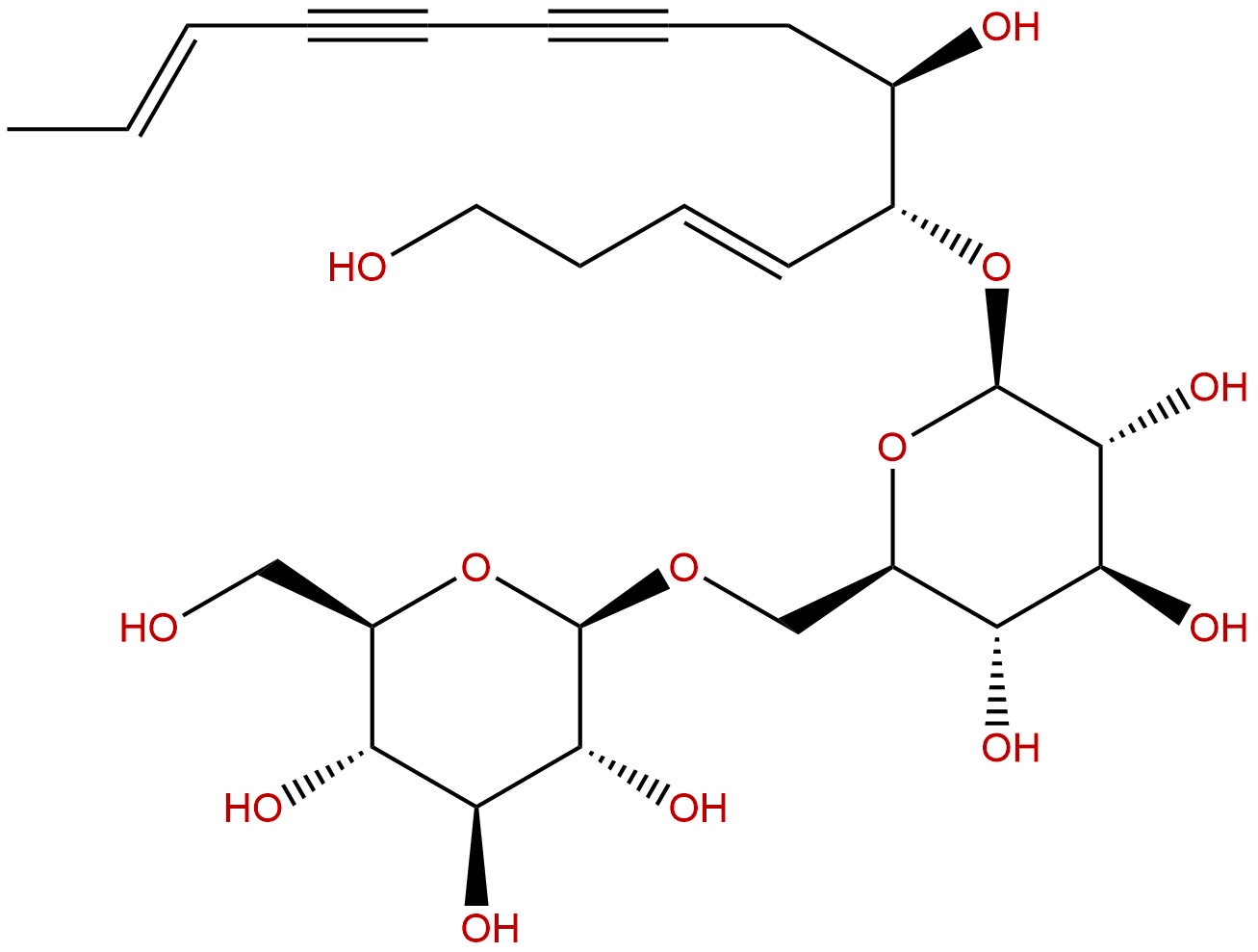
Lobetyolinin is a polyacetylene glycoside compound isolated from Codonopsis pilosula, with a CAS number of 142451-48-7. This compound was first isolated and identified from the root of Codonopsis pilosula in the 1990s. Its chemical structure is composed of a polyacetylene core and a glucose group connected by glycosidic bonds, belonging to the polyacetylene natural product family. Polyacetylene compounds are widely present in plants such as Asteraceae, Campanulaceae, and Araliaceae, and have various pharmacological activities such as anti-inflammatory, anti-tumor, antibacterial, and immunomodulatory effects.
In recent years, with the continuous deepening of research on Codonopsis pilosula acetylenicol, its potential application value in antiarrhythmic, immune enhancement, and liver cancer treatment has gradually emerged. Especially in the study of its mechanism of action in immune regulation, it has been revealed that Codonopsis pilosula acetylene glycoside may exert immune enhancing effects by regulating immune related targets such as IL2, STAT4, IFNG, CD4, CD8A, etc. In addition, its excellent water solubility and medicinal properties make it a highly promising natural lead compound for development. This article will provide a systematic review of the research progress of Codonopsis pilosula acetylene glycoside Ning from the aspects of chemical structure, plant origin, pharmacological activity, mechanism of action, pharmacological evaluation, and clinical application prospects.
Chemical structure and physicochemical properties
Chemical structural characteristics
The chemical name of Codonopsis pilosula acetylene glycoside is 3- [(6-O - β - D-glucopyranosyl - β - D-glucopyranosyl) oxy] -1,5-hepadiene-7-phenyl-4,6-diyn-3-ol, with a molecular formula of C ₂₆₆ H ∝₄₄₁③ and a molecular weight of 558.5770. The core of its structure is a polyacetylene chain containing two triple bonds and one double bond. One end of the polyacetylene chain is connected to a benzene ring, and the other end is connected to a disaccharide group composed of two molecules of glucose. The composite structure of polyacetylene glycoside endows Codonopsis pilosula with unique chemical properties and biological activity.
From the perspective of structural characteristics, the polyacetylene skeleton of Codonopsis pilosula contains a conjugated enyne system, which is relatively rare in nature and usually has high chemical reactivity and biological activity. The introduction of the sugar moiety not only increases the water solubility of the compound, but may also affect its interaction with biological targets. It is worth noting that the glycosidic bond of Codonopsis pilosula is in the β configuration, which is more common in natural glycosides and is beneficial for recognition and metabolism by glycosidases in organisms.
Physical and chemical property parameters
The physicochemical properties parameters of Codonopsis pilosula acetylide glycoside Ning are of great significance for its drug development. According to computational chemical analysis, the lipophilic water partition coefficient (LogP) of the compound is -0.8246, indicating its strong hydrophilicity, which is closely related to the sugar moiety containing multiple hydroxyl groups in the molecule. The polar surface area (TPSA) is 218.9900 Å ², which is much higher than the upper limit of 140 Å ² typically required for oral drugs, indicating that the compound may be difficult to pass through the cell membrane through passive diffusion, and its transmembrane transport may depend on specific transport proteins or endocytosis mechanisms.
In terms of water solubility, the calculated water solubility value of Codonopsis pilosula acetylene glycoside Ning is 30.2023 mg/mL, showing good water solubility, which provides convenient conditions for its formulation development and in vivo administration. The blood-brain barrier penetration assessment showed low penetration, indicating limited distribution of the compound in the central nervous system, which to some extent reduces the risk of central nervous system related toxicity. In addition, the negative prediction result of hERG inhibition suggests a lower risk of causing QT interval prolongation in the heart. The Ames test predicted a value of 0.6, indicating that the compound may not have significant mutagenicity.
Overall, the physicochemical properties of Codonopsis pilosula acetylene glycoside Ning exhibit typical characteristics of natural glycoside compounds: good water solubility, low lipid solubility, limited membrane permeability, and good safety prediction. These properties not only provide advantages for its development as a drug, but also bring certain challenges, such as the possibility of low oral bioavailability, which need to be addressed in subsequent research.
Plant sources and extraction methods
Plant-based
Codonopsis pilosula is mainly derived from plants of the Codonopsis genus in the Campanulaceae family, among which Codonopsis pilosula is the main source(Codonopsis pilosula)The content is the most abundant. There are about 40 species of Codonopsis plants worldwide, mainly distributed in East Asia, Central Asia, and Southeast Asia. China is the main distribution area of Codonopsis plants, with about 39 species. Except for Codonopsis pilosula, Su Hua Codonopsis pilosula(C. pilosula var. modesta)Chuan Dangshen(C. tangshen)The presence of Codonopsis pilosula acetylenicol was also detected in closely related species.
The distribution of Codonopsis pilosula acetylene glycoside Ning in Codonopsis pilosula plants is tissue-specific, mainly enriched in the roots, which is consistent with the traditional medicinal parts of Codonopsis pilosula. Research has shown that the content of Codonopsis pilosula acetylene glycoside in Codonopsis pilosula roots is influenced by various factors, including origin, harvesting time, growth period, processing method, etc. Generally speaking, Codonopsis pilosula roots that have been growing for 3-4 years have a higher content of Codonopsis pilosula acetylenicol, and samples harvested in autumn have a higher content than those harvested in spring. In addition, there are significant differences in the content of Codonopsis pilosula acetylene glycoside in Codonopsis pilosula medicinal materials from different origins, which may be related to soil conditions, climatic factors, and planting methods.
extraction method
The extraction method of Codonopsis pilosula acetylene glycoside has undergone a development process from traditional solvent extraction to modern efficient extraction technology. The traditional extraction methods mainly use ethanol or methanol as extraction solvents, and obtain crude extracts through reflux extraction or percolation extraction. Due to the good water solubility of Codonopsis pilosula acetylenicol, water extraction is also a commonly used extraction method. However, traditional methods have problems such as low extraction efficiency, high impurity content, and residual organic solvents.
In recent years, various modern extraction techniques have been applied to the extraction of Codonopsis pilosula acetylene glycoside, significantly improving extraction efficiency and product purity. Ultrasonic assisted extraction technology utilizes the cavitation and mechanical effects of ultrasound to effectively destroy plant cell walls, promote the dissolution of target compounds, and shorten extraction time to 1/3-1/5 of traditional methods. Microwave assisted extraction technology utilizes the penetration and selective heating properties of microwaves to achieve efficient extraction in a short period of time, especially suitable for compounds with good thermal stability.
Supercritical fluid extraction technology, as a green extraction technique, has also shown good application prospects in the extraction of Codonopsis pilosula acetylene glycoside. By using carbon dioxide as the extraction solvent and adjusting pressure and temperature, selective extraction of Codonopsis pilosula acetylene glycoside Ning can be achieved, and the resulting product has high purity and no residual organic solvents. However, this technology requires a large investment in equipment and high operating costs, and is currently mainly used for the preparation of high value-added products.
Separation and purification process
The separation and purification of Codonopsis pilosula acetylene glycoside Ning is usually carried out using column chromatography technology. After preliminary treatment, the crude extract is first separated by a macroporous adsorption resin column, and eluted with different concentrations of ethanol gradient to enrich the fraction containing Codonopsis pilosula acetylide. Subsequently, further purification was carried out using techniques such as silica gel column chromatography, ODS reverse phase column chromatography, and preparative high-performance liquid chromatography, ultimately obtaining Codonopsis pilosula acetylene glycoside monomer with a purity of over 98%.
It is worth noting that due to the presence of multiple hydroxyl groups in the molecule of Codonopsis pilosula acetylene glycoside, it is prone to irreversible adsorption with the column packing during the separation process, resulting in a decrease in recovery rate. Therefore, in the process of separation and purification, it is usually necessary to add an appropriate amount of acidic regulators (such as formic acid, acetic acid, etc.) to the mobile phase to inhibit the dissociation of hydroxyl groups, improve separation efficiency and recovery rate.
Pharmacological activity research
Antiarrhythmic effect
Arrhythmia is a common cardiovascular disease in clinical practice, and in severe cases, it can lead to sudden cardiac death. Although traditional antiarrhythmic drugs have definite therapeutic effects, they are often accompanied by serious adverse reactions such as arrhythmia. Therefore, finding safe and effective antiarrhythmic drugs has always been a hot topic in cardiovascular pharmacology research.
The anti arrhythmic effect of Codonopsis pilosula acetylenicol was first confirmed in animal models. Research has shown that Codonopsis pilosula extract can significantly reduce the incidence and duration of experimental arrhythmias induced by aconitine, calcium chloride, etc., and prolong the latency of arrhythmias. In ex vivo cardiac perfusion experiments, Codonopsis pilosula acetylenicol can improve arrhythmia caused by ischemia-reperfusion injury and reduce the incidence of ventricular tachycardia and ventricular fibrillation.
Further research has found that the anti arrhythmic effect of Codonopsis pilosula acetylide glycoside Ning may be related to its regulation of ion channels in myocardial cells. Electrophysiological experiments have shown that Codonopsis pilosula extract can prolong the action potential duration of myocardial cells, inhibit L-type calcium channel currents, and promote potassium channel opening, thereby stabilizing myocardial cell membrane potential and reducing the occurrence of abnormal electrical activity. In addition, Codonopsis pilosula extract can inhibit oxidative stress response, reduce myocardial cell apoptosis, and improve myocardial fibrosis, which together form the pharmacological basis of its anti arrhythmic effect.
Immune enhancement effect
The immune system is an important barrier for the body to resist the invasion of pathogenic microorganisms and maintain internal environmental stability. Immunoenhancers can non specifically activate the immune system, improve the immune function of the body, and have a wide range of applications in infectious diseases, tumor adjuvant therapy, vaccine adjuvants and other fields.
The immune enhancing effect of Codonopsis pilosula acetylene glycoside Ning is one of its most prominent pharmacological activities. In vitro experiments have shown that Codonopsis pilosula extract can significantly promote the proliferation of mouse spleen lymphocytes, increase the killing activity of natural killer cells, and enhance the phagocytic function of macrophages. In immunosuppressive animal models, Codonopsis pilosula acetylide glycoside Ning can reverse leukopenia, splenic atrophy, and immune dysfunction caused by immunosuppressants such as cyclophosphamide, restoring the body's immune defense ability.
More importantly, the regulatory effect of Codonopsis pilosula on the immune system is bidirectional, showing an enhancing effect when immune function is low and an inhibitory effect when immune function is high. This immune regulatory property makes it potentially valuable for the treatment of autoimmune and inflammatory diseases.
Antitumor activity
Liver cancer is one of the malignant tumors with high incidence rate and mortality worldwide, which seriously threatens human health. In recent years, significant progress has been made in the research of natural products in the treatment of liver cancer, and various natural compounds have been proven to have anti liver cancer activity.
The potential of Codonopsis pilosula acetylenicol in liver cancer research has attracted widespread attention. In vitro experiments have shown that Codonopsis pilosula extract can inhibit the proliferation of human liver cancer cell lines HepG2, Huh7, etc., induce cell cycle arrest and apoptosis. The mechanism of its anti liver cancer effect involves multiple signaling pathways, including inhibiting the PI3K/Akt/mTOR signaling pathway, activating the p53/p21 pathway, upregulating the expression of pro apoptotic protein Bax, and downregulating the expression of anti apoptotic protein Bcl-2.
In addition, Codonopsis pilosula acetylide glycoside Ning can also inhibit the migration and invasion ability of liver cancer cells, reduce the expression and activity of matrix metalloproteinases, suggesting that it may have anti metastatic effects. In a mouse model of liver cancer, Codonopsis pilosula acetylenicol can inhibit tumor growth, prolong mouse survival, and has low toxicity to normal tissues and organs, demonstrating good therapeutic efficacy.
It is worth noting that the anti-tumor activity of Codonopsis pilosula and its immunomodulatory effect are closely related. Research has shown that Codonopsis pilosula extract can enhance the body's anti-tumor immune response by activating dendritic cells, promoting T cell activation, and enhancing the function of cytotoxic T lymphocytes, thereby exerting indirect anti-tumor effects. This immune tumor dual targeting mechanism provides a new approach for the comprehensive treatment of liver cancer.
Mechanism of action and molecular targets
Molecular mechanisms of immune regulation
The immune enhancing effect of Codonopsis pilosula acetylenicol involves a complex molecular regulatory network. Research has shown that Codonopsis pilosula extract can significantly upregulate the expression level of interleukin-2 (IL2). IL2 is a T cell growth factor that plays a crucial role in the activation, proliferation, and differentiation of T cells. Upregulation of IL2 expression can promote clonal expansion of T cells and enhance the strength of immune response.
Signal transducer and activator of transcription 4 (STAT4) is a key transcription factor downstream of the IL2 signaling pathway. Codonopsis pilosula acetylenicol can activate the phosphorylation of STAT4, promote its nuclear translocation, and regulate the transcription of downstream target genes. The activation of STAT4 not only participates in the Th1 differentiation of T cells, but also regulates the expression of interferon gamma (IFNG). IFNG is a hallmark cytokine of Th1 type immune response, with multiple functions such as antiviral, anti-tumor, and immune regulation.
Codonopsis pilosula extract has a significant effect on the quantity and function of CD4 ⁺ T cells and CD8 ⁺ T cells. CD4 ⁺ T cells, as helper T cells, can assist B cells in producing antibodies, activating macrophages, and enhancing immune responses. CD8 ⁺ T cells, as cytotoxic T cells, are the main effector cells for antiviral and anti-tumor immunity. Codonopsis pilosula extract can promote the differentiation of CD4 ⁺ T cells towards Th1 direction, enhance the killing activity of CD8 ⁺ T cells, and thus comprehensively enhance the adaptive immune response of the body.
Molecular targets for antiarrhythmic effects
The anti arrhythmic effect of Codonopsis pilosula extract is mainly related to its regulation of ion channels in myocardial cells. Molecular docking and electrophysiological experiments have shown that Codonopsis pilosula can bind to the α 1C subunit of L-type calcium channels, inhibit the influx of calcium ions, and reduce calcium overload in cardiomyocytes. At the same time, Codonopsis pilosula acetylide can activate voltage dependent potassium channels, promote the efflux of potassium ions, and accelerate the repolarization process of myocardial cells.
In addition, Codonopsis pilosula extract has a regulatory effect on the expression and distribution of gap junction protein Cx43 in cardiomyocytes. Cx43 is the main molecular basis of electrical coupling between myocardial cells, and its abnormal expression and distribution disorder are closely related to the occurrence of arrhythmia. Codonopsis pilosula extract can upregulate the expression level of Cx43, improve its lateral distribution, enhance the electrical coupling between myocardial cells, and maintain the synchronization and stability of cardiac electrical activity.
Molecular mechanism of anti liver cancer
The anti liver cancer effect of Codonopsis pilosula acetylenicol involves the cross regulation of multiple signaling pathways. The PI3K/Akt/mTOR signaling pathway is a key pathway that regulates cell proliferation, survival, and metabolism, and is often in an abnormally activated state in liver cancer. Codonopsis pilosula extract can inhibit the activity of PI3K, reduce the phosphorylation level of Akt, thereby inhibiting the activation of mTOR, blocking the expression of downstream effector molecules, and ultimately inhibiting the proliferation and survival of liver cancer cells.
The p53/p21 signaling pathway is an important pathway for cell cycle regulation and DNA damage repair. Codonopsis pilosula extract can upregulate the expression level of p53, activate the transcription of p21, cause cell cycle arrest at the G1/S checkpoint, and inhibit the proliferation of liver cancer cells. Meanwhile, the activation of p53 can also promote the expression of Bax, inhibit the expression of Bcl-2, alter mitochondrial membrane potential, release cytochrome c, activate caspase cascade reaction, and induce apoptosis of liver cancer cells.
It is worth noting that Codonopsis pilosula also has inhibitory effects on liver cancer stem cell like cells. Liver cancer stem cells are considered the root cause of liver cancer recurrence and metastasis. Research has shown that Codonopsis pilosula extract can inhibit the expression of liver cancer stem cell markers CD133, CD44, and EpCAM, reduce the self-renewal ability and tumorigenicity of liver cancer stem cells, and provide a new target for radical treatment of liver cancer.
Evaluation of drug properties and pharmacokinetics
Analysis of drug properties parameters
The evaluation of drug properties is a crucial step in determining whether natural products can be successfully converted into drugs. According to Lipinski's five rules, the molecular weight of Codonopsis pilosula acetylenicol is 558.5770, slightly above the threshold of 500; LogP is -0.8246, below the upper limit of 5; The number of hydrogen bond donors (hydroxyl groups on the sugar group) is 8, exceeding the upper limit of 5; The number of hydrogen bond acceptors is 13, exceeding the upper limit of 10. Therefore, Codonopsis pilosula acetylide does not fully comply with Lipinski's five rules, indicating that its oral bioavailability may be low.
However, the TPSA value of 218.9900 Å ² is much higher than the upper limit of 140 Å ² typically required for oral medications, further confirming its poor membrane permeability. However, it is worth noting that Codonopsis pilosula has good water solubility (30.2023 mg/mL), which provides convenient conditions for its intravenous or local administration.
In terms of safety evaluation, hERG inhibition prediction is negative, indicating a low risk of cardiac toxicity caused by the compound. The Ames test predicted a value of 0.6, indicating a low risk of mutagenicity. These safety data provide favorable conditions for the further development of Codonopsis pilosula acetylenicol.
Pharmacokinetic characteristics
At present, there is insufficient research on the pharmacokinetics of Codonopsis pilosula acetylene glycoside Ning, but its pharmacokinetic characteristics can be inferred based on its physicochemical properties. Due to its high molecular weight, strong hydrophilicity, and low membrane permeability, the oral absorption and bioavailability of Codonopsis pilosula acetylene glycoside Ning may be poor. Intravenous administration may be a more effective route of administration.
In terms of distribution within the body, Codonopsis pilosula has low blood-brain barrier penetration and is mainly distributed in tissues and organs with abundant blood flow, such as the blood, liver, and kidneys. Its metabolism may mainly occur in the liver, undergoing biotransformation through pathways such as glycosidase hydrolysis and glucuronic acid binding. The main excretion pathways may be bile excretion and renal excretion.
It is worth noting that the glycosyl portion of Codonopsis pilosula acetylenicol may be metabolized by gut microbiota to produce aglycones or other metabolites, which may have different pharmacological activities. Therefore, when evaluating the pharmacological effects of Codonopsis pilosula acetylenicol, the contribution of its metabolites needs to be considered.
Formulation development strategy
To address the issue of low oral bioavailability of Codonopsis pilosula acetylene glycoside Ning, various formulation techniques can be used to improve its oral absorption. New drug delivery systems such as liposomes, nanoparticles, and microemulsions can enhance drug solubility and membrane permeability, improving oral bioavailability. In addition, prodrug design is also an effective strategy to enhance lipid solubility and promote transmembrane transport by esterification or etherification modification of the hydroxyl group of Codonopsis pilosula acetylenicol.
For intravenous drug formulations, the good water solubility of Codonopsis pilosula acetylide provides convenience for its formulation development. It can be administered in the form of freeze-dried powder injections or injections, but attention should be paid to its stability to avoid degradation during storage.
Clinical application prospects and prospects
Application in the field of cardiovascular disease
Based on the anti arrhythmic effect of Codonopsis pilosula acetylenicol, its application prospects in the field of cardiovascular disease are broad. Arrhythmia is a common clinical disease, and existing drugs have limited efficacy and significant side effects. As a natural source of antiarrhythmic compound, Codonopsis pilosula acetylene glycoside Ning has unique mechanisms of action and good safety, and is expected to be developed into a new type of antiarrhythmic drug.
In addition, the protective effect of Codonopsis pilosula on myocardial ischemia-reperfusion injury suggests its potential value in the treatment of acute myocardial infarction. Combined with its multiple pharmacological activities such as anti-inflammatory and antioxidant effects, Codonopsis pilosula acetylenicol may have a comprehensive therapeutic effect on cardiovascular diseases such as coronary heart disease and heart failure.
Application in the field of tumor immunotherapy
The immune enhancing effect and anti-tumor activity of Codonopsis pilosula acetylene glycoside Ning make it of significant application value in the field of tumor immunotherapy. As an immunomodulatory agent, Codonopsis pilosula can be used as an adjuvant drug for tumor immunotherapy, enhancing the body's anti-tumor immune response and improving the efficacy of immune checkpoint inhibitors and other immunotherapy drugs.
Especially for tumors with low immunogenicity such as liver cancer, Codonopsis pilosula acetylene glycoside may improve the tumor microenvironment and enhance the efficacy of immunotherapy by activating innate and adaptive immunity. In addition, the inhibitory effect of Codonopsis pilosula on tumor stem cells provides a new strategy for preventing tumor recurrence and metastasis.
Application of Immunodeficiency Diseases and infectious diseases
The immune enhancement effect of Codonosylidin makes it have potential application value in the treatment of immune deficiency diseases and infectious diseases. For patients with low immune function, such as AIDS patients, tumor patients after radiotherapy and chemotherapy, elderly people, etc., Dangshengyinine can be used as an immune enhancer to improve the anti infection ability of the body.
In terms of viral infections, Codonopsis pilosula glycoside can promote the production of IFNG, enhance antiviral immune response, and may have inhibitory effects on influenza virus, hepatitis virus, etc. In terms of bacterial infections, Codonopsis pilosula extract can enhance the phagocytic function of macrophages and promote the clearance of pathogenic microorganisms.
Challenges and Future Directions Faced
Despite the excellent pharmacological activity and application prospects of Codonopsis pilosula acetylenicol, its development still faces many challenges. Firstly, the natural sources of Codonopsis pilosula acetylene glycoside Ning are limited, and the chemical synthesis is difficult, which limits its large-scale preparation. In the future, it is necessary to develop efficient and green synthesis methods or biosynthetic technologies to solve the problem of raw material supply.
Secondly, the pharmacokinetic characteristics of Codonopsis pilosula acetylene glycoside Ning need to be further studied, especially the problem of low oral bioavailability that needs to be addressed. Improving its bioavailability through formulation technology or structural modification is the key to promoting its clinical translation.
Again, the mechanism of action of Codonopsis pilosula acetylide glycoside Ning is not yet fully studied, especially its interaction mechanism with immune related targets needs further clarification. By utilizing modern molecular biology techniques such as CRISPR gene editing, proteomics, metabolomics, etc., a systematic study of the molecular targets and signaling networks of Codonopsis pilosula acetylide glycoside Ning can help reveal the molecular basis of its pharmacological effects.
Finally, the long-term toxicity and safety evaluation of Codonopsis pilosula acetylene glycoside Ning is not sufficient, and a systematic preclinical safety evaluation is needed, including acute toxicity, chronic toxicity, reproductive toxicity, genetic toxicity, etc., to provide safety guarantees for its clinical application.
Conclusion
As a polyacetylene glycoside compound isolated from traditional Chinese medicine Codonopsis pilosula, Codonopsis pilosula has attracted widespread attention for its unique chemical structure and diverse pharmacological activities. From anti arrhythmia to immune enhancement, from anti liver cancer to immune regulation, Codonopsis pilosula acetylide glycoside Ning exhibits multi-target and multi pathway effects, reflecting the unique value of natural products in drug discovery.
At present, the research on Codonopsis pilosula acetylene glycoside is in a critical stage of transitioning from basic research to application development. Its good water solubility, low toxicity prediction, and clear pharmacological activity have laid a solid foundation for its further development. However, the low oral bioavailability and incomplete understanding of the mechanism of action remain the main bottlenecks restricting its clinical translation.
In the future, with the interdisciplinary integration of synthetic biology, medicinal chemistry, pharmacology, and other fields, there is hope for breakthrough progress in the research of Codonopsis pilosula acetylenicol. By optimizing its structure to enhance its pharmacological properties, utilizing modern formulation technology to improve its pharmacokinetic characteristics, and combining system pharmacology methods to elucidate its mechanism of action, Codonopsis pilosula is expected to become a new candidate drug for the treatment of cardiovascular diseases, tumors, and immune related diseases.
As a model of modernization research in traditional Chinese medicine, the research process of Codonopsis pilosula acetylene glycoside Ning not only provides an example for the development of polyacetylene natural products, but also provides useful insights for the discovery of natural medicines under the guidance of traditional Chinese medicine theory. I believe that in the near future, with the continuous deepening of research, the medicinal value of Codonopsis pilosula acetylene glycoside Ning will be more fully explored and utilized, making greater contributions to human health.