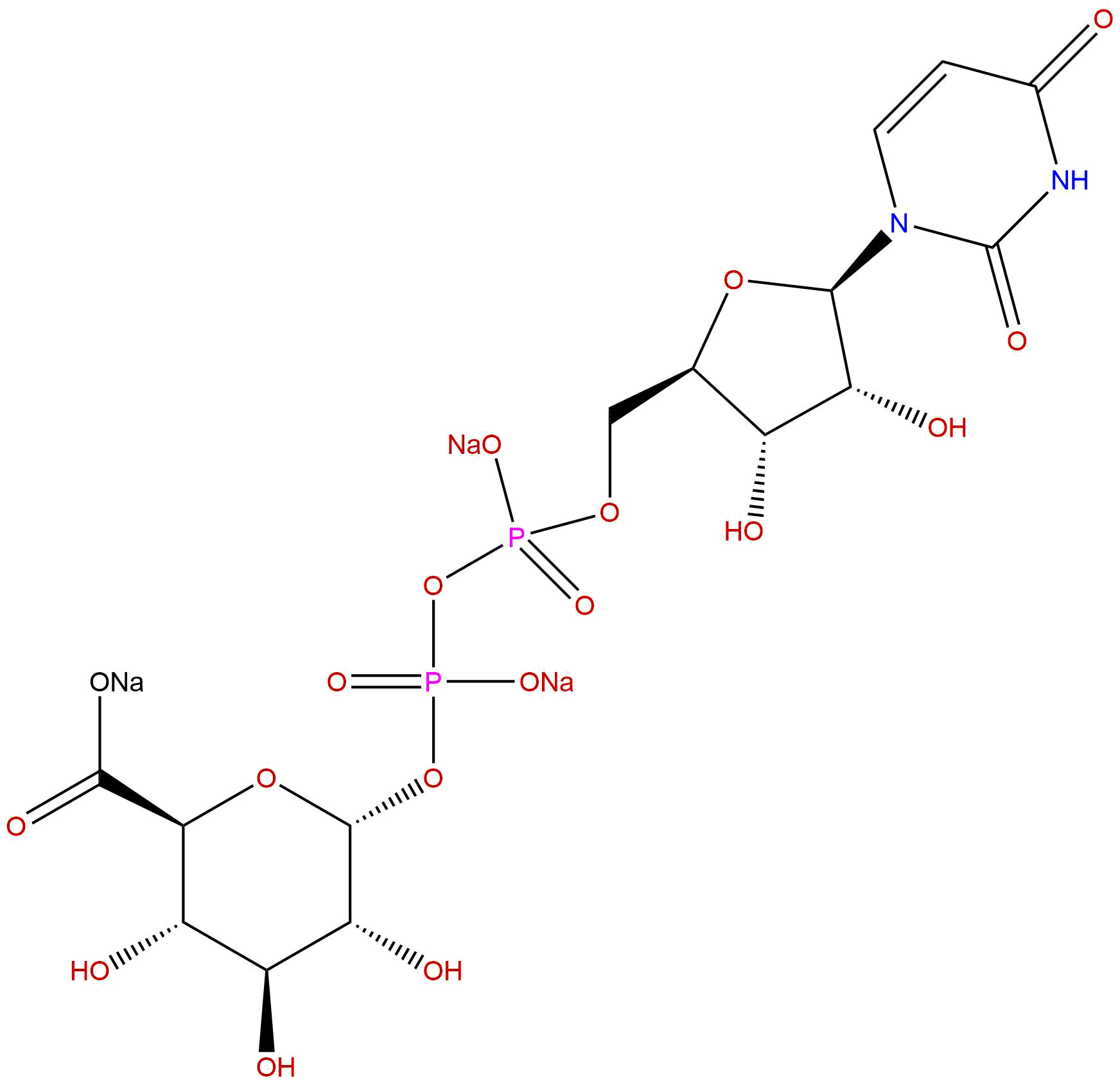


Product name: Trisodium UDP-glucuronic acid
Synonym name: UDP-GlcA; Uridine 5'-diphosphoglucuronic acid trisodium salt; UDPGA; Uridine-diphosphate-glucuronic acid trisodium salt
Catalogue No.: BP4236
Cas No.: 63700-19-6
Formula: C15H22N2O18P2
Mol Weight: 580.285
Botanical Source:
Type of Compound:
Purity: 95%~99%
Analysis Method: HPLC-DAD or/and HPLC-ELSD
Identification Method: Mass, NMR
Packing: Brown vial or HDPE plastic bottle
Storage: Store in a well closed container, protected from air and light. Put into refrigerate or freeze for long term storage.
Whenever possible, you should prepare and use solutions on the same day. However, if you need to make up stock solutions in advance, we recommend that you store the solution as aliquots in tightly sealed vials at -20℃. Generally, these will be useable for up to two weeks.
The product could be supplied from milligrams to grams
Inquire for bulk scale.
For Reference Standard and R&D, Not for Human Use Directly.
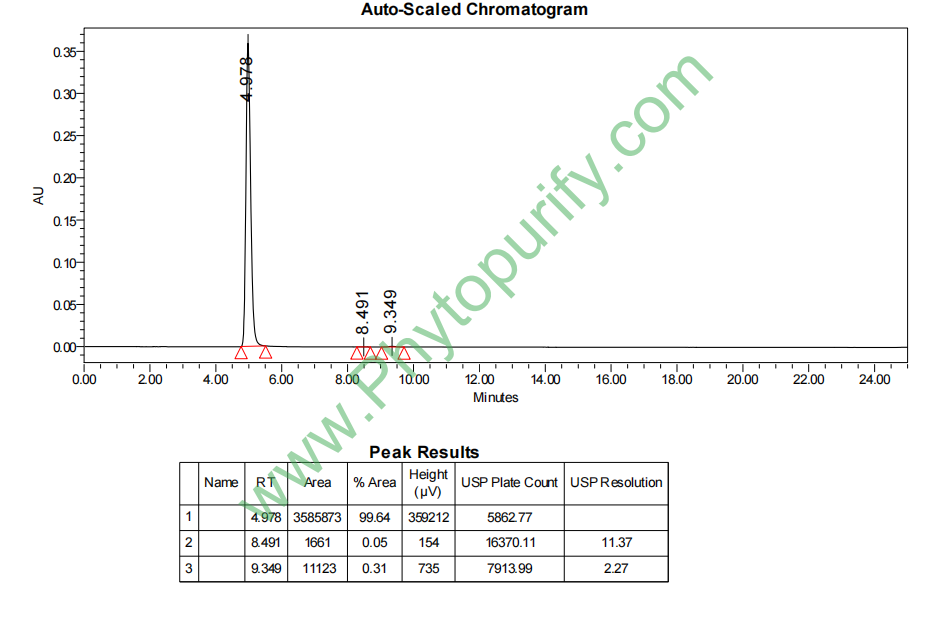
HPLC of Trisodium UDP-glucuronic acid
Storage conditions:Short-term storage at 2~8℃, long-term storage at -20 ~ -80℃
314.0600
-2.7816
-3.4232
100.5442
.3635
.0998
Low
39.4284
5.9195
No
No
No
No
No
No
0.0
Yes
No
Yes
No
Trisodium UDP glucuronic acid (UDP GlcA trisodium salt) is an important natural product derivative and belongs to nucleotide carbohydrate compounds. It mainly serves as an activated form of glucuronic acid in organisms, participating in various biological transformation processes, especially as a key coenzyme in glycosyltransfer reactions. UDP GlcA trisodium salt plays an important role in liver metabolism, especially in the pathophysiological mechanisms of liver metabolic diseases. Its related targets such as cytochrome P450 enzyme (CYP3A4), uridine diphosphate glucuronosyltransferase (UGT1A1, UGT2B7), and transporters (SLC35A2, ABCC2) are closely related to its biological activity. This article provides a systematic review of the chemical structure and physicochemical properties, plant sources and extraction methods, pharmacological activity, mechanism of action, pharmacological evaluation, and clinical application prospects of UDP GlcA trisodium salt, aiming to provide comprehensive reference materials for researchers in related fields.
The molecular formula of UDP glucuronic acid trisodium salt is C15H19N2Na3O17P2, with a molecular weight of 580.2850. Its structural features include a uridine nucleotide backbone, connecting two phosphate groups and a glucuronic acid residue. The LogP value of this compound is -2.7816, indicating strong hydrophilicity, consistent with its high solubility in aqueous solution (100.5442 mg/mL), which is beneficial for its distribution and metabolism in vivo. Its topological polar surface area (TPSA) is 314.0600, indicating its high polarity and difficulty in penetrating the blood-brain barrier (BBB), which is consistent with its low blood-brain barrier permeability. In addition, UDP GlcA trisodium salt does not exhibit hERG channel inhibition, and the Ames test result is 0.0, indicating extremely low genetic toxicity risk and high safety.
The trisodium salt form of the compound enhances its water solubility and stability, making it easier to prepare and store. Its stable phosphodiester bond and uridine structure enable it to effectively participate in enzymatic reactions in vivo, especially as a sugar donor in glucuronidation reactions, promoting the metabolic transformation of endogenous and exogenous substances.
UDP GlcA trisodium salt, as a nucleotide sugar derivative, mainly exists in various plant cells and animal tissues, especially abundant in metabolically active organs such as the liver and kidneys. Its natural form is mostly in a free or bound state, making it difficult to extract in large quantities directly from plants. Common natural sources include cell culture systems of various higher plants and microbial fermentation products.
The extraction method mainly relies on multi-step separation and purification techniques such as centrifugation, ultrafiltration, and ion exchange chromatography after cell lysis. In recent years, the application of ultrasound assisted extraction and membrane separation technology has improved the extraction efficiency and purity of UDP GlcA. In addition, the advancement of genetic engineering technology has made it possible to synthesize UDP GlcA through microbial fermentation, using engineered strains to express related synthetic enzymes and achieve industrial production.
The specific process usually includes:
1. Homogenization treatment of raw material cells or tissues;
2. Protein precipitation and removal of impurities;
3. Separate UDP GlcA through anion exchange column;
4. Further purification and crystallization to obtain high-purity trisodium salt form.
This method ensures the high purity and biological activity of UDP GlcA trisodium salt, providing a material basis for subsequent pharmacological research and clinical applications.
UDP GlcA trisodium salt mainly participates in glucuronidation reaction in the body and is an important coenzyme for liver detoxification metabolism. Its pharmacological activity is mainly reflected in regulating the activity of liver metabolic enzymes, promoting the metabolism and excretion of endogenous and exogenous substances, thereby exerting a protective effect on the liver and improving metabolic disorders.
Multiple in vitro and in vivo studies have shown that UDP GlcA trisodium salt enhances UGT enzyme activity, promotes glucuronidation of drugs and endogenous metabolites, reduces the accumulation of harmful substances, and alleviates liver cell damage. Its protective effects on liver cells include mechanisms such as antioxidant, anti-inflammatory, and promotion of liver cell regeneration.
UDP GlcA trisodium salt is involved in regulating the expression and activity of cytochrome P450 enzymes such as CYP3A4, affecting pharmacokinetics, regulating lipid and carbohydrate metabolism, and improving the pathological status of liver metabolic diseases such as fatty liver, liver fibrosis, and drug-induced liver injury.
Some studies have shown that UDP GlcA trisodium salt can promote the excretion of inflammatory mediators, alleviate liver inflammation, assist immune regulation, and reduce liver inflammation damage by regulating transporters such as ABCC2.
The mechanism of action of UDP GlcA trisodium salt mainly relies on its participation as a sugar donor in enzymatic glucuronidation reactions, affecting the functions of various key enzymes and transporters.
CYP3A4 is the most important drug metabolizing enzyme in the liver, involved in the oxidative metabolism of various exogenous compounds. UDP GlcA trisodium salt regulates the expression and activity of CYP3A4, affects drug metabolism rate, reduces the toxicity of metabolites, and protects liver function.
UDP GlcA is an essential coenzyme for UGT enzyme catalyzed glucuronidation reaction. UGT1A1 and UGT2B7 are the main glucuronosyltransferases involved in the metabolism of bilirubin and various drugs, respectively. UDP GlcA trisodium salt as a substrate promotes UGT enzyme activity, enhances detoxification ability, and prevents the accumulation of toxic substances.
SLC35A2 is a nucleotide sugar transporter responsible for transporting UDP GlcA from the cytoplasm to the Golgi apparatus and endoplasmic reticulum, and is a critical step in glycosylation reactions. UDP GlcA trisodium salt regulates the function of SLC35A2, affects cellular glycosylation status, and thereby regulates protein function and cellular signaling.
ABCC2 (multidrug resistance associated protein 2) is an important organic anion transporter on the liver cell membrane, involved in the excretion of glucuronic acid conjugates. UDP GlcA trisodium salt promotes the excretion of ABCC2 mediated metabolites, reduces intracellular toxic accumulation, and protects liver cells.
In summary, UDP GlcA trisodium salt exerts its pharmacological effects through multi-target synergistic effects, regulating liver metabolism and detoxification processes.
UDP GlcA trisodium salt exhibits good characteristics in terms of drug properties. Its molecular weight is 580.2850, belonging to the category of medium molecular weight compounds, with high polarity and a LogP of -2.7816, showing good water solubility (100.5442 mg/mL), which is beneficial for the preparation and absorption of oral or injectable formulations.
Due to its high polarity and TPSA value, UDP GlcA trisodium salt is difficult to cross the blood-brain barrier, limiting its role in the central nervous system. However, this is beneficial for liver targeted therapy. The distribution in the body is mainly concentrated in the liver and kidneys, with stable metabolism and excretion mainly through the kidney and bile pathways.
The hERG channel inhibition test result was negative, indicating that UDP GlcA trisodium salt has no significant risk of cardiac toxicity. The Ames test is 0.0, indicating no genetic toxicity and high safety. Preclinical toxicology studies have shown that it has no significant toxic side effects within the commonly used dosage range.
As a regulator of CYP3A4 and UGT enzyme systems, UDP GlcA trisodium salt may affect the metabolism of multiple drugs and pose potential drug interaction risks, which require attention in clinical applications.
UDP GlcA trisodium salt has broad clinical application prospects as a potential therapeutic agent for liver metabolic diseases. It improves liver detoxification function by regulating key metabolic enzymes and transporters, and is suitable as an adjuvant therapy for fatty liver, liver fibrosis, drug-induced liver injury, and other metabolic disorders.
Future research directions include:
1. Optimize the formulation process to improve bioavailability and targeting;
2. Deeply analyze its molecular mechanism of action and explore more potential targets;
3. Combining genomics and metabolomics techniques to elucidate their potential applications in personalized therapy;
4. Conduct systematic clinical trials to verify its safety and efficacy;
5. Explore the combination application with other drugs to improve treatment efficacy.
In addition, based on the structural characteristics of UDP GlcA trisodium salt, designing and synthesizing derivatives or analogues to develop novel liver metabolism regulators is also an important direction for future drug development.
Uridine diphosphate glucuronic acid trisodium salt, as a key natural product derivative, plays a central role in liver metabolism and detoxification processes. Its excellent physicochemical properties and safety make it a powerful candidate molecule for the treatment of liver metabolic diseases. Through a systematic review of its chemical structure, pharmacological activity, mechanism of action, and drug properties, this article provides a theoretical basis for the in-depth research and clinical development of this compound. In the future, with technological advancements and in-depth research, UDP GlcA trisodium salt is expected to become a new drug for the treatment of liver metabolic diseases, bringing new treatment options to patients.
