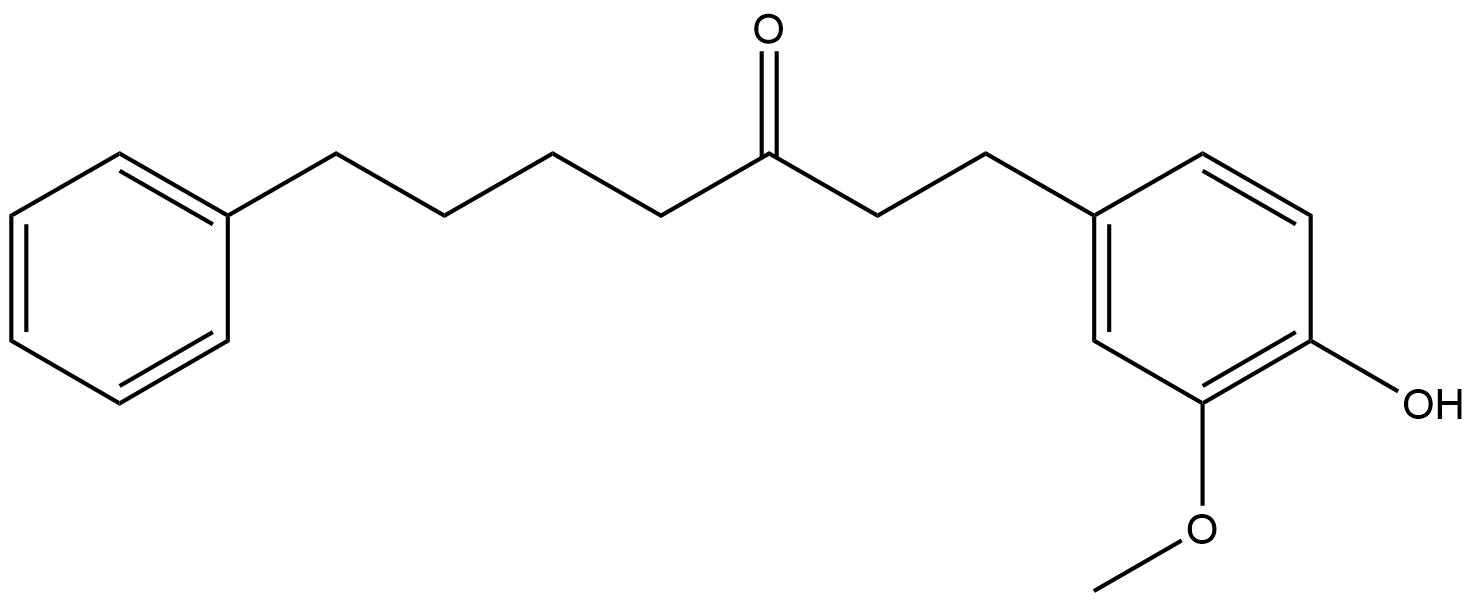


Product name: Yakuchinone A
Synonym name: 1-(4-Hydroxy-3-methoxyphenyl)-7-phenyl-3-heptanone
Catalogue No.: BP4088
Cas No.: 78954-23-1
Formula: C20H24O3
Mol Weight: 312.409
Botanical Source: Alpinia oxyphylla Miq.
Physical Description:
Type of Compound:
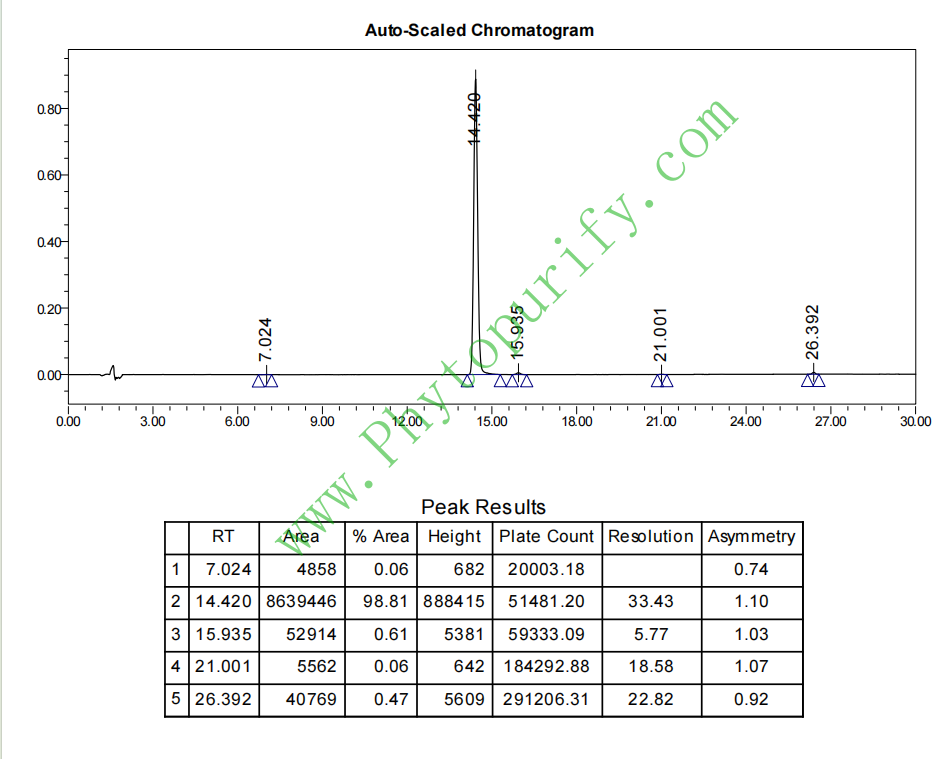
Purity: 95%~99%
Analysis Method: HPLC-DAD or/and HPLC-ELSD
Identification Method: Mass, NMR
Packing: Brown vial or HDPE plastic bottle
Storage: Store in a well closed container, protected from air and light. Put into refrigerate or freeze for long term storage.
Whenever possible, you should prepare and use solutions on the same day. However, if you need to make up stock solutions in advance, we recommend that you store the solution as aliquots in tightly sealed vials at -20℃. Generally, these will be useable for up to two weeks.
The product could be supplied from milligrams to grams
Inquire for bulk scale.
For Reference Standard and R&D, Not for Human Use Directly.
HPLC of Yakuchinone A
Storage conditions:Short-term storage at 2~8℃, long-term storage at -20 ~ -80℃
46.5300
4.1925
4.1912
.0090
8.5106
30.9340
High
94.6499
1.8597
Yes
No
Yes
No
No
No
0.0
No
No
No
No
Yakuchinone A (CAS number: 78954-23-1) is a natural product isolated from the fruit of Alpinia oxyphylla, a plant in the ginger family, and belongs to the ginger flavonoid class. In recent years, oxycodone A has become a hot topic in natural product pharmacology research due to its significant biological activity, especially its potential in anti-cancer, anti-inflammatory, and neuroprotective aspects. This compound can induce cell apoptosis, regulate multiple signaling pathways, and exhibit pharmacological properties of multi-target and multi mechanism. With the increasing demand for neurodegenerative diseases and tumor treatments, the research on oxycodone not only helps to deepen the understanding of the pharmacological mechanisms of natural products, but also provides an important molecular basis for the development of new drugs.
The purpose of this article is to systematically review the chemical structure and physicochemical properties, plant sources, and extraction methods of oxycodone A, with a focus on its pharmacological activity and mechanism of action, exploring its pharmacological properties and pharmacokinetic characteristics, and finally looking forward to its clinical application prospects, aiming to provide scientific references for further research and development of this natural product.
The molecular formula of Yizhi ketone A is C19H20O5, with a molecular weight of 312.4090. Its chemical structure belongs to the ginger flavonoids class, with typical α, β - unsaturated ketone structures and phenolic hydroxyl groups. The structure contains aromatic rings and fatty chains, giving it good lipid solubility. Its LogP value is 4.1925, indicating high hydrophobicity, which is beneficial for penetrating lipid membranes, especially the blood-brain barrier (BBB). The TPSA (topological polar surface area) is 46.53 Å ², indicating moderate polarity that facilitates the binding of molecules to biological targets. Low water solubility (0.0090 mg/mL) suggests limited solubility in aqueous phase, which may affect oral absorption and bioavailability.
Yizhi ketone A does not possess hERG channel inhibitory activity, which reduces the potential risk of cardiac toxicity. The Ames test result is 0, indicating that it has no significant genotoxicity and high safety. These physicochemical properties lay the foundation for its development as a candidate molecule for neuroprotection and anticancer drugs.
Yizhi ketone A mainly comes from the fruit of Alpinia oxyphylla, a plant in the ginger family. Yizhi is a traditional Chinese medicinal herb widely distributed in southern China and Southeast Asia. Its fruit is used in traditional Chinese medicine to invigorate the spleen and kidneys, warm the middle and stop diarrhea. The separation of oxycodone A is usually achieved through organic solvent extraction combined with chromatographic separation techniques.
Common extraction methods include:
Through the above methods, high-purity oxycodone A can be obtained, providing sufficient material basis for subsequent pharmacological research and drug development.
Yizhi ketone A exhibits significant anti-tumor activity and can induce tumor cell apoptosis, inhibit proliferation and migration through various mechanisms. In vitro studies have shown that Yizhi Ketone A can inhibit many cancer cell lines (such as liver cancer, colon cancer, breast cancer, etc.), and induce cell cycle arrest and mitochondrial dependent apoptosis. Its anti-cancer mechanism mainly involves regulating the expression of BCL2 family proteins, activating the caspase 3 (CASP3) pathway, and inhibiting the NF - κ B signaling pathway, reducing the promoting effect of the inflammatory microenvironment on tumors. In addition, Yizhi ketone A can also inhibit the invasion and metastasis of cancer cells, demonstrating potential anti metastatic ability.
Yizhi ketone A reduces inflammation by inhibiting the expression of pro-inflammatory factors such as TNF - α, IL-6, and IL-1 β. Its mechanism of action involves inhibiting the MAPK signaling pathway and NF - κ B activation, reducing the production of inflammatory mediators. In animal model studies, oxycodone A can alleviate inflammatory damage and exhibit good anti-inflammatory effects, indicating its potential application in inflammatory diseases.
Yizhi Ketone A has demonstrated unique advantages in the field of neuroprotection, as it can regulate the survival and function of nerve cells through multiple targets. Its targets include key proteins and enzymes such as BCL2, APP, BACE1, MAPT, SIRT1, MAPK1, ACHE, CASP3, SNCA, and NRF2, which are involved in the pathological processes of neurodegenerative diseases such as Alzheimer's disease and Parkinson's disease.
Yizhi Ketone A can:
The multi-target effects of these substances make Yizhiketone A have broad application prospects in the field of neuroprotection.
The pharmacological activity of Yizhi ketone A depends on its interaction with multiple molecular targets, forming a complex signal network regulation. The main mechanisms of action include:
Inducing cell apoptosis
Yizhi ketone A regulates the expression of BCL2 family proteins, reduces the level of anti apoptotic protein BCL2, increases the expression of pro apoptotic protein BAX, disrupts mitochondrial membrane potential, releases cytochrome C, activates CASP3, initiates apoptotic cascade reaction, and promotes programmed cell death of tumor cells and damaged nerve cells.
Regulation of anti-inflammatory signaling pathway
Yizhi ketone A inhibits the MAPK1 (ERK2) and NF - κ B signaling pathways, reduces the release of pro-inflammatory cytokines, alleviates inflammatory reactions, and protects tissues from inflammatory damage.
anti-oxidative stress
By activating the NRF2 transcription factor, oxycodone A promotes the expression of downstream antioxidant enzymes such as glutathione peroxidase and superoxide dismutase, clears free radicals, and reduces oxidative stress damage to cells.
Neuroprotective mechanism
Yizhi ketone regulates APP and BACE1, reducing the formation of toxic amyloid proteins; Regulating MAPT to prevent neurofibrillary tangles; Activate SIRT1 to promote cell repair and metabolic homeostasis; Inhibit ACHE and enhance nerve conduction; Intervene in SNCA aggregation to alleviate neurotoxicity.
Cross regulation of signaling pathways
Yizhi Ketone A achieves synergistic effects of anti-cancer, anti-inflammatory, and neuroprotective effects through multi-target regulation, reflecting multidimensional pharmacological mechanisms.
The pharmacological parameters of Yizhi ketone A show that it has good potential for drug development:
In terms of pharmacokinetics, oxycodone A exhibits good oral absorption and distribution characteristics in animal models, especially reaching effective concentrations in the central nervous system. Its metabolism is mainly through the phase I and phase II enzyme systems of the liver, and the activity of metabolites still needs further research. Moderate half-life, supporting the design of daily dosing regimens.
Yizhi ketone A, as a multifunctional natural product, has multiple pharmacological activities such as anti-cancer, anti-inflammatory, and neuroprotective effects, demonstrating broad clinical application prospects.
Treatment of neurodegenerative diseases
Yizhi Ketone A has the potential to become a novel drug candidate for treating complex diseases such as Alzheimer's and Parkinson's by regulating pathological processes through multiple targets. Its excellent blood-brain barrier penetration and neuroprotective effects make it potentially effective in cognitive and motor impairments.
neoadjuvant therapy
Yizhi Ketone A induces tumor cell apoptosis and inhibits the inflammatory microenvironment, providing an adjuvant therapy for cancer treatment, especially with potential applications in fields such as liver cancer and colon cancer.
Inflammatory diseases
Its anti-inflammatory effect can be used for the treatment of chronic inflammatory diseases, such as rheumatoid arthritis, inflammatory bowel disease, etc., to alleviate symptoms and improve quality of life.
Challenges and Strategies in Drug Development
Yizhi ketone A has low water solubility and limited bioavailability, and its efficacy needs to be improved through pharmaceutical methods. Future research should focus on structural modification, nanocarrier development, and combination therapy strategies to enhance their clinical conversion rate.
Safety and clinical trials
Yizhi ketone A has shown good safety, and in the future, systematic toxicological evaluation and preclinical research need to be conducted to gradually promote clinical trials and verify its efficacy and safety.
Yizhi ketone A, as an important active ingredient in Yizhi fruit, exhibits multiple potentials in anti-cancer, anti-inflammatory, and neuroprotective effects due to its unique chemical structure and multi-target pharmacological effects. Its good pharmacokinetic parameters and safety provide a solid foundation for the development of new drugs. In the future, with the deepening of pharmacokinetics and mechanism of action research, Yizhi Ketone A is expected to become a new natural medicine for the treatment of major diseases such as neurodegenerative diseases and tumors. Through structural optimization and dosage form innovation, the clinical application prospects of Yizhi Ketone A are broad and worthy of further systematic research and development.
In summary, Yizhi Ketone A not only enriches the research content of natural product pharmacology, but also provides an example for the modern development of natural medicines, with important scientific value and application prospects.
