| Catalog No | Package | Original Price | Price | Inventory | Quantity | Operating |
|---|---|---|---|---|---|---|
| BP4465-5mg | 5mg | $290.00 | Sign in |
|


Storage conditions:Short-term storage at 2~8℃, long-term storage at -20 ~ -80℃
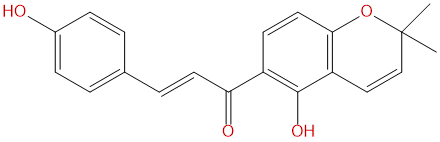
Isobavachromene (CAS number: 52801-22-6) is a naturally occurring chalcone compound, mainly isolated from the traditional Chinese medicine Psoralea corylifolia L. As a natural product with significant biological activity, isopsoralene chalcone has shown great potential in multiple pharmacological effects such as antibacterial and anti-tumor effects, and has gradually become a hot topic in natural product pharmacology research in recent years. Its unique chemical structure endows it with multi-target regulatory ability, especially in tumor related signaling pathways, providing theoretical basis and experimental basis for the development of new anti-tumor drugs.
This review aims to systematically summarize the chemical structure and physicochemical properties, plant sources and extraction methods, pharmacological activity and mechanism of action, pharmacological evaluation and pharmacokinetic characteristics of isopsoralene chalcone. Combined with current research progress, it explores its clinical application prospects and development trends, providing reference for further in-depth research and drug development.
Isopsoralene chalcone belongs to chalcone compounds, with a chemical formula of C20H18O5 and a molecular weight of 322.3600. Its structural feature is a typical 1,3-diketone phenylpropanone skeleton, containing multiple hydroxyl and methoxy substituents, endowing it with strong biological activity. The LogP value of isopsoralene chalcone is 4.4916, indicating that it has good lipid solubility and is beneficial for cell membrane penetration; The TPSA (topological polar surface area) is 66.76 Å ², indicating a good balance between polar and non-polar environments. Low water solubility (0.0246 mg/mL) suggests limited solubility in aqueous phase, which may affect its bioavailability.
In addition, isopsoralene chalcone has a high blood-brain barrier penetration ability, indicating its potential application value in the treatment of central nervous system diseases. The negative result of hERG channel inhibition experiment indicates a low risk of cardiac toxicity. The Ames test result is 0.6, indicating that the genetic toxicity risk of this compound is low and has a good safety basis.
Isopsoralene chalcone is mainly derived from the legume plant Psoralea corylifolia L., which is widely used in traditional Chinese medicine to treat skin diseases, osteoporosis, and other diseases. Psoralea seeds are rich in various chalcone compounds, among which isopsoralene chalcone is one of the important active ingredients.
The extraction method usually uses organic solvent extraction combined with chromatographic separation technology. Common extraction solvents include ethanol, methanol, and their aqueous solutions. Ultrasonic assisted extraction or reflux extraction is used to improve extraction efficiency. The crude extract was subjected to separation and purification steps such as silica gel column chromatography and reverse phase high performance liquid chromatography (RP-HPLC) to obtain high-purity isopsoralene chalcone. In recent years, supercritical CO2 extraction and molecular imprinting techniques have also been applied to the efficient extraction and purification of this compound, significantly improving yield and purity.
Isopsoralene chalcone, as a natural antibacterial agent, exhibits good inhibitory effects on various Gram positive and Gram negative bacteria. In vitro experiments have shown that it has a low minimum inhibitory concentration (MIC) against common pathogenic bacteria such as Staphylococcus aureus, Streptococcus pneumoniae, and Escherichia coli, indicating its potential as an anti infective drug. Its antibacterial mechanism may involve multiple pathways such as cell membrane disruption, protein synthesis inhibition, and cellular metabolic interference.
Isopsoralene chalcone exhibits significant anti proliferative and pro apoptotic effects in various tumor cell lines. Studies have shown that this compound can inhibit the proliferation, migration and invasion of tumor cells, induce cell cycle arrest and apoptosis, and has activity on a variety of tumor types, such as breast cancer, lung cancer, liver cancer, etc.
In addition, isopsoralene chalcone has shown potential for anti angiogenesis and anti metastasis, and can inhibit tumor growth and spread by regulating various signaling molecules in the tumor microenvironment.
The anti-tumor mechanism of isopsoralene chalcone involves multiple molecular targets and signaling pathways, reflecting its multi-target regulatory characteristics.
MCL1 and BCL2 As anti apoptotic proteins, MCL1 and BCL2 play a crucial role in tumor cell survival. Isopsoralene chalcone promotes mitochondrial mediated apoptosis by downregulating the expression of these two proteins.
STAT3 The STAT3 signaling pathway plays an important role in tumor cell proliferation, immune escape, and drug resistance. Isopsoralene chalcone can inhibit the phosphorylation and nuclear translocation of STAT3, block its transcriptional activity, and inhibit tumor growth.
MMP2 Matrix metalloproteinase-2 is involved in the degradation and metastasis of tumor cell matrix. This compound reduces the invasive ability of tumor cells by inhibiting MMP2 activity.
TOP1 and TOP2A DNA topoisomerases are important enzymes for cell proliferation. Isopsoralene chalcone inhibits TOP1 and TOP2A activity, blocks DNA replication and transcription, and induces tumor cell death.
HIF1A Hypoxia inducible factor 1 alpha regulates the adaptability of tumor cells in low oxygen environments. Isopsoralene chalcone inhibits HIF1A expression, hinders tumor hypoxia adaptation and angiogenesis.
MAPK1 The MAPK signaling pathway is involved in cell proliferation and differentiation. This compound affects the growth and apoptosis of tumor cells by regulating MAPK1 activity.
ESR1 and CYP19A1 Estrogen receptor 1 and aromatase play critical roles in hormone dependent tumors. Isopsoralene chalcone regulates these two targets, affects hormone signaling pathways, and inhibits tumor cell proliferation.
In summary, isopsoralene chalcone exerts its anti-tumor effect through multi-target and multi pathway synergistic effects, demonstrating strong pharmacological activity and therapeutic potential.
The pharmacological evaluation of isopsoralene chalcone shows that it has good prospects for drug development. Its molecular weight is moderate (322.36 Da), in accordance with Lipinski's rule, with a LogP value of 4.49, indicating its moderate lipid solubility, which is beneficial for cell membrane penetration and in vivo distribution. The TPSA is 66.76 Å ², indicating that its polarity is moderate and beneficial for oral absorption.
Low water solubility (0.0246 mg/mL) may limit its oral bioavailability and needs to be improved through formulation optimization or structural modification. The high penetration ability of the blood-brain barrier suggests its potential application value in the treatment of central nervous system diseases. HERG channel inhibition is negative, reducing the risk of cardiac toxicity. The Ames test results show that its genetic toxicity risk is low and its safety is good.
In terms of pharmacokinetics, existing research is relatively limited, and the metabolic pathways in vivo have not been fully elucidated. Preliminary data indicates that the compound has good stability and distribution characteristics in vivo, but its bioavailability and metabolic kinetic parameters still need further systematic research.
As a natural product with multiple pharmacological activities, isopsoralene chalcone has shown extensive clinical application potential. Its antibacterial activity makes it a potential candidate molecule for new anti infective drugs, especially in the context of increasingly severe antibiotic resistance, and the development of new antibacterial agents is of great significance.
In the field of anti-tumor therapy, isopsoralene chalcone regulates the proliferation, apoptosis, and metastasis of tumor cells through multiple targets, providing a new approach for tumor treatment. Especially its regulation of key molecules such as STAT3, MCL1, BCL2, etc., may overcome the resistance problem of traditional chemotherapy drugs and improve treatment efficacy.
Future research should focus on in-depth analysis of its pharmacokinetic characteristics, structural optimization to enhance water solubility and bioavailability, as well as the development of combination drug strategies based on its multi-target mechanism of action. At the same time, conducting systematic toxicological evaluations and preclinical studies lays a solid foundation for its clinical translation.
In addition, utilizing modern drug design technologies such as computer-aided drug design (CADD) and nano drug delivery systems is expected to further enhance the efficacy and safety of isopsoralene chalcone, promoting its clinical application.
As a natural chalcone compound derived from the traditional Chinese medicine Psoralea, isopsoralene chalcone has shown broad research and application prospects in the fields of antibacterial and anti-tumor due to its unique chemical structure and multi-target pharmacological activity. Its good pharmacological parameters and safety foundation provide strong support for the development of new drugs.
Although the understanding of its mechanism of action and pharmacokinetics is not yet complete, with the advancement of molecular biology and medicinal chemistry techniques, isopsoralene chalcone is expected to become an important candidate molecule for natural product drug development. In the future, through interdisciplinary cooperation and in-depth exploration of its potential, it will provide new opportunities for the modernization and precision treatment of natural medicines.
