Introduction/Overview
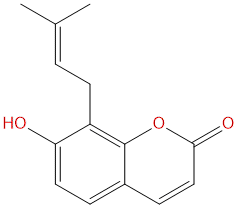
Natural products have long been an important source of innovative drug discovery, and their structural diversity and wide range of biological activities provide valuable lead compounds for the treatment of various diseases. Osthenol, chemical name 7-hydroxy-8- (3-methylbut-2-en-1-yl) -2H-1-benzopyran-2-one, CAS number 484-14-0, is a natural coumarin compound isolated from various medicinal plants. In recent years, resveratrol has attracted much attention due to its unique and multi-target pharmacological activity, especially in the fields of neurological diseases and oncology, where it has shown great research potential. One of its most prominent features is its ability to act as a reversible and highly selective competitive inhibitor of human monoamine oxidase A (hMAO-A), laying the foundation for its application in the treatment of emotional disorders such as depression. At the same time, its activities in anti Helicobacter pylori, antifungal, antibacterial, and inducing apoptosis of colon cancer cells reveal its potential as a pleiotropic drug molecule. This article aims to systematically review the chemical properties, plant sources, pharmacological activities, mechanisms of action, medicinal properties, and clinical application prospects of Wangcao phenol, in order to provide comprehensive scientific references for the in-depth research and development of this compound.
Chemical structure and physicochemical properties
Wangcao phenol is a derivative of linear furan coumarin (or 7-hydroxycoumarin). Its basic parent nucleus is benzo [a] - pyranone (coumarin), which is substituted by a hydroxyl group at position 7 and connected to an isopentenyl (3-methylbut-2-en-1-yl) side chain at position 8. This structural feature is the key to its biological activity. The introduction of isopentenyl significantly enhances its lipophilicity and hydrophobic interactions with certain enzyme active centers, which may be closely related to its high selectivity and inhibitory effect on hMAO-A.
Its molecular formula is C14H14O3 and its molecular weight is 230.2630. The calculated lipid water partition coefficient (LogP) is 3.3091, indicating that resveratrol has moderate lipophilicity, which facilitates its penetration through cell membranes and the blood-brain barrier. The topologically polar surface area (TPSA) is 50.44 Å ², which is relatively small and further supports its good membrane permeability. The low water solubility prediction value (about 0.0866 mg/mL) suggests that solubilization strategies may need to be considered in formulation development. The key pharmacological prediction shows that resveratrol has a high blood-brain barrier permeability potential, which is highly consistent with its localization of the central nervous system target hMAO-A. In addition, its hERG inhibition risk prediction is negative, and the preliminary Ames test result is 0.6 (usually considered negative if less than 1.5), indicating a low potential mutagenic risk and providing preliminary positive signals for its safety assessment.
Plant sources and extraction methods
Wangcao phenol is widely present in various medicinal plants such as the Umbelliferae, Rutaceae, and Mulberry families. Its main plant sources include:
1. cnidium fruit The fruit of the traditional Chinese medicine Cnidium monnieri (L.) Cuss is one of the classic sources of resveratrol. This herb is traditionally used to warm the kidneys, strengthen yang, dry dampness, and kill insects.
2. Chinese angelica It has also been found in plants belonging to the same genus, such as Angelica sinensis (Oliv.) Diels.
3. rue family Some Ruta plants also contain this ingredient.
4. Other sources There are also sporadic reports in some citrus and mulberry plants.
The extraction and separation of resveratrol usually follow the conventional process of natural product chemistry. Firstly, the dried plant material (such as snake bed fruit) is crushed and subjected to leaching or reflux extraction using organic solvents (such as methanol, ethanol, or ethyl acetate). The crude extract obtained is concentrated under reduced pressure and then separated and purified by a series of chromatographic techniques, including silica gel column chromatography, gel column chromatography (such as Sephadex LH-20) and high performance liquid chromatography (HPLC). Their separation is often monitored based on the UV absorption characteristics of coumarin compounds (usually with strong absorption at 250-350 nm). Structural identification is accomplished through the comprehensive use of spectroscopic techniques such as nuclear magnetic resonance (NMR, including 1H and 13C NMR), mass spectrometry (MS), and infrared spectroscopy (IR).
Pharmacological activity research
Wangcao phenol exhibits diverse pharmacological activities, mainly covering three major fields: the nervous and psychiatric system, anti infection, and anti-tumor.
1. Neuropsychiatric system activity
The most prominent activity of Wangcao phenol is as Selective hMAO-A inhibitor Research has shown that its half maximal inhibitory concentration (IC50) for hMAO-A is 0.74 μ M, with an inhibition constant (Ki) of 0.26 μ M, while its inhibitory activity for hMAO-B is weak, exhibiting high subtype selectivity. MAO-A is a key enzyme that degrades monoamine neurotransmitters such as serotonin (5-HT), norepinephrine (NE), and dopamine (DA). Wangcao phenol exerts potential antidepressant and anti anxiety effects by reversibly competitively inhibiting MAO-A and increasing the levels of these monoamine neurotransmitters in synaptic cleft. This mechanism of action may have better safety and less "cheese effect" (tyramine reaction) compared to classical non selective, irreversible MAO inhibitors such as phenylhydrazine.
2. Anti infective activity
Wangcao phenol exhibits inhibitory activity against various pathogenic microorganisms.
* Anti Helicobacter pylori Research has shown that resveratrol has an inhibitory effect on Helicobacter pylori. Its function may involve multiple targets related to the pathogenicity and colonization of Helicobacter pylori, such as DNA gyrase B subunit (GYRB, affecting DNA replication), urease related proteins (UREA, UreB, neutralizing gastric acid), neutrophil activating protein (HPNAP), cytotoxin related gene A protein (CagA), vacuolating toxin A (VacA), bacterial chaperone HpDnaK, and outer membrane protein HopQ. This multi-target mode of action may help overcome bacterial resistance.
* Antifungal and antibacterial Wangcao phenol also has a certain inhibitory effect on various fungi and bacteria, and its mechanism may be related to the destruction of microbial cell membrane integrity or inhibition of its key enzyme activity.
3. Antitumor activity
Wangcao phenol has shown anti proliferative effects in tumor models such as colon cancer. It can effectively inhibit the growth of colon cancer cells, induce apoptosis, and arrest the cell cycle in the G1 phase. These effects suggest that resveratrol may exert anticancer effects by intervening in the signaling pathways and cell cycle regulation mechanisms of tumor cells.
Mechanism of action and molecular targets
The multiple pharmacological activities of resveratrol stem from its interactions with different molecular targets.
1. Inhibition of hMAO-A
Wangcao phenol binds to the active center of hMAO-A in a competitive and reversible manner. The coumarin mother nucleus may undergo π - π stacking or polar interactions with the flavin adenine dinucleotide (FAD) cofactor in the enzyme active center, while the isopentenyl side chain may be embedded in the hydrophobic pocket of the enzyme, thereby preventing substrates (such as 5-HT) from entering the catalytic site and inhibiting oxidative deamination metabolism of neurotransmitters. This reversible binding property is the molecular basis for its safety advantage.
2. Regulation of the PI3K/AKT signaling pathway
In anti colon cancer research, Wangcao phenol has been shown to inhibit the phosphatidylinositol 3-kinase/protein kinase B (PI3K/AKT) signaling pathway. This pathway is the core pathway that regulates cell survival, proliferation, and metabolism, and is often overactivated in tumors. Wangcao phenol inhibits this pathway, leading to downstream dephosphorylation of pro apoptotic proteins (such as BAD), reduction of pro survival proteins, and upregulation of cyclin dependent kinase inhibitors (such as p21, p27), ultimately causing G1 phase arrest of the cell cycle and mitochondrial pathway induced apoptosis.
3. Multi targeted action against Helicobacter pylori
The mechanism of Wangcao phenol against Helicobacter pylori is relatively complex and may be a multi-target synergistic effect:
* Inhibition of DNA gyrase (GYRB)Interference with bacterial DNA replication.
* Inhibition of urease (UREA, UreB)Weakening the survival ability of bacteria in the stomach acid environment.
* Interference with virulence factors It is possible to weaken the inflammatory damage and immune escape mediated by virulence factors such as CagA, VacA, and HPNAP by combining them.
* Affects molecular partners and adhesion Acting on HpDnaK and HopQ, it may affect the correct folding of bacterial proteins and their adhesion and colonization to gastric epithelial cells.
Evaluation of drug properties and pharmacokinetics
Based on its physicochemical parameters and preliminary biological data, Wangcao phenol has shown certain potential as a drug, but comprehensive and in-depth pharmacokinetic and toxicological studies are still needed.
- Absorption and distribution Moderate LogP values and small TPSA indicate that it may have good gastrointestinal absorption and transmembrane transport ability after oral administration. Its high blood-brain barrier permeability prediction value provides a key advantage for it as a central nervous system drug (such as antidepressant), which is beneficial for targeting MAO-A in the brain.
- Metabolism and excretion As a derivative of coumarin, resveratrol may undergo extensive phase I and phase II metabolism in vivo. Phase I metabolism may involve the oxidation of its benzene ring or isopentenyl group by cytochrome P450 enzymes (CYPs), while phase II binding reactions may include glucuronidation and sulfation. Its metabolites, main metabolic enzymes, and excretion pathways (via bile or urine) are yet to be clarified through experiments.
- Preliminary Safety Assessment HERG inhibition negativity reduces the risk of inducing QT interval prolongation and apical torsion ventricular tachycardia in the heart. The preliminary Ames test negative results indicate a low risk of genetic toxicity. However, a comprehensive preclinical safety evaluation, including assessment of acute toxicity, chronic toxicity, reproductive toxicity, and potential drug drug interactions associated with the reversible MAO-A inhibitor properties (especially the risk of developing serotonin syndrome when combined with other drugs acting on the 5-HT system), is an essential step in future development.
- Preparation considerations Low water solubility may affect the dissolution and bioavailability of oral formulations, and may require the use of formulation techniques such as solid dispersion, cyclodextrin inclusion, or nanocrystals for improvement.
Clinical application prospects and prospects
The multi-target pharmacological properties of resveratrol have brought broad application prospects in multiple therapeutic fields, but also face challenges.
1. Treatment for depression
As a highly selective and reversible hMAO-A inhibitor, resveratrol is an excellent lead compound for the development of novel antidepressants. Compared with existing MAO inhibitors, its potential advantage lies in better safety and tolerability. Future research directions include optimizing its structure to enhance effectiveness and selectivity; Conduct systematic antidepressant behavioral efficacy evaluation (such as forced swimming test, tail suspension test); Conduct in-depth research on the long-term effects of its administration on the monoaminergic nervous system.
2. Diseases related to Helicobacter pylori infection
Given the increasingly severe problem of drug resistance in Helicobacter pylori, the multi-target anti Helicobacter pylori activity of Wangcao phenol is of great value. It can be used as an adjuvant therapy drug or in combination with other antibiotics to enhance efficacy and reduce resistance. It is necessary to conduct in-depth research on its synergistic effect with antibiotics in existing triple/quadruple therapies, and evaluate its stability and activity in the complex environment of the stomach.
3. Adjuvant therapy or chemoprevention for colon cancer
Wangcao phenol induces apoptosis and cell cycle arrest by inhibiting the PI3K/AKT pathway, providing a new approach for the treatment of colon cancer. It can be explored as an adjuvant therapy drug, combined with conventional chemotherapy drugs such as 5-fluorouracil and oxaliplatin, to enhance efficacy or reduce chemotherapy resistance. The properties of its natural products also make it of research value in the chemoprevention of colon cancer.
4. Challenges and Future Directions
Despite the promising prospects, the clinical application of Wangcao phenol still needs to overcome many challenges:
* Optimization of drug efficacy intensity Its IC50 is at the micromolar level, and as a drug lead, it may require further structural modification to enhance its potency.
* Comprehensive analysis of pharmacokinetic properties Complete ADME (absorption, distribution, metabolism, excretion) research data is required to clarify its in vivo processes, bioavailability, and main metabolite activity.
* Deep exploration of the mechanism of action In addition to known targets, it is necessary to use chemical biology methods such as affinity fishing and proteomics to discover potential new targets and fully understand their functional networks.
* Preclinical and clinical research After completing the preclinical safety evaluation of the system, clinical trials can be gradually promoted to verify its effectiveness, safety, and optimal dosing regimen in humans.
Conclusion
Wangcao phenol, as a coumarin natural product derived from traditional medicinal plants, has become a highlight molecule in natural product pharmacology research due to its unique selective inhibition of hMAO-A activity, multi-target anti Helicobacter pylori effect, and anti colon cancer effect exerted by regulating the PI3K/AKT pathway. Its excellent blood-brain barrier permeability and preliminary safe pharmacological prediction have laid a solid foundation for its application in the treatment of neurological diseases, especially depression. At the same time, its activity in anti infection and anti-tumor demonstrates the charm of natural product pleiotropy. However, there is still a long way to go from lead compounds to candidate drugs and ultimately to marketed drugs. Future research should focus on optimizing its structure, improving its pharmacokinetic properties, elucidating its mechanism of action, and conducting systematic preclinical development. The research on Wangcao phenol is not only expected to provide new treatment strategies for related diseases, but also further confirms the eternal value of the traditional path of discovering and optimizing drug leads from natural treasure trove.