Introduction/Overview
Natural products, as an important source of drug discovery, play an irreplaceable role in the long struggle between humans and diseases. From ancient plant therapies to the development of modern targeted drugs, the diverse secondary metabolites in nature continue to provide valuable lead compounds for pharmacological research. Among numerous natural products with biological activity, flavonoids and their related compounds have attracted much attention due to their wide pharmacological activity and relatively low toxicity. Odoriflavene, derived from the traditional medicinal plant Odoriflavene(Dalbergia odorifera T. The phenolic compounds of Chen's root and heartwood have gradually entered the field of researchers in recent years, and their potential value in cardiovascular protection is particularly prominent.
Fragrant sandalwood, also known as Hainan Huanghua pear, is not only a precious redwood material, but also a traditional Chinese medicine with a long history. Its heartwood is considered to have the effects of promoting qi circulation, activating blood circulation, relieving pain, and stopping bleeding in traditional Chinese medicine theory, and is commonly used to treat conditions such as traumatic injuries and heart and stomach qi pain. Modern pharmacological research has confirmed that the extract of Dalbergia odorifera has various biological activities such as anti-inflammatory, antioxidant, anti thrombotic, and vasodilatory effects, which are closely related to the abundant flavonoids, isoflavones, chalcones, and new flavonoids it contains. The aromatic yellow hydrocarbon is one of the characteristic components isolated from this complex chemical composition group.
Although Dalbergia odorifera is not the most abundant component in Dalbergia odorifera, its unique chemical structure - an isopentenyl side chain with an isopentenyl skeleton - endows it with special biological activity potential. Preliminary studies have shown that aromatic hydrocarbons can intervene in the pathological process of cardiovascular diseases through multi-target and multi pathway approaches, demonstrating great potential as a new type of cardiovascular protective agent. However, similar to many natural products, the research on aromatic hydrocarbons is still in its early stages, and its in-depth pharmacological mechanisms, systematic pharmacokinetic characteristics, and optimization of drug properties remain to be elucidated. This article aims to provide a systematic review of the research progress on the chemical properties, plant sources, pharmacological activities, mechanisms of action, and pharmacological evaluation of aromatic hydrocarbons, in order to provide comprehensive references for the subsequent research and development of this natural product.
Chemical structure and physicochemical properties
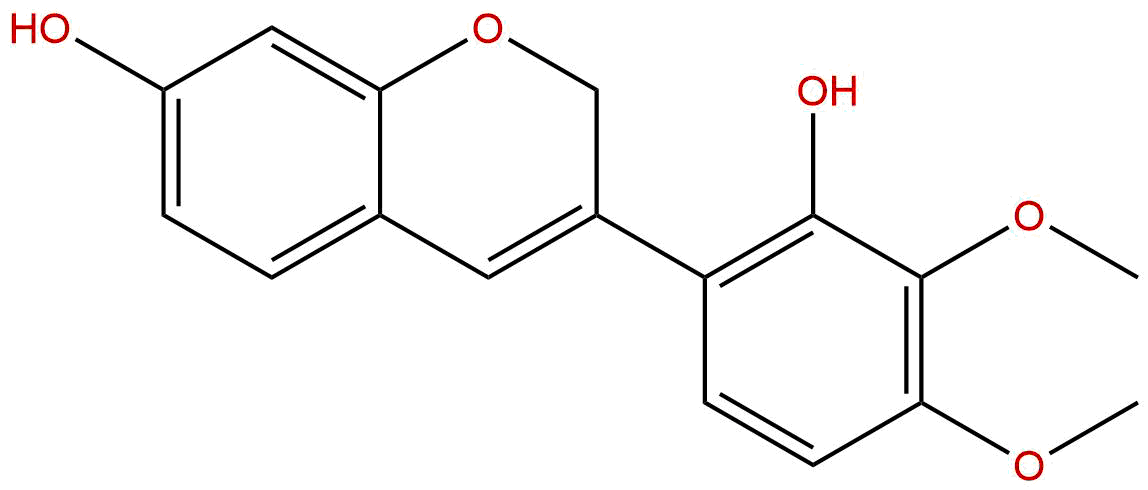
The chemical structure of aromatic hydrocarbons is the basis of their biological activity. From a chemical classification perspective, aromatic hydrocarbons belong to the subfamily of isoflavones in the flavonoid class. The basic skeleton of isoflavones is composed of two benzene rings (A and B) connected by an oxygen-containing heterocyclic ring C, but unlike classical flavonoids (2-phenylchromenone), the C ring of isoflavones is a saturated dihydropyran ring, and the B ring is attached to the 3rd carbon atom of the C ring. The uniqueness of aromatic hydrocarbons lies in the presence of an isopentenyl (3,3-dimethylallyl) side chain attached to their B ring, which significantly enhances the lipophilicity of the molecule and may affect its interaction with biological targets.
Specifically, the chemical name of the aromatic yellow hydrocarbon is 3- (2,4-dihydroxyphenyl) -8-isopentenyl-4H-chroman-4-one, or according to systematic nomenclature, it can be referred to as 3- (2,4-dihydroxyphenyl) -8- (3-methyl-2-buten-1-yl) -2,3-dihydro-4H-chroman-4-one. Its molecular formula is C ₂₀ H ₂₀ O ₄, and its molecular weight is 300.3100 g/mol. The presence of multiple phenolic hydroxyl groups (- OH) in the molecule endows it with certain polarity and antioxidant capacity, while the isopentenyl side chain increases its lipophilicity, allowing it to better penetrate biological membranes.
In terms of physical and chemical properties, according to calculation predictions, the lipid water partition coefficient (LogP) of the aromatic yellow hydrocarbon is 3.1143, indicating its moderate to high lipophilicity, which is consistent with its structural characteristics of containing isopentenyl side chains. Its topological polar surface area (TPSA) is 68.1500 Å ², which is lower than the upper limit of 140 Å ² commonly considered for most oral drugs, indicating its good potential for cell membrane permeability. In terms of water solubility, the predicted water solubility value is 0.0448 mg/mL, which belongs to the category of insoluble in water, which may pose challenges to its formulation development and oral bioavailability. It is worth noting that the predicted results show that aromatic hydrocarbons have a high blood-brain barrier (BBB) penetration ability, which suggests that they may act on central nervous system targets or have potential therapeutic value for brain diseases such as cerebral ischemia-reperfusion injury. In addition, the predicted result of hERG inhibition is' no ', indicating a low risk of causing prolonged QT interval and fatal arrhythmia in the heart, which is a favorable safety signal. The Ames test predicted a value of 0.6, indicating a low risk of mutagenicity and low genetic toxicity. These preliminary pharmacological parameters provide positive prospects for the further development of aromatic hydrocarbons.
Plant sources and extraction methods
The main plant source of aromatic hydrocarbons is Fabaceae, a plant in the genus Dalbergia(Dalbergia odorifera T. Chen), Also known as Hainan Huanghua Pear or Fragrant Yellow Sandalwood. This plant is mainly distributed in Hainan Island, China, and its heartwood is the authentic source of the precious Chinese medicinal herb "Jiangxiang". In addition to Dalbergia odorifera, there are other plants in the Dalbergia genus, such as Indian Dalbergia odorifera(Dalbergia sissoo)And Brazilian ebony(Dalbergia nigra)Similarly, it may also contain trace amounts of aromatic hydrocarbons or their structural analogues, but sandalwood heartwood is currently the most important and reliable source known.
In plants, aromatic hydrocarbons mainly accumulate in the dark heartwood of roots and stems, with extremely low levels in the sapwood. This distribution pattern is consistent with its role as a plant defense substance, with heartwood as the "core" of trees, rich in various secondary metabolites that are antibacterial and insect resistant. The biosynthetic pathway of aromatic hydrocarbons belongs to the branch of flavonoids, and their precursors are derived from the phenylpropane metabolic pathway and the acetic acid malonic acid pathway. The introduction of isopentenyl side chains is catalyzed by isopentenyl transferase, which is the key to forming the characteristic structure of aromatic hydrocarbons.
For the extraction of aromatic hydrocarbons, organic solvent extraction method is usually used. Due to its strong lipophilicity, commonly used extraction solvents include methanol, ethanol, ethyl acetate, or their mixed solvents. The classic extraction process is as follows: the dried sandalwood heartwood is crushed into coarse powder, and then soaked or percolated with a certain concentration (such as 70% -95%) of ethanol or methanol at room temperature or heating conditions for extraction. After the extraction solution is concentrated under reduced pressure, the total extract is obtained. Subsequently, the total extract was preliminarily separated through liquid-liquid extraction using commonly used solvent systems such as petroleum ether, ethyl acetate, n-butanol, and water. Due to the moderate polarity of aromatic hydrocarbons, they are usually enriched in the ethyl acetate extraction site.
Further separation and purification require the use of various chromatographic techniques. Silica gel column chromatography is the most commonly used method, which uses gradient elution systems such as petroleum ether ethyl acetate or chloroform methanol to effectively separate aromatic hydrocarbons from other flavonoids and isoflavone components. In addition, Sephadex LH-20 gel column chromatography is also commonly used in the final refining step to remove impurities by molecular sieve and adsorption. For more efficient separation, preparative high-performance liquid chromatography (Pre HPLC) is an ideal choice for obtaining high-purity aromatic yellow hydrocarbon monomers. In recent years, high-speed countercurrent chromatography (HSCCC) has also been applied as a solid-liquid distribution chromatography technique without solid carriers for the separation of active ingredients in Dalbergia odorifera, with advantages such as high sample recovery rate and low risk of irreversible adsorption. During the extraction and separation process, thin-layer chromatography (TLC) or high-performance liquid chromatography (HPLC) is usually used for tracking and monitoring to determine the enrichment of the target compound.
Pharmacological activity research
The pharmacological activity research of Dalbergia odorifera mainly focuses on its protective effect on the cardiovascular system, which is highly consistent with the traditional efficacy and modern pharmacological discoveries of Dalbergia odorifera. Existing evidence suggests that aromatic hydrocarbons exert cardiovascular protective effects through multiple mechanisms.
1. Anti atherosclerosis effect
Atherosclerosis is the pathological basis of many cardiovascular diseases. Dalbergia odorifera yellow hydrocarbon showed a variety of anti atherosclerosis potential. Firstly, it can inhibit the inflammatory response of vascular endothelial cells. Research has shown that aromatic hydrocarbons can significantly reduce the expression of adhesion molecules (such as ICAM-1, VCAM-1) and selectins (such as SELP) in endothelial cells induced by tumor necrosis factor - α (TNF - α) or oxidized low-density lipoprotein (ox LDL). These adhesion molecules are key mediators of leukocyte adhesion to endothelial cells and migration to the lower endothelium, and their down-regulation helps prevent the early formation of atherosclerotic plaque. Secondly, aromatic hydrocarbons may exert their effects by regulating lipid metabolism. One of its targets, HMGCR, is the rate limiting enzyme in cholesterol biosynthesis, which is the same as the target of statins. Although there is currently a lack of strong evidence for the direct inhibition of HMGCR activity by aromatic hydrocarbons, based on molecular docking and network pharmacology predictions, it may indirectly affect the activity or expression of this enzyme, thereby regulating cholesterol levels in the body. In addition, the potential regulatory effect on PPARG may also improve insulin sensitivity and inhibit macrophage foam, further delaying the process of atherosclerosis.
2. Vasodilation and hypotensive effects
The normal maintenance of vascular function is crucial for blood pressure regulation. It has been confirmed that aromatic hydrocarbons have direct vasodilatory activity. In the ex vivo vascular ring experiment, aromatic hydrocarbons can relax rat aortic rings pre contracted by norepinephrine or potassium chloride in a concentration dependent manner. Its mechanism involves multiple aspects: on the one hand, it may promote the production and release of nitric oxide (NO) by activating nitric oxide synthase (NOS3) in endothelial cells. NO, as an important endothelial derived vasodilator, diffuses to vascular smooth muscle cells, activates guanylate cyclase, and leads to vasodilation; On the other hand, aromatic hydrocarbons may also directly act on vascular smooth muscle cells, inhibiting voltage dependent calcium channels or receptor operated calcium channels, reducing calcium ion influx, and thus relaxing smooth muscles. In addition, its potential inhibitory effect on angiotensin-converting enzyme (ACE) may also synergistically exert a hypotensive effect by reducing the production of angiotensin II and the degradation of bradykinin.
3. Anti myocardial ischemia-reperfusion injury
Myocardial ischemia-reperfusion injury is a common complication after reperfusion therapy for acute myocardial infarction. Aromatic hydrocarbons have shown potential in myocardial protection. Its mechanism of action may be related to the inhibition of oxidative stress and cell apoptosis. The phenolic hydroxyl groups in aromatic hydrocarbons endow them with certain free radical scavenging ability, which can reduce the excessive reactive oxygen species (ROS) generated during ischemia-reperfusion, thereby alleviating oxidative damage. At the same time, it may activate the PI3K/AKT signaling pathway, particularly upregulating the phosphorylation level of AKT1, thereby inhibiting mitochondrial pathway apoptosis and protecting myocardial cells from ischemia-reperfusion induced death. In addition, its inhibition of adhesion molecules such as ICAM-1 can also reduce the infiltration and activation of neutrophils in myocardial tissue after reperfusion, alleviating secondary damage caused by inflammatory reactions.
4. Antiplatelet aggregation and antithrombotic effects
Thrombosis is the direct cause of cardiovascular and cerebrovascular events, such as myocardial infarction and stroke. The aromatic yellow hydrocarbon exhibits certain anti platelet aggregation activity. It may inhibit the expression of platelet surface receptors (such as P-selectin SELP) or interfere with platelet signaling pathways to prevent platelet adhesion, aggregation, and release reactions. Although its antiplatelet activity may be weaker than classical antiplatelet drugs, as a multi-target natural product, its comprehensive antithrombotic effect may be milder and have fewer side effects.
Mechanism of action and molecular targets
The pharmacological activity of aromatic hydrocarbons is not derived from a single target, but is achieved through a network regulation mode of "multi-target, multi pathway". Based on network pharmacology and molecular docking research, combined with experimental verification, a series of key molecular targets related to the cardiovascular protection of aromatic hydrocarbons have been preliminarily revealed.
1. Inflammatory and endothelial function related targets
- SELP (P-selectin)As a cell adhesion molecule, SELP is expressed on the surface of activated platelets and endothelial cells, mediating the initial rolling adhesion of white blood cells to the vascular wall. Reducing aromatic hydrocarbons may alleviate vascular inflammation and thrombosis by downregulating the expression of SELP, inhibiting the recruitment of inflammatory cells.
- ICAM-1 and VCAM-1 (intercellular adhesion molecule-1 and vascular cell adhesion molecule-1)They are members of the immunoglobulin superfamily, expressed on endothelial cells, and bind to integrins on the surface of white blood cells, promoting firm adhesion and transendothelial migration of white blood cells. Dalbergia odorifera yellow hydrocarbon inhibits the up regulation of ICAM-1 and VCAM-1 induced by TNF - α, which is one of the important mechanisms of its anti atherosclerosis effect.
2. Targets related to lipid metabolism and blood pressure regulation
- HMGCR (3-hydroxy-3-methylglutarate monoacyl CoA reductase)The rate limiting enzyme for cholesterol synthesis. Aromatic hydrocarbons may directly or indirectly inhibit HMGCR activity, reduce endogenous cholesterol synthesis, and thus lower blood lipid levels.
- PPARG (Peroxisome proliferator activated receptor gamma)Nuclear receptor transcription factors play a central role in adipocyte differentiation, lipid storage, and insulin sensitivity. Dalbergia odorifera may be used as an activator or regulator of PPARG to improve insulin resistance and inhibit the transformation of macrophages into foam cells.
- ACE (angiotensin converting enzyme)The key enzyme of the renin-angiotensin system (RAS) catalyzes the conversion of angiotensin I into the potent vasoconstrictor angiotensin II. The inhibition of ACE by aromatic hydrocarbons is an important mechanism for their vasodilation and hypotensive effects.
3. Targets related to cell survival and vascular function
- AKT1 (protein kinase B alpha)The core node of the PI3K/AKT signaling pathway regulates cell survival, proliferation, metabolism, and angiogenesis. By activating the phosphorylation of AKT1, aromatic hydrocarbons can inhibit the apoptosis of cardiomyocytes and endothelial cells, exerting a cell protective effect.
- NOS3 (endothelial nitric oxide synthase)Responsible for catalyzing the production of NO from L-arginine in endothelial cells. Flavonoids may enhance the activity of NOS3 and promote NO production by activating AKT1 or calmodulin dependent pathways, thereby relaxing blood vessels, inhibiting platelet aggregation, and leukocyte adhesion.
- ADRB2 (β 2-adrenergic receptor)Mainly distributed in vascular smooth muscle and bronchial smooth muscle, it causes vasodilation after excitation. It is not clear whether the aromatic yellow hydrocarbon directly acts on ADRB2, but it may indirectly regulate vascular tone by affecting its downstream signaling pathways.
- KCNH2 (hERG potassium channel)Although it is predicted that aromatic hydrocarbons do not inhibit hERG, the importance of this target lies in its direct association with cardiac repolarization and arrhythmia risk. The lack of inhibitory effect of aromatic hydrocarbons on hERG is an important indicator of its good cardiac safety.
In summary, aromatic hydrocarbons form a synergistic network by acting on inflammatory targets such as SELP, ICAM-1, VCAM-1, metabolic targets such as HMGCR and PPARG, as well as vascular function and cell survival targets such as ACE, NOS3, AKT1, to jointly exert their cardiovascular protective effects. This multi-target mode of action is its unique advantage over single target chemical drugs, but it also increases the complexity of studying the mechanism of action.
Evaluation of drug properties and pharmacokinetics
The evaluation of drug properties is a crucial step in transitioning natural products from laboratory research to clinical applications. The preliminary pharmacological parameters of aromatic hydrocarbons have shown some positive signals, but they also face common challenges from natural products.
1. Physical and chemical properties and drug like properties
As mentioned earlier, the molecular weight of aromatic hydrocarbons (300.31 Da) meets the requirement of Lipinski's Rule of Five for molecular weight less than 500. Its LogP value (3.11) is also within the ideal range (-0.4 to 5.6), indicating moderate lipophilicity. The TPSA value is 68.15 Å ², far below the upper limit of 140 Å ², indicating its good oral absorption potential. However, its water solubility is poor (0.0448 mg/mL), which may result in low dissolution after oral administration, thereby affecting bioavailability. Therefore, improving water solubility is a key issue that needs to be addressed in the development of aromatic hydrocarbons. Possible strategies include preparing salts, using cyclodextrin inclusion complexes, solid dispersions, or lipid nanocarriers.
2. Pharmacokinetic characteristics
At present, there is very limited experimental data on the pharmacokinetics of aromatic hydrocarbons in vivo, and most of the information comes from computational predictions. The predicted results show that it has high blood-brain barrier penetration, which is advantageous for treating brain diseases such as cerebral ischemia, but may also increase the risk of central nervous system side effects. Its metabolic pathways are speculated to mainly involve phase I metabolism (such as oxidation and reduction) and phase II metabolism (such as glucuronidation and sulfation) in the liver. Phenolic hydroxyl groups are common sites in phase II metabolism, which may lead to significant first pass effects after oral administration, further reducing bioavailability. In addition, the isopentenyl side chain may also undergo metabolic reactions such as epoxidation. Detailed in vivo absorption, distribution, metabolism, and excretion (ADME) studies, including oral bioavailability determination, tissue distribution, metabolite identification, and excretion pathway analysis in animal models, will be the focus of future research.
3. Safety evaluation
The preliminary toxicity prediction results are encouraging. The prediction of hERG inhibition as' no 'indicates a lower risk of causing apical torsion type ventricular tachycardia, which is an important cardiac safety advantage. The Ames test predicted a value of 0.6, indicating a low risk of genetic toxicity. However, these are only computer simulation predictions and cannot replace actual toxicology experiments. In the future, a systematic in vitro and in vivo toxicity evaluation is needed, including acute toxicity, subchronic toxicity, genetic toxicity, reproductive toxicity, and potential effects on major organs (liver, kidney). Especially considering its high BBB penetration, safety assessment of the central nervous system (such as neurobehavioral testing) is also essential.
4. Structural optimization strategy
Given the poor water solubility and potential low bioavailability of aromatic hydrocarbons, structural optimization through medicinal chemistry is an important approach to enhance their pharmacological properties. For example, phosphate groups or amino acid residues can be introduced into phenolic hydroxyl groups to make prodrugs, which can improve water solubility and be enzymatically interpreted as active ingredients in vivo. It is also possible to modify the isopentenyl side chain, such as introducing oxygen-containing functional groups, to regulate its lipophilicity and metabolic stability. Meanwhile, exploring which structural fragments are crucial for activity and which can be modified to improve ADME properties without sacrificing activity through structure-activity relationship (SAR) studies is the core direction of future research.
Clinical application prospects and prospects
As a natural product derived from traditional Chinese medicine, aromatic hydrocarbons have shown broad application prospects in the field of cardiovascular disease prevention and treatment. Its multi-target mode of action makes it a potential candidate drug or functional food ingredient with comprehensive advantages.
1. Potential indications
Based on its pharmacological activity, the most direct potential application of Dalbergia odorifera yellow hydrocarbon is as an anti atherosclerotic drug to prevent and treat coronary heart disease and stroke. Its multiple effects of anti inflammation, lipid regulation and endothelial protection are expected to provide new options for the comprehensive management of atherosclerosis. Secondly, its vasodilation and antihypertensive activity make it possible to develop it as a mild antihypertensive adjuvant drug. In addition, in terms of myocardial protection after myocardial infarction, neuroprotection after ischemic stroke, and peripheral vascular disease, aromatic hydrocarbons have also shown potential.
2. Challenges and Solutions Faced
Despite the bright prospects, the clinical translation of aromatic hydrocarbons still faces many challenges. The primary issue is the limitation of its source. Dalbergia odorifera is a national second-class protected plant with slow growth and extremely scarce heartwood resources, which cannot meet the needs of large-scale industrial production. Therefore, developing sustainable sources is crucial. The strategy includes: (1) producing aromatic hydrocarbons in vitro through plant tissue culture techniques such as callus culture and hairy root culture; (2) Analyze its biosynthetic pathway and utilize synthetic biology techniques to reconstruct its metabolic pathway in microorganisms such as yeast and Escherichia coli, achieving efficient heterologous synthesis; (3) Conduct full synthesis or semi synthesis research and develop efficient chemical synthesis routes.
Secondly, the shortcomings of pharmacokinetic properties, especially poor water solubility and low potential bioavailability, need to be overcome through modern formulation techniques (such as nanoparticles, liposomes, phospholipid complexes) or prodrug design. Again, although its mechanism of action involves multiple targets, the specific molecular binding mode and signal network still need to be elucidated through more in-depth experiments, such as surface plasmon resonance, drug affinity reaction target stability techniques, gene knockout animal models, etc.
3. Future research directions
Future research should focus on the following directions:
- In depth mechanism research Using modern molecular biology techniques, clarify the direct binding mode and binding sites of aromatic hydrocarbons with key targets such as HMGCR, PPARG, NOS3, and elucidate the signaling network they regulate.
- Pharmacokinetic study of the system Conduct ADME research in animals to obtain key data such as oral bioavailability, half-life, and metabolite identification.
- Comprehensive toxicological evaluation Conduct standardized GLP toxicology studies to evaluate the safety of long-term use.
- Research on Structural Optimization and Structure Performance Relationship Synthesize a series of derivatives of aromatic hydrocarbons, systematically study the relationship between their structure, activity, toxicity, and pharmacokinetic properties, and search for candidate compounds with stronger activity and better properties.
- Formulation development Explore new drug delivery systems to improve its oral bioavailability.
- Biological synthesis and green manufacturing Vigorously develop synthetic biology technology, establish a microbial cell factory for reducing aromatic hydrocarbons, and achieve sustainable and low-cost production.
Conclusion
As a phenolic compound with a unique isopentenyl isoflurane structure in Dalbergia odorifera, Dalbergia odorifera has become a highlight in natural product pharmacology research due to its multi-target and multi pathway cardiovascular protective activity. From anti atherosclerosis, vasodilation to myocardial protection, its extensive pharmacological effects are highly consistent with the traditional efficacy and modern application of Dalbergia odorifera. The preliminary pharmacological evaluation also provides positive signals for its drug development, especially its good cardiac safety and low genetic toxicity potential.
However, the road to the conversion of aromatic hydrocarbons from discovery to application is still long and challenging. The problems of scarce resources, unclear pharmacokinetic properties, and need to be further explored in terms of mechanism of action urgently need to be addressed. Future research needs to integrate the strengths of multiple disciplines such as medicinal chemistry, pharmacology, pharmacy, and synthetic biology, while elucidating their precise mechanisms of action, and focusing on addressing their sources and pharmaceutical bottlenecks. We have reason to believe that with the continuous deepening of research, aromatic hydrocarbons and their derivatives have the potential to provide new, effective weapons derived from nature for the prevention and treatment of cardiovascular diseases in the future, and contribute to the cause of human health.