Hydrobromic Acid Amaryllin: Research Progress from Natural Products to Anti Alzheimer's Disease Candidate Drugs
Introduction/Overview
Alzheimer's disease (AD) is a degenerative disease of the central nervous system characterized by progressive cognitive impairment and behavioral damage, and has become a major challenge in the global public health field. According to the World Health Organization, there are approximately 55 million dementia patients worldwide, of which AD accounts for about 60% -70%, and it is expected that this number will increase to 139 million by 2050. The pathological features of AD mainly include senile plaques formed by the deposition of β - amyloid protein (A β), neurofibrillary tangles formed by excessive phosphorylation of tau protein, neuronal loss, and synaptic dysfunction. Although significant progress has been made in the study of the pathogenesis of AD in the past few decades, there is still a lack of drugs in clinical practice that can effectively delay or reverse the disease progression.
Natural products have always played an important role in the search for anti AD drugs. Galantamine, as an alkaloid isolated from plants in the Alliaceae family, has been approved by the US FDA for the treatment of mild to moderate Alzheimer's disease. Its mechanism of action is reversible acetylcholinesterase (AChE) inhibition and allosteric regulation of nicotinic acetylcholine receptors. Lycoramine Hydrobromamide, as a dihydro derivative of galantamine, also originates from plants in the Alliaceae family and has received widespread attention in recent years due to its unique pharmacological activity.
Hydrobromic acid lycorine (CAS number: 89505-76-0) is a natural alkaloid isolated from Lycoris radiata and belongs to the reduced product of galantamine in terms of chemical structure. Research has shown that hydrobromic acid lycorine is an effective AChE inhibitor and may exert anti AD effects through a multi-target mechanism. Compared with galantamine, hydrobromic acid lycorine demonstrates potential advantages in chemical stability, blood-brain barrier permeability, and safety, making it a candidate compound worthy of further research in the development of anti AD drugs.
This article will provide a systematic review of the research progress of hydrobromic acid lycorine from the aspects of chemical structure and physicochemical properties, plant sources and extraction methods, pharmacological activity research, mechanism of action and molecular targets, drug evaluation and pharmacokinetics, clinical application prospects and prospects, in order to provide reference for the further development and application of this compound.
Chemical structure and physicochemical properties
Chemical structural characteristics
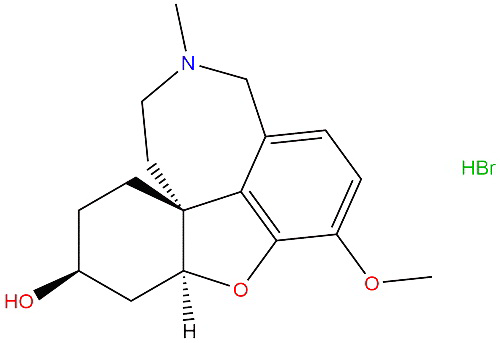
The chemical name of hydrobromic acid lycorine is (4aS, 6R, 8aS) -4a, 5,9,10,11,12-hexahydro-3-methoxy-11-methyl-6H-benzofuran [3a, 3,2-ef] [2] benzodiazepine-6-ol hydrobromide, with a molecular formula of C17H23NO3 · HBr and a molecular weight of 289.3750 (free base form). Its core skeleton is hexahydrobenzofuran [3a, 3,2-ef] [2] benzodiazepine, which belongs to the isoquinoline alkaloids.
Structurally, hydrobromic acid lycorine is the product of the reduction of the C4-C4a double bond of galantamine, known as dihydrogalantamine. This structural difference leads to significant differences in stereochemistry and physicochemical properties between the two. The molecule of hydrobromic acid alliin contains three chiral centers (C4a, C6, C8a), and its absolute configuration is (4aS, 6R, 8aS). The six membered ring and seven membered ring in the molecule are fused through a furan ring to form a unique rigid tricyclic system. In addition, there is a methoxy (- OCH3) and a hydroxyl (- OH) substituent, as well as a tertiary amine group (N-methyl) in the molecule, which are crucial for its biological activity.
Physical and chemical property parameters
According to the medicinal chemical evaluation data, the key physicochemical parameters of hydrobromic acid garlicin are as follows:
- Molecular weight (MW)289.3750 (free base), with a hydrobromide form of approximately 370.3
- Lipid water partition coefficient (LogP)2.1123 indicates that the compound has moderate lipid solubility, which is beneficial for transmembrane transport
- Topological Polarity Surface Area (TPSA)41.93 Å ², lower than the typical threshold of 140 Å ² required for oral medication, indicating good oral absorption potential
- Water solubility 1.8975 mg/mL (predicted value), classified as a moderately water-soluble compound
- Blood-brain barrier (BBB) permeability High, this is an important advantage in the development of targeted drugs targeting the central nervous system
- HERG inhibition Negative, indicating low risk of cardiac toxicity
- Ames test The result is 0.0, indicating no significant genetic toxicity
The hydrobromide form of lycorine hydrobromide improves its water solubility and chemical stability, which is beneficial for formulation development and in vivo administration. Its moderate LogP value and high BBB permeability enable it to effectively penetrate the blood-brain barrier and reach central nervous system targets. In addition, good safety prediction parameters (no hERG inhibition, no Ames toxicity) have laid a safety foundation for its further development.
Plant sources and extraction methods
Plant-based
Hydrobromic acid lycorine mainly comes from Amaryllidaceae plants, among which Lycoris radiata is the most important natural source. Red flowered stone garlic, also known as the other shore flower or manjushri, is a perennial herbaceous plant widely distributed in East Asia such as China, Japan, and South Korea. This plant has been used in traditional medicine for a long time, and is commonly used in folk medicine to treat diseases such as abscesses, sores, toxins, rheumatism, and pain.
In addition to safflower garlic, other genera of plants in the family Lycoris, such as Lycoris, Narcissus, Galanthus, etc., also contain lycorine alkaloids. Research has shown that there are significant differences in the content of lycorine in plants of different genera, origins, and harvest seasons. Generally speaking, the bulb is the main accumulation organ of lycorine alkaloids, and its content can reach 0.1% -0.5% of dry weight.
extraction method
The extraction of hydrobromic acid lycorine is usually carried out using the classic alkaloid extraction process, which mainly includes the following steps:
1. Raw material pretreatment Collect fresh or dried safflower garlic bulbs and grind them to an appropriate particle size (usually 40-60 mesh) to improve extraction efficiency.
2. Solvent extraction Extract using acidic aqueous solutions (such as 0.5% -2% hydrochloric acid or sulfuric acid solutions) or alcohol solvents (such as methanol, ethanol). Acidic conditions are conducive to the formation of alkaloid salts and improve their water solubility. Common extraction methods include:
- Cold soaking method Soak at room temperature for 24-48 hours, suitable for thermosensitive components
- reflux extraction Heating and refluxing for 2-4 hours results in higher extraction efficiency
- Ultrasound assisted extraction By utilizing the cavitation effect of ultrasound, a higher extraction rate can be achieved in a shorter period of time
- Microwave assisted extraction Accelerating solvent penetration and component dissolution through microwave heating
3. Purification and Separation After concentration, the extract is preliminarily purified using liquid-liquid extraction (such as chloroform, ethyl acetate, and other organic solvents) or macroporous adsorption resin column chromatography. Further separation can be achieved using methods such as silica gel column chromatography, alumina column chromatography, or preparative high-performance liquid chromatography (Prep HPLC).
4. Crystallization and Salt Formation The purified free alkali of lycorine reacts with hydrobromic acid to produce hydrobromide, which is then recrystallized to obtain high-purity products.
In recent years, with the promotion of green chemistry concepts, some new extraction techniques such as supercritical fluid extraction (SFE) and deep eutectic solvent extraction have also been attempted for the extraction of lycorine alkaloids, but have not yet been industrialized.
It is worth noting that due to the limited resources and long growth cycle of Alliaceae plants, research on chemical and biological synthesis methods is increasingly being emphasized. At present, the total synthesis route of galantamine is relatively mature, and hydrobromic acid lycorine can be obtained through selective hydrogenation reduction of galantamine, which provides a feasible approach for its large-scale production.
Pharmacological activity research
Acetylcholinesterase inhibitory activity
The most notable pharmacological activity of hydrobromic acid lycorine is its inhibitory effect on acetylcholinesterase (AChE). AChE is a key enzyme that hydrolyzes the neurotransmitter acetylcholine. In the brains of AD patients, the degeneration of cholinergic neurons leads to a decrease in acetylcholine levels, which is closely related to cognitive dysfunction. Therefore, AChE inhibitors have become an important strategy for AD treatment by increasing the concentration of acetylcholine in the synaptic cleft and improving cholinergic neurotransmission.
In vitro enzyme activity assays showed that hydrobromic acid allicin exhibited significant inhibitory activity on both electric eel AChE and human recombinant AChE, with a half maximal inhibitory concentration (IC50) ranging from nanomolar to micromolar levels. Compared with galantamine, hydrobromic acid allicin has comparable or slightly lower AChE inhibitory activity, but higher selectivity and weaker inhibitory effect on butyrylcholinesterase (BuChE). This selective inhibitory property is beneficial for reducing peripheral cholinergic side effects.
Dynamics studies have shown that hydrobromic acid lycorine is a reversible, mixed type AChE inhibitor that can bind to both the active site of the enzyme and interact with peripheral anionic sites. This dual binding mode not only inhibits the catalytic activity of AChE, but may also interfere with AChE induced A β aggregation, thereby exerting a multifunctional neuroprotective effect.
Anti A β aggregation and neuroprotective effects
In addition to AChE inhibition, hydrobromic acid allicin also exhibits anti A β aggregation and neuroprotective activity. Research has shown that the compound can directly bind to A β monomers, inhibiting their transition to β - folding structures, thereby reducing the formation of A β oligomers and fibers. In addition, hydrobromic acid allicin can also block the interaction between AChE and A β, because the peripheral anionic site of AChE can act as a "molecular partner" to promote A β aggregation, and the occupation of this site by hydrobromic acid allicin can effectively inhibit this process.
In a cell model, pretreatment with hydrobromic acid allicin can significantly alleviate A β - induced neurotoxicity, reduce reactive oxygen species (ROS) levels, inhibit mitochondrial membrane potential decline and caspase-3 activation, thereby reducing neuronal apoptosis. These protective effects may be related to their antioxidant, anti-inflammatory, and regulation of cell survival signaling pathways such as PI3K/Akt and ERK pathways.
Anti inflammatory and antioxidant activity
Neuroinflammation is an important link in the pathological process of Alzheimer's disease. Hydrobromic acid lycorine can inhibit the release of pro-inflammatory factors such as tumor necrosis factor - α (TNF - α), interleukin-1 β (IL-1 β), and interleukin-6 (IL-6) in a lipopolysaccharide (LPS) - stimulated microglial cell model, while reducing the expression of inducible nitric oxide synthase (iNOS) and cyclooxygenase-2 (COX-2). These anti-inflammatory effects may be achieved by inhibiting the nuclear factor kappa B (NF - κ B) and mitogen activated protein kinase (MAPK) signaling pathways.
In addition, hydrobromic acid garlicin also exhibits direct antioxidant activity, capable of clearing various free radicals (such as DPPH free radicals, ABTS cationic free radicals), and enhancing the activity of endogenous antioxidant enzymes (such as superoxide dismutase SOD, glutathione peroxidase GPx) in cells. This antioxidant property helps alleviate oxidative stress damage in AD brain.
The effect on tau protein phosphorylation
Overphosphorylation of tau protein is another key pathological feature of AD. Preliminary studies have shown that hydrobromic acid allicin can inhibit the activity of protein kinases such as glycogen synthase kinase-3 β (GSK-3 β) and cyclin dependent kinase 5 (CDK5), thereby reducing the phosphorylation level of tau protein at Ser396, Ser404 and other sites. Meanwhile, the compound can enhance the activity of protein phosphatase 2A (PP2A) and promote the dephosphorylation of phosphorylated tau. These effects help maintain microtubule stability and prevent the formation of neurofibrillary tangles.
Mechanism of action and molecular targets
Acetylcholinesterase target
The inhibitory effect of hydrobromic acid on AChE is its most clear molecular mechanism. Molecular docking and dynamic simulation studies have revealed that the tertiary amine nitrogen atom of hydrobromic acid allicin forms cation - π interactions with residues such as Trp84 and Phe330 at the active site of AChE, while the methoxy and hydroxyl groups form hydrogen bonds with catalytic triad residues such as Ser200 and His440. In addition, its rigid tricyclic skeleton undergoes hydrophobic interactions with aromatic residues of the enzyme (such as Tyr334, Phe331), stabilizing the conformation of the complex.
Compared with galantamine, hydrobromic acid lycorine has a more flexible molecular conformation due to the reduction of C4-C4a double bonds, which can better adapt to the spatial structure of AChE active sites. This may explain the difference in inhibition kinetics between hydrobromic acid lycorine and galantamine.
Multi target mechanism of action
The complexity of AD determines that single target drugs are difficult to achieve ideal therapeutic effects. The advantage of hydrobromic acid lycorine is that it may exert its effects through a multi-target mechanism, involving the following key molecular targets:
1. APP metabolism related targets Abnormal processing of amyloid precursor protein (APP) is a prerequisite for the generation of A β. Research has shown that hydrobromic acid allicin may reduce the beta secretase (BACE1) - mediated amyloidosis pathway by regulating the APP cleavage pathway, while promoting the alpha secretase mediated non amyloidosis pathway. This regulatory effect may involve direct inhibition of BACE1 activity or indirect effects on APP transport and metabolism.
2. Premature aging hormone 1 (PSEN1)PSEN1 is the catalytic subunit of the gamma secretase complex, responsible for the final cleavage of APP. Hydrobromic acid lycorine may regulate the cleavage site selectivity of gamma secretase and reduce the production of A β 42 (a more toxic subtype) by interacting with PSEN1.
3. Apolipoprotein E (APOE)The APOE ε 4 allele is the strongest genetic risk factor for AD. Hydrobromic acid lycorine may regulate the clearance and deposition of A β by affecting the lipidation state of APOE or its interaction with A β.
4. Alpha Synuclein (SNCA)Although SNCA is primarily associated with Parkinson's disease, increasing evidence suggests that it also plays a role in AD pathology. Hydrobromic acid lycorine may inhibit the aggregation of SNCA or promote its degradation.
5. Tau protein (MAPT)As mentioned earlier, hydrobromic acid allicin affects the phosphorylation status of tau protein by regulating the activity of GSK-3 β, CDK5, and PP2A.
Signal pathway regulation
Hydrobromic acid lycorine may also exert neuroprotective effects by regulating multiple cellular signaling pathways:
- PI3K/Akt pathway Activating this pathway can promote cell survival and inhibit apoptosis
- Nrf2/ARE pathway Activate antioxidant response elements and enhance endogenous antioxidant defense
- BDNF/TrkB pathway Promote neurotrophic factor signaling, support synaptic plasticity and neuronal survival
Evaluation of drug properties and pharmacokinetics
Analysis of drug properties parameters
Based on the drug chemistry evaluation criteria, hydrobromic acid allicin exhibits good medicinal properties:
1. Evaluation of drug properties Compliant with Lipinski's five rules (molecular weight<500, LogP<5, hydrogen bond donor<5, hydrogen bond acceptor<10), TPSA is 41.93 Å ² (<140 Å ²), indicating good oral bioavailability potential.
2. blood-brain barrier permeability High BBB permeability is its key advantage as a central nervous system drug. The predicted logBB value (brain/blood partition coefficient) is positive, indicating effective entry into brain tissue.
3. Security prediction HERG inhibition is negative, reducing the risk of cardiac toxicity; The Ames test is negative, indicating no genetic toxicity. These data support its further development of security.
4. Metabolic stability Preliminary studies have shown that hydrobromic acid allicin has moderate metabolic stability in liver microsomes, and its main metabolic pathways may include O-demethylation, N-demethylation, and hydroxylation. Compared to galantamine, its metabolic clearance rate may be lower, which is beneficial for maintaining a longer half-life.
Pharmacokinetic characteristics
Although detailed pharmacokinetic data on hydrobromic acid allicin is not yet complete, reasonable speculation can be made based on the study of its structural analogue galantamine:
- absorb After oral administration, hydrobromic acid lycorine may be rapidly absorbed in the gastrointestinal tract, with an estimated absolute bioavailability of 70% -90% (galantamine is about 90%)
- distribution Manifested as a large cloth volume (Vd>2 L/kg), indicating widespread tissue distribution, with brain tissue concentration reaching 2-3 times that of plasma concentration
- Metabolism Mainly metabolized by the liver CYP450 enzyme system, CYP2D6 and CYP3A4 may be involved in its biotransformation
- excretion Mainly excreted through the kidneys in the form of metabolites, with a relatively low proportion of prototype drug excretion
- half-life Expected plasma half-life between 6-10 hours, supporting 1-2 doses per day
It is worth noting that the hydrobromide form of lycorine hydrobromide may affect its solubility and dissolution rate, thereby affecting oral absorption. In the development of formulations, appropriate prescription processes (such as solid dispersion and nanocrystal technology) should be considered to optimize their bioavailability.
Clinical application prospects and prospects
Potential as an anti AD drug
As a dihydroderivative of galantamine, hydrobromic acid Amaryllin exhibits unique advantages in the treatment of Alzheimer's disease
1. Improved chemical stability The reduction of C4-C4a double bonds eliminates the allyl ether structure in galantamine molecules, improves chemical stability, and is beneficial for formulation development and long-term storage.
2. Potential for better security Preliminary toxicity studies have shown that the acute toxicity of hydrobromic acid allicin is lower than that of galantamine, and the treatment window may be wider. Its lack of hERG inhibition also reduces the risk of cardiac toxicity.
3. Advantages of multi-target action In addition to AChE inhibition, the anti A β aggregation, anti-inflammatory, antioxidant, and tau protein regulatory effects of hydrobromic acid garlicin make it have the potential for disease modification therapy, not just symptom improvement.
Challenges and Solutions Faced
Despite its broad prospects, the clinical development of hydrobromic acid allicin still faces several challenges:
1. Pharmacodynamic optimization Compared with galantamine, its AChE inhibitory activity is slightly lower, which may require structural modification or combination therapy to enhance efficacy. For example, designing hybrid molecules of allicin donepezil or allicin memantine conjugates to achieve multi-target synergistic effects.
2. Pharmacokinetic improvement It is necessary to systematically study its absorption, distribution, metabolism, and excretion characteristics to optimize the dosing regimen. The development of long-acting formulations, such as sustained-release tablets and transdermal patches, can improve patient compliance.
3. Clinical translational evidence At present, research on hydrobromic acid sulfonamide mainly remains at the in vitro and animal experimental stages, and there is a lack of systematic preclinical toxicological evaluation and clinical trial data. Standardized GLP toxicology studies, pharmacological validation, and early clinical trials are required.
4. Resource sustainability The production of naturally sourced lycorine is limited, and efficient chemical or biological synthesis methods need to be developed to ensure the sustainability of drug supply.
Future research directions
-
structural optimization Based on the parent nucleus structure of hydrobromic acid allicin, a series of derivatives were designed and synthesized to screen candidate compounds with higher AChE inhibitory activity and better pharmacokinetic characteristics.
-
Multi target drug design Fusion of the pharmacophores of Amaryllin with those of other anti AD targets (such as BACE1 inhibitors and NMDA receptor antagonists) to develop multi-target targeted ligands.
-
Nanoformulation development Using nanotechnology (such as liposomes, polymer nanoparticles, solid lipid nanoparticles) to encapsulate hydrobromic acid sulfonamide, improving its brain targeting and bioavailability.
-
Combination therapy research Explore the synergistic effect of hydrobromic acid garlicin with existing AD drugs (such as memantine and donepezil) or novel targeted drugs (such as anti-A β antibodies).
-
Indications expansion In addition to AD, the cholinergic enhancement and neuroprotective effects of hydrobromic acid allicin may make it potentially applicable in other neurological diseases such as vascular dementia, Parkinson's disease dementia, and Lewy body dementia.
Conclusion
Hydrobromic acid lycorine, as a natural alkaloid isolated from plants in the Alliaceae family, has shown significant research value in the field of anti Alzheimer's disease drug development due to its unique chemical structure and multi-target pharmacological activity. As a dihydroderivative of galantamine, it not only retains the core activity of AChE inhibition, but also exhibits multiple neuroprotective effects such as anti A β aggregation, anti-inflammatory, antioxidant, and tau protein regulation, with the potential for disease modification therapy.
From the perspective of medicinal properties, hydrobromic acid garlicin meets the criteria for drug like properties, with high blood-brain barrier permeability and good safety prediction parameters, laying a solid foundation for its further development. However, there are still many challenges from laboratory research to clinical application, including pharmacological optimization, pharmacokinetic characterization, preclinical toxicology evaluation, and large-scale production process development.
In the future, with the continuous deepening of understanding of the pathogenesis of AD and the continuous progress of drug development technology, hydrobromic acid sulfonamide is expected to develop into a new generation of anti AD drugs through strategies such as structural modification, formulation optimization, and combination therapy. At the same time, research on the sustainable utilization and biosynthetic pathways of natural source plants will also provide guarantees for the industrialization of this natural product.
In summary, hydrobromic acid allicin represents a typical case of the transformation from traditional natural products to modern innovative drugs. Its research not only provides new candidate molecules for AD treatment, but also provides useful insights for the intersection of natural product chemistry and medicinal chemistry. We look forward to verifying the efficacy and safety of this compound in clinical trials in the near future, ultimately benefiting a large number of AD patients.