Introduction/Overview
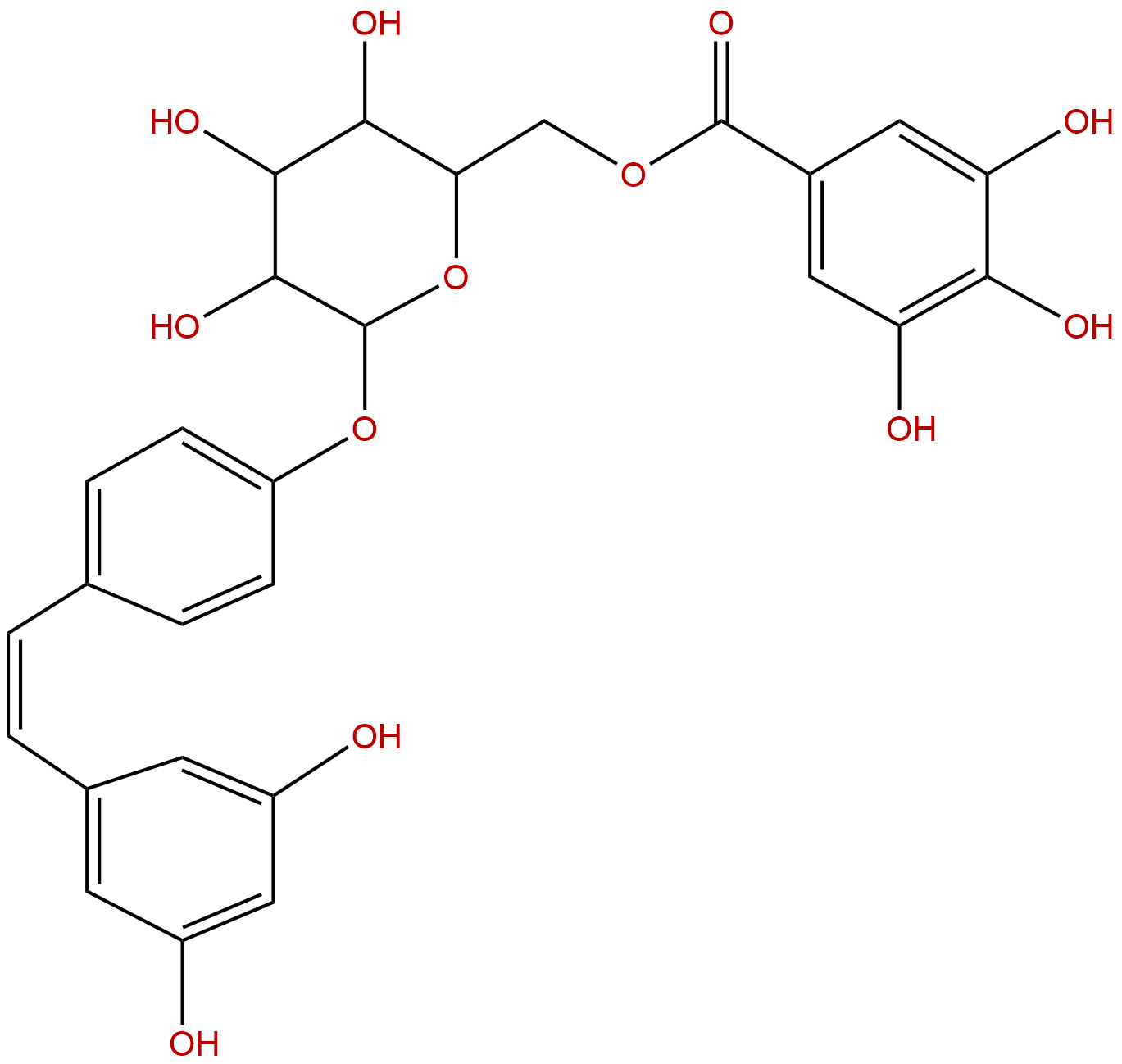
Natural products have always been an important treasure trove for innovative drug discovery, among which polyphenolic compounds have attracted much attention due to their wide range of biological activities. Resveratrol, as a well-known quinone polyphenol, has been widely studied for its antioxidant, anti-inflammatory, cardiovascular protective, and potential anti-aging effects. However, resveratrol often exists in the form of glycosylated or acylated derivatives in nature, and these structural modifications often significantly alter its physicochemical properties, bioavailability, and pharmacological activity. Resveratrol 4 '- (6' '- alloylglucoside, abbreviated as RG) is one of the important derivative products, with a CAS number of 64898-03-9. The compound has a glucose group attached to the 4 '- hydroxyl group of the parent nucleus resveratrol, and the 6' - hydroxyl group of the glucose is further esterified by a galloyl group, forming a unique 'resveratrol glucose gallic acid' ternary structure. This structural complexity not only suggests that it may have a unique biological activity spectrum distinct from resveratrol, but also raises new scientific questions about its metabolic fate in organisms. In recent years, with the advancement of separation and identification techniques, RG has been discovered in various medicinal plants, and its potential anti-inflammatory, antioxidant, neuroprotective, anti-tumor, and metabolic regulatory activities have gradually entered the field of researchers. This article aims to provide a systematic review of the chemical properties, plant sources, pharmacological activities, mechanisms of action, and medicinal potential of RG, in order to provide comprehensive academic references for the in-depth research and development of this natural product.
Chemical structure and physicochemical properties
The chemical structure of RG is the material basis for its biological activity. Its molecular formula is C28H26O12 and its molecular weight is 542.4930. Structurally, it consists of three key components: 1) Resveratrol mother nucleus 3,5,4 '- trihydroxystilbene is the core functional group that exhibits polyphenolic activity, with a conjugated system that can effectively quench free radicals. 2) β - D-glucosyl group Connected to the 4 '- hydroxyl group of resveratrol through glycosidic bonds. Glycosylation is a common solubilization and stabilization modification in nature, which typically affects the lipophilicity, absorption, and metabolism of compounds. 3) Galloyl group 3,4,5-trihydroxybenzoyl is connected to the 6 '' - hydroxyl group of glucose through ester bonds. Gallic acid itself is a strong antioxidant, and its introduction greatly enhances the polyphenol hydroxyl density of the entire molecule.
This unique structure directly determines its physicochemical properties. The calculated lipid water partition coefficient (LogP) is 1.7657, indicating that RG has a certain lipophilicity, but it is significantly lower compared to resveratrol (LogP of about 3.1), mainly due to the introduction of hydrophilic glucose groups. Its topological polar surface area (TPSA) is as high as 206.6000 Å ², reflecting the presence of a large number of polar hydrogen bond donors and acceptors (mainly hydroxyl groups) in the molecule, which are crucial for its solubility and interaction with biomolecules. The theoretically calculated water solubility value is 0.7699 mg/mL, which belongs to the category of slight solubility. However, the actual solubility may be affected by factors such as crystal morphology and solvent pH. The higher TPSA and glycoside structure also indicate that its transmembrane permeability may be limited, especially in terms of its ability to penetrate the blood-brain barrier (BBB), which is predicted to be "low", consistent with the situation of many highly polar polyphenolic glycoside derivatives. In terms of preliminary safety prediction, based on the computational model, RG showed no significant risk of hERG potassium channel inhibition (predicted as "no"), and the Ames test predicted a value of 0.0, suggesting that it may not have direct genetic toxicity. These basic pharmacological parameters provide preliminary directions for subsequent research.
Plant sources and extraction methods
RG is not widely present in all plants, and its distribution is related to specific plant families and genera, mainly found in some traditional medicinal plants.
Main plant sources:
1. Grape family plants The vine, leaves, and skin of Vitis vinifera are important sources of resveratrol and its derivatives. RG has been isolated and identified in grape vines, and is considered a member of the complex grape polyphenol system.
2. Polygonaceae plants Polygonum multiflorum is a famous source of RG. Polygonum multiflorum, as a traditional nourishing Chinese medicine, has complex active ingredients. RG is one of the important glycoside components in its water-soluble part, which may be related to its antioxidant, anti-aging, and neuroprotective effects.
3. Other potential sources In some plants containing resveratrol, such as Polygonum cuspidatum and peanuts, its glycosylated and acylated derivatives may also exist, but the specific content and distribution of RG need further systematic screening.
Extraction and Separation Methods:
The extraction and separation of RG follows the general strategy of natural polyphenolic compounds, but requires optimization based on their glycosidic and ester bond characteristics.
1. Extract Common solvents include methanol, ethanol, acetone, and their mixed solutions with water. Due to the presence of multiple polar hydroxyl groups in RG molecules, moderately polar aqueous alcohols (such as 50-70% ethanol) are typically effective extraction solvents. Ultrasound assisted extraction and heating reflux extraction are commonly used physical methods to improve yield.
2. Separation and purification After segmented extraction with organic solvents such as petroleum ether and ethyl acetate, RG is mainly enriched in polar n-butanol or aqueous layers. Further purification is highly dependent on chromatographic techniques.column chromatography It is a core step, and fillers such as macroporous adsorption resin (such as D101, AB-8), inverted silica gel (such as C18), dextran gel (Sephadex LH-20) are often used. Among them, Sephadex LH-20 gel column uses the dual principles of molecular exclusion and adsorption to separate polyphenol glycosides, which is a key step to obtain RG monomer.High performance liquid chromatography(HPLC), Especially for preparative HPLC, it is an essential tool for obtaining high-purity RG. C18 chromatography columns are often used, with methanol water or acetonitrile water (containing a small amount of formic acid or acetic acid to adjust pH) as the mobile phase for gradient elution.
3. appraisal The structural identification of compounds mainly relies on spectroscopic methods. UV spectroscopy can display the characteristic absorption of resveratrol mother nucleus. Nuclear magnetic resonance spectroscopy (NMR) is a decisive means of analyzing structures. Through 1H NMR, 13C NMR, and two-dimensional spectra such as HSQC and HMBC, all hydrogen and carbon signals on resveratrol, glucose, and galloyl groups can be accurately attributed, and the connection positions of glycosidic and ester bonds can be determined. Mass spectrometry (MS) can provide precise molecular weight (such as ESI-MS providing [M-H] - ion peaks) and fragment information, assisting in structural confirmation.
Pharmacological activity research
Existing studies have shown that RG inherits some of the biological activities of resveratrol, while exhibiting some new or enhanced pharmacological effects due to its unique structural modifications.
1. Antioxidant and anti-inflammatory activities:
The strong antioxidant capacity of RG is its most fundamental activity. The dense phenolic hydroxyl groups in the molecule can effectively scavenge free radicals such as DPPH and ABTS ⁺, and exhibit strong iron ion reduction ability. Its antioxidant efficacy is usually stronger than that of pure resveratrol or resveratrol glycosides, thanks to the additional phenolic hydroxyl groups introduced by the galloyl group. In cell models, RG can significantly reduce oxidative stress induced by hydrogen peroxide or lipopolysaccharides, increase the activity of antioxidant enzymes such as superoxide dismutase and glutathione peroxidase in cells, and reduce malondialdehyde levels. Its anti-inflammatory effect is closely related to antioxidant activity. Research has shown that RG can effectively inhibit the excessive production of nitric oxide and prostaglandin E2 in macrophages stimulated by lipopolysaccharide, and downregulate the expression of inducible nitric oxide synthase and cyclooxygenase-2. It also has a significant inhibitory effect on the secretion of key pro-inflammatory factors such as tumor necrosis factor - α, interleukin-6, and interleukin-1 β.
2. Neuroprotective activity:
This is a highly promising research direction for RG. In various neural injury cell models, such as beta amyloid induced PC12 cell injury and glutamate excitotoxicity model, RG exhibits significant protective effects, can improve cell survival rate, reduce lactate dehydrogenase leakage, and inhibit cell apoptosis. Its mechanism involves alleviating oxidative stress, inhibiting inflammatory response, regulating apoptosis related proteins, etc. In Alzheimer's disease model studies, RG has shown potential to inhibit acetylcholinesterase activity and may exert cognitive effects by regulating signaling pathways related to learning and memory. Although its blood-brain barrier permeability prediction is low, some studies suggest that it may undergo metabolic transformation in the brain or indirectly exert neuroprotective effects by regulating peripheral inflammation.
3. Antitumor activity:
Preliminary research has revealed the potential of RG in the field of anti-tumor. In vitro experiments show that RG can inhibit the growth of some cancer cell lines (such as human hepatoma HepG2 cells, human breast cancer MCF-7 cells), and can induce cell cycle arrest and apoptosis. Its function may be achieved through pathways such as activating the caspase cascade reaction and regulating the Bcl-2/Bax protein ratio. Compared with resveratrol, the glycoside structure of RG may alter its cellular uptake mode and intracellular targets, but its specific anti-tumor spectrum and efficacy still need to be validated in more tumor models.
4. Metabolic regulation and cardiovascular protective activity:
Based on its antioxidant and anti-inflammatory properties, RG has also shown positive effects in metabolic syndrome related models. The research suggests that it may help to improve the endothelial function and inhibit the abnormal proliferation of vascular smooth muscle cells, so it has potential value in the prevention and treatment of atherosclerosis. In addition, it has certain inhibitory activity against alpha glucosidase and pancreatic lipase, suggesting that it may assist in regulating postprandial blood glucose and blood lipids. These activities provide a certain modern pharmacological basis for the use of traditional medicinal herbs such as Polygonum multiflorum for "nourishing liver and kidney, nourishing essence and blood".
Mechanism of action and molecular targets
The pharmacological effects of RG are the result of multiple pathways and multi-target synergy, and its molecular mechanism research is still in the continuous deepening stage.
1. Regulation of core signaling pathways:
* Nrf2/ARE pathway RG, as an electrophilic molecule, may activate nuclear factor E2 related factor 2 (Nrf2) by modifying Keap1 protein. Activated Nrf2 is transferred into the nucleus and binds to antioxidant response elements (ARE), initiating the expression of a series of downstream phase II detoxifying enzymes and antioxidant proteins (such as HO-1, NQO1, GCLC), which is its core molecular mechanism for combating oxidative stress.
* NF - κ B pathway RG can inhibit the activation of nuclear factor kappa B (NF - κ B). It may inhibit the phosphorylation of I κ B kinase, prevent I κ B degradation, and retain NF - κ B p65 subunit in the cytoplasm, preventing it from entering the nucleus to initiate the transcription of inflammatory genes such as TNF - α, IL-6, iNOS, COX-2, which is the key to its anti-inflammatory effect.
* MAPK pathway RG has a regulatory effect on the mitogen activated protein kinase pathway (including ERK, JNK, p38). Under different cellular environments and stimuli, it may selectively inhibit the excessive phosphorylation of certain MAPKs, thereby affecting downstream processes of cell proliferation, differentiation, inflammation, and apoptosis.
2. Key molecular targets:
* Enzyme target RG can directly or indirectly inhibit the activity of various enzymes. In addition to the aforementioned acetylcholinesterase, alpha glucosidase, and pancreatic lipase, it can also inhibit enzymes related to oxidative stress such as xanthine oxidase and myeloperoxidase, as well as enzymes related to inflammation and tumor metastasis such as matrix metalloproteinases.
* Receptors and transcription factors In addition to interacting with transcription factors such as Nrf2 and NF - κ B, RG may also act as a ligand to affect the function of some cell surface receptors or nuclear receptors, but its specific high affinity receptor targets remain to be identified.
* Epigenetic regulation Recent studies have found that resveratrol can regulate the activity of histone deacetylases (such as SIRT1). Whether RG, as a derivative, has similar or stronger epigenetic regulatory abilities is a new direction worth exploring, which may be related to its anti-aging and metabolic regulatory effects.
Preliminary Exploration of Structure Activity Relationship The introduction of glucose groups improves the water solubility and stability of RG, but may reduce its cell membrane permeability. The introduction of galloyl groups is the key to enhancing RG activity. It not only increases the number of phenolic hydroxyl groups and enhances direct antioxidant capacity, but its large steric hindrance and specific electronic effects may also change the binding mode and affinity between molecules and target proteins, thereby deriving new biological activities.
Evaluation of drug properties and pharmacokinetics
Although RG exhibits good biological activity in vitro, its potential as a drug candidate molecule depends on the systematic drug efficacy evaluation.
Pharmacokinetic characteristics (based on prediction and preliminary research):
1. absorb As a highly polar glycoside derivative, the oral absorption of RG may face challenges. Its absorption site may mainly be in the small intestine, but the ability of intact RG molecules to passively diffuse through intestinal epithelial cells is limited. Glycoside hydrolases and esterases in the gut microbiota and intestinal mucosal epithelial cells may hydrolyze it, releasing resveratrol, gallic acid, or their intermediates, which may be further absorbed. Therefore, RG is likely to be a "prodrug", and its metabolites may be the ones that truly exert their effects in the body.
2. distribution The prediction shows that its blood-brain barrier permeability is low, which limits its direct effect on central nervous system diseases. It may be mainly distributed in blood rich tissues such as blood, liver, and kidneys, and its specific tissue distribution characteristics need to be confirmed by in vivo radioactive labeling or high-sensitivity mass spectrometry imaging studies.
3. Metabolism As mentioned earlier, RG is prone to hydrolysis metabolism in the body. The enzyme system in liver microsomes may also undergo II phase binding reactions (such as glucuronidation and sulfation) on their glycoside components. Its metabolic profile is complex, and identifying its main metabolites and activities is the key to evaluating its efficacy.
4. excretion Polar metabolites are mainly excreted in urine through the kidneys, while some prototypes or conjugates may also enter the intestine through bile and be excreted in feces.
Challenges and optimization strategies for drug development:
1. Solubility and permeability Moderate water solubility and low membrane permeability constitute the main bottlenecks in its bioavailability. Formulation strategies such as making nanocrystals, liposomes, cyclodextrin inclusion complexes, or self microemulsion systems can improve their solubility and intestinal absorption.
2. Metabolic stability Glycoside and ester bonds are easily hydrolyzed by enzymes in the gastrointestinal tract and liver. By structural modification (such as methylation of easily hydrolyzed sites or the use of non natural glycosides) or in combination with enzyme inhibitors, its metabolic stability may be improved, but the changes in activity need to be balanced.
3. Targeted delivery To address the issue of its neuroprotective activity but poor BBB penetration, a brain targeted drug delivery system can be developed, such as nanoparticles modified with BBB penetration peptides.
4. safety Although it is predicted that there is no hERG inhibition or genotoxicity risk, a comprehensive evaluation through systematic preclinical toxicology studies (such as acute toxicity, long-term toxicity, reproductive toxicity, etc.) is still needed. As a polyphenolic substance, it is also necessary to pay attention to whether it may produce pro oxidative effects or interact with other drugs at high doses.
Clinical application prospects and prospects
The clinical application development of RG is still in the preclinical research stage, but its various activities indicate potential application directions.
Potential indications:
1. Adjuvant therapy for neurodegenerative diseases Based on its significant neuroprotective, antioxidant, and anti-inflammatory activities, RG or its main plant extracts have the potential to be developed as dietary supplements or plant-based drugs to assist in the treatment of neurodegenerative diseases such as Alzheimer's disease and Parkinson's disease. The focus is on solving the problem of brain delivery or confirming the effectiveness of its peripheral effects.
2. Diseases related to metabolic syndrome In diabetes, nonalcoholic fatty liver, atherosclerosis and other diseases closely related to oxidative stress and chronic low-grade inflammation, RG may act as a multi-target regulator to improve insulin resistance, dyslipidemia and endothelial dysfunction.
3. Anti aging and skin care Its strong antioxidant capacity makes it potential for application in anti-aging cosmetics and functional skincare products, which can be used to resist photoaging, reduce wrinkles and pigmentation.
4. As a lead compound for structural optimization The complex structure of RG provides excellent modification templates for medicinal chemists. By simplifying the structure (such as retaining active pharmacophores) and improving pharmacokinetic properties, it is expected to develop new small molecule drugs with independent intellectual property rights.
Future research directions:
1. In depth mechanism research Using chemical biology methods such as affinity fishing, molecular docking, and kinetic simulations to identify the protein targets directly involved and elucidate their precise molecular mechanisms.
2. Systematic pharmacokinetic study Conduct standardized animal in vivo ADME research to clarify its absolute bioavailability, main metabolic pathways, active metabolites, and tissue distribution patterns.
3. Effective in vivo pharmacological validation: In animal models more similar to human diseases (such as transgenic AD mice, ApoE -/- atherosclerotic mice), evaluate the efficacy and dose effect relationship of its long-term administration.
4. Formulation development Actively explore new drug delivery systems suitable for RG, overcome its drug weakness, and improve treatment index.
5. Multi component collaborative research RG often coexists with other polyphenols in plant extracts, and studying its synergistic effects with other components such as resveratrol, anthocyanins, etc. is of great significance for the development of compound plant medicines based on a holistic approach.
Conclusion
Resveratrol -4 '- O-beta-D - (6' '- O-galloyl) glucoside (RG) is a natural stilbene derivative with unique structure and diverse biological activities. It ingeniously integrates the three active units of resveratrol, glucose, and gallic acid, not only inheriting some of the beneficial properties of resveratrol, but also exhibiting enhanced or unique effects in antioxidant and anti-inflammatory aspects due to the introduction of galloyl groups. Its potential application value in fields such as neuroprotection and metabolic regulation is remarkable. However, the road from natural compounds to candidate drugs is still long. The pharmacokinetic challenges it faces, such as poor oral absorption, metabolic instability, and low blood-brain barrier penetration, are core scientific issues that need to be addressed in future research. Through in-depth mechanism exploration, systematic pharmacological evaluation, and innovative formulation strategies, RG is expected to develop from an interesting natural molecule into a new drug or functional product leader for treating chronic inflammatory and degenerative diseases, continuing to interpret the eternal charm of natural products as a source of drug discovery.