| Catalog No | Package | Original Price | Price | Inventory | Quantity | Operating |
|---|---|---|---|---|---|---|
| BP5047-5mg | 5mg | $450.00 | Sign in |
|


Storage conditions:Short-term storage at 2~8℃, long-term storage at -20 ~ -80℃
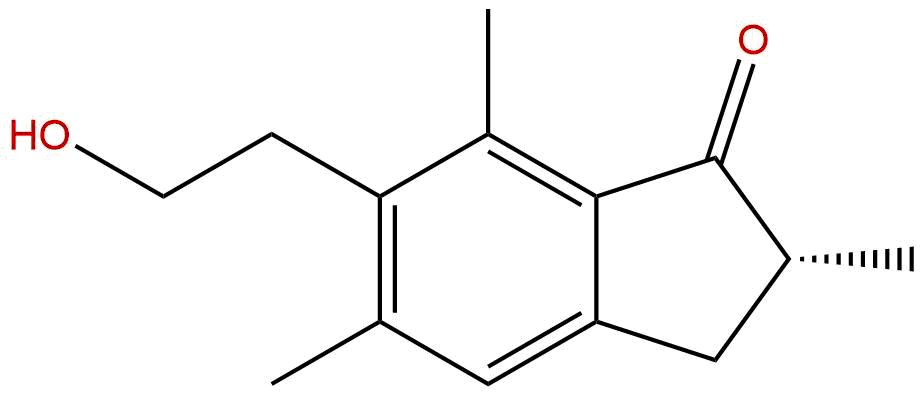
Pterostin B (CAS number: 34175-96-7) is a substance derived from ferns(Pteridium aquilinum)Natural indanone compounds. As an orally active ingredient, fern extract B has demonstrated multiple biological activities in pharmacological studies in recent years, especially in anti-inflammatory, antioxidant, anti myocardial hypertrophy, cognitive function improvement, and metabolic regulation, showing significant potential. Its unique molecular structure endows fern B with good bioavailability and blood brain barrier permeability, which makes it show positive therapeutic effects in neurodegenerative diseases, osteoarthritis, pathological cardiac hypertrophy, diabetes and other disease models.
This review aims to systematically summarize the chemical structure and physicochemical properties, plant sources, and extraction methods of fern extract B, with a focus on its pharmacological activity and mechanism of action, exploring its drug properties and pharmacokinetic characteristics, and combining current research progress to prospect its clinical application prospects, providing theoretical basis and research direction for subsequent drug development and clinical translation.
Fern B belongs to the natural product of indanone, with a molecular formula of C13H-14O3 and a molecular weight of 218.2960. Its structural core is the indanone skeleton, which has strong chemical stability and biological activity. The LogP value of fern extract B is 2.7746, indicating its moderate lipid solubility, which is beneficial for cell membrane penetration and in vivo distribution. The polar surface area (TPSA) is 37.3 Å ², indicating that its molecular polarity is moderate and conducive to oral absorption and blood-brain barrier penetration. Low water solubility (0.0645 mg/mL) indicates limited solubility in aqueous phase, but moderate lipid solubility facilitates in vivo absorption and distribution.
It is worth noting that fern extract B does not exhibit hERG channel inhibitory activity, indicating a low risk of cardiac toxicity; The Ames test result is negative, indicating a low risk of genetic toxicity. These physical, chemical, and toxicological parameters provide a solid foundation for the safety and pharmacological properties of fern extract B.
Fern B is mainly derived from ferns(Pteridium aquilinum)Obtained through separation. Bracken is widely distributed in temperate and subtropical regions around the world and is a traditional medicinal and edible plant. The above ground part contains abundant indanone compounds, among which fern B has a higher content.
Common extraction methods include:
In recent years, the application of ultrasound assisted extraction and microwave-assisted extraction technologies has improved the extraction efficiency and purity of fern extract B, providing technical support for large-scale preparation.
The pharmacological activity research of pterin B covers many disease fields, mainly including anti-inflammatory, antioxidant, neuroprotective, anti cardiac hypertrophy, anti diabetes and anti osteoarthritis.
Research has shown that fern extract B can effectively inhibit chondrocyte hypertrophy in mice and slow down the progression of osteoarthritis (OA). The mechanism involves inhibiting the expression of hypertrophy related genes in chondrocytes, reducing the release of inflammatory mediators, protecting the integrity of cartilage matrix, and delaying the degeneration of articular cartilage.
Ferns B significantly improves cognitive impairment in Alzheimer's disease (AD) model mice by inhibiting the Sik3 signaling pathway, reducing the expression of transcription factor Klf5, and thereby decreasing β - amyloid (A β) deposition. Its excellent blood-brain barrier permeability makes it a potential candidate molecule for central nervous system drugs.
In the pathological model of cardiac hypertrophy, fern extract B can effectively inhibit myocardial cell hypertrophy and improve cardiac function. This effect may be achieved by regulating the signal transduction pathway within myocardial cells and inhibiting the expression of hypertrophy related genes, indicating its potential application value in the prevention and treatment of cardiovascular diseases.
Pterilin B has the effect of lowering blood glucose in diabetes models, which may play a role by improving insulin sensitivity and regulating the signal pathways related to glucose and lipid metabolism, providing new ideas for the treatment of diabetes and its complications.
Fern extract B exhibits certain inhibitory effects on various pathogens, including bacterial DNA gyrase (GYRA), cell membrane protein (GYPB), cell division protein (FTSZ), fatty acid synthase (FABI), dihydrofolate reductase (DHFR), and other related targets. Its antibacterial spectrum covers both Gram positive and Gram negative bacteria, demonstrating potential anti infective application value.
The multi-target mechanism of action of fern extract B is the basis for its broad pharmacological activity. The core mechanism mainly involves the following aspects:
Sik3 (salt induced kinase 3) is an important kinase that regulates cellular metabolism and inflammatory response. As an inhibitor of Sik3, fern extract B regulates the expression of downstream transcription factor Klf5 by blocking its kinase activity, thereby affecting cell proliferation, differentiation, and inflammatory response, exerting anti-inflammatory, anti hypertrophic, and neuroprotective effects.
Klf5 (Kr ü ppel like factor 5) is an important transcription factor that regulates cell proliferation and fibrosis. Fern B inhibits the expression of Klf5, reduces cellular hypertrophy and fibrosis processes, and alleviates myocardial hypertrophy and cartilage degeneration.
In the Alzheimer's disease model, fern B can reduce the accumulation of β - amyloid in the brain, alleviate neurotoxicity and cognitive impairment, and the specific mechanism may involve promoting the clearance of A β and inhibiting the activity of enzymes related to its generation.
Fern B has inhibitory effects on various key enzymes and proteins in bacteria, including DNA gyrase (GYRA), fatty acid synthase (FABI), dihydrofolate reductase (DHFR), etc. It interferes with bacterial DNA replication, lipid synthesis, and metabolism, exerting antibacterial effects.
The pharmacological evaluation of fern extract B shows that it has good potential for drug development:
In terms of pharmacokinetics, fern extract B exhibits good oral absorption and blood-brain barrier permeability, with a wide distribution in the body and stable metabolism. The main excretion pathways are hepatic metabolism and renal excretion. In the future, further systematic research is needed on its half-life, metabolites, and drug interactions to provide data support for clinical applications.
As a multi-target natural product, fern extract B has a wide range of pharmacological activities and good drug properties, demonstrating potential clinical applications in various disease fields
Future research should focus on preclinical safety evaluation, pharmacokinetic optimization, formulation development, and clinical trial design of fern B, promoting its transition from laboratory research to clinical application. At the same time, combining modern medicinal chemistry and pharmacology techniques, structural modification and derivative design are carried out to enhance their activity and selectivity, and expand their application fields.
As a natural indanone compound from pteridophyte, pterin B shows therapeutic potential in osteoarthritis, Alzheimer's disease, cardiac hypertrophy, diabetes and other diseases by virtue of its unique chemical structure and multi-target pharmacological activity. Its good pharmacological parameters and safety have laid the foundation for subsequent drug development. With the deepening of research, fern extract B is expected to become a new generation of natural medicines or lead compounds, providing new drug options and treatment strategies for related diseases. Future research needs to strengthen the molecular level analysis of its mechanism of action, optimize pharmacokinetic characteristics, and promote clinical translation processes, fully leveraging its unique value in the field of natural product pharmacology.
