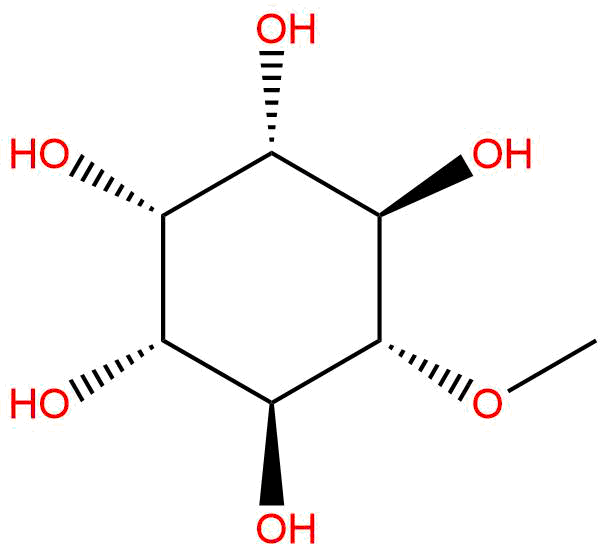


Product name: 5-O-Methyl-myo-inositol
Synonym name: Sequoyit;Inositol, 5-O-methyl-, myo- (8CI); Sequoyitol (6CI,7CI);
Catalogue No.: BP4097
Cas No.: 523-92-2
Formula: C7H14O6
Mol Weight: 194.183
Botanical Source:
Physical Description:
Type of Compound:
Purity: 95%~99%
Analysis Method: HPLC-DAD or/and HPLC-ELSD
Identification Method: Mass, NMR
Packing: Brown vial or HDPE plastic bottle
Storage: Store in a well closed container, protected from air and light. Put into refrigerate or freeze for long term storage.
Whenever possible, you should prepare and use solutions on the same day. However, if you need to make up stock solutions in advance, we recommend that you store the solution as aliquots in tightly sealed vials at -20℃. Generally, these will be useable for up to two weeks.
The product could be supplied from milligrams to grams
Inquire for bulk scale.
For Reference Standard and R&D, Not for Human Use Directly.
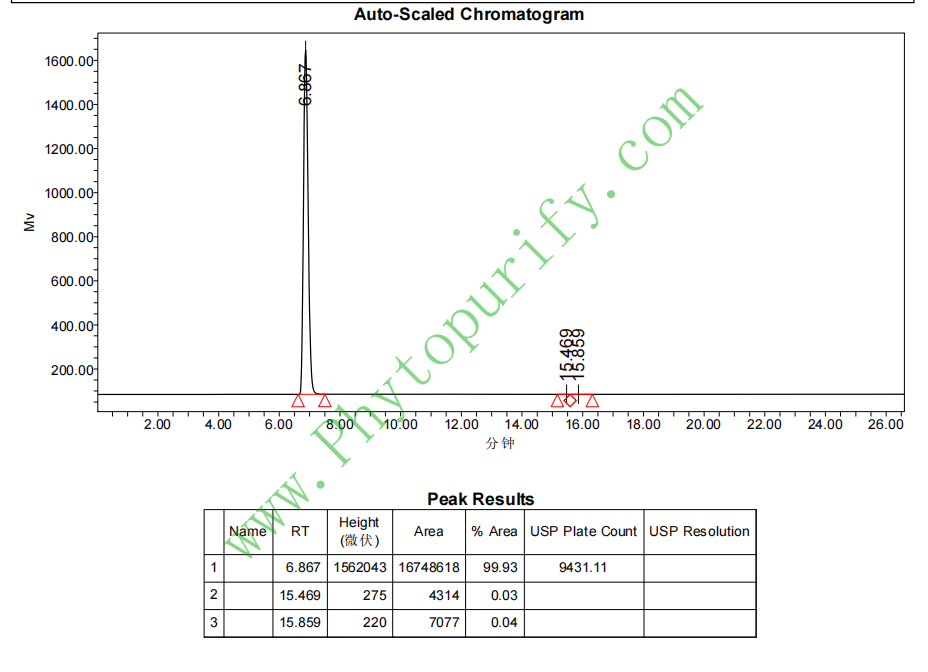
HPLC of 5-O-Methyl-myo-inositol
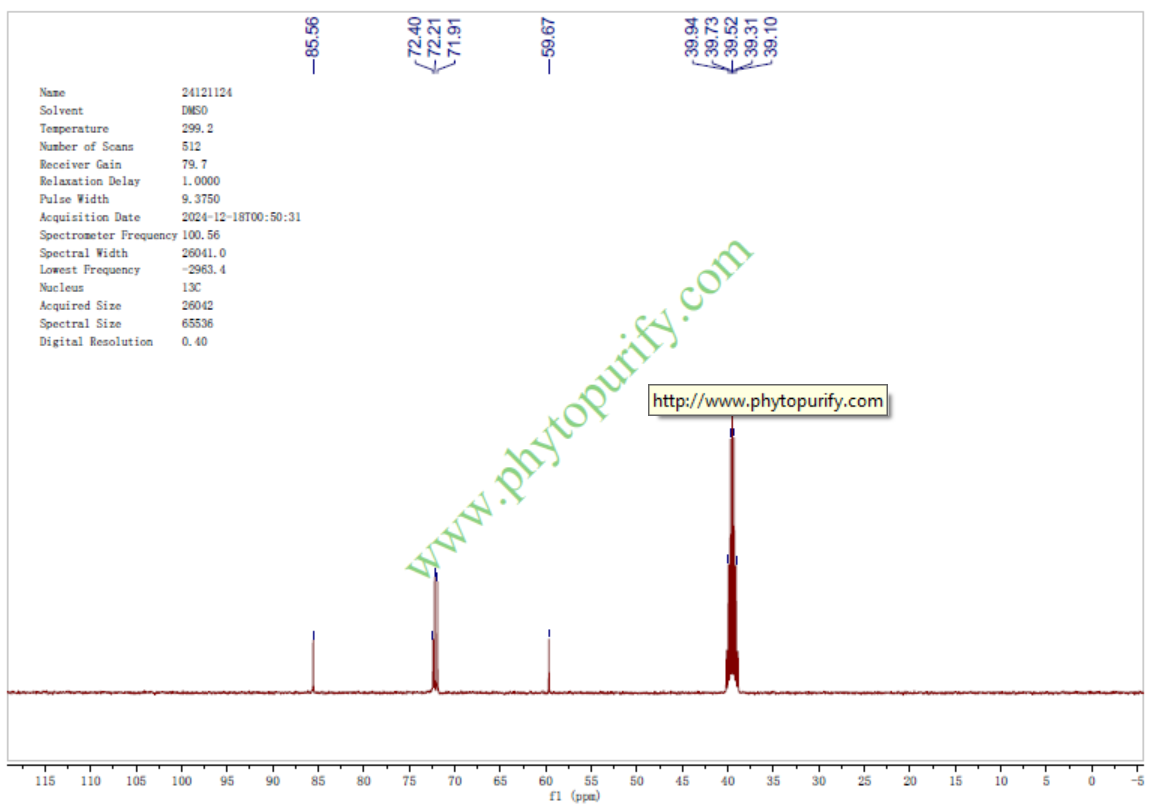
NMR of 5-O-Methyl-myo-inositol
Storage conditions:Short-term storage at 2~8℃, long-term storage at -20 ~ -80℃
5-O-Methyl-myo-inositol (CAS number: 523-92-2) is a naturally occurring methyl inositol compound, belonging to the derivatives of cyclohexane-1,2,3,4,5-pentanol. Its structural feature is that the hydroxyl group at position 6 is replaced by a methoxy group, forming a unique 1D-5-O-methyl inositol stereoisomer (1R, 2S, 3r, 4R, 5S, 6r). As a plant metabolite, resveratrol has been found in multiple plant species, demonstrating important biological functions and potential pharmacological activities. In recent years, with the deepening of pharmacological research on natural products, resveratrol has gradually become a hot topic in natural antioxidant research due to its significant antioxidant properties and ability to regulate multiple key molecular targets.
This article aims to systematically review the chemical structure and physicochemical properties, plant sources, and extraction methods of redwood alcohol, explore its pharmacological activity and mechanism of action, evaluate its pharmacological properties and pharmacokinetic characteristics, and finally look forward to its potential in clinical applications and future research directions, providing theoretical basis and research references for the field of natural product pharmacology.
Sequoiacol has a molecular formula of C7H14O6 and a molecular weight of 194.1830, belonging to the class of methyl inositol compounds. Its core structure is the inositol ring (cyclohexane-1,2,3,4,5-pentanol), which is replaced by a methoxy group (- OCH3) at the 6th hydroxyl position to form 5-O-methyl inositol. This molecule has five out of six hydroxyl groups that maintain a free hydroxyl state, giving it strong hydrophilicity and typical characteristics of a polyhydroxy compound.
In terms of physical and chemical properties, the LogP value of redwood alcohol is -2.0650, indicating its high hydrophilicity and water solubility of 378.4177 mg/mL, indicating its superior solubility in aqueous phase. The topological polar surface area (TPSA) is 110.3800 Å ², indicating that the molecule has a large number of polar groups, which are conducive to forming hydrogen bonds and polar interactions with biomolecules. The low permeability of the blood-brain barrier limits its direct action in the central nervous system. The negative result of hERG channel inhibition experiment indicates a low risk of cardiac toxicity. The Ames mutagenicity test showed a value of 0.0, indicating an extremely low risk of genetic toxicity.
In summary, the physicochemical properties of redwood alcohol determine its good water solubility and safety, laying the foundation for its use as a drug candidate molecule.
Sequoiacol, as a natural product, is widely present in various plants, especially in certain species of the Sequoiaceae family and other higher plants. Its biosynthetic pathway mainly involves methylation modification of inositol, which is an important metabolite for plants to cope with environmental stress and regulate cell signaling.
At present, the extraction of resveratrol mainly relies on water or alcohol extraction methods of plant tissues. A typical extraction process includes:
In recent years, green extraction techniques such as supercritical fluid extraction and microwave-assisted extraction have also been attempted to be applied to the extraction of redwood alcohol to improve extraction efficiency and environmental friendliness.
The pharmacological activity research of redwood alcohol mainly focuses on its antioxidant capacity and related cell protective effects. As a polyhydroxymethyl inositol compound, resveratrol can effectively scavenge free radicals and alleviate oxidative stress damage to cells.
Multiple in vitro experiments have shown that resveratrol can significantly enhance the activity of intracellular antioxidant enzymes such as superoxide dismutase (SOD1, SOD2), catalase (CAT), and glutathione peroxidase (GPX1), promote the clearance of reactive oxygen species (ROS), and reduce lipid peroxidation levels. In addition, resveratrol can induce the expression of heme oxygenase 1 (HMOX1), further enhancing the antioxidant defense system of cells.
Sequoiacol exhibits potential anti-inflammatory effects by regulating the activity of matrix metalloproteinases (MMP1, MMP3), inhibiting the release of inflammatory mediators, reducing tissue damage. Its activation of the nuclear factor E2 related factor 2 (NFE2L2/NRF2) signaling pathway is a key mechanism for its cell protective effect. NRF2, as the main antioxidant response transcription factor in cells, regulates the expression of various antioxidant enzyme genes. Sequoiacol enhances the adaptability of cells to oxidative stress by promoting NRF2 nuclear translocation.
Although current research on resveratrol mainly focuses on its antioxidant and anti-inflammatory effects, its structural characteristics suggest that it may have potential activities in sugar metabolism regulation, cell signaling, and other areas. Future research is expected to further expand its pharmacological functions.
The mechanism of action of resveratrol mainly revolves around its regulation of multiple key antioxidant and cell protection related targets:
Through multi-target synergistic regulation, resveratrol effectively alleviates cellular damage caused by oxidative stress and exerts a protective effect. In addition, the regulation of signaling pathways by resveratrol may involve inflammation related pathways such as MAPK and NF - κ B, enhancing its anti-inflammatory and cell protective effects.
The pharmacological parameters of redwood alcohol show that it has good safety and potential for drug development:
At present, there is limited research on the pharmacokinetics of redwood alcohol, but its high water solubility and low fat solubility suggest that its oral absorption may be limited, and pharmaceutical methods are needed to optimize absorption and bioavailability. In addition, the metabolic pathways, half-life, and excretion mechanisms of resveratrol in the body still need to be systematically studied.
Sequoiacol, with its significant antioxidant and anti-inflammatory activities, has shown potential application value in various diseases related to oxidative stress. Oxidative stress is an important link in the pathogenesis of cardiovascular disease, neurodegenerative disease, diabetes, tumor and other chronic diseases. Taxol is expected to become a new natural antioxidant by regulating the multi-target antioxidant pathway.
The future clinical application prospects mainly include:
In addition, the safety and low toxicity of redwood alcohol provide a good foundation for its clinical development. Future research should focus on its in vivo pharmacokinetic characteristics, formulation optimization, and preclinical animal model validation to promote its clinical translation.
Sequoiacol, as a natural methyl inositol compound, has shown broad research and application prospects in the fields of antioxidant and cell protection due to its unique chemical structure and excellent physicochemical properties. Its multi-target regulatory mechanism provides a new perspective for understanding the role of natural product antioxidants. Although research on its pharmacokinetics and clinical applications is still in its infancy, its good safety and significant biological activity lay a solid foundation for future drug development.
With the continuous development of natural product pharmacology, resveratrol is expected to become an important member of natural antioxidants, providing new strategies for the prevention and treatment of related diseases. In the future, it is necessary to strengthen its mechanism research, formulation development, and preclinical evaluation to promote its clinical application and benefit human health.
