Introduction/Overview
Natural products are an important source of new drug discovery and development, among which triterpenoids have attracted much attention due to their structural diversity and wide range of biological activities. Brucein B is derived from the traditional Chinese medicine Brucein(Brucea javanica A bitter bitter triterpenoid compound was isolated from the seeds of (L.) Merr., with a CAS number of 25514-29-8. Brucea asiatica is commonly used in traditional Asian medicine to treat diseases such as dysentery, malaria, and tumors, and its modern pharmacological research has revealed its significant anti-tumor potential. In recent years, Brucea Javanese B has become a hot topic in the field of anti-tumor natural product research due to its strong inhibitory activity against various malignant tumor cells and its action on multiple key signaling pathways and molecular targets. This article aims to systematically review the chemical structure, plant origin, pharmacological activity, mechanism of action, pharmacological evaluation, and clinical application prospects of Brucea Javanese B, in order to provide comprehensive scientific references for the in-depth research and development of this compound.
Chemical structure and physicochemical properties
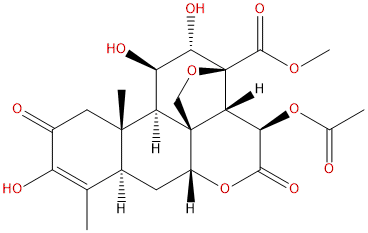
Brucea Javanese B belongs to the bitter bitter triterpenoid class, and its basic skeleton is derived from a twenty carbon tetracyclic triterpenoid. The structure usually contains a highly oxidized lactone ring (α, β - unsaturated - δ - lactone), which is the key pharmacophore for its biological activity. Its molecular formula is C28H32O9 and its molecular weight is 480.4660. This compound has multiple chiral centers and complex stereochemistry.
From the analysis of the parameters related to drug properties, the lipid water partition coefficient (LogP) of Brucea Javanese B is 0.0689, indicating its relatively balanced lipophilic and hydrophilic properties. Its topological polar surface area (TPSA) is 165.89 Å ², which is a relatively high value, mainly due to the presence of multiple polar groups such as hydroxyl, carbonyl, and ether bonds in the molecule. The water solubility parameter is 1.6111 (usually referring to LogS or related solubility indicators), indicating that it has a certain degree of solubility in water, but may still belong to the category of slightly soluble or poorly soluble. These physicochemical properties collectively determine that it is difficult to penetrate the blood-brain barrier (predicted as low permeability), which to some extent limits its direct effect on central nervous system tumors, but may also reduce the potential risk of neurotoxicity. The preliminary safety prediction shows that the risk of hERG channel inhibition is "no", and the Ames test result is 0.0 (usually indicating no mutagenicity), which provides preliminary safety signals for its further development.
Plant sources and extraction methods
Brucea Javanese B is mainly derived from the Brucea Javanese plant in the Sapindaceae family(Brucea javanica)Dry and mature seeds. Brucea is widely distributed in Southeast Asia and southern China. Its seeds are rich in various bitter bitter compounds of bitter wood, among which brucine B is one of the most active components.
The traditional extraction method mainly uses organic solvent extraction. The common process is to crush the seeds of Brucea asiatica, defatte them with petroleum ether or n-hexane, and then perform reflux extraction or percolation extraction with medium polarity solvents such as ethyl acetate, ethanol, or methanol. The crude extract obtained is further purified through a series of chromatographic separation techniques, including silica gel column chromatography, reverse phase column chromatography (such as ODS), high performance liquid chromatography (HPLC), and preparative thin-layer chromatography. Modern separation techniques such as high-speed countercurrent chromatography (HSCCC) have also been applied for efficient separation of such compounds. The optimization of the extraction process, such as solvent selection, temperature, time, and the use of ultrasound assisted or microwave-assisted extraction, aims to improve the yield and purity of Brucea Javanese extract B. It should be noted that the content of this component in plants is affected by factors such as place of origin, harvest season, and storage conditions.
Pharmacological activity research
The most prominent and extensively studied pharmacological activity of Brucea Javanese B is its broad-spectrum and potent anti-tumor effect. A large number of in vitro studies have shown that it has significant proliferation inhibitory and apoptosis inducing activities on a variety of human cancer cell lines, including but not limited to liver cancer, pancreatic cancer, breast cancer, colon cancer, lung cancer, leukemia and glioblastoma. Its half maximal inhibitory concentration (IC50) is usually in the micromolar or even nanomolar range, demonstrating strong cytotoxicity.
In addition to its direct cytotoxic effect, studies have also found that brucea Javanese B has other anti-tumor related activities: it can inhibit the migration and invasion of tumor cells, indicating its potential for anti metastasis; Has shown inhibitory effects on tumor angiogenesis in some studies; And it can reverse the multidrug resistance of certain tumor cells and enhance the efficacy of traditional chemotherapy drugs. In addition, Brucea Javanese B also has certain anti-inflammatory and immune regulatory activities, which may be related to the regulation of the tumor microenvironment in its anti-tumor effect. However, compared to its anti-tumor activity, there are relatively few reports on its antibacterial, antiviral, and other pharmacological activities.
Mechanism of action and molecular targets
The anti-tumor effect of Brucea Javanese B involves a complex mechanism of multiple targets and pathways, which is consistent with its characteristics as a natural product. Current research has revealed that its mechanism of action mainly includes inducing cell apoptosis, inhibiting cell proliferation, blocking the cell cycle, inhibiting invasion and metastasis, and regulating the tumor microenvironment. The key molecular targets are as follows:
- Apoptosis pathway targets Brucea Javanese B can significantly upregulate pro apoptotic proteins (such as Bax) and downregulate anti apoptotic proteins Bcl-2 and MCL1 Thus, it disrupts the mitochondrial membrane potential, promotes the release of cytochrome C, activates the Caspase cascade reaction, and ultimately leads to cell apoptosis. This is one of its most core mechanisms of action.
- Signal transduction pathway targets It can effectively inhibit STAT3 The activation of signaling pathways, including the inhibition of STAT3 phosphorylation and the expression of downstream target genes such as Survivor and Bcl xl. The sustained activation of STAT3 is closely related to tumor growth, survival, and immune escape.
- Transcription factor targets Brucea Javanese B can downregulate hypoxia inducible factor HIF-1αThe expression of tumor cells affects their adaptability and angiogenesis under hypoxic conditions.
- Enzyme and receptor targets:
- Topoisomerase Research suggests that it may inhibit TOP1 and TOP2A The activity interferes with DNA replication and repair, leading to DNA damage.
- Matrix metalloproteinases It can inhibit MMP-2 The expression and activity of MMP-9 weaken the invasion and metastasis ability of tumor cells.
- MAPK pathway: Yes MAPK1 The regulation of kinases such as ERK2 affects cell proliferation and survival signals.
- Estrogen related targets In hormone dependent breast cancer, brucea javanica B may interfere with Estrogen receptor 1 (ESR1) Signal or inhibit aromatase(CYP19A1)Active and exert anti-tumor effects.
These targets do not exist in isolation. Brucea Javanese B synergistically acts on these key nodes, forming a networked pharmacological effect that ultimately leads to tumor cell death and inhibits its malignant progression. For example, inhibiting STAT3 may be associated with downregulating the expression of MCL1, Bcl-2, and MMPs.
Evaluation of drug properties and pharmacokinetics
Despite the significant in vitro activity of Brucea Javanese B, its drug like properties face challenges, which is also the bottleneck that most natural active ingredients need to overcome in order to enter clinical practice.
- Absorption, distribution, metabolism, excretion (ADME)As mentioned earlier, its high TPSA and moderate LogP values suggest that its oral bioavailability may be low. Limited preclinical pharmacokinetic studies (mostly conducted in rodents) have shown that brucine B is metabolized rapidly in vivo, has a short plasma half-life, and may exhibit first pass effects. Its distribution volume and specific metabolic pathways (such as through the liver CYP450 enzyme system) still require systematic research. Its difficulty in crossing the blood-brain barrier limits its therapeutic application for brain tumors.
- Dosage form and administration route In order to improve its bioavailability and targeting, researchers are exploring novel drug delivery systems. For example, preparing it into nano drug delivery systems such as liposomes, nanoparticles, microemulsions, or polymer micelles can improve its water solubility, prolong circulation time, and potentially passively target tumor tissues through enhanced permeability and retention effects (EPR effects). In addition, making it into injectable emulsions or prodrug derivatives is also a feasible strategy.
- safety evaluation Although there is no preliminary prediction of hERG inhibition and mutagenic risk, comprehensive preclinical safety evaluation (including acute toxicity, long-term toxicity, reproductive toxicity, etc.) is still lacking for brucea jasmona B. Its strong cytotoxicity may not only kill tumor cells, but also have toxic side effects on normally proliferating cells such as bone marrow cells and gastrointestinal epithelial cells. The treatment window needs to be carefully defined.
Clinical application prospects and prospects
As a lead compound with multi-target anti-tumor activity, Brucea Javanese B has broad clinical application prospects, but the road ahead is long.
- Direct drug development The most direct path is to develop it into a new type of anti-tumor drug. The future research focus should be on: a) optimizing its pharmacokinetic properties through structural modification, improving oral bioavailability and targeting, and reducing potential toxicity; b) Conduct systematic preclinical pharmacological and toxicological studies to provide sufficient data for its application for clinical trials; c) Explore its combination therapy with existing chemotherapy drugs, targeted drugs, or immune checkpoint inhibitors in order to achieve synergistic effects and reduce drug resistance.
- Modernization of Traditional Chinese Medicine and Quality Markers As one of the main active ingredients in the medicinal herb of Brucea Javanica, the content of Brucea Javanese B can serve as an important chemical marker (Q-Marker) for evaluating the quality of Brucea Javanica and related preparations (such as Brucea Javanica oil emulsion injection), promoting the standardization and modernization of traditional Chinese medicine Brucea Javanica.
- Deep exploration of the mechanism of action By utilizing omics technologies (proteomics, metabolomics) and gene editing techniques, we can further comprehensively and unbiased reveal its targets and networks, which may lead to the discovery of novel tumor treatment targets.
- Application of new dosage forms and new technologies Developing an intelligent responsive delivery system that combines nanotechnology, targeted delivery technology, and prodrug strategies to achieve precise release of brucellotoxin B at the tumor site is a key direction for improving its efficacy and reducing systemic toxic side effects.
The challenges faced mainly include: complex total synthesis routes limit large-scale structural modifications; The multi-target characteristic is both advantageous and may bring unforeseeable off target effects and toxicity; From in vitro activity to in vivo effectiveness, and then to clinical benefits, a huge transformation gap needs to be bridged.
Conclusion
Brucea Javanese B is a representative bitter bitter triterpenoid compound isolated from the traditional Chinese medicine Brucea Javanese. With its unique chemical structure and multi-target mechanism of action, it has shown great potential in the field of anti-tumor research. It effectively induces tumor cell apoptosis, inhibits proliferation and metastasis by regulating multiple key targets such as MCL1, Bcl-2, STAT3, MMP-2, HIF-1 α, etc. However, its inherent pharmacological defects, such as potentially low oral bioavailability and rapid metabolism, are the main obstacles that constrain its clinical translation. Future research should focus on optimizing its ADME properties through drug chemical modification and novel drug delivery systems, and conducting systematic preclinical and clinical studies, while exploring its value as a combination drug component. In depth exploration of the pharmacological mechanism of Brucea Javanese B not only helps to develop new anti-tumor drugs, but also provides important basis for interpreting the scientific connotation of Brucea Javanese, a traditional Chinese medicine.