Introduction/Overview
Natural products, as an important source of drug discovery, play an irreplaceable role in the history of human disease treatment. Among them, alkaloid compounds have always been a hot topic in pharmacological research due to their structural diversity and significant physiological activity. Corynine, as a relatively simple catecholamine alkaloid, has gradually attracted the attention of researchers due to its unique pharmacological activity, especially its multi-target potential in the field of analgesia, since its discovery. Catecholamines, such as adrenaline, norepinephrine, and dopamine, are important neurotransmitters and hormones in the human body, widely involved in cardiovascular, neurological, and metabolic regulation. As a member of this class of compounds, palmatine has a structure similar to endogenous catecholamines, indicating that it may produce complex biological effects by interacting with multiple receptors and signaling pathways. This article aims to systematically review the chemical properties, plant sources, pharmacological activities, molecular mechanisms of action, pharmacological evaluation, and clinical application prospects of palmatine, in order to provide comprehensive scientific references for the in-depth research and potential drug development of this compound.
Chemical structure and physicochemical properties
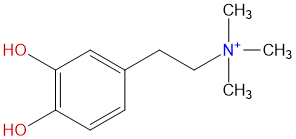
The chemical name of palmatine is 4- (2-aminoethyl) -1,2-benzenediol, and its CAS number is 7224-66-0. Structurally, palmatine belongs to the catecholamine family, with its core structure consisting of a catechol ring and an ethyl side chain with an amino group at the end. This structural feature gives it a high degree of similarity with endogenous neurotransmitters dopamine (lacking one hydroxyl group) and adrenaline (having one more hydroxyl group and one methyl group on the side chain), and also determines its basic physicochemical properties and potential biological activity.
According to the provided pharmacological parameters, the molecular weight of palmatine is 196.2700 g/mol, which belongs to small molecule compounds. The calculated lipid water partition coefficient (LogP) is -1.3262, indicating that the compound has a high degree of hydrophilicity, which is closely related to the presence of two phenolic hydroxyl groups and one amino polar group in the structure. The topological polar surface area (TPSA) is 40.4600 Å ², further confirming its excellent polarity characteristics. The high hydrophilicity directly leads to its excellent water solubility, with a calculated value of up to 8.6555 mg/mL, which is beneficial for its dissolution and in vivo distribution in aqueous media. However, this strong polarity also poses a challenge, as its ability to penetrate lipid bilayers is limited. The prediction shows that its blood-brain barrier (BBB) permeability is "low", which means it may be difficult for it to effectively enter the central nervous system through passive diffusion, which is a key obstacle to overcome for analgesic effects with the main target located in the central nervous system. In addition, preliminary safety warnings for the drug indicate that the risk of hERG inhibition is "no", and the Ames test result is 0.0 (usually indicating no mutagenicity), which provides a preliminary positive signal for its safety assessment, but needs to be validated through more comprehensive in vitro and in vivo experiments.
Plant sources and extraction methods
Gangzhang alkaloid was originally isolated from certain Cactaceae plants, which is also the origin of its Chinese name "Gangzhang alkaloid". Subsequent research has found that it also exists in some other plant species, especially in certain families and genera of the Caryophyllales order. These plants may have been used in traditional medicine to treat pain or inflammation, providing ethnic botanical clues for the analgesic activity of palmatine.
Extracting palmatine from plant materials usually follows the general process of alkaloid extraction. Firstly, the dried and crushed plant materials are leached or refluxed with polar solvents such as methanol, ethanol, or acidified water/alcohol mixtures to fully dissolve polar alkaloids including palmatine. The purpose of acidification is to convert alkaloids into water-soluble salt forms. Subsequently, crude extract was obtained through filtration and concentration. After preliminary liquid-liquid partitioning (such as removing lipophilic impurities with chloroform or ethyl acetate), the crude extract is further separated and purified using column chromatography technology. Common chromatographic packing materials include silica gel, alumina, or reverse phase C18 materials. Due to the presence of active functional groups such as catechol and amino groups, it is important to avoid oxidation during the separation process. It is often operated under low temperature, light avoidance, and inert gas protection. High performance liquid chromatography (HPLC), especially preparative HPLC, is a key step in obtaining high-purity palmatine monomers. Structural identification relies on spectroscopic techniques such as nuclear magnetic resonance (NMR), mass spectrometry (MS), infrared (IR), and ultraviolet (UV). Modern biotechnology, such as plant cell culture, also provides potential alternative pathways for large-scale production, but it is still in the research stage.
Pharmacological activity research
The most notable pharmacological activity of palmatine is concentrated in its analgesic properties. Research has shown that it exhibits significant analgesic effects in various experimental pain models.
1. Central analgesic effect: In pain models that mainly integrate the spinal cord horizontally, such as the hot plate method and tail flick method, palmatine can significantly increase the pain threshold of animals. Its function may involve regulating the central opioid receptor system, although it is not a typical opioid ligand, it may indirectly affect the release of endogenous opioid peptides or receptor sensitivity.
2. Peripheral anti-inflammatory and analgesic effects: In pain models with inflammatory components such as acetic acid writhing test and formalin test, palmatine also showed good inhibitory effects. The second phase reaction (inflammatory pain) of formalin test was significantly inhibited, indicating its anti-inflammatory and analgesic properties. This is related to its potential inhibition of cyclooxygenase (COX) activity and reduction of the production of inflammatory mediators such as prostaglandins.
3. Potential effects of neuropathic pain: In some preliminary models of chronic compressive injury (CCI) of sciatic nerve or pain of diabetes neuropathy, clavulamine also showed a trend of relieving abnormal pain and hyperalgesia. This suggests that its target may involve key ion channels and receptors that mediate neuropathic pain.
In addition to its core analgesic activity, based on its catecholamine structure, palmatine may have an impact on the cardiovascular system, such as transient pressor or heart rate changes, but this is usually more pronounced at high doses, and its intensity and characteristics of action are different from classical adrenergic receptor agonists, showing certain selectivity or partial excitatory properties, which is worth further exploration.
Mechanism of action and molecular targets
The analgesic effect of palmatine is not achieved through a single pathway, but exhibits a multi-target synergistic effect, which is highly related to its structural characteristics. The preliminary revealed targets mainly include the following categories:
1. Transient receptor potential (TRP) channel:
* TRPV1 (Vanillin Receptor 1): TRPV1 is an important pain integrator that can be activated by capsaicin, heat, and protons. Research has shown that palmatine may act as a regulator of TRPV1, producing antagonistic or desensitizing effects at specific concentrations, thereby inhibiting the signaling of thermal and inflammatory pain mediated by this channel.
* TRPA1 (Anchored Protein Receptor 1): TRPA1 is involved in cold pain, inflammatory pain, and neuropathic pain. Guanzhang alkaloid may intervene in the downstream pain signaling pathway by affecting the activity of TRPA1.
2. Endogenous cannabinoids and opioid system:
* CNR1 (cannabinoid CB1 receptor): The endocannabinoid system is a key pathway for pain regulation. Gangzhang alkaloid may directly or indirectly act on CB1 receptors, mimic the effects of endogenous cannabinoids, and produce analgesic, anti anxiety, and other effects.
* Opioid receptors (OPRM1, OPRD1, OPRK1): Namely, μ, δ, and κ opioid receptors. Although palmatine is not a potent opioid agonist, it may act as a partial agonist or allosteric modulator, activating these receptors in a way different from morphine. While producing pain relief, it may potentially alleviate some of the side effects of traditional opioid drugs, such as respiratory depression and addiction, but this requires strict validation.
3. Inflammatory mediator synthase:
* PTGS1/PTGS2 (cyclooxygenase-1/2): The catechol structure of palmatine may have the potential to resist oxidation and inhibit COX enzyme activity, thereby reducing the biosynthesis of pain and inflammatory mediators such as prostaglandin E2, which is an important molecular basis for its peripheral anti-inflammatory and analgesic effects.
4. Monoamine neurotransmitter system:
* SLC6A4 (5-hydroxytryptamine transporter, SERT): By inhibiting the reuptake of 5-hydroxytryptamine (5-HT), increasing the concentration of 5-HT in the synaptic cleft, and enhancing the regulation of pain by the descending inhibitory pathway.
* DRD2 (dopamine D2 receptor): The dopamine system plays a role in both pain modulation and reward pathways. Guanzhang alkaloid may affect the midbrain limbic dopamine pathway by acting on D2 receptors, and may regulate emotional components associated with chronic pain while providing pain relief.
In summary, palmatine forms a multidimensional and multi-level analgesic network by simultaneously acting on TRP channels, endogenous analgesic systems (opioids, cannabinoids), key enzymes involved in the synthesis of inflammatory mediators, and monoamine neurotransmitter systems. This multi-target mode of action may bring advantages such as synergistic enhancement and reduction of side effects caused by excessive activation of a single target, especially for chronic pain and neuropathic pain with complex mechanisms, which may have greater therapeutic potential.
Evaluation of drug properties and pharmacokinetics
Based on calculations and preliminary experimental data, a preliminary evaluation of the pharmacological properties of palmatine alkaloids is conducted
Advantage:
1. Low molecular weight Meets the molecular weight requirements in the "Five Rules" for drug properties.
2. Good security warning The unpredictable risk of hERG cardiac toxicity and mutagenicity (Ames test negative) has laid a preliminary safety foundation for subsequent development.
3. Excellent water solubility Beneficial for formulation development and improving the dissolution rate in oral bioavailability.
4. Clear structure, easy to synthesize and modify Its relatively simple structure facilitates full synthesis or structural optimization, providing convenience for structure-activity relationship research and prodrug design.
Challenges and shortcomings:
1. Poor blood-brain barrier permeability This is the main obstacle to its development as a central analgesic drug. Its high polarity (low LogP, high TPSA) results in weak passive diffusion ability.
2. Chemical stability issues The structure of catechins is easily oxidized by oxygen in the air, especially under alkaline conditions, generating quinone substances that may affect their efficacy and safety. During the formulation process, antioxidant strategies should be considered, such as adding antioxidants, making stable salts, and storing them in a dark sealed environment.
3. Potential off target effects As a catecholamine analogue, it may have unexpected effects on adrenergic alpha and beta receptors, causing cardiovascular side effects that require strict receptor selectivity evaluation.
4. Oral bioavailability may be low In addition to solubility, it may be metabolized by enzymes in the gastrointestinal tract, such as catechol-O-methyltransferase, COMT), And the first pass effect will also affect the amount of it entering the systemic circulation.
Pharmacokinetic outlook:
At present, there are few reports on pharmacokinetic studies of the palmatine system. It can be speculated that its pharmacokinetic characteristics may be similar to other catecholamine drugs: after oral administration, it may be absorbed rapidly but incompletely, with a small distribution volume (mainly distributed in the blood and extracellular fluid), making it difficult to enter brain tissue. The metabolic pathways may mainly involve methylation of COMT, deamination of monoamine oxidase (MAO), and binding reactions with sulfuric acid or glucuronic acid, generating inactive metabolites that are excreted by the kidneys. The future research focus should include: establishing sensitive biological analysis methods to systematically investigate their absorption, distribution, metabolism, and excretion processes under different administration routes (oral, injection, transdermal, etc.); Assess its metabolic stability; And explore improving its BBB permeability and overall pharmacokinetic properties through structural modifications (such as preparing prodrugs, introducing lipophilic groups) or using delivery systems (such as nanoparticles, liposomes, brain targeted peptide modifications).
Clinical application prospects and prospects
As a multi-target analgesic lead compound, palmatine has broad clinical application prospects, but also faces many challenges.
Potential application directions:
1. Complex chronic pain management For pain types with complex mechanisms such as neuropathic pain and cancer pain, single target drugs often have limited efficacy. The multi-target properties of palmatine may provide more comprehensive pain control and may reduce the dosage and risk of opioid dependence.
2. Peripheral inflammatory pain By utilizing its potential COX inhibition and anti-inflammatory properties, it can be developed for pain primarily driven by inflammation, such as osteoarthritis and muscle pain.
3. Components of auxiliary analgesics or compound preparations As an adjuvant medication for existing analgesics such as nonsteroidal anti-inflammatory drugs and weak opioid drugs, it synergistically enhances efficacy through different mechanisms, reducing the dosage and side effects of each component.
4. Template for the Design of New Analgesic Drugs Using it as the core structure, systematic pharmacochemical optimization is carried out with the aim of improving BBB penetration, enhancing selectivity towards specific targets, and improving metabolic stability, in order to develop a new generation of analgesics with more drug properties.
Future research prospects:
1. In depth study on the mechanism of action It is necessary to use molecular docking, point mutagenesis, functional experiments, and other methods to accurately elucidate the binding mode, action properties (excitatory/antagonistic/allosteric regulation), and efficacy of palmatine with each key target such as TRPV1, CNR1, and opioid receptors.
2. Preclinical evaluation of the system Validate its efficacy in animal pain models that are closer to human diseases, and comprehensively evaluate its long-term safety, toxicological characteristics (especially cardiovascular and neurological toxicity), and potential addiction.
3. Structural optimization and delivery strategy This is the core driving force for its clinical application. Design prodrugs through chemical modifications (such as esterification and etherification of phenolic hydroxyl groups, acylation of amino groups), or develop nano drug delivery systems, transdermal drug delivery systems, etc., to address their BBB permeability, stability, and pharmacokinetic shortcomings.
4. Explore other pharmacological activities Given its action on the dopamine and serotonin systems, its activity in emotional disorders (such as depression, anxiety, often comorbid with chronic pain), Parkinson's disease, and other related fields is also worth exploring.
Conclusion
Gangzhang alkaloid, a natural catecholamine derived from plants, has become an attractive research object in the fields of natural product medicinal chemistry and pain pharmacology due to its unique chemical structure and multi-target analgesic pharmacological activity. It is like a multi toothed key that can simultaneously act on multiple key nodes in the pain signaling pathway, including TRP channels, endogenous opioid and cannabinoid systems, inflammatory mediator synthetases, and monoamine neurotransmitter systems, thus demonstrating the potential to address complex pain syndromes. Although it faces challenges such as low blood-brain barrier permeability and chemical stability in drug development, these challenges are precisely the breakthroughs that modern medicinal chemistry and new drug delivery technologies can focus on solving. Future research should focus on revealing its precise molecular mechanism of action and overcoming its pharmaceutical shortcomings through rational structural optimization and advanced formulation strategies. Guanzhang alkaloid not only provides valuable lead compounds for the development of new, efficient, and low-risk analgesic drugs, but also once again confirms the strategic value of searching for multi-target therapeutic drugs from natural products. With the continuous deepening of research, palmatine is expected to move from the laboratory to clinical practice, bringing new treatment hope to billions of pain patients worldwide.