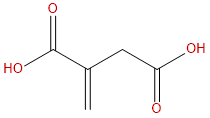


Product name: Itaconic acid
Synonym name: Methylenebutanedioic acid;Propylenedicarboxylic acid
Catalogue No.: BP4247
Cas No.: 97-65-4
Formula: C5H6O4
Mol Weight: 130.099
Botanical Source:
Type of Compound:
Purity: 95%~99%
Analysis Method: HPLC-DAD or/and HPLC-ELSD
Identification Method: Mass, NMR
Packing: Brown vial or HDPE plastic bottle
Storage: Store in a well closed container, protected from air and light. Put into refrigerate or freeze for long term storage.
Whenever possible, you should prepare and use solutions on the same day. However, if you need to make up stock solutions in advance, we recommend that you store the solution as aliquots in tightly sealed vials at -20℃. Generally, these will be useable for up to two weeks.
The product could be supplied from milligrams to grams
Inquire for bulk scale.
For Reference Standard and R&D, Not for Human Use Directly.
Storage conditions:Short-term storage at 2~8℃, long-term storage at -20 ~ -80℃
74.6000
-.2559
-2.2659
65.7040
1.4817
2.6724
Low
50.3581
2.5503
Yes
No
No
No
No
No
0.0
Yes
Yes
Yes
Yes
Itaconic acid (CAS number: 97-65-4), as an important natural dicarboxylic acid, has attracted widespread attention in pharmacology and biomedical fields in recent years. Its unique chemical structure and biosynthetic pathway make it the intersection of fungal metabolites and human metabolites, reflecting the dual identity of natural products and endogenous metabolites. Itaconic acid is not only widely used as an important biobased chemical in industrial biotechnology, but also a hot topic in natural product pharmacology research due to its potential roles in immune regulation, anti-inflammatory, and metabolic reprogramming. Especially in the treatment research of severe inflammatory diseases such as sepsis and inflammatory storms, itaconic acid has shown significant pharmacological activity by regulating multiple key molecular signaling pathways, demonstrating good clinical application prospects.
This article provides a systematic review of the chemical structure and physicochemical properties, plant sources and extraction methods, pharmacological activities, and mechanisms of action of itaconic acid. The focus is on analyzing its molecular target regulatory effects in sepsis and inflammatory storms, and exploring its pharmacokinetic characteristics and clinical application prospects in combination with drug parameters. The aim is to provide comprehensive and in-depth references for researchers in the field of natural product pharmacology.
Yikang acid is a dicarboxylic acid, chemically named 2-methylenylpropanedicarboxylic acid, with a molecular formula of C5H6O4 and a molecular weight of 130.0990. Its structural feature is that one methyl hydrogen in the methyl methacrylate skeleton is replaced by a carboxylic acid group, forming a fatty acid derivative containing two carboxyl groups. The molecular structure of itaconic acid contains an unsaturated alkene bond, which endows it with certain reactivity and biological functional diversity. Its structure is similar to succinic acid, both belonging to the dicarboxylic acid class, but the ene bond of itaconic acid makes it unique in metabolic pathways and biological activity.
In terms of physical and chemical properties, the LogP value of itaconic acid is -0.2559, indicating its good hydrophilicity. Its water solubility is 65.7040 mg/mL, indicating its high solubility in aqueous phase, which is conducive to absorption and distribution in vivo. Its polar surface area (TPSA) is 74.6 Å ², indicating that its molecular polarity is moderate and conducive to binding with biomolecules. The low permeability of the blood-brain barrier means that its distribution in the central nervous system is limited, which may reduce the risk of central toxicity. The hERG channel inhibition experiment result was negative, indicating that itaconic acid is not prone to cardiac toxicity. The Ames mutagenicity test showed 0.0, indicating a low risk of genotoxicity and a good safety basis.
Itaconic acid was initially discovered in fungal microorganisms, especially Aspergillus and Ustilago fungi. Although itaconic acid itself is not a typical plant secondary metabolite, its presence in plant microbial symbiotic systems and the diversity of its metabolites make it a research hotspot. The natural source of itaconic acid is mainly produced through microbial fermentation, using fungal metabolic pathways to convert carbon sources into itaconic acid.
The traditional extraction method of itaconic acid relies on microbial fermentation, and commonly used carbon sources include glucose, glycerol, and starch. Fermentation conditions such as pH, temperature, aeration rate, and nutrient concentration all have a significant impact on the yield of itaconic acid. In recent years, the development of genetic engineering technology has made it possible to optimize the synthesis pathway of itaconic acid through gene editing, significantly improving yield and purity. In addition, the application of downstream purification technologies such as membrane separation, crystallization, and ion exchange has improved the industrial extraction efficiency of itaconic acid.
Although itaconic acid mainly comes from microbial fermentation, some studies have also explored the biosynthetic potential of itaconic acid in plant tissue culture and symbiotic microbial systems, providing a theoretical basis for future diversified production.
The pharmacological activity research of itaconic acid mainly focuses on its anti-inflammatory, immune regulatory, and metabolic reprogramming functions. As an endogenous metabolite, itaconic acid plays an important role in immune cell metabolism, especially in the metabolic reprogramming process of macrophages.
anti-inflammatory effect
Itaconic acid reduces inflammation by inhibiting the production and release of inflammatory mediators. Research has shown that itaconic acid can significantly reduce the expression of pro-inflammatory cytokines such as IL-1 β, TNF - α, and IL-6, and inhibit the activation of inflammatory signaling pathways. Its anti-inflammatory effect has been validated in various inflammatory models, including sepsis, mouse inflammatory bowel disease models, and lung injury models.
Immune regulatory function
Yikang acid regulates the metabolic status of immune cells, promotes the transformation of macrophages from pro-inflammatory M1 type to anti-inflammatory M2 type, and regulates the balance of the immune microenvironment. In addition, itaconic acid affects the energy metabolism and functional status of immune cells by regulating the activity of immune metabolism related enzymes.
Antioxidant and Cellular Protection
Itaconic acid can activate antioxidant response and reduce oxidative stress-induced cell damage. It enhances cellular antioxidant defense ability and protects tissues from oxidative damage by regulating the KEAP1-NRF2 signaling pathway.
metabolic regulation
As a metabolic intermediate, itaconic acid participates in the tricarboxylic acid cycle (TCA) pathway metabolism, regulating cellular energy metabolism and metabolic homeostasis. It plays a key role in regulating cellular metabolic reprogramming, affecting cell proliferation, differentiation, and function.
The pharmacological effects of itaconic acid depend on its regulation of multiple key molecular signaling pathways, especially in pathological states such as sepsis and inflammatory storms. The main targets include:
NLRP3 inflammasome
NLRP3 inflammasome is a key regulator in the inflammatory response, involved in the production of pro-inflammatory cytokines. Yikang acid inhibits the assembly and activation of NLRP3 inflammasomes, reduces the release of pro-inflammatory factors such as IL-1 β, alleviates excessive inflammatory reactions, and prevents the occurrence of inflammatory storms.
HIF-1 α (hypoxia inducible factor-1 α)
HIF-1 α plays a central role in inflammation and metabolic regulation. Yikang acid can regulate the stability and transcriptional activity of HIF-1 α, affect the metabolic reprogramming of inflammatory cells, inhibit the expression of pro-inflammatory genes, and promote anti-inflammatory responses.
KEAP1-NRF2 signal pathway
KEAP1, as an inhibitory protein of NRF2, regulates cellular antioxidant response. Yikang acid binds to KEAP1, releases NRF2, activates antioxidant gene expression, enhances cell resistance to oxidative stress, and reduces tissue damage.
NF - κ B signaling pathway
NF - κ B is the core transcription factor of inflammatory response, regulating the expression of various inflammatory genes. Yikang acid inhibits the activation of NF - κ B, reduces the expression of pro-inflammatory cytokines, and suppresses the inflammatory cascade reaction.
ACOD1 (immune related decarboxylase 1)
ACOD1 catalyzes the biosynthesis of itaconic acid and is a key enzyme in immune metabolism regulation. As a product of ACOD1, itaconic acid participates in feedback regulation, affects the metabolism and function of immune cells, and regulates the intensity and duration of immune responses.
In summary, itaconic acid regulates inflammation and immune response through multi-target and multi pathway synergistic effects, demonstrating a complex and sophisticated pharmacological regulatory network.
The pharmacological evaluation of itaconic acid shows that it has good potential for drug development:
In terms of pharmacokinetics, itaconic acid, as a small molecule metabolite, has stable metabolism in vivo and is mainly excreted through the kidneys. Its hydrophilic and polar characteristics make it widely distributed in plasma, but its tissue penetration is limited. Due to the low permeability of the blood-brain barrier, there is less exposure of itaconic acid in the central nervous system. The detailed pharmacokinetic data of itaconic acid is currently insufficient, and systematic in vivo pharmacokinetic and pharmacodynamic studies are needed in the future to optimize the dosing regimen and formulation design.
Yikang acid has shown broad application prospects in clinical emergencies such as sepsis and inflammatory storms due to its unique immunomodulatory and anti-inflammatory effects. Sepsis, as a highly lethal inflammatory disease worldwide, lacks effective targeted therapeutic drugs. Yikang acid regulates the inflammatory response through multiple targets, providing a new approach for the treatment of sepsis.
In addition, the potential applications of itaconic acid in autoimmune diseases, metabolic syndrome, and chronic inflammatory diseases are gradually being recognized. Its ability to regulate immune metabolism makes it a candidate drug for treating diseases related to immune metabolism disorders.
Future research should focus on:
With the advancement of biotechnology and drug development technology, itaconic acid is expected to become an important breakthrough in the field of natural product pharmacology, bringing new hope for the treatment of inflammatory diseases.
As a natural product with unique structure and multiple biological functions, itaconic acid combines the dual advantages of metabolic regulation and immune regulation, demonstrating a wide range of pharmacological activities and good drug properties. Its multi-target mechanism of action in severe inflammatory diseases such as sepsis and inflammatory storms provides a solid foundation for the development of novel anti-inflammatory and immunomodulatory drugs. Although research on itaconic acid is still in its infancy, with the deepening of molecular pharmacology, metabolomics, and clinical translation studies, itaconic acid is expected to become an important direction for the development of natural product drugs in the future. The pharmacokinetics and preclinical research of the system will lay the foundation for its clinical application, promote its clinical translation, and benefit more patients.
