Introduction/Overview
Cardiovascular disease (CVD) is the leading cause of death and disability worldwide, with a complex pathogenesis involving multiple pathophysiological processes such as inflammation, oxidative stress, endothelial dysfunction, lipid metabolism disorders, and myocardial cell apoptosis. Although modern medicine has made significant progress in the development of cardiovascular drugs, existing drugs still face issues such as side effects, drug resistance, and high costs. Therefore, searching for efficient and low toxicity new cardiovascular protective agents from natural products has always been an important direction in the field of drug development. Flavonoids, as a widely distributed class of secondary metabolites in the plant kingdom, have become a hot topic in natural medicine research due to their diverse chemical structures and extensive biological activities.
Choerospondin, CAS number 81202-36-0, is a traditional medicinal plant derived from South jujube(Choerospondias axillaris)Flavonoids isolated from fruits or bark. South sour jujube is commonly used in the traditional medical systems of many Asian countries to treat cardiovascular discomfort, indigestion, and trauma. In recent years, with the deepening development of natural product chemistry and molecular pharmacology, jujube glycoside has attracted much attention due to its significant cardiovascular protective activity demonstrated in experimental models. Research has shown that its effects involve multiple aspects such as anti-inflammatory, antioxidant, anti apoptotic, improving endothelial function, and regulating ion channels, and interact with multiple key cardiovascular related targets such as SELP, PPARG, ACE, AKT1, etc. This article aims to provide a systematic review of the chemical properties, plant sources, pharmacological activities, mechanisms of action, medicinal properties, and clinical application potential of jujube glycoside, in order to provide comprehensive scientific references for the in-depth research and development of this compound.
Chemical structure and physicochemical properties
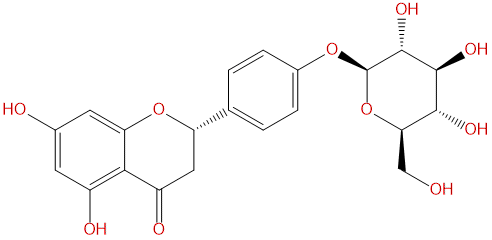
South jujube glycoside is a flavonoid carbon glycoside, and its chemical structure belongs to a subclass of flavonoids. Its basic parent nucleus is 2-phenylchromenone, and its specific structure is Quercetin-3-O - α - L-rhamnoside. The molecular formula is C21H20O11 and the molecular weight is 434.3970 g/mol.
From the analysis of physical and chemical properties, Nanjujuzi glycoside exhibits typical polar flavonoid glycoside characteristics. The calculated lipid water partition coefficient (LogP) value is 0.3984, indicating that the compound has good hydrophilicity, which is consistent with its glycoside structure. The topologically polar surface area (TPSA) is as high as 166.14 Å ², further confirming the presence of multiple hydrogen bond donors and acceptors (mainly from sugar and phenolic hydroxyl groups) in the molecule, which determines its strong polarity. The predicted value of water solubility is 2.7930 mg/mL, which belongs to moderate to upper solubility and is beneficial for its dispersion and absorption in biological aqueous environments. However, its high polarity and TPSA also pose challenges to its transmembrane permeability. The prediction shows that its blood-brain barrier (BBB) permeability is low, suggesting that the direct action of the central nervous system may be limited, but it also reduces the potential risk of central nervous system side effects. In terms of preliminary safety prediction, Nanjujuzi glycoside showed no hERG potassium channel inhibitory activity (predicted as' no '), indicating a lower risk of inducing QT interval prolongation and apical torsion type ventricular tachycardia in the heart. The Ames test predicted a value of 0.0, indicating that there may be no direct risk of genotoxic mutagenesis. These preliminary pharmacological parameters have laid a relatively favorable foundation for its subsequent development.
Plant sources and extraction methods
The main source of Nanjujuzi glycoside is Nanjujuzi, a plant of the genus Nanjuzi in the family Anacardiaceae(Choerospondias axillaris). This plant is widely distributed in China, Nepal, India, Japan, and some parts of Southeast Asia. Its dried and mature fruit (Guangzao) is a commonly used medicinal herb in Mongolian medicine, Tibetan medicine, and traditional Chinese medicine. It is commonly used to treat conditions such as palpitations, insomnia, qi stagnation, and blood stasis.
The extraction of naringin from plant materials usually follows the conventional extraction and separation process of flavonoid glycosides in natural products. Firstly, dry and crush the fruit or bark of the jujube.extraction method Solvent extraction methods are commonly used, including methanol, ethanol, or their aqueous solutions (such as 70% -80% ethanol). Heating reflux, ultrasound assisted, or microwave-assisted extraction techniques are used to improve extraction efficiency and rate. The crude extract is concentrated under reduced pressure to obtain a paste.
Subsequently, the system will proceed Separation and purification Large pore adsorption resin (such as AB-8, D101) column chromatography is commonly used for initial enrichment, followed by gradient elution with water and different concentrations of ethanol. Jujube glycoside is usually enriched in the elution sites of medium to high concentrations of ethanol. Further purification depends on normal or reverse phase silica gel column chromatography, Sephadex LH-20 column chromatography and high performance liquid chromatography (HPLC) preparation technology. The combination of a reverse phase C18 chromatographic column with methanol water or acetonitrile water system is the key step in obtaining high-purity naringenin monomers. Structural identification involves the comprehensive use of spectroscopic methods such as ultraviolet spectroscopy (UV), infrared spectroscopy (IR), mass spectrometry (MS), nuclear magnetic resonance hydrogen spectroscopy, and carbon spectroscopy (1H-NMR, 13C-NMR).
Pharmacological activity research
A large number of pharmacological experiments in vitro and in vivo have confirmed that jujube glycoside has multiple biological activities, and its core lies in Protective effect on cardiovascular system。
-
Antioxidant and anti-inflammatory effects Jujube glycoside is an effective free radical scavenger that can significantly reduce the levels of reactive oxygen species (ROS) in vascular endothelial cells and cardiomyocytes induced by hydrogen peroxide (H2O2), lipopolysaccharide (LPS), or oxidized low-density lipoprotein (ox LDL). At the same time, it can inhibit the production of inflammatory factors such as tumor necrosis factor - α (TNF - α), interleukin-6 (IL-6), and interleukin-1 β (IL-1 β), and downregulate the expression of inducible nitric oxide synthase (iNOS) and cyclooxygenase-2 (COX-2), thereby reducing oxidative damage and inflammatory response in blood vessels and cardiac muscle tissue.
-
Endothelial function protection and anti atherosclerosis: In atherosclerosis models (such as ApoE -/- mice) or high-fat diet induced animal models, jujuboside can improve endothelium-dependent vasodilation, and its mechanism is related to increasing the activity of endothelial nitric oxide synthase (eNOS) and the bioavailability of nitric oxide (NO). In addition, it can inhibit the expression of vascular cell adhesion molecule-1 (VCAM-1) and intercellular adhesion molecule-1 (ICAM-1), reduce the adhesion of monocytes to endothelial cells, and thus delay the formation of atherosclerotic plaque.
-
Cardioprotective effect In myocardial ischemia/reperfusion (I/R) injury, isoproterenol induced myocardial hypertrophy, or doxorubicin induced cardiomyopathy models, pretreatment with naringenin can significantly reduce myocardial infarction area, inhibit myocardial cell apoptosis, and improve cardiac function indicators such as left ventricular end diastolic pressure, left ventricular systolic pressure, and ejection fraction. Its protective effect is closely related to inhibiting mitochondrial apoptosis pathway, reducing calcium overload, and regulating autophagy.
-
Antiarrhythmic effects and ion channel regulation Research has shown that naringenin has the potential to regulate multiple ion channels. Especially, it has no direct blocking effect on hERG channels, reducing the risk of arrhythmia. Meanwhile, it may stabilize myocardial cell electrophysiology and counteract ischemia or drug-induced arrhythmias by regulating the activity of sodium calcium exchangers (NCX1, encoded by SLC8A1) and potassium channels (such as KCNH2 related channels).
-
Other potential activities Some studies also suggest that naringenin may have the potential to inhibit platelet aggregation (related to the inhibition of P-selectin SELP), mildly reduce blood pressure (related to the inhibition of angiotensin-converting enzyme ACE), and regulate lipid metabolism by activating peroxisome proliferator activated receptor gamma (PPARG).
Mechanism of action and molecular targets
The cardiovascular protective effect of jujube glycoside is not achieved through a single pathway, but through a complex multi-target network. Existing research has revealed its interactions with multiple key protein targets:
-
Anti inflammatory and endothelial protective targets:
- SELP (P-selectin)Jujuboside can inhibit the expression of P-selectin on the surface of platelets and endothelial cells, reduce platelet leukocyte aggregation and leukocyte rolling on inflammatory endothelium, which is the early link of its anti atherosclerosis.
- ICAM1 & VCAM1 By inhibiting inflammatory signaling pathways such as nuclear factor kappa B (NF - κ B), downregulating the expression of ICAM-1 and VCAM-1, and blocking the migration and adhesion of monocytes/macrophages to the vascular endothelium.
- NOS3 (eNOS)Nanjujuzi glycoside can activate the PI3K/AKT signaling pathway, promote AKT1 phosphorylation and further phosphorylate to activate eNOS, increase NO production, thereby improving vasodilation function and endothelial health.
-
Cell survival and anti apoptotic targets:
- AKT1 (protein kinase B)As a core survival signal node, jujube glycoside activates PI3K through upstream receptors (possibly interacting with G protein coupled receptors such as ADRB2), and then phosphorylates and activates AKT1. Activated AKT1 exerts a strong anti cardiomyocyte apoptosis effect by phosphorylating and inhibiting pro apoptotic proteins such as Bad and Caspase-9, as well as activating pathways such as mTOR.
- PPARG (Peroxisome proliferator activated receptor gamma)As a nuclear receptor, PPARG can regulate gene expression related to lipid metabolism, glucose homeostasis, and inflammation after activation. South jujube glycoside may act as a regulator of PPARG, improving metabolic disorders and reducing vascular inflammation.
-
Cardiovascular regulatory enzymes and channel targets:
- ACE (angiotensin converting enzyme)In vitro studies have shown that jujube glycoside may have a certain inhibitory effect on ACE, which helps to reduce the production of angiotensin II, thereby producing vasodilatory and antihypertensive effects.
- ADRB2 (β 2-adrenergic receptor)As an important cardiovascular regulatory receptor, the activation of ADRB2 is associated with vasodilation and myocardial protection. South jujube glycoside may indirectly affect cAMP levels and downstream protein kinase A (PKA) activity by regulating ADRB2 signaling.
- SLC8A1 (sodium calcium exchanger NCX1)In myocardial ischemia/reperfusion injury, the reverse mode of NCX1 exacerbates calcium overload. South jujube glycoside may help maintain intracellular calcium homeostasis and protect the myocardium by regulating NCX1 activity.
- KCNH2 (hERG potassium channel)As mentioned earlier, naringenin does not directly inhibit hERG channels, which is a favorable feature of its cardiac safety.
In summary, Nanjujuzi glycoside forms a three-dimensional cardiovascular protection network through multi-target synergistic effects, from inhibiting inflammation initiation (SELP), reducing endothelial damage (ICAM1/VCAM1/NOS3), promoting cell survival (AKT1), regulating metabolism (PPARG) to stabilizing electrophysiology (SLC8A1).
Evaluation of drug properties and pharmacokinetics
Based on computational predictions and preliminary experimental data, the medicinal properties of Nanjujuzi glycoside present both opportunities and challenges.
Advantage aspects Its good water solubility (2.793 mg/mL) is beneficial for the development of formulations such as oral and injection solutions. The lack of hERG inhibition and Ames mutagenicity risk prediction provides preliminary positive signals for its safety. The molecular weight is moderate and meets multiple standards in the five principles of generic drugs.
Challenge aspect The high polarity (TPSA=166.14) and low LogP value indicate that its oral bioavailability may face challenges. Flavonoid glycosides usually need to be hydrolyzed by gut microbiota or intestinal mucosal enzymes into aglycones (such as quercetin) and glycosides before they can be absorbed, and aglycones may undergo extensive II binding metabolism (glucuronidation, sulfation), leading to significant first pass effects. Its low blood-brain barrier penetration limits its direct effects on central related cardiovascular diseases, but as mentioned earlier, it also reduces the risk of central side effects.
Regarding Nanjujuzi glycoside pharmacokinetics The research is still relatively limited at present. Limited animal experiments (mainly conducted in rats) suggest that the absorption rate after oral administration is moderate, with a peak time (Tmax) of about 1-2 hours, but the absolute bioavailability may not be high. Its distribution in the body may mainly be concentrated in tissues with abundant blood and developed endothelial systems, such as the heart, liver, kidneys, and vascular walls. The metabolic pathway is speculated to be mainly through hydrolysis and II binding reactions, with metabolites mainly excreted through urine and bile. Systematic pharmacokinetic studies, including the entire process of absorption, distribution, metabolism, and excretion (ADME) in different animal models, as well as the pharmacological contribution of active metabolites such as quercetin, are key gaps that must be filled in future preclinical development. Pharmaceutical strategies, such as preparing phospholipid complexes, nanoparticles, cyclodextrin inclusion complexes, or prodrugs, may be effective means of improving their oral bioavailability.
Clinical application prospects and prospects
As a natural compound with clear multi target cardiovascular protective activity, jujuboside has broad clinical application prospects, but its transformation still needs solid research.
Potential application directions:
1. Primary/Secondary Prevention of Cardiovascular Diseases: As a dietary supplement or functional food ingredient, it is used for people with cardiovascular risk factors (such as mild inflammation, endothelial dysfunction) to prevent the occurrence and development of atherosclerosis.
2. Adjuvant therapy drugs Developed into drugs, combined with existing antihypertensive drugs, statins, lipid-lowering drugs, or antiplatelet drugs, for the treatment of stable angina, chronic heart failure, ventricular remodeling after myocardial infarction, etc., may have a synergistic and detoxifying effect.
3. Myocardial ischemia protectant Based on its clear myocardial protective effect, it can be explored as a perioperative protective medication in medical scenarios such as cardiac surgery and percutaneous coronary intervention (PCI) that may cause myocardial ischemia/reperfusion injury.
Future research prospects:
1. In depth mechanism research It is necessary to use gene knockout/knockdown technology, molecular docking and dynamics simulation, surface plasmon resonance (SPR) and other techniques to accurately verify the direct interaction sites and affinities between jujube glycoside and the above targets (such as AKT1, PPARG), and clarify the upstream and downstream relationships of its signaling network.
2. Systematic pharmacokinetic and toxicological evaluation Conduct preclinical ADME and long-term toxicity studies that comply with Good Laboratory Practice (GLP) standards, clarify the safe dose range, target organ toxicity, and reproductive toxicity, and provide data support for clinical trial applications.
3. Structural optimization and formulation development Based on its glycoside structure, reasonable chemical modifications are carried out to improve its metabolic stability, targeting, and bioavailability. At the same time, developing new drug delivery systems (such as targeted nano formulations) to enhance their enrichment towards cardiovascular disease sites.
4. Clinical translational research After completing sufficient preclinical studies, gradually advance Phase I (safety, pharmacokinetics), Phase II (efficacy exploration), and Phase III (confirmatory) clinical trials to ultimately evaluate its true efficacy and safety in humans.
Conclusion
South jujube glycoside is a representative flavonoid glycoside compound discovered from the traditional medicinal plant South jujube. Based on existing research, it exhibits multidimensional and synergistic pharmacological activities in antioxidant, anti-inflammatory, endothelial protection, anti apoptotic, and ion channel regulation by acting on multiple cardiovascular related key targets such as SELP, PPARG, ACE, AKT1, NOS3, ICAM1/VCAM1, forming a solid scientific foundation for its prevention and treatment of cardiovascular diseases. Although there are challenges in drug development, especially in terms of oral bioavailability, its good water solubility and preliminary predicted safety provide a favorable starting point for its further development. In the future, through interdisciplinary collaboration, the molecular mechanism of action of jujube glycoside will be deeply revealed, and its pharmacokinetics and safety will be systematically evaluated. With the help of modern medicinal chemistry and pharmacology methods for optimization, jujube glycoside is expected to develop from a promising lead compound into a new drug or functional factor for the prevention and treatment of cardiovascular diseases, contributing to modern solutions derived from traditional wisdom for human cardiovascular health.