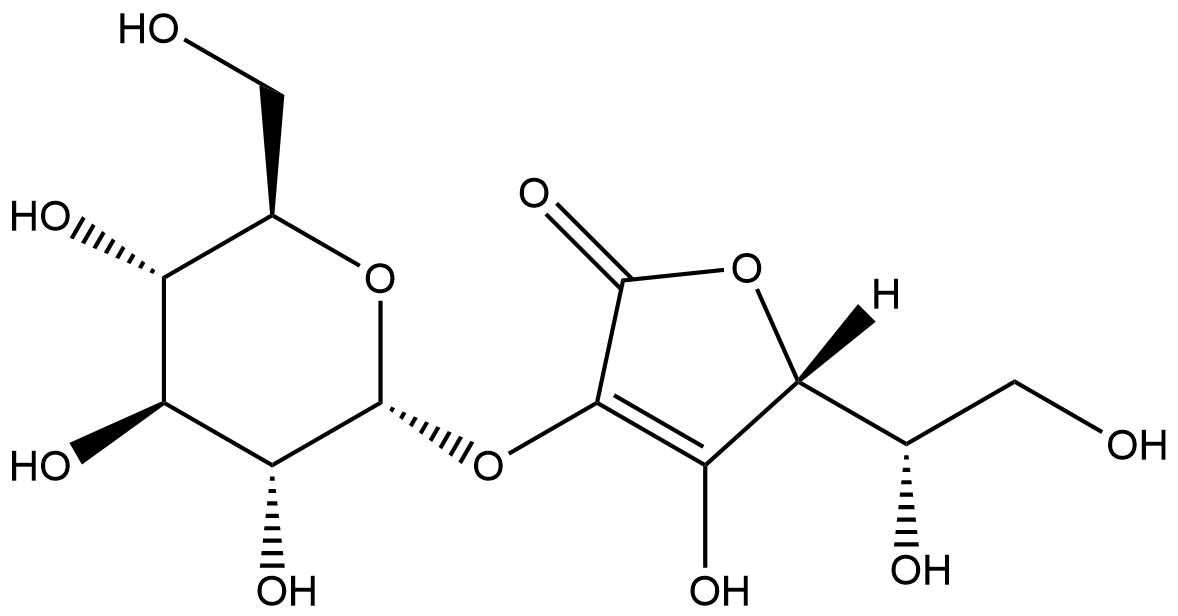


Product name: 2-O-α-D-Glucopyranosyl-L-ascorbic acid
Synonym name: AA 2G; Ascofresh; L-Ascorbic acid 2-glucoside
Catalogue No.: BP4125
Cas No.: 129499-78-1
Formula: C12H18O11
Mol Weight: 338.265
Botanical Source:
Physical Description:
Type of Compound:
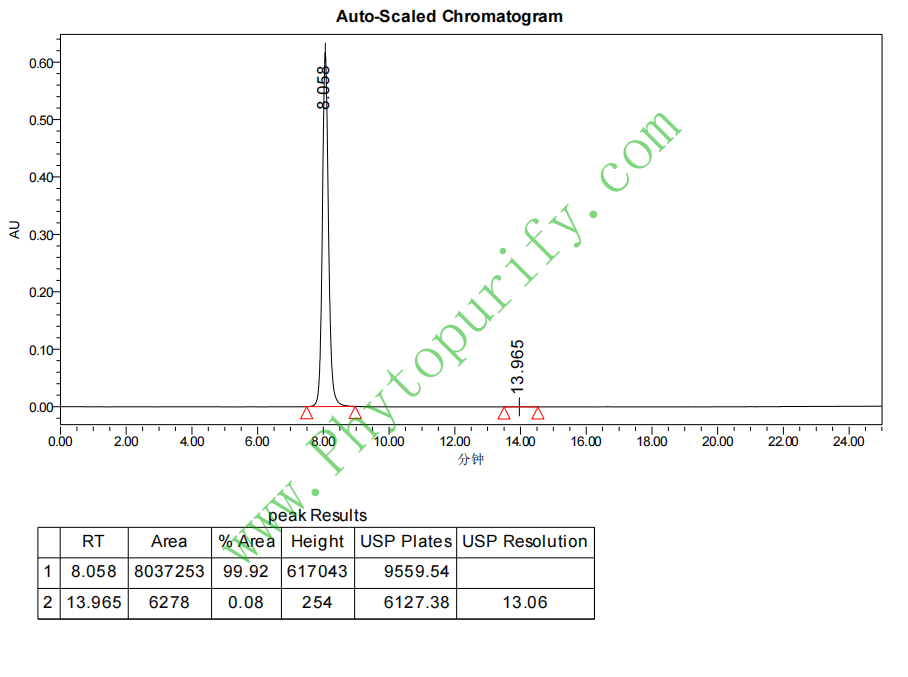
Purity: 95%~99%
Analysis Method: HPLC-DAD or/and HPLC-ELSD
Identification Method: Mass, NMR
Packing: Brown vial or HDPE plastic bottle
Storage: Store in a well closed container, protected from air and light. Put into refrigerate or freeze for long term storage.
Whenever possible, you should prepare and use solutions on the same day. However, if you need to make up stock solutions in advance, we recommend that you store the solution as aliquots in tightly sealed vials at -20℃. Generally, these will be useable for up to two weeks.
The product could be supplied from milligrams to grams
Inquire for bulk scale.
For Reference Standard and R&D, Not for Human Use Directly.
HPLC of 2-O-α-D-Glucopyranosyl-L-ascorbic acid
Storage conditions:Short-term storage at 2~8℃, long-term storage at -20 ~ -80℃
186.3700
-2.3009
-2.5966
162.2624
.4670
.2195
Low
32.3908
4.4179
Yes
No
No
No
No
No
0.0
Yes
No
Yes
Yes
2-O - α - D-Glucopyranosyl-L-ascorbic acid (CAS number: 129499-78-1) is a naturally occurring glycoside compound, belonging to the derivatives of ascorbic acid (vitamin C). As a highly water-soluble and stable precursor of ascorbic acid, ascorbate glucoside has attracted widespread attention in the field of natural product pharmacology. Its unique structure endows it with excellent antioxidant capacity and multi-target regulatory potential, involving the treatment of inflammatory bowel disease, neurodegenerative disease, skin photoaging, diabetes retinopathy and other clinical related diseases. This article is based on the latest literature and provides a systematic review of the chemical structure and physicochemical properties, plant sources and extraction methods, pharmacological activity and mechanism of action, pharmacological evaluation and pharmacokinetic characteristics of ascorbate glucoside. It explores its clinical application prospects and development trends, aiming to provide theoretical basis and research direction for its subsequent drug development and clinical translation.
The chemical structure of ascorbate glucoside is composed of ascorbate molecules connected to glucose through a 2-O-position α - D-glucoside bond. Its molecular formula is C12H18O10, with a molecular weight of 338.2650. The structure contains multiple hydroxyl groups and lactone rings, giving it high hydrophilicity and chemical stability. Compared with free ascorbic acid, glucosylation modification significantly increased its solubility in water (about 162.26 mg/mL), reduced its oxidative degradation rate, and enhanced its stability during storage and application.
In terms of physicochemical parameters, the LogP value of ascorbate glucoside is -2.3009, indicating its strong hydrophilicity, which is consistent with the characteristics of water-soluble drugs. Its topological polar surface area (TPSA) reached 186.37 Å ², indicating a high molecular polarity that may limit its ability to pass through lipid membranes. The results of the blood-brain barrier permeability assessment show that its permeability is low, suggesting that its direct role in the central nervous system may be limited. The hERG channel inhibition test was negative, indicating a low risk of cardiac toxicity. The Ames mutagenicity test result is 0.0, indicating that its genotoxicity risk is extremely low and has a good safety basis.
Ascorbic acid glucoside is mainly present in various plants, especially in certain fruits and vegetables that are rich in this compound. Common natural sources include citrus fruits, kiwifruit, and certain medicinal plants such as Lonicera japonica and Lycium barbarum. The content of ascorbate glucoside in these plants is relatively high, and its distribution is closely related to the growth environment, maturity, and harvesting time of the plants.
The extraction method usually uses water extraction combined with enzymatic or acid hydrolysis techniques to disrupt plant cell walls and promote the release of ascorbate glucoside. In modern extraction processes, ultrasound assisted extraction (UAE), microwave-assisted extraction (MAE), and enzyme catalyzed extraction techniques are widely used to improve extraction efficiency and purity. After concentration, centrifugation, and filtration, the extract is often separated and purified using high-performance liquid chromatography (HPLC) to ensure the production of high-purity ascorbate glucoside products. The key control points during the purification process include temperature, pH value, and solvent selection to prevent degradation of ascorbate glucoside.
Ascorbic acid glucoside exhibits various important pharmacological activities due to its unique structure and physicochemical properties, covering antioxidant, anti-inflammatory, neuroprotective, and skin protective aspects.
As a derivative of ascorbic acid, ascorbate glucoside retains strong free radical scavenging ability. In vitro studies have shown that the compound can effectively scavenge hydroxyl radicals, superoxide anions, and hydrogen peroxide, significantly reducing oxidative stress levels. Its mechanism of action mainly activates the nuclear factor erythroid 2-related factor 2 (Nrf2) signaling pathway, upregulates the expression of antioxidant enzymes such as superoxide dismutase (SOD1, SOD2), catalase (CAT), glutathione peroxidase (GPX1), and heme oxygenase 1 (HMOX1), and enhances the intracellular antioxidant defense system.
Ascorbic acid glucoside exhibits significant anti-inflammatory effects in the inflammatory bowel disease (IBD) model. It inhibits the release of pro-inflammatory cytokines and reduces intestinal mucosal inflammation by regulating various inflammation related targets, such as AMP activated protein kinase (AMPK), Toll like receptor 4 (TLR4), interleukin-6 (IL-6), signal transducer and activator of transcription 3 (STAT3), etc. In addition, the compound can regulate immune cell metabolism and promote the recovery of inflammatory microenvironment by modulating targets such as tryptophan metabolizing enzyme IDO1 and carboxylesterase (CES1, CES2).
In the field of neurodegenerative diseases, ascorbate glucoside exhibits multiple neuroprotective potentials. Its targets include key neuropathological markers such as BCL2 family anti apoptotic proteins, β - amyloid precursor protein (APP), β - secretase (BACE1), and microtubule associated protein tau (MAPT). Reduce harmful β - amyloid deposition by inhibiting BACE1 activity; Regulating the abnormal phosphorylation of MAPT and reducing the formation of neurofibrillary tangles; Meanwhile, ascorbate glucoside can also reduce oxidative stress and neuroinflammation by downregulating TLR4 mediated inflammatory response and activating the NFE2L2 pathway, protecting neuronal survival.
Ascorbic acid glucoside has shown good effects in the prevention and treatment of skin photoaging. It achieves whitening effect by inhibiting tyrosinase (TYR) activity, reducing melanin production. Meanwhile, ascorbate glucoside can downregulate the expression of matrix metalloproteinases (MMP1, MMP3), prevent the degradation of collagen (COL1A1) and elastin (ELN), and maintain the integrity of skin structure. Its anti-inflammatory and antioxidant effects are also reflected in inhibiting the nuclear factor kappa B (NFKB1) signaling pathway and regulating the levels of transforming growth factor beta 1 (TGFB1), slowing down UV induced skin damage and aging processes.
Ascorbic acid glucoside has a potential protective effect on diabetes retinopathy (DR). Its targets include the protein kinase C family (PRKCA, PRKCB), aldose reductase (AKR1B1), matrix metalloproteinase 2 (MMP2), hypoxia inducible factor 1 alpha (HIF1A), and tumor necrosis factor (TNF). By regulating these targets, ascorbic acid glucoside can reduce the increase of retinal vascular permeability, inflammatory reaction and oxidative stress, and delay the progress of diabetes retinopathy.
The multi-target mechanism of action of ascorbate glucoside is the basis of its pharmacological activity. It mainly achieves biological effects through the following signaling pathways and targets:
Nrf2/ARE antioxidant pathway
Ascorbic acid glucoside activates Nrf2, promotes its nuclear translocation, binds to antioxidant response elements (ARE), upregulates the expression of various antioxidant enzyme genes, including SOD1, CAT, GPX1, and HMOX1, enhances cellular antioxidant capacity, and reduces oxidative damage.
TLR4/NF - κ B inflammatory signaling pathway
By inhibiting TLR4 mediated signaling, ascorbate glucoside reduces nuclear factor kappa B (NF - κ B) activity, decreases the release of pro-inflammatory factors such as IL-6 and TNF, and alleviates inflammatory reactions.
AMPK energy metabolism regulation
Ascorbic acid glucoside activates AMPK, regulates cellular energy metabolism, promotes the repair of inflammatory microenvironment, and maintains immune homeostasis.
Regulation of neuroprotective targets
By regulating proteins such as BCL2, APP, BACE1, and MAPT, ascorbate glucoside inhibits neuronal apoptosis and pathological protein deposition, slowing down the progression of neurodegenerative diseases.
Regulation of collagen metabolism
Ascorbic acid glucoside regulates MMPs and collagen synthesis related targets, protects skin structure, and prevents photoaging.
Diabetes related metabolic targets
By regulating PRKCA, AKR1B1, HIF1A, etc., ascorbic acid glucoside can improve the metabolic abnormalities and microvascular diseases of diabetes retinopathy.
The synergistic effects of these multiple targets and pathways endow ascorbate glucoside with extensive pharmacological activity and potential clinical application value.
The pharmacological parameters of ascorbate glucoside show that it has good safety and pharmacological basis. The moderate molecular weight of 338.2650, extremely high water solubility, and low LogP value suggest that its oral absorption may be limited, but hydrophilicity is beneficial for in vivo distribution and metabolic stability. The low permeability of the blood-brain barrier limits its direct effects on the central nervous system, but also reduces the risk of central toxicity.
HERG channel inhibition negative and Ames test non mutagenicity indicate low cardiac safety and genetic toxicity risk, providing safety assurance for clinical application. In terms of pharmacokinetics, ascorbate glucoside may be converted into active ascorbic acid through hydrolytic enzymes in vivo, exerting biological effects. Its metabolic pathways mainly involve liver esterases and glycosidases, and the metabolites have good safety.
At present, there is a lack of systematic research on its oral bioavailability, half-life, and tissue distribution. In the future, further in vivo pharmacokinetic and metabolic studies are needed to provide data support for dosage form design and dosing regimen optimization.
Ascorbic acid glucoside has shown broad clinical application prospects due to its excellent antioxidant, anti-inflammatory, and multi-target regulatory abilities. Its potential therapeutic value in inflammatory bowel disease, neurodegenerative disease, skin photoaging, diabetes retinopathy and other diseases has attracted great attention in the field of drug research and development.
In inflammatory bowel disease, ascorbate glucoside may become a new option for adjuvant therapy by regulating intestinal immunity and inflammatory response. In the field of neurodegenerative diseases, although the permeability of the blood-brain barrier is limited, it is still expected to play an indirect protective role by improving peripheral inflammation and oxidative stress. In the field of dermatology, ascorbate glucoside, as a stable vitamin C derivative, is suitable for the development of anti-aging and whitening products. In the prevention and treatment of diabetes retinopathy, its multi target regulation ability provides a new idea for delaying the progress of the disease.
Future research should focus on its in vivo metabolic mechanism, pharmacokinetic characteristics, and clinical safety evaluation, combined with new drug delivery technologies such as nanocarriers, to enhance its bioavailability and targeting. In addition, research on multi-target mechanisms based on molecular docking and systems biology will provide theoretical support for its precise treatment strategy.
Ascorbic acid glucoside, as a naturally occurring glycoside with unique structure and diverse functions, has demonstrated broad pharmacological research and clinical application potential due to its excellent antioxidant, anti-inflammatory, and multi-target regulatory abilities. Its physicochemical properties and safety evaluation have laid a solid foundation for drug development. In the future, through in-depth pharmacokinetic research, mechanism analysis, and clinical trial verification, ascorbate glucoside is expected to become a new natural drug candidate molecule for the treatment of various diseases, promoting the integrated development of natural product pharmacology and modern drug research and development.
