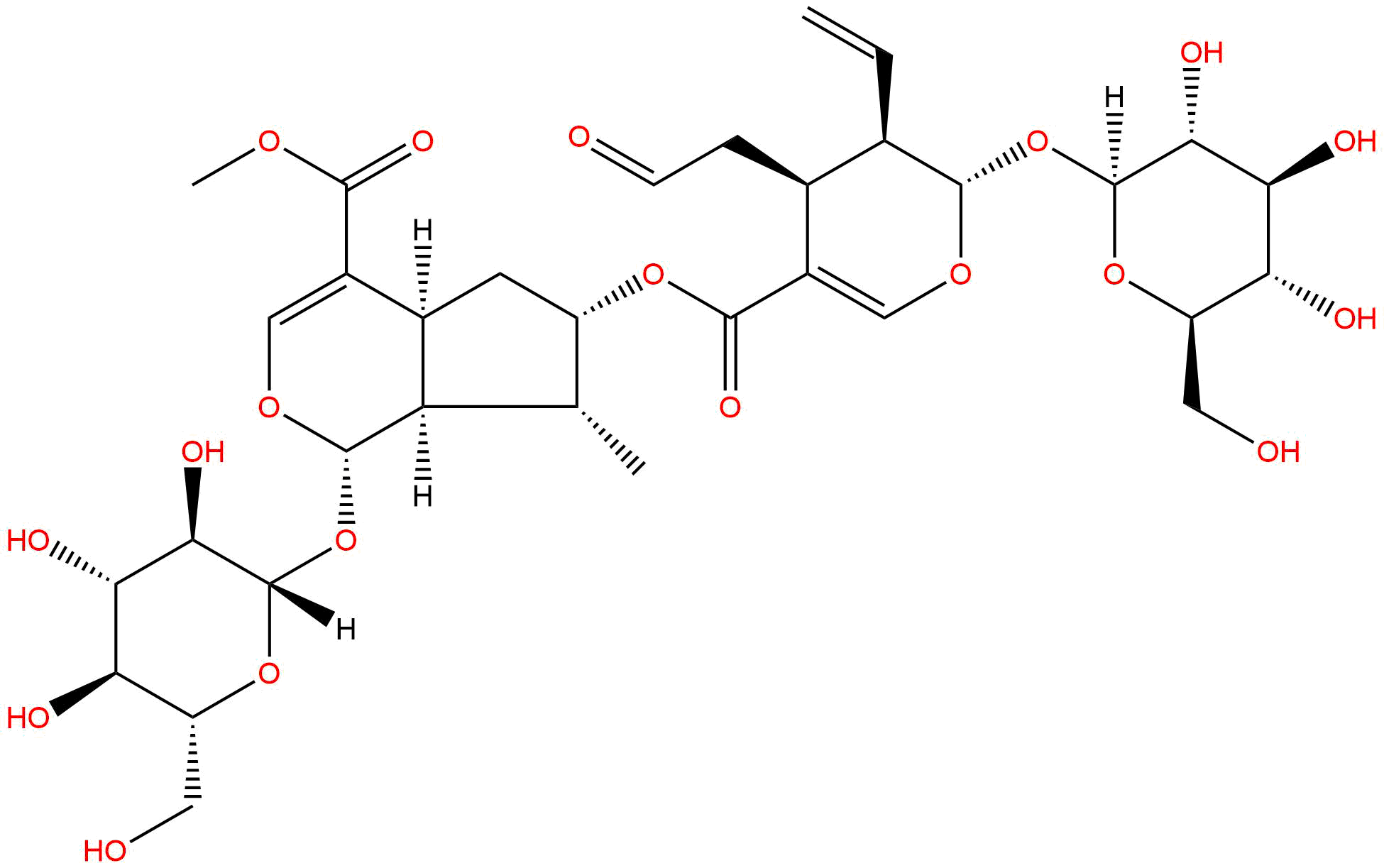


Product name: Cantleyoside
Synonym name:
Catalogue No.: BP4579
Cas No.: 32455-46-2
Formula: C33H46O19
Mol Weight: 746.712
Botanical Source:
Type of Compound:
Purity: 95%~99%
Analysis Method: HPLC-DAD or/and HPLC-ELSD
Identification Method: Mass, NMR
Packing: Brown vial or HDPE plastic bottle
Storage: Store in a well closed container, protected from air and light. Put into refrigerate or freeze for long term storage.
Whenever possible, you should prepare and use solutions on the same day. However, if you need to make up stock solutions in advance, we recommend that you store the solution as aliquots in tightly sealed vials at -20℃. Generally, these will be useable for up to two weeks.
The product could be supplied from milligrams to grams
Inquire for bulk scale.
For Reference Standard and R&D, Not for Human Use Directly.
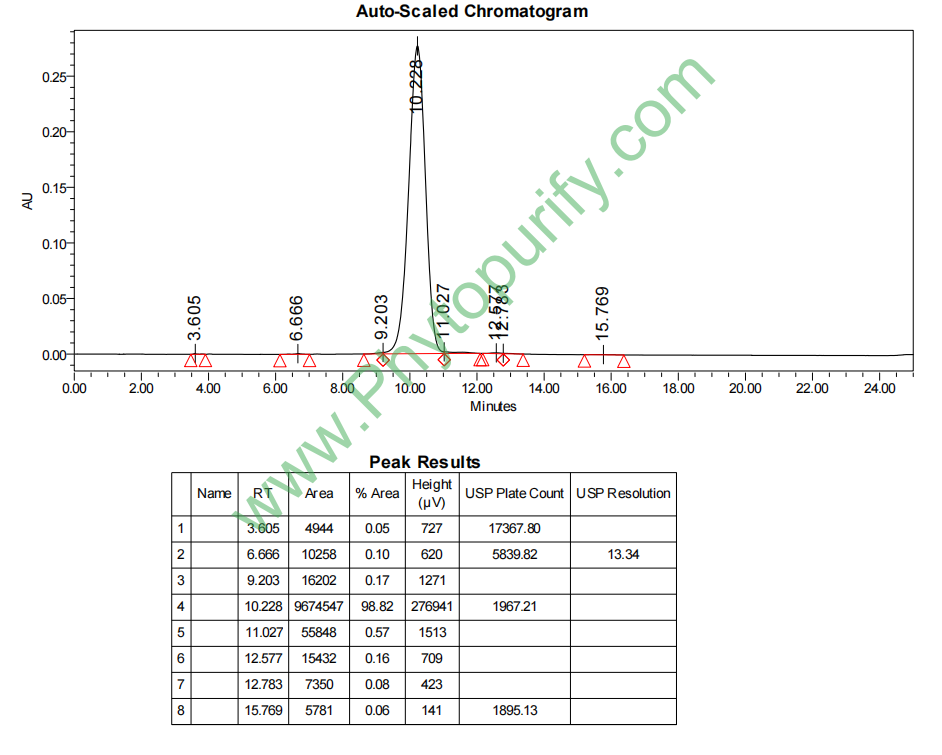
HPLC of Cantleyoside
Storage conditions:Short-term storage at 2~8℃, long-term storage at -20 ~ -80℃
286.8900
-1.4974
-1.4979
20.3101
.5074
.6032
Low
41.7476
5.9813
No
No
No
No
Yes
No
0.0
Yes
Yes
Yes
Yes
Depression is a highly prevalent mental disorder worldwide, with complex pathological mechanisms involving multiple levels such as monoamine neurotransmitter imbalance, neuroendocrine disorders, neurotrophic factor deficiency, impaired neuroplasticity, and inflammatory responses. Although traditional antidepressants, represented by selective serotonin reuptake inhibitors (SSRIs), are widely used in clinical practice, they generally suffer from delayed onset, limited efficacy, and significant side effects. Therefore, searching for efficient and low toxicity novel antidepressant lead compounds from natural products has always been an important direction in drug development. Cantleyoside, as a cyclic terpenoid glycoside isolated from traditional Chinese medicine, has attracted much attention in recent years due to its significant activity in multiple antidepressant related targets and pathways. This article aims to systematically review the chemical properties, plant sources, pharmacological activities, mechanisms of action, pharmacological evaluation, and clinical application prospects of rutin, in order to provide comprehensive scientific references for the in-depth research and development of this compound.
Cantleyoside, CAS number 32455-46-2, is a structurally complex iridoid glycoside. Its molecular formula is C34H42O19 and its molecular weight is 746.7120. Cycloene ether terpenes typically have a cyclopentane pyran core, on which rutin is linked with multiple sugar groups (such as glucose) and other modifying groups, forming their unique spatial conformation and biological activity basis.
From the analysis of physicochemical parameters related to medicinal properties, rutin exhibits typical polar molecular characteristics. The calculated lipid water partition coefficient (LogP) is -1.4974, indicating that the compound has a high degree of hydrophilicity. The topologically polar surface area (TPSA) is as high as 286.8900 Å ², mainly attributed to the presence of numerous hydroxyl and glycosidic bonds in its structure. The high TPSA and negative LogP values together explain its excellent water solubility (predicted value of approximately 20.3101 mg/L). However, these characteristics also pose challenges to its ability to penetrate biofilms. The predictive model shows that the ability of rutin to cross the blood-brain barrier (BBB) is relatively low, which is a key limiting factor for the development of central nervous system (CNS) drugs. In terms of early safety evaluation, existing data suggests that it may not have significant cardiac toxicity (hERG inhibition predicted as "no") and genetic toxicity (Ames test predicted value of 0.0), which provides preliminary safety basis for its further development.
Wu Zhuyu glycoside is mainly isolated from the dried roots of Dipsacus asper Wall. ex C.B. Clarke, a plant in the family Dipsacaceae. Chuanxuduan, also known as "xuduan", is a traditional Chinese medicinal herb that has the effects of tonifying the liver and kidneys, strengthening muscles and bones, and sustaining injuries. It is commonly used to treat conditions such as soreness and weakness in the waist and knees, rheumatism and pain, and injuries from falls and blows. Wu Zhuyu glycoside, as one of its active ingredients, is an important material basis for its pharmacological effects.
The extraction of rutin from plant materials is usually carried out using solvent extraction method. The common process is as follows: first, dry and crush the Sichuan continuous root, and then perform reflux extraction or ultrasound assisted extraction with polar solvents (such as methanol, ethanol, or ethanol water mixed solution). After filtration and concentration, the crude extract is subjected to liquid-liquid extraction using solvents such as petroleum ether and ethyl acetate to remove lipophilic impurities. The aqueous layer or polar fraction is rich in iridoid glycosides. Further purification relies on various chromatographic techniques, including macroporous adsorption resin column chromatography (such as D101 resin, eluted with water and different concentrations of ethanol gradient), silica gel column chromatography, reverse phase silica gel column chromatography (such as ODS C18, using methanol water or acetonitrile water as mobile phase), and high-performance liquid chromatography (HPLC) preparation. Through spectroscopic methods such as nuclear magnetic resonance (NMR) and mass spectrometry (MS), high-purity rutin monomers were finally obtained for structural identification. Optimizing the extraction process (such as solvent ratio, temperature, time) and adopting modern separation techniques (such as high-speed countercurrent chromatography) are key to improving its yield and purity.
A large number of preclinical studies, especially experiments based on animal behavioral models, have confirmed that rutin has clear antidepressant like activity.
In the classic mouse forced swimming test (FST) and tail suspension test (TST), administration of rutin significantly shortened the immobility time of mice, and its effect was comparable to that of positive control drugs fluoxetine or imipramine, and was dose-dependent. These two experiments are the core models for evaluating the antidepressant potential of compounds, and the results show that rutin can effectively improve behavioral despair. In the chronic unpredictable mild stress (CUMS) model, long-term intervention with rutin can not only reverse behavioral defects such as reduced sucrose preference (core symptom of pleasure loss) and decreased spontaneous activity caused by stress, but also improve slow weight gain caused by stress. In addition, in the depression model induced by reserpine (which can lead to decreased body temperature, drooping eyelids, and inability to move), rutin also exhibits antagonistic effects.
In addition to its core antidepressant behavioral effects, research has also found that rutin has other beneficial neuropharmacological activities. For example, it exhibits certain anti anxiety effects (increasing the open arm exploration time and frequency in the elevated cross maze experiment) and has neuroprotective potential, which can counteract glutamate or β - amyloid protein induced neuronal damage in vitro models. These multifaceted activities suggest that rutin may exert therapeutic effects through multi-target and multi pathway synergy, not only improving emotional symptoms, but also potentially benefiting accompanying cognitive impairment and neurodegenerative changes.
The antidepressant effect of Wu Zhuyu glycoside is not achieved through a single pathway, but involves multidimensional regulation of the monoaminergic system, neurotrophic pathway, neuroplasticity, and related enzyme systems. Its target network is highly consistent with the provided target information.
1. Regulating the monoamine neurotransmitter system:
This is an important foundation for its rapid emotional regulation function. Wu Zhuyu glycoside has been proven to inhibit the activity of monoamine oxidase A and B (MAO-A and MAO-B). MAO is a key enzyme that degrades monoamine neurotransmitters such as serotonin (5-HT), norepinephrine (NE), and dopamine (DA). Inhibiting its activity can increase the concentration of monoamine neurotransmitters in synaptic cleft. Meanwhile, research suggests that rutin may regulate the function of serotonin transporters (SLC6A4/SERT), reducing the reuptake of 5-HT, similar to the mechanism of action of SSRIs. In addition, its excitatory effect on the 5-HT1A receptor (HTR1A) can regulate the discharge and neurotransmitter release of 5-HTergic neurons, and participate in antidepressant and anti anxiety effects.
2. Enhance neurotrophic signals and neural plasticity:
This is the core mechanism by which it may improve long-term prognosis. Chronic stress and depression are often accompanied by inhibition of brain-derived neurotrophic factor (BDNF) and its downstream signaling pathways. Wu Zhuyu glycoside can significantly upregulate the expression of BDNF in brain regions such as hippocampus and prefrontal cortex. BDNF activates its receptor TrkB, thereby initiating multiple intracellular signaling pathways, with a key link being the activation of the transcription factor cAMP response element binding protein (CREB1). The phosphorylation activation of CREB1 is an upstream event that regulates the expression of various genes related to neuronal survival and synaptic plasticity, including BDNF itself. Wu Zhuyu glycoside can promote the phosphorylation of CREB1 and form a positive regulatory loop. Meanwhile, it can also inhibit the activity of glycogen synthase kinase-3 β (GSK3B). GSK3B is a key negative regulator of the Wnt/β - catenin signaling pathway, and its overactivity can impair neurogenesis and synaptic function. Inhibiting GSK3B can help restore neural plasticity.
3. Affects the balance of neural excitability:
The regulatory effect of rutin on gamma aminobutyric acid type A receptor (GABRA1) has also been reported. GABA is the main inhibitory neurotransmitter in the central nervous system, and regulating the function of GABAA receptors may affect the excitation/inhibition balance of neural networks, which is closely related to the regulation of emotions and anxiety.
4. Other potential targets:
Catechin-O-methyltransferase (COMT) is another important enzyme that degrades catecholamine neurotransmitters such as DA and NE. Although the specific mode of action remains to be clarified, as a related target, rutin may fine tune dopaminergic and noradrenergic signals by affecting COMT.
In summary, rutin rapidly increases monoamine levels through "MAO inhibition+SERT regulation", while fundamentally promoting neural plasticity and repair through the "BDNF CREB GSK3B" axis, supplemented by regulation of the GABAergic system, forming a synergistic and multi-level antidepressant network.
Although wuzhuyu glycoside exhibits excellent pharmacological activity, its pharmacological properties, especially as an oral central nervous system drug, face a series of challenges, mainly due to its physical and chemical properties.
Pharmacokinetic characteristics:
Due to its high hydrophilicity (low LogP) and high molecular weight (>500), the oral bioavailability of rutin may be low. Limited animal pharmacokinetic studies suggest that the prototype drug has limited exposure in the bloodstream and is difficult to effectively penetrate the blood-brain barrier (BBB), which is consistent with theoretical predictions. The low penetration of BBB is the biggest obstacle to its development as an antidepressant drug that directly acts on the CNS. Compounds may undergo extensive metabolism in the body, particularly hydrolysis (deglycosylation) of glycosidic bonds, to generate aglycones or other metabolites, which may have different activities and distribution characteristics. Its excretion pathway may mainly be through the kidneys.
Optimization strategy for drug properties:
To overcome these deficiencies, it is necessary to adopt reasonable drug chemistry and dosage form strategies:
1. Pre drug design: Esterification, acylation, or preparation of lipid prodrugs from multiple hydroxyl groups in the structure of rutin is the most direct strategy to improve its lipid solubility, membrane penetration, and oral absorption. It is crucial to design prodrugs that can be specifically enzymatically hydrolyzed and restored to their original form in the body, especially after reaching the CNS.
2. Nano drug delivery system: Encapsulating it in liposomes, solid lipid nanoparticles, polymer nanoparticles, or nanoemulsions can enhance its gastrointestinal stability, promote lymphatic absorption, and achieve brain targeted delivery through surface modification (such as connecting BBB targeting ligands) using nanocarriers.
3. Simplification and Modification of Structure: On the premise of retaining the pharmacophore, simplify the molecule, reduce polar groups, and synthesize analogs with better drug like properties (such as appropriately reducing molecular weight and increasing LogP).
4. Combination therapy: Consider combining with safe BBB penetration enhancers (such as certain surfactants) or developing non oral routes of administration (such as intranasal administration, utilizing the olfactory nerve pathway to bypass the BBB).
As a natural active molecule discovered from traditional Chinese medicine, Wu Zhuyu glycoside's multi-target antidepressant mechanism provides novel ideas and candidate structures for the development of new generation antidepressant drugs.
Potential advantages:
1. Multi target synergistic effect: It simultaneously acts on the monoamine neurotransmitter system and the neurotrophic/plasticity pathway, which may bring therapeutic potential for faster onset, higher efficiency, and improved cognitive function, especially for patients who have poor response to existing monoamine drugs.
2. Natural sources and safety foundation: Originating from traditional medicinal plants, its parent medicinal material has a long history of human use, and the preliminary in vitro toxicity prediction is also optimistic, which provides some background support for its safety.
3. Novel chemical structure: As a iridoid glycoside, its structural framework is different from existing synthetic antidepressants, and it has a completely new intellectual property space.
Challenges and future research directions:
1. Drug breakthrough: As mentioned earlier, how to effectively improve its brain bioavailability is the core bottleneck of transformation. Future research should focus on prodrug design, development of advanced delivery systems, and structure-activity relationship studies.
2. In depth mechanism clarification: More precise elucidation of its direct interaction mode, affinity, and functional consequences with various targets (such as SLC6A4, GABRA1, COMT) is needed. The necessity of using gene knockout or knockdown techniques to validate the in vivo effects of key targets.
3. Pre clinical evaluation of the system: On the basis of optimizing pharmacokinetic properties, it is necessary to conduct long-term toxicological, safety pharmacological, and pharmacological evaluations in conditions closer to human diseases, such as organoids and humanized animal models.
4. Exploring new indications: Given its neurotrophic and neuroprotective effects, the therapeutic potential of rutin and its derivatives in neurological and psychiatric disorders such as Alzheimer's disease, Parkinson's disease, anxiety disorders, and post-stroke depression is also worth exploring.
Wu Zhuyu glycoside is a cyclic iridoid glycoside with significant antidepressant potential isolated from the traditional Chinese medicine Chuan Shen Duan. Its unique value lies in its ability to integrate the dual mechanisms of rapid regulation of monoamine neurotransmission and long-term promotion of neurotrophic and neuroplasticity, acting on multiple key targets such as MAOA/B, SLC6A4, BDNF, CREB1, GSK3B, forming a synergistic antidepressant network. Although its inherent high polarity leads to low oral bioavailability and low blood-brain barrier penetration, which are currently the main challenges facing clinical translation, these obstacles are expected to be overcome through modern pharmaceutical chemistry, pharmacology, and nanotechnology strategies. In the future, research on the structural optimization, delivery system innovation, in-depth analysis of the mechanism of action, and expansion of indications of rutin will not only help promote its own development into a new type of antidepressant drug, but also provide valuable experience and paradigm for exploring multi-target central nervous system therapeutic drugs from natural products.
