Introduction/Overview
Cancer is one of the leading causes of death worldwide, and exploring and innovating treatment strategies is a core challenge in contemporary medical research. Among various treatment methods, chemotherapy occupies an important position due to its systemic effects, but traditional chemotherapy drugs generally have problems such as poor selectivity, significant toxic side effects, and susceptibility to drug resistance. Therefore, searching for efficient and low toxicity novel anti-tumor lead compounds from natural products has become an important direction in drug development. Lignin compounds, as a class of natural phenolic substances widely present in the plant kingdom, have attracted much attention due to their diverse chemical structures and significant biological activities, especially anti-tumor activity.
Anhydrosecoisoliquiritinol (ASI), CAS number 29388-33-8, is a dehydrated derivative of ring opening isoliquiritinol and belongs to the lignan class of compounds. Early studies mainly focused on the chemical identification of its plant origin, while pharmacological studies in recent years revealed that this compound showed significant growth inhibitory activity on a variety of human breast cancer cell lines, such as MCF-7 and MDA-MB-231, suggesting that it has potential anti-tumor application value. Its mechanism of action involves the regulation of multiple key biological processes such as cell apoptosis, proliferation, invasion, and metastasis, and interacts with multiple important tumor related targets such as MCL1, STAT3, MMP2, etc.
This article aims to provide a systematic review of the chemical structure, plant origin, pharmacological activity, mechanism of action, medicinal properties, and clinical application prospects of dehydrated ring opening isoquercetin, in order to provide comprehensive scientific references for the in-depth research and development of this natural product.
Chemical structure and physicochemical properties
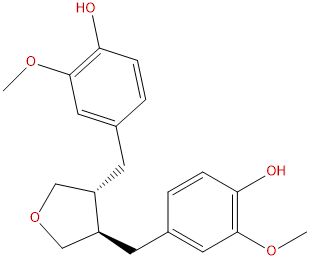
The molecular formula of dehydrated open-loop isoquercetin (ASI) is C20H24O5, with a molecular weight of 344.4070. Structurally, ASI belongs to the dehydrated derivative of open-loop isoquercetin. Open ring isoquercetin is a common lignan in plants, characterized by two phenylpropane units (C6-C3) connected by a C8-C8 'bond, and the C9 hydroxyl group of one propane chain forming a lactone ring or an open ring structure with the C7' hydroxyl group of the other unit. ASI, on the other hand, forms additional cyclic structures or double bonds through dehydration reactions, thereby increasing the rigidity and hydrophobicity of the molecule.
Its chemical structure consists of two aromatic benzene rings (A ring and B ring) connected by a propyl chain and an oxygen-containing heterocyclic ring (such as furan ring or lactone ring variants). This structure endows ASI with typical physicochemical properties of lignin compounds. The calculated lipid water partition coefficient (LogP) is 3.2728, indicating that the compound has moderate lipophilicity, which facilitates its penetration into cell membranes. The topological polar surface area (TPSA) is 68.1500 Å ², reflecting the presence of multiple polar oxygen atoms (such as phenolic hydroxyl groups, ether bonds, etc.) in the molecule, which have a certain degree of polarity. The low water solubility value (about 0.0284 mg/mL) is consistent with its hydrophobic characteristics, indicating that solubilization strategies may need to be considered in formulation development.
The structure of ASI is similar to known plant estrogens or antioxidant lignans (such as open-loop isoquercetin and quercetin), but its unique dehydration structure may lead to different spatial conformations and electron distributions, which in turn affect its interaction with biomolecules and specific biological activity.
Plant sources and extraction methods
The main natural source of dehydrated open-loop isoquercetin is the Asteraceae plant Double flowered butterfly chrysanthemum(Wedelia biflora (L.) DC.)。 Butterfly Chrysanthemum Genus(Wedelia)Plants are commonly used in traditional medicine to treat inflammation, infection, and pain. Modern research has also shown that this genus of plants is rich in various bioactive secondary metabolites, such as flavonoids, terpenes, and lignans.
ASI usually exists in the plant body in free form or in the form of glycosides bound to sugars. The extraction and separation process follows the conventional methods of natural product chemistry:
1. Extract Organic solvents such as methanol, ethanol, or acetone are usually used for drying Wedelia biflora Whole grass or aboveground parts are subjected to cold soaking or heated reflux extraction. Ultrasound assisted extraction can improve efficiency.
2. Rough classification Suspend the concentrated total extract in water and extract it sequentially with solvents of different polarities such as petroleum ether, ethyl acetate, n-butanol, etc. ASI is mainly enriched in the ethyl acetate extraction site due to its equipolarity.
3. Separation and Purification The ethyl acetate fraction was subjected to silica gel column chromatography, with different ratios of petroleum ether ethyl acetate or chloroform methanol gradient elution for preliminary separation. Subsequently, the flow containing ASI was further purified by combining modern chromatographic techniques such as reversed phase silica gel (such as ODS) column chromatography, Sephadex LH-20 column chromatography, and high performance liquid chromatography (HPLC, usually using C18 column, methanol water or acetonitrile water as mobile phase) until the monomer compound was obtained. Structural identification involves the comprehensive use of techniques such as nuclear magnetic resonance (NMR, including 1H, 13C, 2D NMR), mass spectrometry (MS), and infrared spectroscopy (IR).
Except for W. biflora, ASI may also exist in other closely related plants, but there are few related reports, and its main biological activity studies are based on compounds isolated from this plant.
Pharmacological activity research
At present, the pharmacological activity of ASI is mainly concentrated in the field of anti-tumor, especially for breast cancer.
Antitumor activity:
In vitro cell experiments showed that ASI had significant inhibitory effects on the proliferation of many human breast cancer cell lines. Studies have shown that ASI can inhibit the activity of estrogen receptor positive (ER+) MCF-7 cells and triple negative breast cancer (TNBC) MDA-MB-231 cells in a dose-dependent and time-dependent manner. Its half maximal inhibitory concentration (IC50) value is usually in the micromolar (μ M) range, indicating strong cytotoxicity. In addition to inhibiting proliferation, ASI can also induce apoptosis in cancer cells, manifested by nuclear condensation, DNA fragmentation, and activation of apoptosis related proteins such as caspase-3.
In addition, preliminary studies suggest that ASI may also have inhibitory effects on the migration and invasion ability of cancer cells, which is related to its potential impact on the activity of extracellular matrix degradation related enzymes such as matrix metalloproteinase MMP2. Although there is limited publicly available data on the activity of ASI against other types of cancer cells, such as lung cancer, colon cancer, and liver cancer, it is speculated that it may have broad-spectrum anti-tumor potential based on its broad range of targets.
Other potential activities:
As a lignan compound, ASI may also possess certain biological activities shared by this class of compounds, such as antioxidant and anti-inflammatory effects. The phenolic hydroxyl group in its structure is a potential free radical scavenging group. However, these activities have not yet been systematically experimentally validated for ASI, which is a direction for future pharmacological research to expand.
Mechanism of action and molecular targets
The anti-tumor effect of ASI involves a complex regulatory network of multiple targets and pathways. Based on its known potential targets, its mechanism of action can be summarized into the following key aspects:
-
Inducing cell apoptosis and regulating Bcl-2 family proteins The mitochondrial pathway of cell apoptosis is one of the core functions of ASI. Research has shown that ASI can downregulate anti apoptotic proteins MCL1 and BCL2 At the same time, it may upregulate the levels of pro apoptotic proteins such as Bax, leading to a decrease in mitochondrial membrane potential, release of cytochrome C, and activation of the caspase cascade reaction, ultimately triggering programmed cell death.
-
Inhibition of STAT3 signaling pathway Signal Transduction and Transcription Activation Factor 3(STAT3)It is an important oncogenic transcription factor that is continuously activated in various cancers, promoting cell proliferation, survival, and immune escape. ASI has been shown to inhibit the phosphorylation (activation) of STAT3, prevent its nuclear translocation and binding to DNA, thereby downregulating the expression of downstream target genes (such as Cyclin D1, Bcl-2, MMP2, etc.) and exerting anti-tumor effects.
-
Inhibit tumor invasion and metastasis Tumor metastasis is closely related to the degradation of extracellular matrix. ASI can inhibit matrix metalloproteinase 2(MMP2)Expression and activity. MMP2 is a key enzyme that degrades type IV collagen (the main component of the basement membrane), and inhibition of its activity can effectively reduce the invasion and migration ability of cancer cells.
-
Interference with DNA Topoisomerase Function DNA Topoisomerase I(TOP1)And II α(TOP2A)It is a key enzyme for DNA replication and transcription, and also a target for many chemotherapy drugs. ASI may cause DNA damage and replication fork arrest by interfering with the function of these enzymes, leading to cell cycle arrest and death.
-
Regulating hormone related pathways: For estrogen receptor positive breast cancer, ASI may antagonize estrogen receptor ESR1 Signal or inhibition of aromatase(CYP19A1)The activity comes into play. CYP19A1 is a rate limiting enzyme for estrogen synthesis. Inhibiting its activity can reduce the estrogen level in the tumor microenvironment, thereby inhibiting the growth of ER+breast cancer.
-
Affects hypoxia inducible factors and MAPK pathway Hypoxia inducible factor-1 α(HIF1A)Plays a central role in tumor adaptation to hypoxic microenvironment. ASI may inhibit the stability or transcriptional activity of HIF1A, affecting tumor angiogenesis and metabolic reprogramming. In addition, it may also regulate mitogen activated protein kinase 1(MAPK1 The activity of ERK2, which is involved in signal transduction for cell proliferation and survival.
In summary, ASI forms a synergistic anti-tumor effect by simultaneously acting on multiple key nodes such as apoptosis, proliferation, invasion, hormone response, and stress adaptation, which helps overcome the problem of drug resistance that single target drugs are prone to.
Evaluation of drug properties and pharmacokinetics
Based on computational chemistry and preliminary experimental data, a preliminary evaluation of the drug like properties of ASI is conducted
- Drug like parameters The molecular weight (344.4) conforms to Lipinski's "Five Rules" (<500). The LogP value (3.27) is within the ideal range (usually<5), indicating good membrane permeability. TPSA (68.2 Å ²) is moderate and beneficial for oral absorption. These parameters overall meet the basic requirements of small molecule oral drugs.
- Solubility and permeability The lower water solubility (0.0284 mg/mL) is a potential limiting factor for its oral bioavailability. However, its high lipid solubility may facilitate its penetration through cell membranes and biological barriers. Calculate and predict it High blood-brain barrier (BBB) permeability This suggests that ASI may be used to treat brain tumors or central nervous system metastases, which is a unique potential advantage.
- Preliminary safety warning HERG channel inhibition is a common cause of drug-induced cardiac toxicity (long QT syndrome). Prediction data shows ASI No risk of hERG inhibition This is a positive signal.Ames test The predicted result is negative (0.0), indicating that it may not have mutagenicity, but it needs to be confirmed through experiments.
- Metabolic stability There are phenolic hydroxyl groups and other functional groups in the structure, which may be sites for glucuronic acid binding or methylation metabolism. Attention should be paid to their in vivo metabolic rate and first pass effect.
- Current Status of Pharmacokinetic (PK) Research At present, there is a lack of public reports on the in vivo pharmacokinetic studies of ASI systems, such as absorption, distribution, metabolism, and excretion. This is a key gap that must be filled in the process of advancing towards drug development. In the future, it is necessary to establish sensitive and specific biological analysis methods (such as LC-MS/MS) to study their absolute bioavailability, tissue distribution (especially tumor tissue accumulation), major metabolites, and excretion pathways in animal models (rats, mice).
Clinical application prospects and prospects
Dehydrated open-loop isoquercetin, as a natural lignan with multi-target anti-tumor activity, has shown certain development potential, but its clinical application still faces many challenges and directions that need to be further explored.
potential advantages:
1. Multi target mechanism of action It can simultaneously affect multiple aspects such as tumor growth, survival, invasion, and hormone dependence, and may have stronger therapeutic effects and lower risk of drug resistance.
2. Unique BBB penetrability The predicted high BBB permeability provides the possibility for its treatment of brain tumor or breast cancer brain metastasis, which is the short board of many existing chemotherapy drugs.
3. Natural product lead compounds The structure is novel and can be chemically modified as a parent nucleus to optimize its activity and pharmacokinetic properties.
Challenges faced and future research directions:
1. In depth preclinical research Current research mainly focuses on the cellular level. Urgent need to carry out systematic development Pharmacodynamic evaluation in vivo To verify its anti-tumor effect and dose effect relationship in animal transplantation tumor models of breast cancer (especially triple negative breast cancer) and other cancers.
2. Comprehensive pharmacokinetic and toxicological studies It is necessary to clarify the ADME process of ASI in vivo and determine its therapeutic window. Conduct standardized preclinical safety evaluations for acute toxicity, long-term toxicity, and reproductive toxicity.
3. Structural optimization and formulation development To address the issue of poor water solubility, chemical modifications (such as preparing prodrugs, introducing water-soluble groups) or developing novel drug delivery systems (such as nanoparticles, liposomes, cyclodextrin inclusion complexes) can be used to improve its bioavailability and targeting.
4. Accurate authentication of the mechanism of action Currently, most targets are based on computational predictions or indirect evidence, requiring the use of surface plasmon resonance (SPR), isothermal titration calorimetry (ITC), co crystallization, gene knockout/knockdown, and other techniques to directly verify the interaction between ASI and the target proteins mentioned above, and clarify their precise binding sites and regulatory mechanisms.
5. Exploration of combination therapy Exploring the synergistic effects of ASI in combination with existing clinical chemotherapy drugs (such as paclitaxel, doxorubicin) or targeted drugs may help reduce their respective doses, minimize toxic side effects, and overcome drug resistance.
Conclusion
Dehydrated open-loop isoquercetin is a lignan compound with significant anti-tumor potential isolated from the traditional medicinal plant Chrysanthemum morifolium. Through regulating multiple key targets, such as MCL1, STAT3, MMP2, TOP1/2A, it shows a synergistic effect in inhibiting the proliferation of breast cancer cells, inducing apoptosis, and impeding invasion and metastasis. Preliminary pharmacological analysis shows that it has the basic structural characteristics for development as a small molecule oral drug, and is predicted to have high blood-brain barrier penetration and low risk of cardiac toxicity. These characteristics lay the foundation for its characteristic development.
However, the road from natural active compounds to candidate drugs is long. The current research on ASI is still in its early stages, especially lacking systematic data on in vivo efficacy, pharmacokinetics, and toxicology. Future research should focus on filling these key gaps and optimizing their structure using medicinal chemistry methods to overcome the shortcomings in their physicochemical properties. In a word, dehydrated ring opening isolaricin is an anti-tumor lead compound worthy of in-depth study. Its follow-up research may not only provide new candidate molecules for the treatment of breast cancer, but also provide an important case for in-depth understanding of the biological activity spectrum of lignans.