Introduction/Overview
Anemarrhenasapone Ia is a natural triterpenoid saponin compound isolated from the roots and stems of the traditional Chinese medicine Anemarrhena asphodeloides Bunge. Anemarrhena asphodeloides, as an important heat clearing and dryness nourishing herb in traditional Chinese medicine, is widely used to treat diabetes, inflammation and a variety of metabolic diseases. In recent years, with the in-depth development of natural product pharmacology, Anemarrhena asphodeloides saponin Ia has attracted great attention in the scientific research community due to its significant anti-inflammatory and anti diabetes activities. This compound can not only inhibit the production of peroxides induced by fMLP (N-formyl-methylthionyl-phenylalanine) and alleviate inflammatory reaction, but also show good anti diabetes potential by regulating a variety of key metabolic targets. This article will systematically review the chemical structure and physicochemical properties, plant sources and extraction methods, pharmacological activity and mechanism of action, pharmacological evaluation and pharmacokinetic characteristics of saponins Ia from Anemarrhena, and explore its clinical application prospects and development trends.
Chemical structure and physicochemical properties
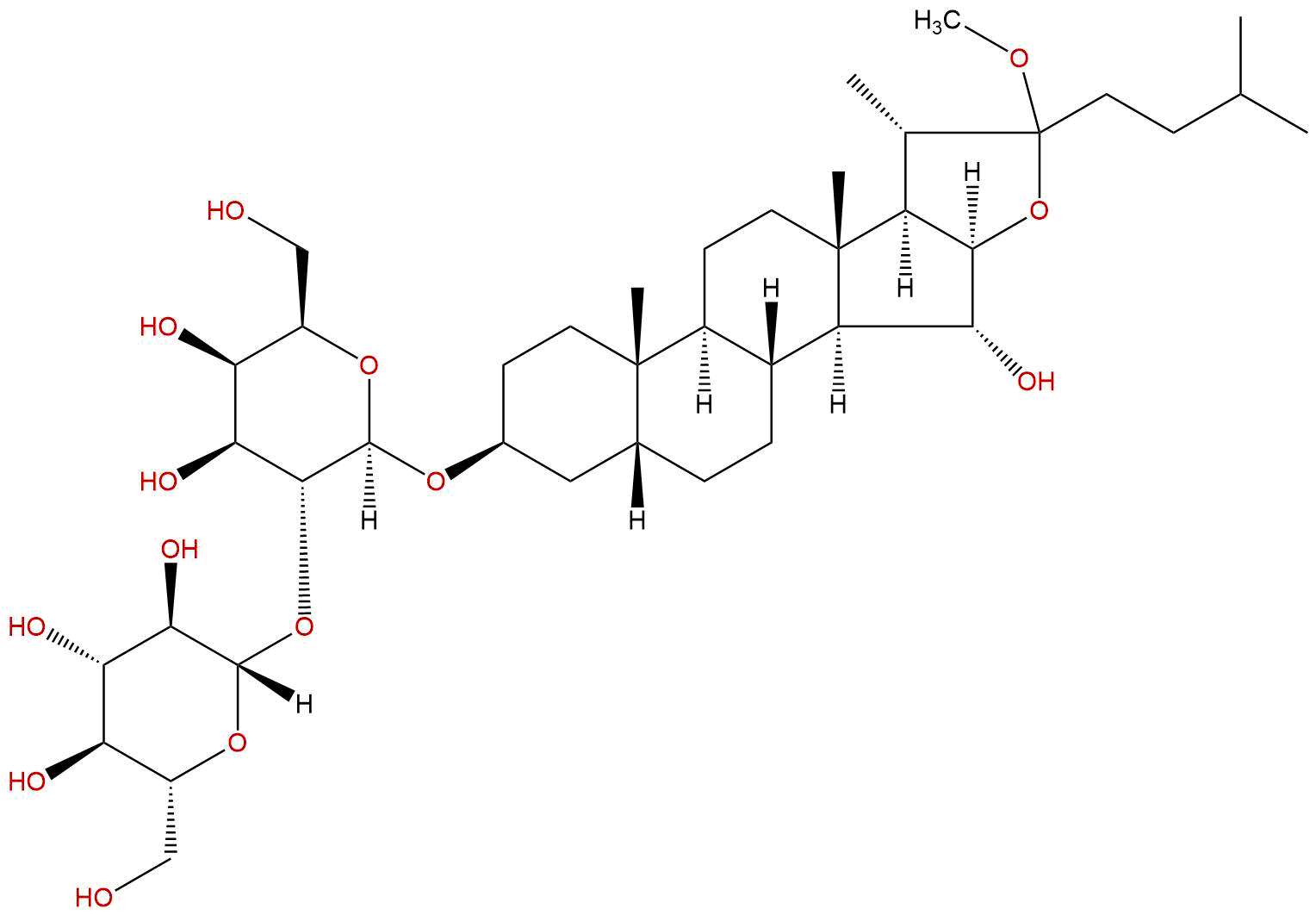
The molecular formula of Zhimu saponin Ia is C42H66O14, with a molecular weight of 772.9700, and it belongs to the natural triterpenoid saponin class. Its structural core is a typical tetracyclic triterpenoid skeleton, connecting multiple sugar residues to form glycosidic bonds. The LogP value of this compound is 2.1746, indicating that it has moderate lipid solubility, which is beneficial for cell membrane penetration. The polar surface area (TPSA) is 217.2200, indicating strong water affinity and strength. However, its water solubility is only 0.0814, indicating limited solubility in water. The low blood-brain barrier permeability of Zhimu saponin Ia suggests that its effects are mainly limited to peripheral tissues. The hERG channel inhibition experiment result was negative, indicating that the compound has a low risk of cardiac toxicity. The Ames mutagenicity test showed a value of 0.0, indicating a low risk of genotoxicity and a good safety basis.
From a chemical structure perspective, the glycoside portion of Zhimu saponin Ia endows it with good water solubility and biological activity regulation ability, while the triterpenoid skeleton is the key structural basis for its biological activity. This structural feature provides a molecular basis for its multi-target and multi pathway pharmacological effects.
Plant sources and extraction methods
Zhimu saponin Ia mainly comes from the dried rhizomes of Anemarrhena asphodeloides Bunge, a plant in the lily family. Zhimu is widely distributed in northern China and East Asia, and is an important medicinal herb in traditional Chinese medicine for clearing heat, moistening dryness, nourishing yin, and reducing fire. Its rhizome contains various saponins, flavonoids, steroids, and polysaccharides, among which saponins are the main active ingredients.
The common methods for extracting saponins Ia from Anemarrhena include:
- Solvent extraction Using ethanol or methanol as extraction solvents and utilizing reflux or ultrasound assisted extraction techniques can effectively dissolve saponin components.
- Liquid liquid distribution By separating water with organic solvents such as ether and chloroform, lipid soluble impurities are removed and saponin components are enriched.
- Column chromatography separation Using silica gel, C18 reverse phase column or resin column for separation and purification, combined with gradient elution technology, high-purity Zhimu saponin Ia can be obtained.
- High performance liquid chromatography (HPLC)Used for qualitative and quantitative analysis and further purification to ensure the purity and structural identification of compounds.
In recent years, emerging technologies such as supercritical fluid extraction and microwave-assisted extraction have also been applied to the extraction of saponins Ia from Anemarrhena, improving extraction efficiency and purity, providing high-quality sample guarantees for subsequent pharmacological research.
Pharmacological activity research
anti-inflammatory activity
Zhimu saponin Ia exhibits significant anti-inflammatory effects. In vitro studies have shown that this compound can inhibit the production of peroxides induced by fMLP, alleviate the oxidative burst response of neutrophils, reduce reactive oxygen species (ROS) levels, and thus reduce the release of inflammatory mediators. By inhibiting oxidative stress, Zhimu saponin Ia effectively alleviates inflammatory damage, demonstrating potential anti-inflammatory therapeutic value.
In animal models, Zhimu saponin Ia reduces the expression of inflammatory factors such as TNF - α, IL-1 β, and IL-6, inhibits the activation of the NF - κ B signaling pathway, and further confirms its anti-inflammatory mechanism. Its anti-inflammatory effect is not limited to acute inflammation, but also has a certain regulatory effect on chronic inflammatory diseases.
Antidiabetic activity
Anemarrhena saponin Ia has been increasingly studied in the field of anti diabetes. Multiple in vitro and in vivo experiments have shown that this compound can improve insulin resistance, promote glucose metabolism, and lower blood sugar levels. Its function involves multiple key targets and signaling pathways:
- Activate AMPK (5 'AMP activated protein kinase), promote the regulation of energy metabolism and lipid metabolism, and enhance cell sensitivity to insulin.
- Regulating PPAR gamma (peroxisome proliferator activated receptor gamma), promoting adipocyte differentiation and lipid metabolism, and improving insulin resistance.
- Affects SGLT2 (sodium glucose cotransporter 2), reduces renal reabsorption of glucose, and promotes urinary glucose excretion.
- By activating the AKT1 and IRS1 signaling pathways, insulin signaling is enhanced and glucose uptake is promoted.
- Inhibit DPP4 (Dipeptidyl peptidase-4), prolong GLP-1 (glucagon like peptide-1) activity, and promote insulin secretion.
To sum up, Anemarrhena saponin Ia can significantly improve the abnormal glucose metabolism through multi target and multi mechanism synergy, and has the potential to become a new anti diabetes drug.
Mechanism of action and molecular targets
The pharmacological effects of Zhimu saponin Ia are based on its regulation of multiple signaling pathways and molecular targets:
-
AMPK pathway
As a cellular energy sensor, AMPK regulates glucose and lipid metabolism, inflammatory response, and cellular autophagy. Zhimu saponin Ia activates AMPK, promotes glucose uptake and fatty acid oxidation, inhibits fat synthesis, and improves metabolic disorders.
-
PPAR γ regulation
PPAR γ is a key nuclear receptor for adipocyte differentiation and insulin sensitivity. Zhimu saponin Ia promotes lipid metabolism balance and alleviates insulin resistance by activating PPAR γ.
-
SGLT2 inhibition
SGLT2 is responsible for glucose reabsorption in the renal proximal tubules. The regulatory effect of Zhimu saponin Ia on SGLT2 helps to lower blood glucose levels, similar to the clinical use of SGLT2 inhibitors.
-
AKT1/IRS1 signaling pathway
AKT1 and IRS1 are core molecules involved in insulin signaling. Zhimu saponin Ia enhances the activity of this pathway, promotes the translocation of glucose transporters (such as SLC2A4/GLUT4) to the cell membrane, and increases glucose uptake.
-
DPP4 inhibition
DPP4 degrades GLP-1 and affects insulin secretion. Zhimu saponin Ia inhibits DPP4 activity, prolongs GLP-1 action time, promotes insulin release, and improves blood glucose control.
-
Anti inflammatory mechanism
By inhibiting the NF - κ B and MAPK signaling pathways, Zhimu saponin Ia reduces the expression of pro-inflammatory factors, lowers oxidative stress, and alleviates inflammatory reactions.
The above multi-target mechanism of action reflects the pleiotropic characteristics of Zhimu saponin Ia as a natural product, providing theoretical support for its clinical application.
Evaluation of drug properties and pharmacokinetics
The pharmacological evaluation of Zhimu saponin Ia shows that it has certain development potential:
-
Molecular weight and lipid solubility
Its molecular weight is close to 773 Da, slightly higher than the ideal range of traditional small molecule drugs, but still within the acceptable range of natural macromolecular drugs. The LogP is 2.17, indicating that it has moderate lipid solubility, which is beneficial for cell membrane penetration and bioavailability.
-
Polarized surface area (TPSA)
The TPSA is 217.22 Å ², and the higher polar surface area may limit its oral absorption and blood-brain barrier penetration, but it helps with its distribution in blood and tissues.
-
Water solubility
Low water solubility (0.0814) suggests limited solubility in vivo and may require formulation improvements (such as nanocarriers, liposomes, etc.) to enhance bioavailability.
-
safety
The hERG inhibition test was negative, indicating a low risk of cardiac toxicity. The Ames mutagenicity test result is 0, indicating a low risk of genotoxicity and good safety.
-
Blood-brain barrier permeability
Low permeability suggests that it mainly acts on peripheral targets, reducing the risk of central nervous system side effects.
There is currently limited research on pharmacokinetics. Preliminary data suggests that the absorption of Zhimu saponin Ia is slow after oral administration, and its metabolism in the body is mainly through the liver enzyme system. The excretion pathways are mainly bile and feces. In the future, further in-depth research is needed on its absorption, distribution, metabolism, and excretion (ADME) characteristics to optimize dosage forms and administration regimens.
Clinical application prospects and prospects
Anemarrhena asphodeloides saponin Ia has broad clinical application prospects due to its significant anti-inflammatory and anti diabetes activities. The high incidence rate and complex pathological mechanism of diabetes and its complications urgently require multi target and multi mechanism treatment strategies. Anemarrhena saponin Ia has both hypoglycemic and anti-inflammatory effects by regulating AMPK, PPAR γ, SGLT2 and other key targets, meeting the needs of modern diabetes comprehensive management.
In addition, its good safety and low toxicity lay the foundation for clinical translation. In the future, modern pharmaceutical formulation technology can be combined to develop oral sustained-release formulations or targeted delivery systems to improve their bioavailability and therapeutic efficacy.
In the field of inflammatory diseases, Zhimu saponin Ia is expected to be used as an adjuvant therapy to alleviate chronic inflammation and improve patients' quality of life. Its multi-target mechanism of action also provides potential new ideas for the treatment of metabolic syndrome, obesity, and related cardiovascular diseases.
However, the clinical research on Zhimu saponin Ia is still in its infancy and lacks systematic clinical trial data. In the future, it is necessary to strengthen its pharmacological, pharmacokinetic, and safety evaluations, conduct multicenter clinical studies, clarify indications and dosage ranges, and promote its translation into clinical applications.
Conclusion
Anemarrhena asphodeloides saponin Ia, as a natural triterpene saponin derived from traditional Chinese medicine Anemarrhena asphodeloides, shows excellent anti-inflammatory and anti diabetes activities. Its multi-target and multi mechanism mode of action provides new drug candidate molecules for the treatment of complex metabolic diseases. Although its high molecular weight and low water solubility still need to be overcome in terms of drug development, its good safety and unique pharmacological properties make it highly valuable for development.
Future research should focus on in-depth analysis of its molecular mechanism of action, optimization of extraction, purification, and formulation techniques, improvement of pharmacokinetic and toxicological evaluations, and promotion of clinical translational applications. Anemarrhena saponin Ia is expected to become an important breakthrough in the field of natural product pharmacology, providing new strategies and new drugs for the treatment of diabetes and inflammatory diseases.