Introduction/Overview
Natural products have long been an important source of innovative drug discovery, among which terpenoids have attracted much attention due to their structural diversity and wide range of biological activities. Lemon bitter compounds are a class of highly oxidized tetratriterpenoids, mainly found in plants of the Rutaceae and Meliaceae families, known for their significant bitterness and diverse biological activities. Deoxylimonin (CAS number: 989-23-1), as an important member of the limonin family, has undergone key reduction modifications in its chemical structure compared to classical limonin (such as nomilin and limonin). This structural change profoundly affects its physicochemical properties and biological activity spectrum. Early research focused on the insect repellent and insecticidal activities of this type of compound. However, with the deepening of research, especially the expansion of pharmacological research in recent years, deoxylimonin and its derivatives have shown potential beyond traditional understanding, especially in the fields of anti-tumor, anti-inflammatory and analgesic activities, which have shown remarkable activity. This article aims to systematically review the chemical properties, plant sources, pharmacological activities, mechanisms of action, medicinal properties, and clinical application prospects of deoxylimonin, in order to provide comprehensive scientific references for the deep development and utilization of this natural product.
Chemical structure and physicochemical properties
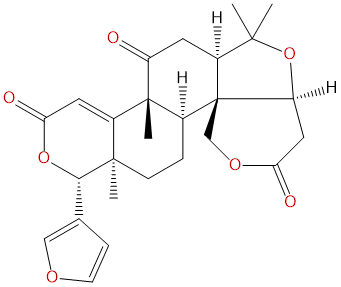
Deoxylimonin is a triterpenoid compound with a molecular formula of C26H30O8 and a molecular weight of 454.5190. Its core structure is based on a highly modified furan ring and tetra triterpenoid skeleton. Compared with common limonoid compounds such as limonoid itself, the key structural feature of deoxylimonoid is that one oxygen atom on its D ring is reduced (deoxygenated), specifically manifested by the lack of a hydroxyl or epoxy group at the C-14 position. This structural difference is the origin of its name and significantly changes the polarity, conformation, and biological activity of the molecule.
From the analysis of physical and chemical properties, the lipid water partition coefficient (LogP) of deoxylimonin is 2.5966, indicating its moderate lipophilicity, which is beneficial for its penetration of cell membranes but may also affect its water solubility. Its topological polar surface area (TPSA) is 92.0400 Å ², reflecting the presence of multiple oxygen atoms in the molecule that can form hydrogen bonds (such as lactones and ether bonds). The measured water solubility is relatively low, about 0.0059 mg/mL, indicating that strategies such as salt formation, formation of inclusion complexes, or use of solubilizers may be needed to improve its solubility in formulation development. It is worth noting that its predicted blood-brain barrier permeability is "high", which is consistent with its moderate LogP and molecular weight, suggesting its potential to act on central nervous system targets, which partially explains its potential insecticidal and neuropharmacological activities. In addition, preliminary pharmacological risk assessment showed no significant inhibitory effect on hERG potassium channels (hERG inhibition: No), and the Ames test result was 0.9 (usually considered negative if less than 2), indicating a low potential mutagenic risk and laying the foundation for further safety evaluation.
Plant sources and extraction methods
Deoxylimonin mainly comes from plants in the Rutaceae family, among which grapefruit (Citrus × paradisi) seeds are an important natural source. In citrus plants, limonoid compounds usually exist in the form of glycosides of the bitter free limonoid A-cyclic lactone precursor. During fruit damage, processing, or storage, they are converted into bitter limonoid compounds through enzymatic hydrolysis and acidification, and deoxylimonoid is one of the products of this conversion process.
The extraction and separation method follows the conventional process of natural product chemistry. Firstly, dry grapefruit seeds or other plant materials rich in this ingredient are crushed and subjected to Soxhlet extraction or room temperature leaching using moderately polar organic solvents such as methanol, ethanol, or ethyl acetate. After vacuum concentration, the crude extract obtained is subjected to liquid-liquid extraction (such as extraction with petroleum ether, chloroform, and ethyl acetate in sequence) for preliminary fractionation. Deoxylimonin is usually enriched in the moderately polar fraction (such as the ethyl acetate fraction). Further purification relies on column chromatography technology, often using silica gel as the stationary phase, with different ratios of petroleum ether ethyl acetate or chloroform methanol gradient elution. Depending on the polarity and separation difficulty of the target compound, multiple column chromatography or high-performance liquid chromatography (HPLC) may be required for final purification. Structural identification involves the comprehensive use of techniques such as nuclear magnetic resonance (1H NMR, 13C NMR), mass spectrometry (MS), infrared spectroscopy (IR), and X-ray single crystal diffraction. In recent years, green extraction techniques such as supercritical CO2 extraction have also been explored for the extraction of limonoid compounds, in order to improve efficiency and reduce the use of organic solvents.
Pharmacological activity research
Deoxylimonin and its structurally modified derivatives exhibit various pharmacological activities, mainly focused on anti-tumor, analgesic, anti-inflammatory, and insecticidal fields.
-
Antitumor activity Studies have confirmed that deoxyglimonin has anti proliferative activity on many cancer cell lines, especially on breast cancer cells. Its function may involve inducing cell cycle arrest, promoting cell apoptosis, and other pathways. However, what is more remarkable is the research on its derivatives. Scientists have obtained compounds with significantly enhanced activity by structural modifications of the deoxylimonin core, such as introducing specific ester groups, amino groups, or forming heterocycles. These derivatives not only show stronger cytotoxicity to breast cancer, but also to lung cancer, colon cancer, liver cancer and other human cancer cell lines, and some derivatives have relatively low toxicity to normal cells, showing a certain selectivity. This provides a clear direction for the development of novel anti-cancer lead compounds based on the deoxylimonoid skeleton.
-
Analgesic and anti-inflammatory activity Traditionally, some plant extracts containing limonoid compounds have been used to alleviate pain and inflammation. Pharmacological studies have confirmed that certain derivatives of deoxylimonin exhibit significant analgesic effects in classic pain models such as the acetic acid writhing test and formalin induced pain test in mice. In inflammation models such as carrageenan induced paw swelling and cotton ball granuloma in rats, these derivatives also exhibit clear anti-inflammatory effects, sometimes comparable to traditional nonsteroidal anti-inflammatory drugs. Its analgesic and anti-inflammatory mechanisms may be related to inhibiting the synthesis of inflammatory mediators such as prostaglandins and leukotrienes, or regulating inflammatory signaling pathways such as NF - κ B.
-
Insecticidal activity This is one of the earliest recognized activities of limonoid compounds. Deoxylimonin has anti food, toxic or growth inhibiting effects on various agricultural and sanitary pests. Its target proteins involve multiple key proteins in the insect nervous system, including acetylcholinesterase (AChE), gamma aminobutyric acid receptor (GABAAR), nicotinic acetylcholine receptor (nAChR), glutamate receptor (GluR), voltage-gated sodium channel (VGSC), and ryanodine receptor (RyR). This multi-target mechanism of action makes it difficult for insects to develop high levels of resistance to it, therefore deoxylimonin and its analogues are considered potential templates for developing new, environmentally friendly plant-based insecticides.
Mechanism of action and molecular targets
The multiple pharmacological activities of deoxylimonin and its derivatives stem from their interactions with various molecular targets in the body.
-
Mechanism of anti-cancer action Current research suggests that its anti-cancer effect may be the result of multi pathway synergy. including:
- Inducing cell apoptosis By upregulating pro apoptotic proteins (such as Bax) and downregulating anti apoptotic proteins (such as Bcl-2), activating the caspase cascade reaction, cancer cells undergo programmed cell death.
- Block cell cycle Block cancer cells in G0/G1 or G2/M phase and inhibit their proliferation.
- Inhibit migration and invasion It is possible to inhibit the metastatic potential of cancer cells by regulating the activity of epithelial mesenchymal transition (EMT) related markers (such as E-cadherin, N-cadherin, vimentin) or matrix metalloproteinases (MMPs).
- Regulating signal pathways May interfere with signaling pathways closely related to cell survival and proliferation, such as PI3K/Akt/mTOR, MAPK/ERK, Wnt/β - catenin, etc. The specific target proteins are still under further analysis.
-
Mechanism of analgesic and anti-inflammatory effects Its analgesic and anti-inflammatory activities may be related to the following mechanisms:
- Inhibit inflammatory mediators Inhibit the activity of cyclooxygenase (COX) and lipoxygenase (LOX), thereby reducing the production of painful and inflammatory substances such as prostaglandins and leukotrienes.
- Regulating the inflammatory signaling pathway Inhibiting the activation of nuclear factor kappa B (NF - κ B) and subsequently downregulating the expression of pro-inflammatory cytokines such as tumor necrosis factor - α (TNF - α), interleukin-1 β (IL-1 β), and IL-6.
- Affects pain signal transduction May regulate pain signals by acting on ion channels (such as transient receptor potential channels) or neurotransmitter systems in the peripheral or central nervous system.
-
Insecticidal mechanism As mentioned earlier, its insecticidal activity exhibits typical multi-target characteristics
- Acetylcholinesterase (AChE) inhibition Causing the accumulation of neurotransmitter acetylcholine in synaptic cleft, resulting in sustained excitation, spasms, and even death of insects.
- Neuroreceptor interference As an antagonist or allosteric regulator, it acts on ligand gated ion channels such as GABAAR, nAChR, GluCl, etc., disrupting normal neural impulse transmission.
- Ion channel regulation: Affects the opening and closing dynamics of voltage-gated sodium channels (VGSCs) and interferes with the generation and conduction of action potentials.
- Intracellular calcium release Activation of the ryanodin receptor (RyR) leads to abnormal release of calcium ions in the sarcoplasmic reticulum/endoplasmic reticulum, causing muscle contraction disorders and cell damage.
This coordinated attack on multiple key nodes of the insect nervous system is the core reason for its efficient insecticidal activity and low resistance.
Evaluation of drug properties and pharmacokinetics
Based on existing computational data and limited experimental research, a preliminary evaluation of the pharmacological properties of deoxylimonin is conducted
- Absorption and oral activity Deoxylimonin has been reported to have oral activity, which is consistent with its moderate LogP value (2.5966), suggesting that it may have good passive diffusion absorption ability in the gastrointestinal tract. But its low water solubility may become a key factor limiting its oral bioavailability, which may lead to slow or incomplete absorption.
- distribution The predicted high blood-brain barrier permeability means that the compound can enter the central nervous system, which is advantageous for the development of central analgesics or insecticides (acting on the central nervous system of insects), but also suggests that potential central side effects should be considered when developing drugs for systemic diseases.
- Metabolism and excretion As a triterpenoid compound, it is likely to undergo phase I metabolism (such as oxidation and reduction of cytochrome P450 enzymes) and phase II metabolism (such as glucuronidation and sulfation) in the liver. The specific metabolites, main metabolic enzymes, and excretion pathways (bile or urine) still need to be clarified through in vivo pharmacokinetic experiments.
- Preliminary safety indicators HERG inhibition negative is a positive signal that reduces the risk of causing QT interval prolongation and apical torsion ventricular tachycardia in the heart. The negative result of Ames test also preliminarily ruled out its direct genetic mutation toxicity. However, a comprehensive safety evaluation, including acute toxicity, subchronic toxicity, reproductive toxicity, etc., still needs to be carried out.
- Formulation Challenge Low water solubility is the main challenge in formulation development. Future research may require exploring solubilization techniques such as nanocrystals, liposomes, cyclodextrin inclusion complexes, solid dispersions, or designing and synthesizing water-soluble prodrugs to improve their pharmaceutical properties.
Clinical application prospects and prospects
Deoxylimonin, as a natural lead compound with multi-target activity, has shown broad prospects in translational medicine in multiple fields.
-
Development of anti-tumor drugs Given the potent, broad-spectrum anticancer activity and potential selectivity exhibited by its derivatives, the deoxylimonin scaffold is an excellent starting point for developing novel small molecule anticancer drugs. Future research should focus on: ① conducting systematic structure-activity relationship studies to optimize candidate compounds with stronger activity, lower toxicity, and higher selectivity; ② Thoroughly elucidate its precise molecular targets and signaling pathways; ③ Conduct a comprehensive evaluation of preclinical pharmacodynamics, pharmacokinetics, and safety; ④ Explore its combination therapy with existing chemotherapy drugs in order to enhance efficacy and reduce toxicity.
-
Exploration of new analgesics and anti-inflammatory drugs Based on the analgesic and anti-inflammatory effects exhibited by its derivatives, it is expected to develop new drugs for the treatment of chronic inflammatory diseases (such as arthritis) or neuropathic pain. Its multi-target mechanism of action may bring different efficacy and safety characteristics from traditional nonsteroidal anti-inflammatory drugs or opioid drugs.
-
Green pesticide creation In the field of agriculture, the development of new plant-based insecticides based on deoxylimonin structure conforms to the green and sustainable plant protection concept. Its multi-target mechanism of action helps to delay the development of drug resistance. The research focuses on improving its photostability and shelf life, and reducing costs and enhancing field efficacy through formulation technology.
-
Other potential uses Based on other known activities of limonoid compounds, such as antiviral, antioxidant, and hepatoprotective effects, the potential of deoxylimonoid in these areas is also worth exploring.
The challenges faced mainly include: ① limited natural sources, requiring the development of efficient chemical or biological synthesis methods to achieve large-scale supply; ② Poor water solubility requires advanced formulation strategies to overcome; ③ The multi-target characteristic is a double-edged sword. While it brings therapeutic advantages, it may also increase the risk of off target side effects, requiring precise structural optimization to improve selectivity.
Conclusion
Deoxylimonin, a natural product of the limonin class found in grapefruit seeds, is increasingly receiving attention in the fields of natural product pharmacology and medicinal chemistry due to its unique chemical structure and rich biological activity. From its initial insecticidal activity to the enormous potential it has shown in fields such as anti-tumor, analgesic, and anti-inflammatory, its research process reflects the value of deep exploration of natural products. Despite facing challenges such as low water solubility in drug development, its clear pharmacological effects, diverse mechanisms of action, good preliminary safety indicators, and successful cases of significantly enhancing activity through structural modifications have injected strong impetus into its subsequent development. In the future, through interdisciplinary cooperation and the combination of modern drug design, synthetic chemistry, pharmacy, and systems biology technologies, deoxylimonin is expected to gradually develop from a potential natural lead compound into a new type of drug or green pesticide with practical application value in the fields of medicine and agriculture, contributing to human health and agricultural development.