Introduction/Overview
Diabetes is a global chronic metabolic disease, its incidence rate continues to rise, has become a serious public health challenge. Although current first-line clinical drugs can effectively control blood sugar, long-term use often comes with limitations such as weight gain, risk of hypoglycemia, cardiovascular events, or gastrointestinal adverse reactions. Therefore, it is always an important direction for drug research and development to explore new anti diabetes lead compounds with high efficiency and low toxicity from natural products. Pentacyclic triterpenoids have shown great potential in this field due to their extensive biological activity and relatively low toxicity.
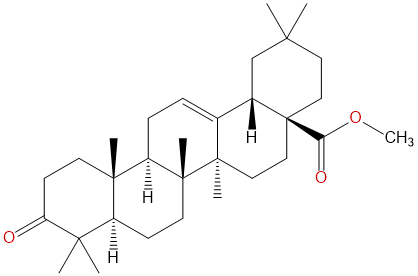
3-Keto-oolean-12-en-28-oic acid methyl ester (3-KOAM), CAS number 1721-58-0, is a semi synthetic or naturally occurring derivative of oleanolic acid. Compared with the parent nucleus of oleanolic acid, the hydroxyl group at C-3 is oxidized to carbonyl, and the carboxyl group at C-28 is esterified to methyl ester. This structural modification significantly altered its physicochemical properties and biological activity spectrum. In recent years, with the deepening of network pharmacology, molecular docking and in vitro and in vivo experiments, 3-KOAM's anti diabetes activity and its multi-target mechanism of action have gradually been revealed, making it an attractive candidate drug molecule. This article aims to systematically review the chemical properties, plant sources, pharmacological activities, mechanisms of action, and medicinal properties of 3-KOAM, and to explore its clinical application prospects.
Chemical structure and physicochemical properties
The molecular formula of 3-Keto-ooleanolic acid-28-methyl ester is C ∝₁ H ₄₈ O3, with a molecular weight of 468.7220. Its chemical structure belongs to the oleanane type pentacyclic triterpenoid, with the following key characteristics:
1. Mother nucleus structure The classic oleane pentacyclic skeleton consists of five rings A, B, C, D, and E, with double bonds (Δ ¹ ²) at positions C-12 and C-13.
2. Key modifications:
* C-3 position The hydroxyl group is oxidized to ketocarbonyl (3-Oxo -), which enhances the electrophilicity of this position and may affect its hydrogen bonding interaction with the active site of the target protein.
* C-28 bits Carboxyl groups are methylated (- COOCH ∝), which significantly reduces the polarity of the compound and increases its lipophilicity.
Based on the above structure, the key physicochemical parameters related to drug properties are as follows:
* Lipid water partition coefficient (LogP)Up to 7.1863, indicating that the compound has extremely strong lipophilicity. This is beneficial for its penetration through cell membranes, but it may also lead to poor water solubility, affecting oral bioavailability and formulation development.
* Topological Polarity Surface Area (TPSA)The value of 43.37 Å ² is relatively small, further confirming its low polarity characteristics.
* Water solubility Extremely low, about 0.0003 mg/mL. This is a direct consequence of high LogP values and a technical bottleneck that needs to be addressed in subsequent development.
* Blood-brain barrier permeability Predicted as' high '. This is mainly attributed to its high lipid solubility and low TPSA, suggesting that the compound may easily enter the central nervous system. For anti diabetes drugs, this may not only bring potential benefits of central blood glucose regulation, but also increase the risk of unknown neurological side effects, which should be carefully evaluated in preclinical studies.
* HERG inhibition Predicted as' no '. This is a positive signal indicating that 3-KOAM may not inhibit the hERG potassium channel in the heart at conventional concentrations, reducing the risk of cardiac toxicity in inducing acquired long QT syndrome and apical torsion ventricular tachycardia.
* Ames test The predicted value is 0.0, indicating that it may not have direct genetic toxicity, but it needs to be verified through experiments.
In summary, 3-KOAM is a pentacyclic triterpenoid derivative with high lipid solubility and low water solubility. While its structural modification endows it with specific biological activity, it also brings challenges in solubility and delivery.
Plant sources and extraction methods
3-Keto-ooleanolic acid-28-methyl ester is not widely present in nature. It is mainly found in a few plants as an oxidized and esterified derivative of oleanolic acid, and is mostly obtained through semi synthetic pathways.
-
Natural plant sources:
According to literature reports, 3-KOAM can be isolated from some traditional medicinal plants, such as certain Osmanthus family Plants (such as Ligustrum) Ligustrum Spp.) and Holly family Plants (such as Cornus officinalis) Ilex cornuta). In these plants, their content is usually much lower than that of oleanolic acid. In addition, it may also be detected in the skin wax of some plants or in medicinal materials that have undergone specific processing (such as fermentation or processing).
-
Extraction and Separation:
The process of directly extracting 3-KOAM from plants is usually similar to its parent nucleus oleanolic acid:
- Extract Organic solvents such as methanol, ethanol, and chloroform are commonly used for reflux extraction or ultrasound assisted extraction of dried plant materials.
- Rough classification After concentration, the extract is subjected to liquid-liquid extraction using solvents such as petroleum ether and ethyl acetate to enrich triterpenoid components.
- purification Further separation and purification can be achieved through methods such as silica gel column chromatography, reverse phase silica gel column chromatography (such as ODS), preparative thin layer chromatography (PTLC), or high-performance liquid chromatography (HPLC). Due to its low polarity, it is usually eluted on a normal phase silica gel column using a medium polarity eluent (such as a petroleum ether ethyl acetate gradient).
-
Semi synthetic preparation:
Given the limited natural sources, semi synthesis is the main method for obtaining sufficient amounts of 3-KOAM for research. Usually starting from inexpensive and readily available oleanolic acid, it undergoes two steps of reaction:
- C-3 oxidation Using Jones reagent (chromic acid sulfuric acid), Collins reagent (CrO3 · Py ₂), or other mild oxidants (such as Deiss Martin oxidant), selectively oxidize C-3 hydroxyl to ketone carbonyl to obtain 3-ketooleanolic acid.
- C-28 esterification The above intermediates are esterified with methanol in the presence of acidic catalysts such as concentrated sulfuric acid and p-toluenesulfonic acid, or methylated with diazomethane (CH ₂ N ₂) to obtain 3-Keto-ooleanolic acid-28-methyl ester. The semi synthetic route has a high yield and is easy to scale up, making it the main source of compounds used in current pharmacological research.
Pharmacological activity research
Numerous in vitro and in vivo studies have shown that the core pharmacological activity of 3-KOAM is concentrated in anti-diabetic In terms of related metabolic syndrome, it also exhibits certain anti-inflammatory and antioxidant activities.
-
Antidiabetic activity:
- In vitro research In cell models of insulin resistance, such as palmitic acid-induced HepG2 liver cells, C2C12 myotubes, or 3T3-L1 adipocytes, 3-KOAM significantly enhances glucose uptake and utilization, improving insulin sensitivity. Its effect is often better than that of oleanolic acid.
- In vivo research: In the model of type 1 diabetes mice induced by streptozotocin (STZ), the model of type 2 diabetes mice or rats induced by high-fat diet combined with STZ, and the model of spontaneous diabetes db/db mice, 3-KOAM oral administration can reduce fasting blood glucose and postprandial blood glucose levels in a dose-dependent manner, and improve abnormal glucose tolerance. At the same time, it can reduce weight loss (type 1) or control weight gain (type 2) caused by diabetes, and improve the complications of diabetes (such as kidney hypertrophy, abnormal liver function indicators).
-
Improving insulin resistance and lipid metabolism:
In the animal model of type 2 diabetes or high-fat diet, 3-KOAM can not only reduce blood glucose, but also significantly reduce serum insulin level and increase insulin sensitivity index (such as HOMA-IR), indicating that it can effectively improve systemic insulin resistance. In addition, it can reduce the levels of triglycerides (TG), total cholesterol (TC), and low-density lipoprotein cholesterol (LDL-C) in serum, increase high-density lipoprotein cholesterol (HDL-C), and exhibit lipid-lowering effects.
-
Anti inflammatory and antioxidant activity:
Chronic low-grade inflammation and oxidative stress are the key driving factors of insulin resistance and the progress of diabetes. Research has shown that 3-KOAM can inhibit the excessive production of pro-inflammatory mediators such as nitric oxide (NO), prostaglandin E2 (PGE2), tumor necrosis factor - α (TNF - α), and interleukin-6 (IL-6) in macrophages induced by lipopolysaccharide (LPS) or inflammatory factors. In diabetes animal tissues, it can reduce the level of oxidative stress markers (such as malondialdehyde MDA), and enhance the activities of superoxide dismutase (SOD), glutathione peroxidase (GSH Px) and other antioxidant enzymes.
Mechanism of action and molecular targets
Based on network pharmacology prediction, molecular docking and experimental verification, the anti diabetes effect of 3-KOAM is characterized by multiple targets and multiple pathways. Its core mechanism involves improving insulin signal transduction, promoting glucose metabolism and transport, regulating energy metabolism and inhibiting inflammation.
-
Activate AMPK signaling pathway AMP activated protein kinase (AMPK) is a core sensor and regulator of cellular energy metabolism. 3-KOAM has been shown to directly or indirectly activate AMPK (target PRKAA1/AMPK). The activation of AMPK produces a series of downstream effects:a) Inhibit the expression of key enzymes involved in hepatic gluconeogenesis, such as PEPCK and G6Pase, and reduce hepatic glucose output;b) Promote the translocation of glucose transporter 4 (GLUT4, encoded by SLC2A4 gene) from skeletal muscle and adipocytes to the cell membrane, and increase peripheral tissue glucose uptake;c) Promote fatty acid oxidation, inhibit fat synthesis, and improve lipid metabolism.
-
Enhance insulin PI3K/Akt signaling pathway Insulin activates the phosphatidylinositol 3-kinase (PI3K)/protein kinase B (Akt) signaling axis by binding to its receptors, which is the core pathway regulating glucose metabolism. Research has shown that 3-KOAM can upregulate tyrosine phosphorylation of insulin receptor substrate 1 (IRS1), activate the regulatory subunit PIK3R1 and catalytic subunit of PI3K, and promote phosphorylation activation of Akt (AKT1). Activated Akt further promotes GLUT4 translocation and regulates metabolic processes such as glycogen synthesis.
-
Regulating key metabolic enzymes and transporters:
- Glucokinase (GCK)As a glucose sensor in liver and pancreatic beta cells, GCK catalyzes glucose phosphorylation, which is the first step in glucose metabolism. 3-KOAM may have the effect of activating or stabilizing GCK, promoting liver utilization of glucose and insulin secretion.
- Sodium glucose cotransporter 2 (SGLT2)Responsible for approximately 90% of glucose reabsorption in the renal proximal tubules. Molecular docking showed that 3-KOAM may bind to SGLT2, and its potential inhibitory activity may contribute to its hypoglycemic effect, similar to SGLT2 inhibitor drugs that lower blood sugar by increasing urinary glucose excretion.
- Dipeptidyl peptidase-4 (DPP4)DPP4 degrades the intestinal insulinotropic hormone GLP-1. Inhibiting DPP4 can prolong GLP-1 activity, promote insulin secretion, and inhibit glucagon secretion. 3-KOAM may have DPP4 inhibitory potential.
-
Regulating peroxisome proliferator activated receptor gamma (PPARG)PPAR γ is a key regulatory factor for adipocyte differentiation and insulin sensitivity. Thiazolidinedione drugs (TZDs) are their potent agonists. 3-KOAM may act as a partial agonist or regulator of PPAR γ, promoting normal differentiation of adipocytes and increasing insulin sensitivity while avoiding side effects such as excessive weight gain and edema caused by TZDs.
-
Anti inflammatory and antioxidant mechanisms 3-KOAM reduces the production of inflammatory factors by inhibiting the activation of inflammatory signaling pathways such as nuclear factor kappa B (NF - κ B) and mitogen activated protein kinase (MAPK). Its antioxidant effect may be related to activating the Nrf2/ARE pathway and upregulating the expression of downstream antioxidant enzymes. These effects together alleviate metabolic inflammation and oxidative damage in the state of diabetes, and indirectly improve insulin resistance.
Evaluation of drug properties and pharmacokinetics
Although the pharmacological activity of 3-KOAM is clear, there are significant challenges in its drug likeness, mainly due to its extreme physicochemical properties.
-
Absorption, distribution, metabolism, excretion (ADME) characteristics:
- absorb Theoretically, high lipid solubility (high LogP) is beneficial for its penetration into gastrointestinal biofilms, but its extremely low water solubility (0.0003 mg/mL) severely limits its solubility and dissolution rate in gastrointestinal fluids, which may be the main bottleneck for its low oral bioavailability. The formulation strategy (such as making nanocrystals, solid dispersions, lipid formulations, or prodrugs) is key to improving their absorption.
- distribution The predicted high blood-brain barrier permeability suggests that it may be widely distributed in tissues throughout the body, including the central nervous system. This requires specific research on the distribution and concentration of its target tissues (such as liver, muscle, fat) and their relationship with drug efficacy, as well as evaluating the safety of central exposure.
- Metabolism As a triterpenoid compound, its metabolic pathway may involve redox reactions of the liver cytochrome P450 (CYP) enzyme system, as well as hydrolysis of ester bonds (possibly reversed to 3-ketooleanolic acid). Further research is needed on the specific metabolites, major metabolic enzymes, and species differences.
- excretion The prototype drug and its metabolites may be mainly excreted through bile and feces, with a relatively small proportion excreted through the kidneys.
-
Preliminary evaluation of safety:
- cardiotoxicity The negative prediction of hERG inhibition is a positive signal, but further experimental verification is needed, especially to determine whether its metabolites have cardiotoxicity.
- Genotoxicity The negative prediction of Ames test needs to be further confirmed through standard in vitro chromosomal aberration test and in vivo micronucleus test.
- Acute and subchronic toxicity Currently, there is a lack of systematic toxicological research data. It is necessary to conduct standardized animal acute and long-term toxicity tests, determine their safe dose window, and observe the functional and histological effects on major organs (liver, kidney, heart).
-
Challenges and Strategies in Formulation Development:
Improving bioavailability is the primary task of 3-KOAM development. Feasible strategies include:
- nanotechnology Preparation of 3-KOAM nanosuspension or polymer nanoparticles to increase specific surface area and enhance dissolution rate.
- Solid dispersion Dispersing drugs in an amorphous form onto water-soluble carriers (such as PVP, Soluplus) significantly improves solubility and dissolution.
- Prodrug design Modification of C-28 methyl ester or C-3 ketone group by introducing hydrophilic groups (such as phosphate esters and amino acid esters) to produce water-soluble prodrugs, which can be enzymatically interpreted and released as active ingredients in vivo.
- Composite formation Form inclusion complexes with materials such as cyclodextrin to improve water solubility and stability.
Clinical application prospects and prospects
As a multi target anti diabetes natural product derivative, 3-KOAM has broad prospects for research and development, but the road is long.
-
Potential therapeutic positioning:
- First line or combined treatment of type 2 diabetes: Its multi-target mechanism of action (improving insulin resistance, promoting sugar utilization, potentially promoting insulin secretion, regulating lipid and anti-inflammatory) makes it possible to become a candidate for single drug treatment of early type 2 diabetes, especially for patients with insulin resistance and dyslipidemia.
- Prevention and treatment of complications of diabetes Its anti-inflammatory and antioxidant properties suggest that while controlling blood glucose, it may have direct benefits for complications such as diabetes nephropathy and non-alcoholic fatty liver disease (NAFLD), which is worth further study.
- Metabolic syndrome Its comprehensive effect of improving glucose and lipid metabolism also makes it potential in the treatment of metabolic syndrome.
-
Future research directions:
- In depth mechanism research Using gene knockout/knockdown techniques, chemical proteomics, and other methods, accurately verify its direct interaction with key targets such as AMPK and PPAR γ, and elucidate its upstream activation mechanism.
- Systematic pharmacokinetic study Comprehensively study its absolute bioavailability, tissue distribution, metabolic profile, excretion pathways, and major active metabolites in multiple animal models.
- Security system evaluation Complete standardized GLP toxicology studies to clarify the safety of long-term use.
- structural optimization Based on structure-activity relationship (SAR) research, rationally optimize its structure. For example, while maintaining activity, introducing hydrophilic groups to balance LogP values, improve water solubility and pharmacokinetic properties; Or carry out targeted modification to improve its tissue selectivity.
- Innovative formulation development Actively exploring advanced delivery technologies such as nanomaterials and prodrugs to solve the fundamental problem of poor water solubility and lay the foundation for clinical translation.
- Preclinical and clinical research After completing sufficient preclinical research, gradually advance clinical trials to verify its effectiveness and safety in humans.
Conclusion
3-Keto-oleanolacid-28-methyl ester is a pentacyclic triterpene compound with definite anti diabetes activity derived from oleanolic acid, an active component of traditional medicinal plants. By activating AMPK, enhancing PI3K/Akt signal, regulating PPAR γ, inhibiting SGLT2 and DPP4 and other multi-target synergistic effects, it has shown comprehensive efficacy in improving insulin resistance, promoting glucose metabolism, regulating lipid disorders and inhibiting inflammation, which is consistent with the complex pathophysiological network of diabetes. However, its extremely high lipid solubility and extremely low water solubility constitute the main obstacles to its conversion into drugs. Future research should focus on breaking through the bottleneck of bioavailability through innovative formulation technology and rational structural modification, and conducting systematic pharmacokinetic and safety evaluations. With the gradual solution of these key issues, 3-KOAM is expected to develop into a class of natural, novel mechanism of action of multi target anti diabetes candidate drugs, providing new options for the treatment of diabetes and its complications.