Introduction/Overview
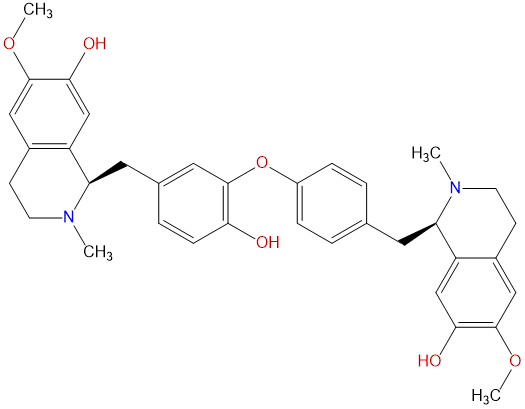
Bisbenzylisoquinoline alkaloids are a class of natural products with unique structures and wide biological activities, which play an important role in both traditional medicine and modern drug development. Among them, Guattegaurine (CAS number: 21446-35-5), as a representative bisbenzylisoquinoline alkaloid, has attracted much attention since its discovery due to its complex chemical structure and diverse pharmacological activities. This compound was initially isolated from plants such as Menispermum dauricum DC. in the family Menispermaceae. Its structural feature is that two tetrahydroisoquinoline units are connected by an aromatic ether bond, belonging to the aromatic ether class. It is functionally closely related to the famous Dauricine. Bat Ge Xinlin alkaloid exhibits multidimensional biological activities including anti mitosis, cytotoxicity, and neuroprotection, indicating its potential value in the fields of anti-tumor and neurological disease treatment. What is particularly noteworthy is that recent studies have revealed its significant role in cardiac electrophysiology, especially its potential for anti arrhythmic effects, making it a research hotspot connecting natural product chemistry with cardiovascular pharmacology. This article aims to systematically review the chemical structure, plant origin, pharmacological activity, mechanism of action, evaluation of drug properties, and clinical application prospects of dauricine, in order to provide comprehensive scientific references for the in-depth research and development of this compound.
Chemical structure and physicochemical properties
The molecular formula of Batvine Xinlin alkaloid is C ∝₈ H ₄₄ N ₂ O ₆, with a molecular weight of 596.7240. Its core structure is a dimer composed of two (1R) -1- (4-hydroxybenzyl) -6-methoxy-2-methyl-1,2,3,4-tetrahydroisoquinoline-7-ol units, which undergo oxidative coupling between the 4-hydroxy group of one molecule and the 3-position of the 4-hydroxybenzyl group of another molecule, forming an aromatic ether bond (C-O-C). This structure belongs to the category of bisbenzylisoquinoline alkaloids, while also possessing the characteristics of phenols, aromatic ethers, and tertiary amino compounds.
The presence of its stereochemical center (such as the R configuration at C-1) may have a significant impact on its biological activity. The rich aromatic rings and ether bond structures in molecules determine their specific physicochemical properties. The calculated lipid water partition coefficient (LogP) is 5.2402, indicating that the compound has high lipophilicity. The topological polar surface area (TPSA) is 94.86 Å ², reflecting the presence of multiple polar atoms (such as O, N) in the molecule. Its water solubility is extremely low, only 0.0216 mg/mL, which is consistent with its high LogP value, indicating that its dissolution and absorption in organisms may face challenges. These basic physicochemical parameters are important foundations for evaluating its pharmacokinetic properties and subsequent structural modifications.
Plant sources and extraction methods
Bat Ge Xinlin alkaloid mainly comes from plants in the family Menispermaceae. Its initial and primary source is the rhizome of Menispermum dauricum DC. As a traditional Chinese medicinal herb (Sophora alopecuroides), Platycodon grandiflorus is commonly used in Asia for clearing heat, detoxifying, dispelling wind, and relieving pain. It is rich in various quinoline alkaloids, and Platycodon grandiflorus alkaloids are one of them. In addition, there have been reports of isolating this compound or its analogues in some species of other genera in the same family, such as Stephania and Tinospora.
The extraction and separation of dauricine from plant materials usually follow the conventional process of natural product chemistry. Firstly, the dried plant rhizomes are crushed and subjected to reflux extraction or cold soaking extraction with appropriate organic solvents (such as methanol, ethanol, or chloroform methanol mixture) to extract total alkaloids. Subsequently, the alkaloids are treated with acidic water (such as dilute hydrochloric acid or dilute sulfuric acid) to dissolve into salts and separate from lipophilic impurities; After alkalization (such as ammonia or sodium hydroxide), crude total alkaloids are obtained by back extraction with organic solvents (such as chloroform or ethyl acetate). Further purification is often carried out using column chromatography technology, often using silica gel as the stationary phase and solvent systems of different polarities (such as chloroform methanol ammonia gradient elution) for separation. Due to the characteristic absorption of dauricine in the ultraviolet region, it can be tracked by thin layer chromatography (TLC) combined with ultraviolet detection or chromogenic agents such as bismuth potassium iodide. High performance liquid chromatography (HPLC), especially preparative HPLC, is the ultimate key step in obtaining high-purity monomers. Modern separation techniques such as high-speed countercurrent chromatography (HSCCC) have also been applied to the separation and purification of such alkaloids due to their high efficiency and avoidance of irreversible adsorption.
Pharmacological activity research
A large number of in vitro and in vivo pharmacological studies have shown that Batrachamine has multiple biological activities, providing a basis for its potential therapeutic applications.
-
Anti mitotic and cytotoxic activity Batvine alkaloid has been identified as an effective anti mitotic agent. Research has shown that it can interfere with the dynamic balance of microtubule proteins, inhibit microtubule polymerization, thereby blocking the cell cycle in the G2/M phase and ultimately inducing tumor cell apoptosis. This effect makes it show significant cytotoxicity to a variety of human tumor cell lines, including leukemia, breast cancer, lung cancer and liver cancer cells. Its cytotoxic activity is similar to classical microtubule inhibitors such as colchicine, but may have unique sites or mechanisms of action.
-
Neuroprotective activity Some studies suggest that dauricine may have a protective effect on the nervous system. In neuronal damage models induced by oxidative stress or glutamate excitotoxicity, this compound exhibits the potential to increase cell survival, reduce reactive oxygen species production, and inhibit apoptosis. Its neuroprotective mechanism may be related to its antioxidant properties, regulation of calcium homeostasis, or impact on specific neural signaling pathways, providing clues for exploring its application in neurodegenerative diseases such as Alzheimer's disease, Parkinson's disease, or cerebral ischemia, as well as brain injury.
-
Antiarrhythmic activity This is the core pharmacological activity of Bat Ge Xin Lin alkaloid that has received much attention in recent years. Cardiac electrophysiological disorders are the basis for the occurrence of arrhythmia. Research has shown that dauricine can affect multiple ion channels in myocardial cells, prolong action potential duration (APD), and effectively counteract experimental arrhythmia models induced by various drugs (such as aconitine, barium chloride, adrenaline) or electrical stimulation (such as ventricular premature beats, tachycardia, and fibrillation). Its anti arrhythmic effect is comparable in strength to some commonly used clinical drugs, such as amiodarone, and may have the advantage of multi-channel action.
-
Other activities In addition, there are sporadic reports suggesting that Batrachenan alkaloids may have antibacterial, anti-inflammatory, and other activities, but the relevant research is not yet systematic and needs further confirmation and in-depth investigation.
Mechanism of action and molecular targets
The multiple pharmacological activities of Bat Ge Xinlin alkaloid stem from its interactions with multiple key molecular targets within cells.
-
tubulin As the main target of its anti mitotic and cytotoxic effects, Batrachamine can directly bind to specific sites of microtubule proteins, inhibit microtubule polymerization, and disrupt spindle function, which is the core mechanism of its anti-tumor activity.
-
Heart ion channels (core target group for antiarrhythmic effects)The anti arrhythmic effect of Bat Ge Xin Lin alkaloid has been confirmed to be achieved by simultaneously regulating multiple ion channels on the myocardial cell membrane, reflecting the characteristics of multi-target action
- Delayed rectifier potassium current (IKr)By inhibiting KCNH2 The fast delayed rectifier potassium current (IKr) mediated by the hERG gene encoding channel is a key mechanism for prolonging the duration of myocardial action potential and effective refractory period, thereby terminating reentrant arrhythmia. The pharmacological parameters of "hERG inhibition: Yes" also directly confirm this point.
- Slow Delay Rectified Potassium Current (IKs): Yes, by KCNQ1 and KCNE1 The IKs current mediated by the subunit complex also has an inhibitory effect, further synergistically prolonging repolarization.
- Voltage gated sodium channel (INa): Yes, by SCN5A The encoded cardiac sodium channel (Nav1.5) may have a use dependent blocking effect, reducing the maximum rate of action potential rise in phase 0 and slowing down conduction, which is beneficial for the treatment of tachyarrhythmia.
- L-type calcium channel (ICa-L)Inhibition by CACNA1C The encoded L-type calcium channel current reduces calcium influx, which helps to lower the autonomy of myocardial cells and inhibit triggering activity.
- Lanine receptor 2 (RyR2)Possible through stability RYR2 Receptors reduce the abnormal release of calcium ions from the sarcoplasmic reticulum during diastole, thereby inhibiting calcium sparks and delayed depolarization (DAD). This is an important mechanism for preventing and treating certain malignant ventricular arrhythmias, such as catecholamine sensitive ventricular tachycardia.
- In addition, regarding KCNE2 The influence of auxiliary subunits may also be involved in fine-tuning their electrophysiological effects.
-
Neuroprotective targets The precise molecular targets of its neuroprotective effect are not yet fully understood, and may involve regulating NMDAR receptors, antioxidant stress pathways (such as Nrf2/ARE), and inhibiting mitochondrial apoptosis pathways (such as regulating Bcl-2/Bax and inhibiting caspase-3).
This synergistic regulation of multiple ion channels in the heart may lead to the potential for broad-spectrum antiarrhythmic effects of dauricine. At the same time, its "multi-target" properties may also bring therapeutic benefits superior to single target drugs, but at the same time, it also increases the complexity of its action and potential risk of side effects.
Evaluation of drug properties and pharmacokinetics
Based on its physical and chemical properties and preliminary biological data, a preliminary evaluation of the pharmacological properties of Batrachotoxin alkaloid is conducted
- Absorption and distribution The high LogP value and low water solubility suggest that its oral bioavailability may be low, and dissolution and absorption in the gastrointestinal tract are the main limiting steps. Its blood-brain barrier permeability is predicted to be "low", which is related to its larger molecular weight and higher polar surface area. This means that the amount of its prototype drug entering the central nervous system may be limited, which is a challenge for its neuroprotective effect, but may also reduce the risk of central nervous system side effects.
- Metabolism and excretion As a compound containing phenolic hydroxyl and tertiary amine groups, dauricine is likely to undergo extensive metabolism in the body, including phase I oxidation (such as cytochrome P450 enzyme catalysis) and phase II binding reactions (such as glucuronidation and sulfation). Its metabolites, major metabolic enzymes, and excretion pathways (bile or urine) still need to be clarified through studies such as radioactive labeling or high-resolution mass spectrometry.
- Preliminary Safety Assessment The key toxicity warning indicator shows that the Ames test result is 0.0, indicating that there is no mutagenicity in the experimental system used, which is a positive signal. However, the clear "hERG inhibition" activity is a double-edged sword: it is both the pharmacological basis for its class III antiarrhythmic effects and a risk marker for its potential to trigger acquired long QT syndrome and lead to severe cardiac toxicity such as torsade cuspidae (TdP). Therefore, in subsequent development, it is necessary to conduct extremely strict evaluations of its cardiac safety and find the best window between efficacy and hERG related cardiac toxicity.
- Pharmaceutical Science Challenge To improve its water solubility and bioavailability, advanced formulation technologies such as nanocrystals, liposomes, cyclodextrin inclusion complexes, or prodrugs may be required.
At present, there is still a lack of pharmacokinetic studies on the Batrachotoxin alkaloid system (such as absolute bioavailability, tissue distribution, half-life, etc.) in public literature, which is a key data gap that must be filled in order to move towards drug development.
Clinical application prospects and prospects
The diverse pharmacological activities of Bat Ge Xinlin alkaloid have demonstrated potential application prospects in multiple therapeutic fields, but also face clear challenges.
-
Development of antiarrhythmic drugs This is currently the most attractive direction. Existing antiarrhythmic drugs generally have insufficient efficacy or side effects such as arrhythmia. The multi ion channel blocking properties of Batrachotoxin alkaloid, similar to amiodarone, may make it a candidate drug for the treatment of complex and refractory arrhythmias such as atrial fibrillation and ventricular tachycardia. The future research focus will be on: clarifying the treatment window through systematic preclinical pharmacology and safety evaluation (especially cardiac safety); Optimize the structure while preserving the advantages of multi-channel effects and minimizing the risk of arrhythmia as much as possible; Explore its potential for precise treatment of specific subtypes of arrhythmias, such as RyR2 related arrhythmias.
-
Development of anti-tumor drugs Its microtubule inhibition mechanism endows it with the potential as a novel anti-tumor drug, especially for tumors resistant to other microtubule inhibitors. However, its poor water solubility, potential neurotoxicity (common side effects of microtubule inhibitors), and the need to overcome hERG inhibition risks make its development pathway more complex. Developing it as a nano formulation targeting tumors or in combination with other drugs may be a strategy worth exploring.
-
Development of neuroprotective agents Although low blood-brain barrier permeability is the main obstacle, its brain targeting can be improved through structural modifications or the development of dosing regimens suitable for acute brain injury (where the blood-brain barrier may temporarily open). Its multi-target effects may also be beneficial for complex neurodegenerative diseases.
-
Challenges and Future Directions:
- Structural optimization and structure-activity relationship Systematically studying the relationship between its chemical structure and various pharmacological activities and toxicity, with the aim of designing derivatives or analogues with higher activity, better selectivity, and better drug properties.
- Systematic pharmacokinetics and toxicology research This is the cornerstone of advancing any drug development and must be fully completed.
- Deep analysis of the mechanism of action Using chemical biology methods to more accurately elucidate its binding patterns with various targets, downstream signaling networks, and the intrinsic connections between different activities.
- New delivery system Develop advanced delivery technologies suitable for this compound to address its solubility, targeting, and stability issues.
Conclusion
Bat Ge Xinlin alkaloid, as a structurally unique bisbenzylisoquinoline alkaloid, is a brilliant gem in the treasure trove of natural products. It combines anti mitotic, cytotoxic, neuroprotective, and especially multi-channel antiarrhythmic activity, fully demonstrating the diversity of natural compound chemical structures and the multiplicity of biological activities. Despite facing significant challenges such as poor water solubility, unclear pharmacokinetic properties, and the risk of hERG inhibition related cardiac toxicity on the path to drug development, its clear molecular targets and unique pharmacological mode of action provide valuable lead compounds and new ideas for the development of novel antiarrhythmic and anti-tumor drugs. Future research should focus on using interdisciplinary strategies to deeply analyze its structure-activity relationship and mechanism of action, systematically evaluate its pharmacokinetic and toxicological properties, and optimize and modify it using modern medicinal chemistry and formulation methods. Only in this way can we hope to transform this active molecule derived from traditional medicinal plants into modern drugs that truly benefit patients, achieving a successful leap from natural products to innovative drugs.